
Global Lingerie Market Size & Forecast 2025–2033: Comfort, Confidence, and Inclusivity Redefine the Future of Intimate Apparel
Rising Fashion Awareness, Digital Retail Expansion, and Body Positivity Drive the Global Lingerie Industry Toward US$ 155.57 Billion by 2033

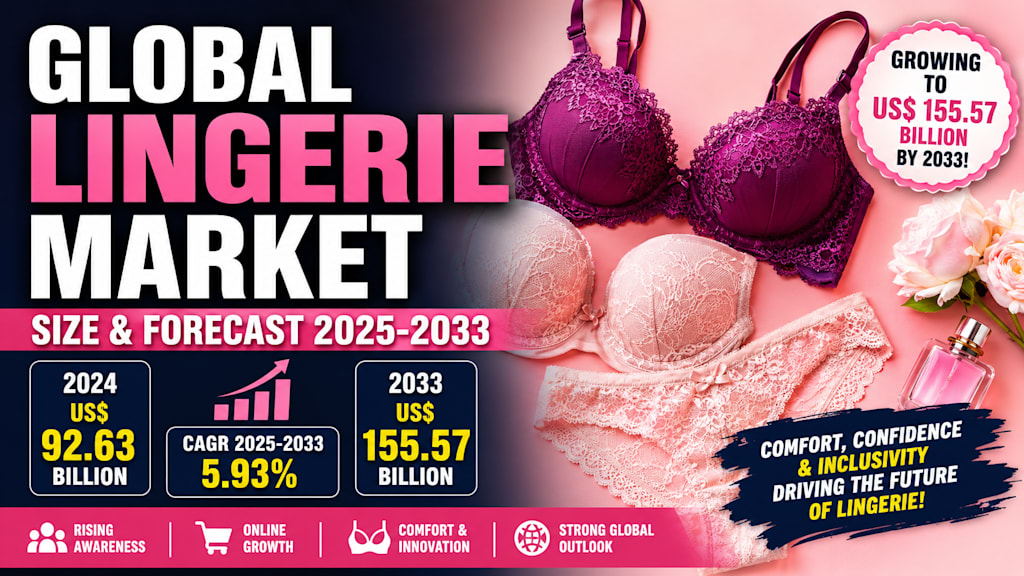
Global Lingerie Market Set for Strong Growth Through 2033
The global lingerie market is entering a transformative era, fueled by changing consumer preferences, increasing fashion consciousness, growing disposable incomes, and a heightened focus on comfort and inclusivity. According to Renub Research, the Global Lingerie Market is projected to reach US$ 155.57 billion by 2033 from US$ 92.63 billion in 2024, expanding at a compound annual growth rate (CAGR) of 5.93% during 2025–2033.
Lingerie has evolved far beyond its traditional role as an undergarment. Today, it represents personal style, confidence, self-expression, and wellness. Modern consumers are increasingly seeking products that combine aesthetics with functionality, prompting brands to innovate in materials, sizing, design, and sustainability.
From premium lace collections and seamless everyday bras to adaptive lingerie and eco-friendly cotton products, the industry is witnessing remarkable diversification. As digital commerce continues to reshape shopping behaviors and body positivity movements gain momentum globally, the lingerie sector is poised for sustained expansion across both developed and emerging markets.
Understanding the Modern Lingerie Market
Lingerie encompasses a broad category of women's intimate apparel, including bras, panties, camisoles, shapewear, bodysuits, sleepwear, and other specialized undergarments. These products are designed to provide comfort, support, hygiene, and style while enhancing confidence and personal identity.
Materials commonly used in lingerie manufacturing include cotton, silk, satin, nylon, lace, mesh, and innovative performance fabrics. Over the years, the industry has evolved to cater to diverse consumer needs, including active lifestyles, maternity support, post-surgery recovery, and plus-size fashion.
Today's consumers expect lingerie to deliver a balance of functionality, comfort, sustainability, and visual appeal. This expectation has transformed the sector into one of the most dynamic segments within the global fashion industry.
Key Growth Drivers Transforming the Lingerie Industry
1. Body Positivity and Inclusivity Are Expanding Consumer Reach
One of the most influential trends shaping the lingerie market is the growing acceptance of body diversity and inclusivity.
Consumers increasingly demand products that accommodate different body shapes, sizes, skin tones, and gender identities. In response, leading lingerie brands are introducing extended-size collections, adaptive designs, and more representative marketing campaigns.
The rise of body positivity has encouraged consumers to prioritize comfort and self-confidence over traditional beauty standards. This cultural shift is particularly evident among Millennials and Generation Z consumers, who actively support brands that celebrate diversity.
In September 2024, Clovia launched an expanded plus-size bra collection featuring enhanced side support, wider underbands, and full-coverage designs, highlighting the industry's move toward inclusive innovation.
2. Digital Commerce Is Revolutionizing Lingerie Shopping
The rapid expansion of e-commerce platforms has dramatically transformed the way consumers purchase intimate apparel.
Traditionally, lingerie shopping involved concerns about privacy, fitting, and product selection. Today, online retailers address these challenges through advanced size guides, virtual fitting technologies, AI-powered recommendations, and hassle-free return policies.
Social media platforms, influencer marketing, and direct-to-consumer business models have further strengthened brand visibility and consumer engagement.
In September 2023, Victoria's Secret expanded its India e-commerce offerings by introducing its complete range of lingerie and sleepwear products online, allowing consumers greater access to premium intimate apparel collections.
The convenience of digital shopping continues to accelerate market growth, especially in emerging economies where smartphone adoption and internet penetration are increasing rapidly.
3. Fabric Innovation and Comfort-Centric Designs
Comfort has become the defining factor influencing lingerie purchases worldwide.
Consumers increasingly favor seamless bras, wireless designs, breathable fabrics, moisture-wicking technology, and lightweight materials that support all-day wear. This shift is particularly evident following the rise of remote work and casual lifestyles.
Manufacturers are investing heavily in textile innovation, creating products that offer enhanced flexibility, support, durability, and temperature regulation.
Organic cotton, bamboo fibers, recycled materials, and antibacterial fabrics are gaining popularity among environmentally conscious consumers.
A notable example is Wacoal India's Spring/Summer 2025 Cool Comfort Collection, which integrates advanced cooling technologies and breathable fabrics to address consumer demand for comfort in warm climates.
Challenges Facing the Global Lingerie Market
Intense Market Competition
The lingerie industry remains highly fragmented, with numerous international, regional, and local players competing for market share.
Fast-fashion brands continue to pressure pricing structures by offering trend-driven products at affordable rates. As a result, premium and niche brands must carefully balance quality, innovation, and affordability to remain competitive.
This competitive environment often leads to margin pressures, making profitability increasingly challenging for smaller manufacturers and luxury brands.
Cultural and Regional Barriers
Although global acceptance of lingerie continues to grow, cultural sensitivities still influence purchasing behaviors in many regions.
Conservative societies may limit open discussions surrounding intimate apparel, affecting advertising strategies, retail visibility, and consumer engagement.
Brands entering such markets must develop localized marketing campaigns that respect cultural values while promoting product awareness. This often requires additional investment and tailored business strategies.
Brassiere Segment Remains the Largest Product Category
Bras continue to dominate the global lingerie market, accounting for a substantial portion of total revenue.
Consumers seek bras for various purposes, including daily wear, sports activities, maternity support, and fashion enhancement. Growing demand for wireless bras, bralettes, push-up designs, and seamless products is reshaping product innovation.
Technology-driven sizing solutions and customized fitting experiences have further improved consumer satisfaction and boosted sales.
As brands continue introducing more inclusive size ranges and comfort-focused designs, the brassiere segment is expected to maintain its leadership position throughout the forecast period.
Cotton Lingerie Gaining Momentum
Cotton remains one of the most preferred lingerie materials globally due to its breathability, softness, and skin-friendly characteristics.
Consumers increasingly associate cotton lingerie with health, hygiene, and long-term comfort. The demand for organic and sustainably sourced cotton products is also rising among environmentally conscious buyers.
Particularly in warm and humid regions across Asia-Pacific, Latin America, and Africa, cotton-based lingerie continues to enjoy strong consumer preference.
Nylon Lingerie Maintains Strong Market Presence
Nylon remains a vital material within the lingerie industry due to its affordability, elasticity, and durability.
The fabric allows manufacturers to create lightweight products featuring intricate lace details, mesh structures, and fashionable designs. Nylon's versatility makes it a preferred choice for both mass-market and mid-range lingerie collections.
Its cost efficiency also enables brands to produce fashionable products at accessible price points, appealing to budget-conscious consumers globally.
Premium Lingerie Segment Witnessing Rapid Expansion
Premium lingerie is emerging as a fast-growing category driven by increasing disposable incomes and evolving consumer lifestyles.
Luxury consumers increasingly view lingerie as a fashion statement rather than a purely functional product. High-end brands focus on premium fabrics, detailed craftsmanship, designer collaborations, and exclusive collections.
Urban consumers, particularly in North America, Europe, and parts of Asia-Pacific, are willing to invest in premium products that offer superior comfort, aesthetics, and brand prestige.
The gifting culture surrounding luxury lingerie is also contributing to segment growth.
Specialized Stores Continue to Play a Critical Role
Despite the rise of online retail, specialized lingerie stores remain important distribution channels.
Consumers often prefer in-store experiences when purchasing intimate apparel due to the need for accurate fitting, personalized guidance, and product testing.
These stores provide professional consultations, customized recommendations, and access to exclusive collections not readily available through general apparel retailers.
As a result, specialized stores continue to maintain relevance alongside digital channels.
Regional Market Insights
United States
The United States remains one of the world's largest lingerie markets, supported by high consumer spending, strong brand presence, and sophisticated retail infrastructure.
Demand for sustainable products, inclusive sizing, shapewear, and comfort-focused lingerie continues to drive innovation. Digital commerce and direct-to-consumer brands are reshaping market dynamics while expanding product accessibility.
Germany
Germany's lingerie market is characterized by strong consumer emphasis on quality, functionality, and sustainability.
Organic fabrics, seamless designs, sports bras, and shapewear products enjoy significant popularity. Consumers prioritize durability and comfort, encouraging brands to invest in high-quality manufacturing and environmentally responsible materials.
India
India represents one of the fastest-growing lingerie markets globally.
Urbanization, rising female workforce participation, increasing disposable incomes, and evolving social attitudes are driving market growth. Online platforms have significantly improved product accessibility, particularly in Tier I and Tier II cities.
Young consumers increasingly view lingerie as an essential lifestyle and fashion product, creating substantial growth opportunities for both domestic and international brands.
Brazil
Brazil's vibrant fashion culture supports a strong lingerie market characterized by bold designs, seasonal collections, and body-confidence-focused products.
Consumers actively embrace self-expression through fashion, creating opportunities across both premium and mass-market segments. E-commerce expansion continues to complement traditional retail channels.
Saudi Arabia
Saudi Arabia's lingerie market is experiencing steady growth due to rising female employment, growing disposable incomes, and expanding modern retail infrastructure.
Online shopping remains particularly important because it offers privacy and convenience. Brands are successfully adapting product offerings and marketing strategies to align with cultural preferences while meeting increasing demand for stylish intimate apparel.
10 Recent Developments Shaping the Competitive Landscape
1. Fashion Nova LLC
Fashion Nova expanded its women's intimate apparel portfolio with new inclusive sizing options and influencer-driven marketing campaigns targeting younger consumers.
2. Hanesbrands Inc.
Hanesbrands strengthened its comfort-focused product offerings through innovative fabric technologies emphasizing softness, breathability, and everyday wearability.
3. H&M Hennes & Mauritz AB
H&M increased its sustainable lingerie collections using recycled materials and environmentally responsible production processes.
4. Hunkemöller International B.V.
Hunkemöller enhanced its omnichannel retail strategy by integrating digital fitting tools and personalized online shopping experiences.
5. Jockey International Inc.
Jockey introduced upgraded seamless and wireless lingerie collections designed to address growing consumer demand for comfort.
6. MAS Holdings
MAS Holdings expanded its sustainable manufacturing initiatives while increasing investments in innovative textile technologies.
7. PVH Corp.
PVH continued strengthening its premium intimate apparel brands through product innovation and global retail expansion.
8. The Gap Inc.
The Gap expanded its innerwear collections, focusing on comfort-oriented essentials and inclusive sizing.
9. Groupe Chantelle
Groupe Chantelle accelerated investments in eco-friendly lingerie solutions and advanced fitting technologies.
10. Triumph International Ltd.
Triumph expanded its premium and comfort-focused product ranges while enhancing digital retail capabilities across multiple markets.
Competitive Landscape
The global lingerie industry remains highly competitive, with established multinational corporations and emerging regional players continuously investing in innovation, branding, sustainability, and digital transformation.
Major market participants include:
Fashion Nova LLC
Hanesbrands Inc.
H & M Hennes & Mauritz AB
Hunkemöller International B.V.
Jockey International Inc.
MAS Holdings
PVH Corp.
The Gap Inc.
Groupe Chantelle
Triumph International Ltd.
These companies are increasingly focusing on inclusivity, sustainability, premiumization, and e-commerce expansion to strengthen their market positions.
Final Thoughts
The global lingerie market is undergoing a remarkable transformation driven by inclusivity, comfort, innovation, and digital retail evolution. As consumers increasingly prioritize self-expression, body positivity, and personalized shopping experiences, lingerie brands are adapting with broader size ranges, advanced fabrics, and sustainable product offerings.
With the market projected to grow from US$ 92.63 billion in 2024 to US$ 155.57 billion by 2033, the industry presents substantial opportunities for manufacturers, retailers, investors, and fashion innovators. Companies that successfully blend comfort, style, sustainability, and digital engagement will be best positioned to capitalize on the next decade of growth in the global lingerie market.
About the Creator
Enjoyed the story? Support the Creator.
Subscribe for free to receive all their stories in your feed.
Comments
There are no comments for this story
Be the first to respond and start the conversation.