
Global Hip Replacement Market Advances as Aging Populations and Surgical Innovation Drive Demand
Rising cases of osteoarthritis, growing life expectancy, and breakthroughs in minimally invasive orthopedic procedures are fueling steady expansion in the global hip replacement industry.

The global healthcare industry is witnessing a significant rise in demand for orthopedic procedures, and hip replacement surgery remains one of the most transformative interventions available today. For millions of people suffering from chronic hip pain, mobility limitations, and degenerative joint disorders, hip replacement procedures offer a pathway toward improved quality of life, restored independence, and long-term pain relief.
Advancements in implant technology, robotic-assisted surgery, minimally invasive techniques, and post-operative rehabilitation have dramatically improved patient outcomes over the past two decades. At the same time, rising life expectancy and increasing prevalence of osteoarthritis are creating sustained demand for orthopedic solutions worldwide.
As healthcare systems continue investing in advanced surgical infrastructure and patients seek earlier treatment options, the hip replacement market is expected to experience steady growth throughout the coming decade.
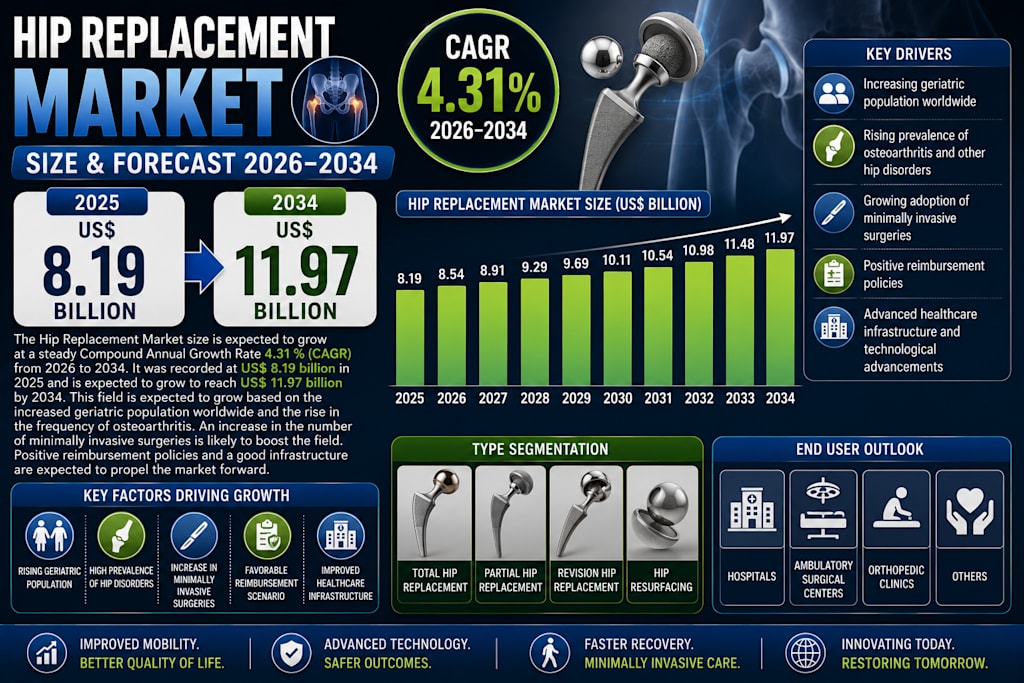
According to Renub Research, the Global Hip Replacement Market was valued at US$8.19 billion in 2025 and is projected to reach US$11.97 billion by 2034, expanding at a compound annual growth rate (CAGR) of 4.31% between 2026 and 2034. Growing geriatric populations, increasing rates of joint disorders, and continued innovation in surgical techniques are expected to support long-term market expansion.
Hip Replacement Surgery Has Become a Highly Successful Orthopedic Solution
Hip replacement surgery, also known as total hip arthroplasty, involves replacing damaged portions of the hip joint with artificial implants made from materials such as metal, ceramic, and durable polymers.
The procedure is commonly recommended for patients suffering from severe osteoarthritis, rheumatoid arthritis, avascular necrosis, post-traumatic arthritis, and hip fractures.
During surgery, damaged cartilage and bone are removed and replaced with prosthetic components that replicate the natural ball-and-socket function of the hip joint.
Over the years, improvements in implant materials and surgical techniques have significantly increased the success rate of hip replacement procedures.
Today, hip replacement is widely regarded as one of the most effective and cost-efficient orthopedic interventions, providing long-term pain relief and restored mobility for millions of patients globally.
Aging Populations Continue to Drive Market Growth
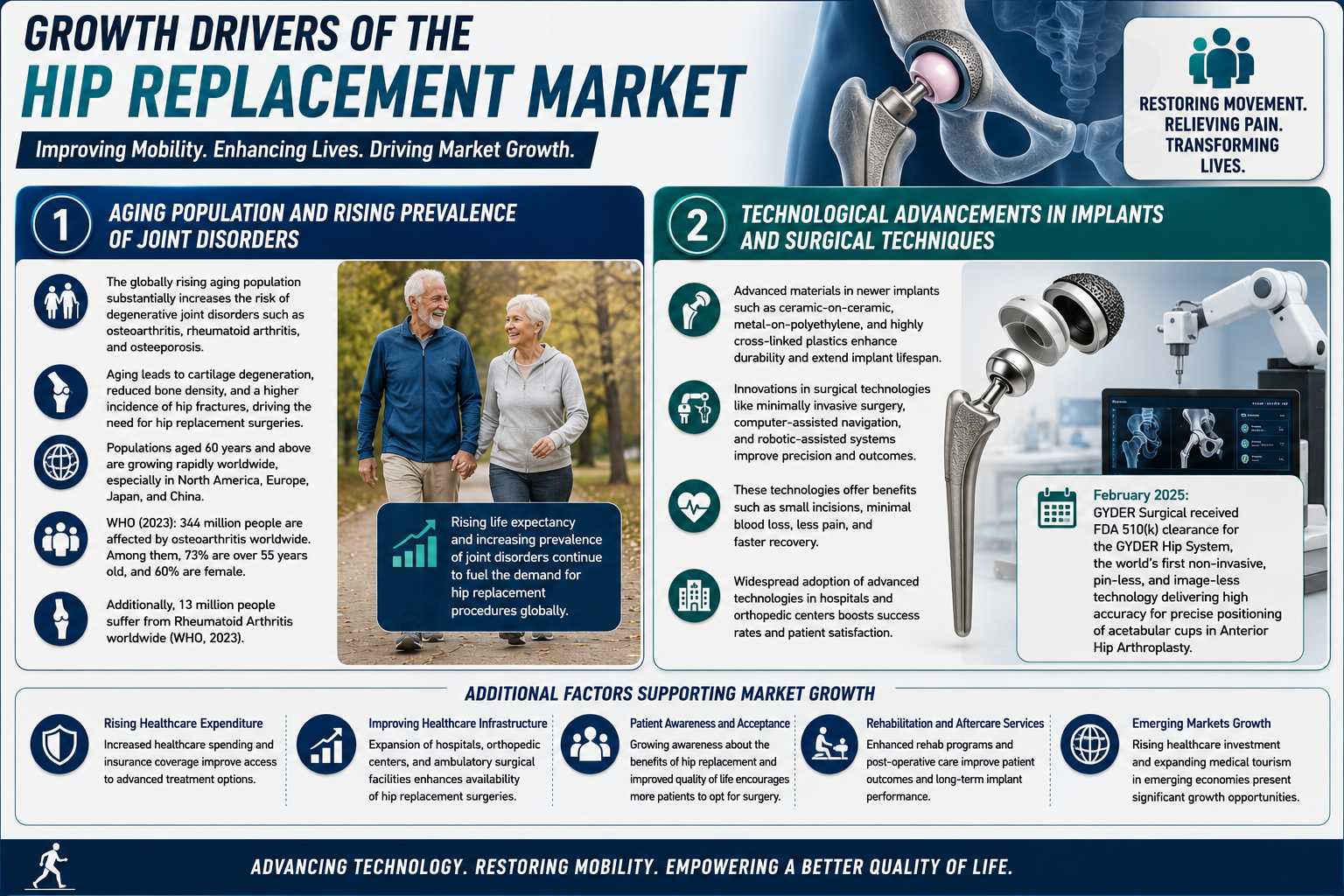
One of the strongest growth drivers for the hip replacement market is the rapid expansion of the global elderly population.
As people age, they become increasingly susceptible to degenerative joint diseases that affect mobility and overall quality of life.
Conditions such as osteoarthritis, rheumatoid arthritis, osteoporosis, and age-related cartilage deterioration significantly increase the likelihood of requiring hip replacement surgery.
According to data referenced by the World Health Organization, approximately 344 million people worldwide are affected by osteoarthritis, with 73% of those affected being over the age of 55. Additionally, rheumatoid arthritis affects around 13 million individuals globally. These trends continue creating substantial demand for orthopedic treatment solutions.
Countries across North America, Europe, Japan, China, and other regions are experiencing demographic shifts that are expected to support long-term market growth.
Osteoarthritis Remains the Leading Indication
Among all medical conditions requiring hip replacement procedures, osteoarthritis remains the most significant contributor.
This degenerative joint disease gradually breaks down cartilage, causing pain, stiffness, inflammation, and restricted movement.
As populations age and obesity rates increase globally, the prevalence of osteoarthritis continues rising.
For many patients with advanced disease progression, conservative treatments such as medication, physical therapy, and lifestyle modifications eventually become insufficient.
Hip replacement surgery often provides the most effective long-term solution, restoring mobility and significantly improving quality of life.
The growing burden of osteoarthritis ensures continued demand for hip replacement procedures worldwide.
Technological Innovation Is Transforming Surgical Outcomes
Technology continues to reshape the future of orthopedic surgery.
Modern hip replacement procedures benefit from major advancements in implant design, surgical planning, imaging systems, robotics, and navigation technologies.
New-generation implants utilize highly durable materials such as ceramic-on-ceramic bearings, highly cross-linked polyethylene, and advanced metal alloys designed to increase implant longevity and performance.
These innovations reduce wear rates while enhancing long-term patient outcomes.
Improved durability is particularly important as younger and more active patients increasingly undergo hip replacement procedures.
As technology advances, implants are becoming more reliable, efficient, and capable of supporting decades of use.
Minimally Invasive Procedures Gain Popularity
Minimally invasive surgical techniques are becoming increasingly important within the hip replacement market.
Unlike traditional procedures, minimally invasive approaches use smaller incisions and minimize disruption to surrounding muscles and tissues.
Patients often benefit from reduced blood loss, lower pain levels, shorter hospital stays, and faster recovery times.
These advantages make surgery more appealing to patients who may previously have delayed treatment due to concerns about lengthy rehabilitation.
Healthcare providers also benefit from improved efficiency and reduced post-operative complications.
As awareness of these benefits continues growing, minimally invasive hip replacement procedures are expected to gain broader adoption worldwide.
Robotic-Assisted Surgery Enhances Precision
The integration of robotics into orthopedic surgery represents one of the most exciting developments within the market.
Robotic-assisted systems help surgeons achieve greater accuracy during implant placement and alignment.
Enhanced precision contributes to improved joint function, reduced complication rates, and potentially longer implant lifespans.
In February 2025, Gyder Surgical received FDA 510(k) clearance for the GYDER Hip System, described as the world's first non-invasive, pin-less, and image-less technology designed to improve acetabular cup positioning during anterior hip arthroplasty procedures.
Such innovations demonstrate how robotics and digital navigation technologies continue improving surgical outcomes while increasing confidence among both surgeons and patients.
Medical Tourism Expands Access to Treatment
Medical tourism has become an increasingly important contributor to hip replacement market growth.
Patients from developed countries often travel abroad seeking high-quality surgical care at significantly lower costs.
Countries such as India have emerged as leading destinations for orthopedic procedures due to their combination of skilled surgeons, modern hospitals, and affordable pricing structures.
According to market data, unilateral hip replacement procedures in India may cost approximately US$5,000, compared with US$25,000 or more in countries such as the United States, United Kingdom, and Australia. Bilateral procedures may cost around US$10,000 compared to US$40,000 or more elsewhere.
Government initiatives promoting healthcare tourism are further strengthening these opportunities.
Rising Awareness Encourages Earlier Intervention
Patients today are significantly more informed about treatment options than previous generations.
Increased access to medical information, digital health resources, and specialist consultations has improved awareness of hip replacement benefits.
Many individuals now recognize that delaying treatment can negatively affect mobility, independence, and overall quality of life.
As a result, patients are increasingly seeking surgical intervention earlier rather than waiting until symptoms become severe.
This shift is helping expand the addressable patient population while supporting market growth.
Total Hip Replacement Dominates the Market
Among various procedure types, total hip replacement remains the largest segment within the market.
This procedure involves replacing both the femoral head and acetabular socket, providing comprehensive treatment for severe hip joint damage.
Total hip replacement is widely recommended for patients with advanced osteoarthritis, rheumatoid arthritis, avascular necrosis, and complex fractures.
Its popularity is supported by strong clinical outcomes, long implant lifespan, and substantial improvements in pain relief and mobility.
Many modern implants are expected to last between 15 and 20 years or longer, further enhancing the attractiveness of the procedure.
As demand continues increasing among both elderly and younger active patients, total hip replacement is expected to maintain market leadership.
Partial Hip Replacement Serves Specialized Needs
Partial hip replacement represents an important segment for patients with specific orthopedic conditions.
Unlike total replacement procedures, partial hip replacement involves replacing only the femoral head while preserving the natural acetabulum.
The procedure is particularly common among elderly patients with certain types of hip fractures.
Benefits include shorter surgical times, reduced blood loss, lower physiological stress, and faster recovery.
Although the procedure serves a narrower patient population than total hip replacement, ongoing improvements in patient selection and surgical techniques continue supporting its relevance.
Hospitals and Surgery Centers Lead Procedure Volumes
Hospitals and specialized surgery centers account for the majority of hip replacement procedures globally.
These facilities possess the infrastructure, surgical expertise, and post-operative care capabilities necessary for managing complex orthopedic cases.
Advanced technologies such as robotic-assisted systems and minimally invasive surgical tools are often concentrated within major healthcare institutions.
Ambulatory surgery centers are also becoming increasingly important due to shorter stays, lower costs, and improved patient convenience.
Together, hospitals and surgery centers remain the primary end-users within the hip replacement market.
Orthopedic Clinics Play a Growing Role
Orthopedic clinics continue expanding their influence within the patient care journey.
These facilities provide specialized diagnosis, treatment planning, rehabilitation, and follow-up care for individuals experiencing hip-related conditions.
Many clinics serve as important referral centers that help patients navigate treatment options and prepare for surgery.
Their growing role reflects broader healthcare trends emphasizing specialization and patient-centered care.
As demand for orthopedic services increases, clinics are expected to remain essential components of the treatment ecosystem.
High Costs Remain a Major Challenge
Despite its proven effectiveness, hip replacement surgery remains expensive.
Procedure costs include implants, surgeon fees, hospital stays, diagnostic testing, rehabilitation, and post-operative care.
Advanced technologies and premium implants can further increase overall expenses.
For many patients, particularly those in low- and middle-income countries, affordability remains a significant barrier to treatment.
Even in developed markets, rising healthcare costs continue placing pressure on healthcare systems and reimbursement programs.
Improving affordability while maintaining quality remains a major challenge for the industry.
Surgical Risks Continue to Influence Decision-Making
Although hip replacement is considered highly safe and effective, all surgical procedures carry inherent risks.
Potential complications include infection, blood clots, implant loosening, dislocation, nerve damage, and the need for revision surgery.
Younger and highly active patients may face additional concerns regarding implant longevity and future replacement requirements.
Fear of complications can discourage some individuals from pursuing surgery despite potential benefits.
Continued advances in surgical techniques, implant technology, and post-operative care are helping reduce these risks, but concerns remain an important consideration for patients and healthcare providers alike.
United States Maintains Global Leadership
The United States remains one of the largest and most technologically advanced hip replacement markets in the world.
Strong healthcare infrastructure, high awareness levels, favorable reimbursement systems, and widespread access to orthopedic specialists support continued market growth.
Demand is driven by aging populations, obesity rates, osteoarthritis prevalence, and patient interest in maintaining active lifestyles.
In October 2025, Zimmer Biomet announced that the U.S. Food and Drug Administration granted Breakthrough Device Designation for its iodine-treated total hip replacement system—the first product in the company's history to receive this designation.
Such innovations highlight the country's leadership in orthopedic technology development.
India Emerges as a High-Growth Market
India is rapidly becoming one of the most important growth markets for hip replacement procedures.
Expanding healthcare infrastructure, rising awareness, increased life expectancy, and growing access to advanced orthopedic care are driving demand.
The country's position as a global medical tourism destination further strengthens market growth.
In January 2026, Manipal Hospital in Gurugram successfully performed a 3D-navigated total hip replacement using the IntelliJoint 3D Navigation System, highlighting India's increasing adoption of advanced surgical technologies.
Saudi Arabia Invests in Advanced Orthopedic Care
Saudi Arabia's hip replacement market is benefiting from major healthcare modernization initiatives.
Government investment in hospitals, specialized surgical centers, and advanced medical technologies is improving access to high-quality orthopedic care.
In January 2026, Dallah Al Nakheel Hospital successfully performed hip replacement surgery using the Direct Anterior Approach (DAA), an advanced technique associated with reduced pain, faster recovery, and improved patient outcomes.
These developments reflect the country's broader commitment to strengthening domestic healthcare capabilities.
Final Thoughts
The global hip replacement market continues to evolve as aging populations, rising rates of joint disorders, and advances in orthopedic technology drive increasing demand.
Innovations in implant materials, minimally invasive procedures, robotic-assisted surgery, and rehabilitation are helping improve patient outcomes while expanding treatment accessibility.
With the market projected to grow from US$8.19 billion in 2025 to US$11.97 billion by 2034, significant opportunities exist for healthcare providers, medical device manufacturers, investors, and technology innovators.
While challenges related to affordability, surgical risks, and healthcare access remain, continued advancements in medical science and healthcare infrastructure are expected to support long-term growth.
As patients around the world seek improved mobility, reduced pain, and greater independence, hip replacement surgery will remain one of the most important and impactful orthopedic procedures available.
About the Creator
Enjoyed the story? Support the Creator.
Subscribe for free to receive all their stories in your feed.
Comments
There are no comments for this story
Be the first to respond and start the conversation.