
Global Health and Wellness Market to Reach US$ 4.82 Trillion by 2033 as Preventive Healthcare and Digital Wellness Transform Consumer Lifestyles
Rising Demand for Functional Nutrition, Personalized Healthcare, Mental Wellness, and Fitness Technologies Continues to Reshape the Global Wellness Economy

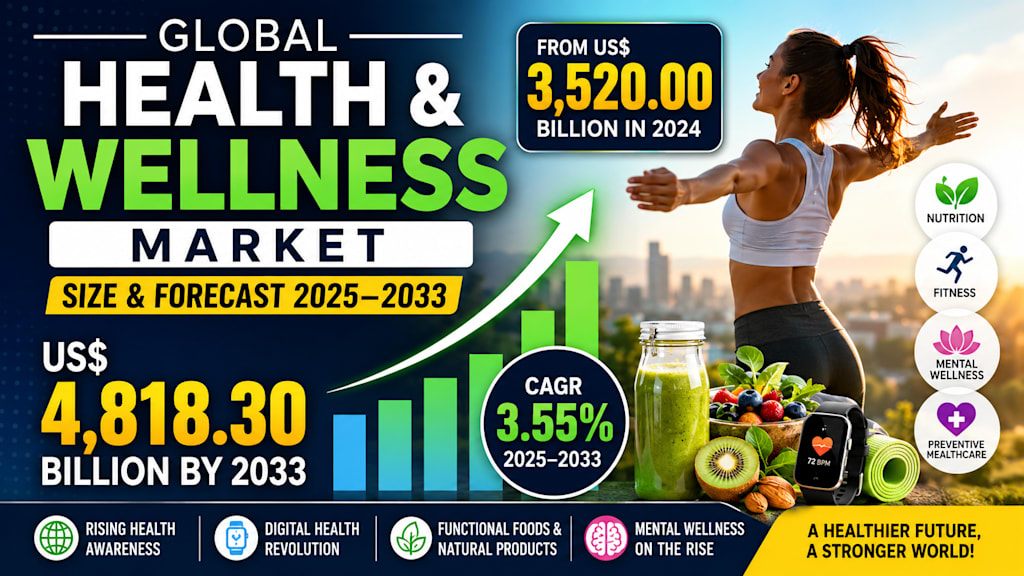
Global Health and Wellness Market Size and Forecast 2025–2033
The global health and wellness market is entering a transformative era driven by growing health consciousness, technological innovation, and a widespread shift toward preventive healthcare. According to Renub Research, the Global Health and Wellness Market is expected to grow from US$ 3,520.00 billion in 2024 to US$ 4,818.30 billion by 2033, expanding at a CAGR of 3.55% during 2025–2033.
The market's expansion reflects a significant change in consumer behavior. Individuals across all age groups are increasingly prioritizing long-term well-being over reactive medical treatment. As concerns about chronic diseases, stress, obesity, mental health disorders, and aging populations intensify, consumers are embracing healthier lifestyles supported by innovative wellness products and services.
From functional foods and dietary supplements to wearable fitness devices, mental wellness platforms, and personalized healthcare solutions, the health and wellness industry has evolved into one of the most influential sectors of the global economy.
Understanding the Modern Health and Wellness Landscape
Health and wellness encompass a broad spectrum of activities and products designed to improve physical, mental, and emotional well-being. The concept goes far beyond simply avoiding illness; it promotes proactive lifestyle choices that support overall quality of life.
Today's wellness ecosystem includes:
Functional nutrition
Fitness and exercise programs
Mental health services
Preventive healthcare
Personalized medicine
Beauty and personal care
Alternative therapies
Wellness tourism
Digital health technologies
Consumers now view wellness as an ongoing lifestyle commitment rather than a temporary trend. This shift has encouraged businesses across healthcare, food, beauty, technology, and retail industries to invest heavily in wellness innovation.
Social media platforms, wellness influencers, mobile applications, and wearable technologies have also accelerated awareness, making wellness information more accessible than ever before.
Preventive Healthcare Is Becoming a Global Priority
One of the strongest drivers behind market growth is the increasing focus on preventive healthcare.
Rather than waiting for diseases to develop, consumers are actively investing in solutions that help maintain health and reduce future medical risks. This trend has led to rising demand for:
Nutritional supplements
Health screenings
Fitness memberships
Mental wellness applications
Telehealth services
Health coaching programs
Governments and healthcare organizations worldwide are also promoting preventive care to reduce long-term healthcare costs and improve population health outcomes.
As healthcare expenses continue rising globally, prevention is becoming a practical and cost-effective strategy for both individuals and public health systems.
The result is a sustained increase in spending on wellness-focused products and services across developed and emerging economies.
Functional Foods and Beverages Drive Nutrition Innovation
The functional foods and beverages segment remains one of the fastest-growing areas within the wellness industry.
Consumers increasingly seek products that deliver additional health benefits beyond basic nutrition. These products are formulated with ingredients such as:
Probiotics
Vitamins
Minerals
Antioxidants
Adaptogens
Plant proteins
Popular wellness beverages include kombucha, protein drinks, herbal teas, collagen beverages, and immunity-boosting formulations.
Busy lifestyles have created demand for convenient nutrition solutions that support energy, digestive health, immunity, and overall wellness.
Consumers are also paying closer attention to ingredient transparency, favoring clean-label products free from artificial additives and preservatives.
Food manufacturers continue investing in research and development to create innovative products that combine health benefits with taste and convenience.
As a result, supermarket shelves worldwide are increasingly dedicated to wellness-oriented food and beverage categories.
Technology Is Revolutionizing Health and Wellness
Digital transformation is reshaping the wellness industry at an unprecedented pace.
Wearable fitness trackers, smartwatches, health-monitoring devices, mobile wellness applications, and AI-powered health platforms are empowering consumers to take control of their well-being.
Modern wellness technologies enable users to monitor:
Physical activity
Sleep quality
Heart rate
Stress levels
Nutrition habits
Mental health indicators
Artificial intelligence and machine learning further enhance personalization by delivering tailored recommendations based on individual health data.
The European Commission's Digital Decade initiative, which aims for universal access to electronic health records by 2030, demonstrates how governments are supporting digital healthcare adoption.
The COVID-19 pandemic accelerated consumer acceptance of virtual healthcare, telemedicine, remote fitness coaching, and online mental health services.
Today, digital wellness has become an essential component of the broader health and wellness ecosystem.
Beauty and Personal Care Products Continue Expanding
The convergence of beauty and wellness has created significant growth opportunities for personal care companies.
Modern consumers increasingly seek products that improve both appearance and overall health.
Popular categories include:
Probiotic skincare
Anti-aging solutions
SPF-enhanced products
Natural cosmetics
Microbiome-friendly formulations
Clean beauty products
Consumers are also demanding greater transparency regarding ingredients, sustainability practices, and ethical sourcing.
Brands promoting cruelty-free testing, eco-friendly packaging, and scientifically validated formulations are gaining strong consumer support.
Social media and influencer marketing continue to play a critical role in shaping purchasing decisions and accelerating product adoption.
The growing willingness of consumers to pay premium prices for high-quality wellness-oriented beauty products is supporting long-term market growth.
Immunity Products Remain a Key Growth Segment
The importance of immune health has become deeply embedded in consumer behavior.
Following the global pandemic, individuals increasingly recognize immunity as a year-round wellness priority rather than a seasonal concern.
Demand remains strong for:
Vitamin C supplements
Vitamin D products
Zinc formulations
Elderberry extracts
Probiotic supplements
Functional immunity beverages
Manufacturers continue introducing innovative delivery formats such as gummies, powders, sachets, and ready-to-drink beverages.
Consumers increasingly favor products supported by scientific research and transparent sourcing practices.
Ongoing investments in immunity-related research are expected to generate additional innovation throughout the forecast period.
Bone Health Gains Importance Amid Aging Populations
Global demographic trends are creating strong opportunities within the bone health segment.
As populations age, concerns related to osteoporosis, fractures, mobility limitations, and overall skeletal health are becoming more prominent.
Consumers are actively seeking products that support bone strength and long-term mobility.
High-demand ingredients include:
Calcium
Vitamin D
Magnesium
Collagen
Protein supplements
In addition to nutritional products, digital health platforms are introducing specialized exercise programs focused on bone density maintenance and fall prevention.
The emphasis on healthy aging and preventive care is expected to support continued growth in bone health-related wellness solutions worldwide.
United States Leads Global Wellness Innovation
The United States remains the largest and most influential health and wellness market globally.
American consumers demonstrate strong demand for:
Dietary supplements
Fitness technologies
Mental wellness services
Organic foods
Functional beverages
Telehealth solutions
Healthcare expenditure in the United States is projected to reach approximately US$ 4.9 trillion, reflecting the country's growing emphasis on healthcare and wellness.
Major retailers, e-commerce platforms, and healthcare providers continue expanding wellness offerings to meet evolving consumer expectations.
The U.S. market often serves as an innovation hub, influencing wellness trends worldwide.
Germany Emphasizes Quality and Evidence-Based Wellness
Germany's health and wellness sector is characterized by high product quality standards and consumer trust.
German consumers place significant importance on scientific validation, safety, and regulatory compliance.
The market shows strong demand for:
Herbal remedies
Nutritional supplements
Fitness services
Preventive healthcare programs
Mental wellness solutions
Government-supported healthcare initiatives and preventive care programs further encourage wellness adoption.
Sustainability and environmental responsibility also play important roles in consumer purchasing decisions.
India Emerges as a Fast-Growing Wellness Powerhouse
India represents one of the world's most dynamic health and wellness markets.
The country's wellness ecosystem uniquely blends traditional practices such as Ayurveda and yoga with modern fitness, nutrition, and digital health solutions.
Growing middle-class incomes, rising health awareness, and widespread smartphone adoption are expanding market opportunities.
Demand continues increasing for:
Immunity supplements
Functional foods
Fitness applications
Online wellness coaching
Personalized nutrition
Government initiatives promoting preventive healthcare and digital health infrastructure are further strengthening market growth.
India's ability to combine cultural heritage with technological innovation positions it as a major future contributor to the global wellness economy.
Brazil and Saudi Arabia Offer Strong Growth Potential
Brazil remains Latin America's leading wellness market, benefiting from a strong fitness culture and consumer interest in natural health products.
Demand is particularly strong for:
Weight management products
Immunity supplements
Organic foods
Anti-aging solutions
Meanwhile, Saudi Arabia's Vision 2030 initiative is accelerating investment in healthcare, fitness, wellness tourism, and preventive medicine.
The Kingdom is witnessing increased adoption of:
Digital health platforms
Premium supplements
Wellness centers
Telemedicine services
These emerging markets present substantial opportunities for global wellness brands seeking geographic expansion.
Key Challenges Facing the Industry
Despite strong growth prospects, the health and wellness market faces several challenges.
Regulatory Complexity
Rapid innovation often outpaces regulatory frameworks, particularly in supplements, functional foods, and wellness technologies.
Inconsistent regulations can create confusion regarding product efficacy and safety.
Market Saturation
The increasing number of wellness brands intensifies competition.
Many companies offer similar products, making differentiation difficult and increasing customer acquisition costs.
Consumer Trust
Consumers increasingly demand scientific validation and transparency.
Brands lacking credible evidence may struggle to maintain long-term loyalty and market credibility.
10 Recent Developments by Leading Health & Wellness Companies
1. Amway Corp.
Expanded its personalized nutrition ecosystem through digital health assessments and customized supplement recommendations.
2. Bayer AG
Strengthened its consumer health portfolio by investing in preventive healthcare and self-care product innovations.
3. Danone S.A.
Accelerated development of functional nutrition products focused on immunity, digestive health, and healthy aging.
4. David Lloyd Leisure Ltd.
Expanded premium fitness and wellness offerings across Europe, integrating recovery and holistic wellness services.
5. Fitness First India Pvt Ltd.
Enhanced digital fitness engagement through virtual training programs and hybrid membership models.
6. Herbalife Nutrition Ltd.
Introduced new science-backed nutrition products supporting weight management and active lifestyles.
7. Holland & Barrett Retail Limited
Expanded wellness categories including vitamins, supplements, plant-based nutrition, and mental wellness products.
8. L'Oréal SA
Increased investment in beauty-tech innovations and personalized skincare solutions powered by artificial intelligence.
9. Nestlé SA
Expanded functional nutrition and health science divisions with greater focus on personalized wellness products.
10. Procter & Gamble
Continued innovation in health-focused consumer products emphasizing preventive care and everyday wellness.
Competitive Landscape
The global health and wellness market remains highly competitive, with leading companies focusing on innovation, personalization, sustainability, and digital transformation.
Major market participants include:
Amway Corp.
Bayer AG
Danone S.A.
David Lloyd Leisure Ltd.
Fitness First India Pvt Ltd.
Herbalife Nutrition Ltd.
Holland & Barrett Retail Limited
L'Oréal SA
Nestlé SA
Procter & Gamble
Companies are increasingly investing in research, AI-driven personalization, direct-to-consumer channels, and evidence-based product development to strengthen their market positions.
Final Thoughts
The global health and wellness market is no longer defined solely by fitness memberships or nutritional supplements. It has evolved into a comprehensive ecosystem encompassing preventive healthcare, personalized nutrition, mental wellness, beauty innovation, digital health technologies, and healthy lifestyle solutions.
With the market projected to grow from US$ 3.52 trillion in 2024 to US$ 4.82 trillion by 2033, wellness is becoming one of the most influential consumer movements worldwide. Rising awareness, technological innovation, aging populations, and the pursuit of healthier lifestyles will continue driving demand across every region.
Businesses that combine scientific credibility, personalization, sustainability, and digital convenience are likely to emerge as the next leaders in this rapidly evolving global wellness economy.
About the Creator
Enjoyed the story? Support the Creator.
Subscribe for free to receive all their stories in your feed.
Comments
There are no comments for this story
Be the first to respond and start the conversation.