
Global Footwear Market Set to Reach US$ 492.60 Billion by 2033 as Fashion, Fitness, and Sustainability Redefine Consumer Choices
From athletic sneakers and luxury leather shoes to eco-friendly footwear innovations, the global footwear industry is stepping into a new era of growth driven by evolving consumer lifestyles and digital commerce.

The Global Footwear Industry Is Walking Into a New Growth Phase
Footwear has evolved far beyond its traditional role of protecting the feet. Today, shoes represent fashion statements, performance-enhancing tools, lifestyle symbols, and even sustainability commitments. As consumers increasingly seek comfort, functionality, and style, footwear manufacturers are responding with innovative designs, advanced materials, and digital shopping experiences.
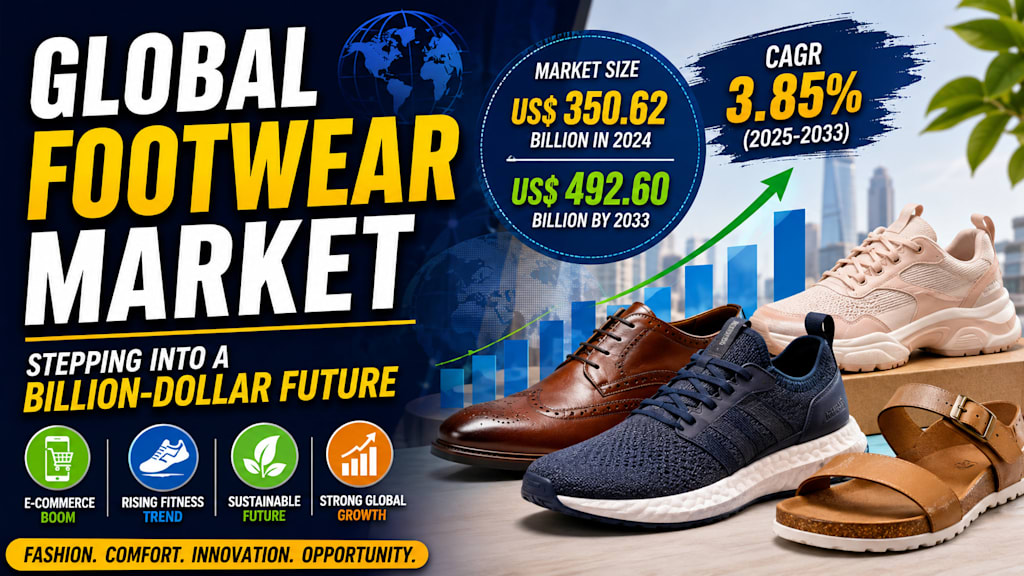
According to Renub Research, the Global Footwear Market was valued at US$ 350.62 billion in 2024 and is projected to reach US$ 492.60 billion by 2033, expanding at a CAGR of 3.85% during 2025–2033.
This growth reflects changing consumer preferences, increasing disposable incomes, rapid urbanization, and the growing influence of e-commerce platforms across developed and emerging economies.
Why Footwear Remains an Essential Consumer Product
Footwear serves multiple functions in modern society. Beyond protecting feet from environmental hazards and physical injuries, footwear has become an integral part of personal identity and fashion.
Consumers now purchase different types of shoes for various occasions, including:
Athletic activities
Formal events
Casual wear
Workplace safety
Outdoor adventures
Luxury fashion
Technological advancements have further transformed footwear into highly specialized products. Running shoes now offer advanced cushioning technologies, while workplace footwear includes safety features such as steel toes and anti-slip soles.
The result is a highly diversified market catering to a wide range of consumer needs and preferences.
Growing Health Awareness Is Boosting Athletic Footwear Demand
One of the strongest growth drivers in the footwear market is the increasing global focus on health and wellness.
Consumers are becoming more active through:
Running
Gym workouts
Yoga
Outdoor sports
Recreational fitness activities
As participation in fitness activities rises, demand for performance-oriented footwear continues to expand. Athletic footwear brands are investing heavily in research and development to create products that improve comfort, support, durability, and performance.
The growing popularity of athleisure fashion is also contributing significantly to market growth. Consumers increasingly prefer shoes that can seamlessly transition between workouts and daily activities.
This trend has blurred the boundaries between athletic and casual footwear, creating new opportunities for manufacturers worldwide.
E-Commerce Continues to Revolutionize Footwear Retail
Digital transformation has dramatically changed how consumers purchase footwear.
Online shopping platforms offer numerous advantages, including:
Wider product selection
Convenient home delivery
Easy return policies
Competitive pricing
Personalized recommendations
The rise of mobile commerce and social commerce has further accelerated online footwear sales.
Brands are increasingly leveraging artificial intelligence, virtual try-on technology, and augmented reality experiences to improve customer engagement and reduce purchase uncertainty.
These innovations help consumers visualize products before purchasing, resulting in higher conversion rates and stronger customer satisfaction.
The growing penetration of smartphones and internet connectivity in emerging markets is expected to continue supporting e-commerce-driven footwear growth over the coming decade.
Sustainability Is Reshaping Consumer Purchasing Decisions
Environmental awareness is becoming a major factor influencing footwear purchases.
Consumers increasingly seek products that align with their values regarding:
Environmental responsibility
Ethical sourcing
Sustainable manufacturing
Waste reduction
Carbon footprint minimization
As a result, leading footwear companies are investing in:
Recycled materials
Bio-based alternatives
Circular manufacturing models
Footwear recycling programs
Transparent supply chains
Brands that successfully integrate sustainability into their operations are gaining stronger consumer loyalty and competitive advantages.
This shift is expected to remain one of the most influential market trends through 2033.
Major Challenges Facing the Global Footwear Industry
Despite strong growth opportunities, several challenges continue to affect market performance.
Intense Competition
The footwear industry remains highly competitive, with global giants, regional brands, and direct-to-consumer startups all competing for market share.
This competitive environment often leads to:
Price wars
Margin pressure
Increased marketing expenses
Rapid product cycles
Maintaining profitability while meeting evolving consumer expectations remains a significant challenge for manufacturers.
Supply Chain Disruptions
Recent global events have highlighted vulnerabilities within international supply chains.
Challenges include:
Transportation delays
Rising logistics costs
Raw material shortages
Geopolitical tensions
Regulatory complexities
Manufacturers are increasingly diversifying sourcing strategies and investing in supply chain resilience to minimize risks.
Athletic Footwear Segment Continues to Lead Innovation
Athletic footwear remains one of the fastest-growing segments within the industry.
Consumers increasingly prioritize:
Performance
Comfort
Injury prevention
Style
Sustainability
Manufacturers are responding with innovations such as:
Smart footwear technology
Activity-tracking features
Lightweight materials
Enhanced cushioning systems
Eco-friendly manufacturing processes
As sports participation and fitness awareness continue to rise globally, athletic footwear is expected to remain a key revenue generator for major brands.
Leather Footwear Maintains Premium Market Appeal
Leather footwear continues to attract consumers seeking durability, sophistication, and premium quality.
High-end leather shoes remain popular among:
Business professionals
Luxury consumers
Formal footwear buyers
Although synthetic alternatives have gained market share due to affordability and sustainability concerns, leather footwear continues to hold strong value in premium segments.
Manufacturers are increasingly adopting environmentally responsible leather processing techniques to address changing consumer expectations.
Women's Footwear Dominates Global Demand
Women's footwear remains one of the largest and most influential segments within the industry.
Several factors support this dominance:
Greater product variety
Strong fashion influence
Seasonal purchasing patterns
Expanding participation in sports and fitness
Women frequently purchase footwear across multiple categories, including:
Casual shoes
Formal footwear
Athletic shoes
Luxury brands
Seasonal fashion collections
The combination of fashion consciousness and functional requirements continues to drive robust demand within this segment.
Regional Market Insights
United States
The United States remains one of the world's largest footwear markets.
Key growth factors include:
High consumer spending
Strong athletic footwear demand
Advanced retail infrastructure
Technology-driven innovation
Growing athleisure trends
American consumers increasingly prioritize comfort, sustainability, and multifunctional footwear products.
France
France maintains a unique position within the global footwear landscape due to its strong fashion heritage.
French consumers value:
Design excellence
Premium quality
Luxury craftsmanship
Fashion-forward styles
At the same time, demand for sports-inspired footwear continues to grow as health-conscious lifestyles gain popularity.
India
India represents one of the most promising growth markets globally.
Market expansion is supported by:
Rising disposable incomes
Rapid urbanization
Expanding middle-class population
Growing fashion awareness
Increasing internet penetration
The rapid growth of e-commerce platforms has significantly expanded consumer access to both domestic and international footwear brands.
Saudi Arabia
Saudi Arabia is witnessing increasing demand for premium and branded footwear.
Growth is being driven by:
Higher consumer purchasing power
Expanding retail infrastructure
Growing online shopping adoption
Rising interest in global fashion trends
Sustainability and technological innovation are also becoming important purchase considerations among consumers in the region.
Competitive Landscape
The global footwear market is highly fragmented yet dominated by several internationally recognized brands that continue investing in innovation, sustainability, and digital transformation.
Major companies operating in the market include:
Nike Inc.
Adidas AG
New Balance Athletics, Inc.
Asics Corporation
LVMH Moët Hennessy Louis Vuitton SE
Fila Holdings Corp.
The Bata Corporation
VF Corporation
These organizations continue to strengthen their market positions through product innovation, strategic partnerships, digital expansion, and sustainability initiatives.
10 Recent Developments Shaping the Footwear Industry
1. Nike Expands Digital Retail Experiences
Nike continues investing in augmented reality and personalized shopping technologies to improve online customer engagement.
2. Adidas Introduces New Footwear Collection
Adidas expanded its footwear lineup with new lifestyle and performance-focused products targeting evolving consumer preferences.
3. Metro Brands Launches Sustainability Initiative
Metro Brands introduced footwear recycling programs aimed at reducing waste and supporting circular economy objectives.
4. Skechers Agrees to Major Buyout Deal
Skechers entered a landmark US$ 9.42 billion acquisition agreement, representing one of the largest transactions in footwear industry history.
5. Bata Expands Digital Presence in France
Bata strengthened its European reach through partnerships with leading online footwear retailers.
6. New Balance Expands International Product Showcases
New Balance increased brand visibility through exclusive product launches and experiential retail events.
7. JD Sports and Nike Enhance AR Shopping Experiences
Advanced augmented reality technologies are improving consumer interaction and virtual product trials.
8. Veldskoen Expands into North America
The South African footwear brand accelerated international growth through expansion into the U.S. market.
9. Sustainability Becomes a Core Product Strategy
Leading brands increasingly incorporate recycled materials and environmentally friendly manufacturing practices.
10. Smart Footwear Innovation Gains Momentum
Manufacturers continue exploring connected footwear technologies capable of tracking performance and enhancing user experiences.
Future Outlook
The future of the global footwear market appears highly promising.
Several long-term trends are expected to support growth:
Expansion of digital commerce
Rising disposable incomes
Growing health consciousness
Increasing demand for sustainable products
Technological innovation
Expansion into emerging markets
Companies that successfully combine performance, style, affordability, and environmental responsibility will likely emerge as industry leaders in the years ahead.
Final Thoughts
The global footwear industry is undergoing a significant transformation. What was once viewed primarily as a necessity has become a powerful combination of fashion, technology, health, and sustainability.
With the market expected to grow from US$ 350.62 billion in 2024 to US$ 492.60 billion by 2033, footwear manufacturers have substantial opportunities to capture new consumer segments and expand globally.
As innovation accelerates and consumer expectations evolve, the brands that adapt quickly to changing lifestyles, embrace sustainability, and deliver superior customer experiences will define the next generation of success in the global footwear market.
About the Creator
Enjoyed the story? Support the Creator.
Subscribe for free to receive all their stories in your feed.
Comments
There are no comments for this story
Be the first to respond and start the conversation.