
Global Food Enzymes Market Poised for Strong Growth as Clean-Label Trends and Food Innovation Transform Manufacturing
Rising demand for processed foods, advances in biotechnology, and increasing preference for natural food ingredients are driving the expansion of the global food enzymes industry.

The modern food industry is constantly evolving to meet changing consumer expectations. Today's consumers want food products that are not only convenient and flavorful but also healthier, more sustainable, and made with natural ingredients. As food manufacturers work to balance these demands with efficiency and profitability, one category of ingredients has become increasingly important: food enzymes.
Often invisible to consumers but essential to food production, enzymes play a critical role in improving food quality, enhancing processing efficiency, reducing waste, and supporting clean-label formulations. From baking bread and producing cheese to clarifying fruit juices and brewing beverages, food enzymes have become indispensable tools across the global food manufacturing landscape.
As technological innovation continues to reshape the food industry, enzymes are emerging as one of the most valuable solutions for improving production processes while meeting modern consumer expectations.
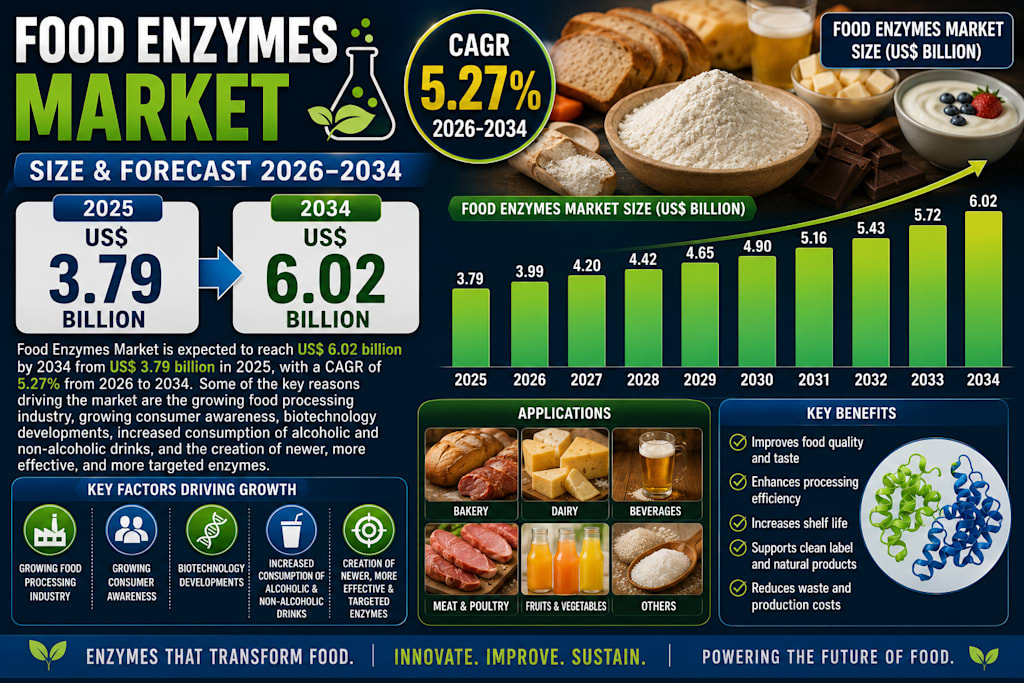
According to Renub Research, the Global Food Enzymes Market is expected to grow from US$3.79 billion in 2025 to US$6.02 billion by 2034, registering a compound annual growth rate (CAGR) of 5.27% between 2026 and 2034. Increasing demand for processed foods, biotechnology advancements, growing consumer awareness, and the development of more effective enzyme solutions are expected to support this growth.
Food Enzymes Have Become Essential to Modern Food Production
Food enzymes are biological catalysts that accelerate chemical reactions during food manufacturing.
Derived primarily from microorganisms, plants, or animal sources, enzymes help food producers improve efficiency, enhance product quality, and optimize resource utilization. Unlike many synthetic additives, enzymes work in small quantities and are biodegradable, making them highly attractive within modern food systems.
Different enzymes perform different functions depending on the application.
Carbohydrases assist in breaking down carbohydrates, proteases help process proteins, and lipases contribute to fat modification and flavor development. Together, these enzymes support a wide range of food manufacturing processes across multiple industries.
Their ability to improve texture, flavor, shelf life, and consistency has made enzymes an indispensable part of contemporary food production.
Growing Demand for Processed Foods Drives Market Expansion
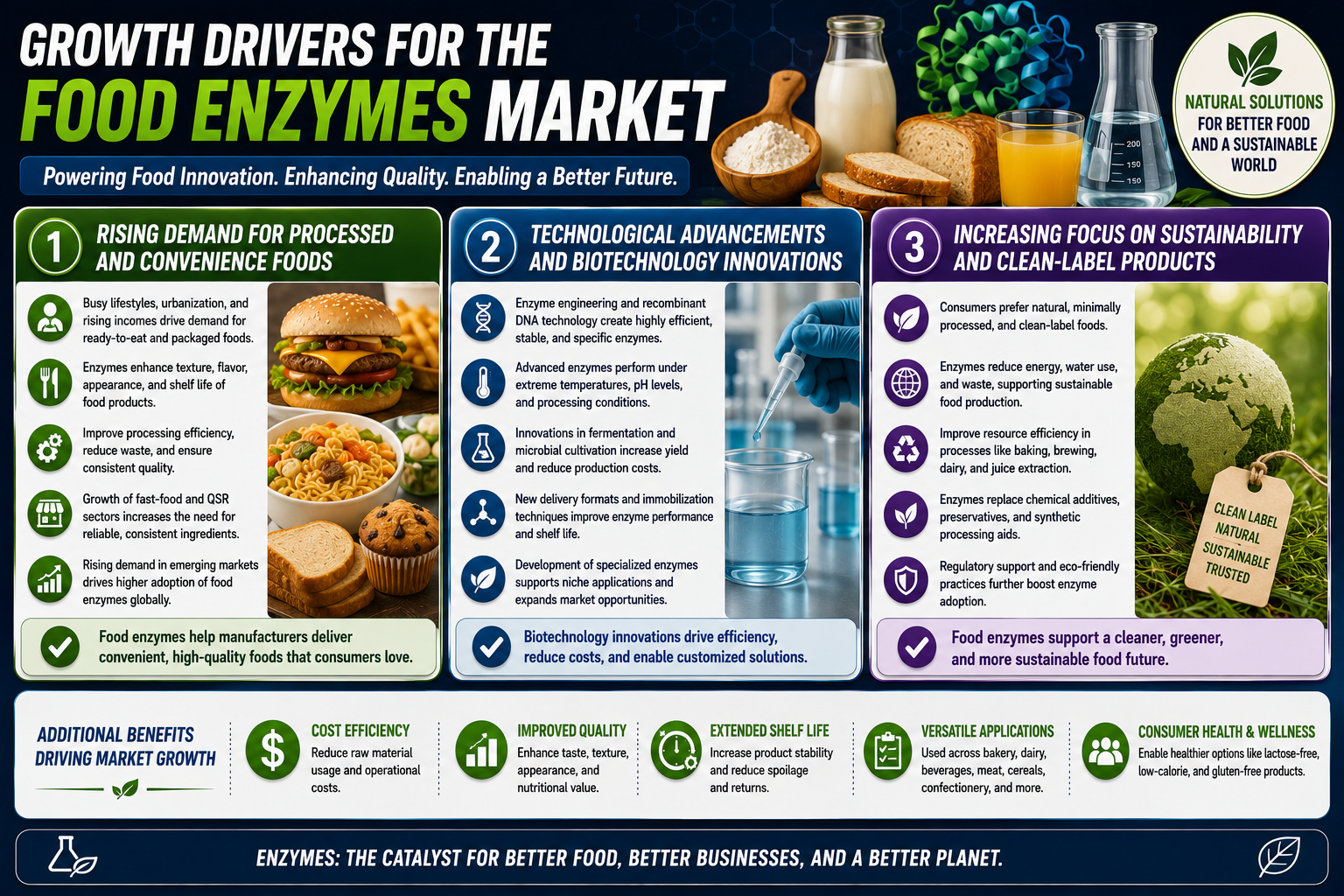
One of the most significant drivers of the food enzymes market is the continued growth of processed and convenience foods.
Modern consumers increasingly prioritize convenience due to busy lifestyles, urbanization, and changing work patterns. Ready-to-eat meals, packaged foods, bakery products, dairy items, and beverages have become essential components of daily diets in many regions.
Food manufacturers rely on enzymes to maintain product consistency, improve production efficiency, and enhance sensory characteristics.
For example, enzymes help bread remain soft for longer periods, improve cheese production yields, and optimize beverage clarification processes.
As global demand for processed foods continues to increase, the importance of food enzymes within manufacturing operations is expected to grow accordingly.
Biotechnology Innovations Are Transforming the Industry
Advancements in biotechnology have significantly expanded the capabilities of food enzymes.
Modern technologies such as genetic engineering, recombinant DNA techniques, and protein engineering allow scientists to develop highly specialized enzymes tailored for specific industrial applications.
These innovations enable enzymes to function effectively under challenging conditions such as extreme temperatures, varying pH levels, and complex processing environments.
Improved enzyme stability and performance help manufacturers achieve greater production efficiency while reducing operational costs.
Additionally, advances in microbial fermentation and cultivation technologies have increased enzyme yields and improved production scalability.
As biotechnology continues evolving, the range of applications for food enzymes is expected to expand substantially.
Clean-Label Trends Are Increasing Enzyme Adoption
Consumer demand for clean-label products has become one of the most influential trends within the food industry.
Today's shoppers increasingly seek products made with natural, recognizable ingredients while avoiding artificial additives and preservatives.
Food enzymes align well with these preferences because they can often replace synthetic processing aids while delivering similar or superior functionality.
Manufacturers are increasingly using enzymes to improve texture, flavor, and shelf life without relying heavily on chemical additives.
This ability to support cleaner ingredient lists has made enzymes particularly attractive for brands seeking to appeal to health-conscious consumers.
As clean-label trends continue gaining momentum globally, enzyme adoption is expected to accelerate across numerous food categories.
Sustainability Benefits Support Industry Growth
Sustainability has become a critical priority for food manufacturers worldwide.
Food enzymes contribute significantly to sustainability goals by improving production efficiency and reducing resource consumption.
Enzymes often help reduce energy requirements, minimize raw material waste, increase extraction yields, and optimize manufacturing processes.
For example, certain enzymes improve juice extraction from fruits, reducing waste while maximizing production output. Others enhance dough performance in baking, allowing manufacturers to use ingredients more efficiently.
Because enzymes support more sustainable production methods, they are increasingly viewed as valuable tools for achieving environmental objectives.
As sustainability becomes an even greater priority, demand for enzyme-based solutions is expected to rise.
Bakery Applications Remain a Major Growth Segment
The bakery industry represents one of the largest applications for food enzymes.
Consumers expect bread, cakes, pastries, and baked goods to deliver consistent texture, freshness, appearance, and flavor. Food enzymes help manufacturers achieve these expectations while improving production efficiency.
Amylases, proteases, and other enzymes are widely used to improve dough handling, enhance bread volume, maintain softness, and extend shelf life.
Enzymes also help reduce production variability, ensuring consistent quality across large-scale manufacturing operations.
As global demand for bakery products remains strong, enzyme usage within this sector is expected to continue expanding.
Dairy Industry Benefits from Enzyme Technology
The dairy sector is another important consumer of food enzymes.
Enzymes play critical roles in cheese production, lactose reduction, flavor development, and dairy processing efficiency.
Lactase enzymes, for example, are essential for producing lactose-free milk and dairy products, a category experiencing rapid growth due to increasing lactose intolerance awareness.
Other enzymes contribute to cheese maturation, texture development, and yield optimization.
As demand for dairy products continues evolving, enzymes will remain essential tools for supporting innovation and production efficiency within the industry.
Beverage Manufacturers Rely on Enzymes for Efficiency
The beverage industry extensively utilizes enzymes to improve product quality and manufacturing performance.
Enzymes assist with juice extraction, clarification, filtration, fermentation, and flavor enhancement.
In fruit juice production, enzymes help break down plant cell structures, improving extraction efficiency and increasing yields.
Breweries and wineries also rely on enzymes to optimize fermentation processes and improve final product characteristics.
The growing popularity of alcoholic beverages, non-alcoholic beverages, and functional drinks continues creating new opportunities for enzyme applications.
As beverage innovation accelerates, enzyme demand is expected to increase further.
Microorganisms Dominate Enzyme Production
Among enzyme sources, microorganisms remain the most important production platform.
Microbial enzymes offer several advantages, including high production efficiency, scalability, consistency, and cost-effectiveness.
Bacteria, fungi, and yeast can be cultivated under controlled conditions, allowing manufacturers to produce large quantities of enzymes with reliable quality.
Advances in microbial biotechnology have further improved enzyme performance and expanded application possibilities.
As food manufacturers seek efficient and sustainable ingredient solutions, microorganism-derived enzymes are expected to maintain their dominant position within the market.
Carbohydrases Lead the Market
Carbohydrases represent one of the largest enzyme categories within the food industry.
These enzymes help break down carbohydrates and are widely used across bakery, beverage, and sweetener applications.
Their ability to improve texture, sweetness, processing efficiency, and product consistency makes them highly valuable to manufacturers.
Carbohydrases are particularly important in bread production, fruit juice processing, and starch conversion operations.
Growing demand for processed foods and beverages continues supporting strong consumption of this enzyme category.
Regulatory Challenges Remain Significant
Despite strong growth prospects, regulatory compliance remains a major challenge for the food enzymes industry.
Food enzymes must undergo rigorous safety evaluations and approval processes before entering commercial markets.
Regulatory agencies require detailed information regarding enzyme sources, production methods, toxicology, allergenicity, and purity.
Differences in regulations across regions such as North America, Europe, and Asia further increase complexity for global manufacturers.
Meeting these requirements often involves substantial investment in testing, documentation, and compliance management.
While regulatory oversight helps ensure consumer safety, it can also increase costs and extend product development timelines.
High Production Costs Present Ongoing Challenges
Producing food enzymes requires sophisticated biotechnology infrastructure and specialized expertise.
Manufacturing processes typically involve microbial fermentation, purification, stabilization, and quality control procedures that can be expensive and technically demanding.
Additionally, enzymes must maintain effectiveness under diverse processing conditions, often requiring advanced engineering and formulation techniques.
These technical challenges contribute to relatively high production costs compared to some conventional food ingredients.
For smaller companies, the financial requirements associated with enzyme development and production can create barriers to market entry.
The United States Leads Innovation and Adoption
The United States remains one of the most important food enzymes markets globally.
Strong consumer demand for processed foods, advanced biotechnology capabilities, and widespread adoption of enzyme-based solutions support market growth.
Food manufacturers increasingly use enzymes to improve efficiency, support clean-label initiatives, and enhance product quality.
The country's robust research infrastructure and investment in biotechnology continue driving innovation across enzyme applications.
As health-conscious consumer trends and sustainability priorities expand, demand for food enzymes is expected to remain strong throughout the U.S. market.
Germany Continues to Embrace Natural Food Solutions
Germany's food enzymes market benefits from the country's advanced food processing sector and strong emphasis on quality.
German consumers increasingly prefer natural ingredients and minimally processed foods, encouraging greater adoption of enzyme technologies.
The country's leadership in biotechnology research and food manufacturing supports continued innovation within the enzyme industry.
Growing demand for premium bakery products, dairy items, and convenience foods further contributes to market expansion.
China Emerges as a Fast-Growing Market
China is rapidly becoming one of the most important growth markets for food enzymes.
Urbanization, rising disposable incomes, and expanding food manufacturing capacity are creating substantial demand for enzyme-based solutions.
The country's growing processed food sector increasingly relies on enzymes to improve efficiency, product quality, and competitiveness.
Government support for biotechnology development further strengthens long-term market prospects.
As food consumption patterns continue evolving, China is expected to remain a major contributor to global market growth.
UAE Experiences Rising Demand
The United Arab Emirates is witnessing increasing adoption of food enzymes as its food processing industry expands.
Demand for convenience foods, bakery products, dairy items, and beverages continues to grow, creating opportunities for enzyme suppliers.
The country's modern retail infrastructure and strong foodservice sector further support market development.
Growing awareness of clean-label products and sustainable manufacturing practices is also contributing to increased enzyme usage.
Final Thoughts
The global food enzymes market is becoming increasingly important as food manufacturers seek innovative ways to improve efficiency, enhance product quality, and meet evolving consumer expectations.
Driven by biotechnology advancements, rising processed food consumption, sustainability initiatives, and clean-label trends, enzymes are playing a vital role in the future of food production.
With the market projected to grow from US$3.79 billion in 2025 to US$6.02 billion by 2034, significant opportunities exist for manufacturers, biotechnology companies, investors, and food producers worldwide.
Although challenges related to regulation, production costs, and technical complexity remain, continued innovation and growing demand suggest a highly promising future for the industry.
As consumers increasingly seek high-quality, natural, and sustainable food products, food enzymes will continue serving as one of the most valuable and transformative technologies within the global food sector.
About the Creator
Enjoyed the story? Support the Creator.
Subscribe for free to receive all their stories in your feed.
Comments
There are no comments for this story
Be the first to respond and start the conversation.