
Global Flour Market Outlook 2026–2034: How Bakery Demand, Health Trends, and Food Industry Expansion Are Driving Growth
Growing consumption of bakery products, rising demand for convenience foods, and increasing interest in specialty flours are fueling steady expansion in the global flour market.

Flour has been one of the most essential food ingredients throughout human history, serving as the foundation for countless staple foods consumed across every region of the world. From bread and pastries in Europe to noodles in Asia and flatbreads in the Middle East, flour remains a critical component of daily diets and global food security.
Today, the flour industry is evolving beyond traditional wheat-based products. Changing consumer preferences, rising health awareness, urbanization, and increasing demand for processed and convenience foods are reshaping the global market. Consumers are increasingly seeking products that combine convenience, nutrition, and versatility, encouraging manufacturers to innovate and diversify their offerings.
The market is also benefiting from the growing popularity of specialty flour products such as gluten-free, whole grain, fortified, and plant-based alternatives. Advances in milling technologies and food processing techniques are helping manufacturers improve product quality, nutritional value, and production efficiency.
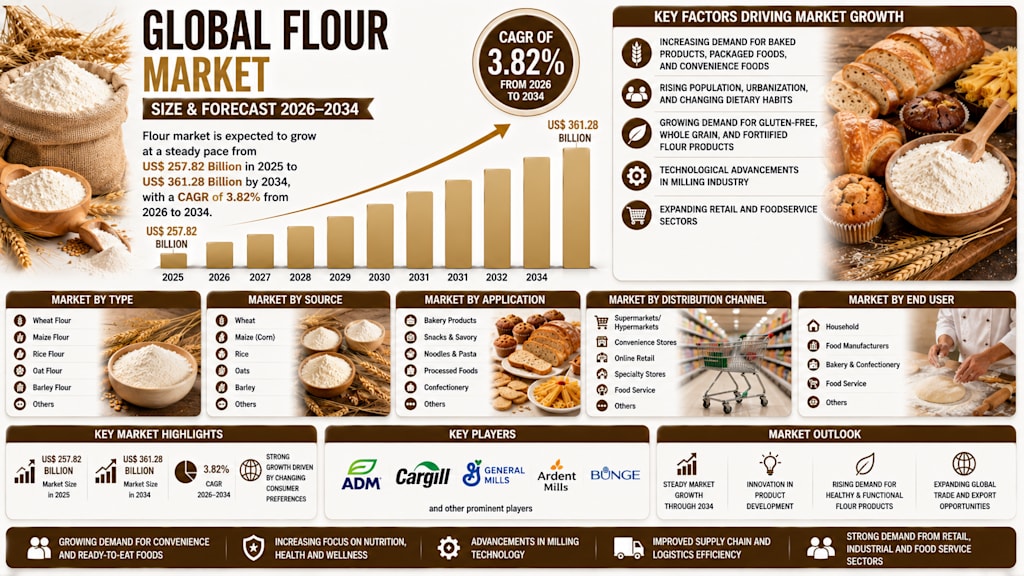
According to Renub Research, the Global Flour Market is expected to grow from US$ 257.82 billion in 2025 to US$ 361.28 billion by 2034, registering a compound annual growth rate (CAGR) of 3.82% between 2026 and 2034. Rising demand for bakery products, packaged foods, convenience meals, specialty flours, and expanding foodservice industries are among the primary factors driving market growth.
As food consumption patterns continue evolving worldwide, flour is expected to remain one of the most important ingredients supporting the global food industry.
Understanding the Importance of Flour
Flour is a finely ground powder produced from grains, seeds, roots, or nuts and serves as a fundamental ingredient in food preparation.
Wheat flour remains the most widely used variety, forming the basis for bread, cakes, pastries, cookies, noodles, pasta, and numerous baked goods.
Other important flour varieties include rice flour, maize flour, barley flour, oat flour, almond flour, and specialty blends designed for specific dietary needs.
Flour provides carbohydrates, proteins, vitamins, minerals, and dietary fiber, making it an important source of nutrition in many cultures.
Its versatility allows manufacturers and home cooks to create a vast range of food products with different textures, flavors, and nutritional profiles.
Because of its affordability, accessibility, and adaptability, flour remains a critical ingredient within both household kitchens and industrial food production facilities worldwide.
Rising Demand for Bakery Products Is Fueling Growth
One of the strongest drivers of the flour market is the growing global demand for bakery products.
Bread, cakes, biscuits, pastries, muffins, cookies, and other baked goods continue enjoying widespread popularity across developed and emerging economies alike.
Urbanization and changing lifestyles have increased demand for ready-to-eat and easy-to-prepare foods, encouraging consumers to purchase packaged bakery products more frequently.
Fast-food restaurants, coffee chains, bakeries, and convenience stores have further expanded the consumption of flour-based products.
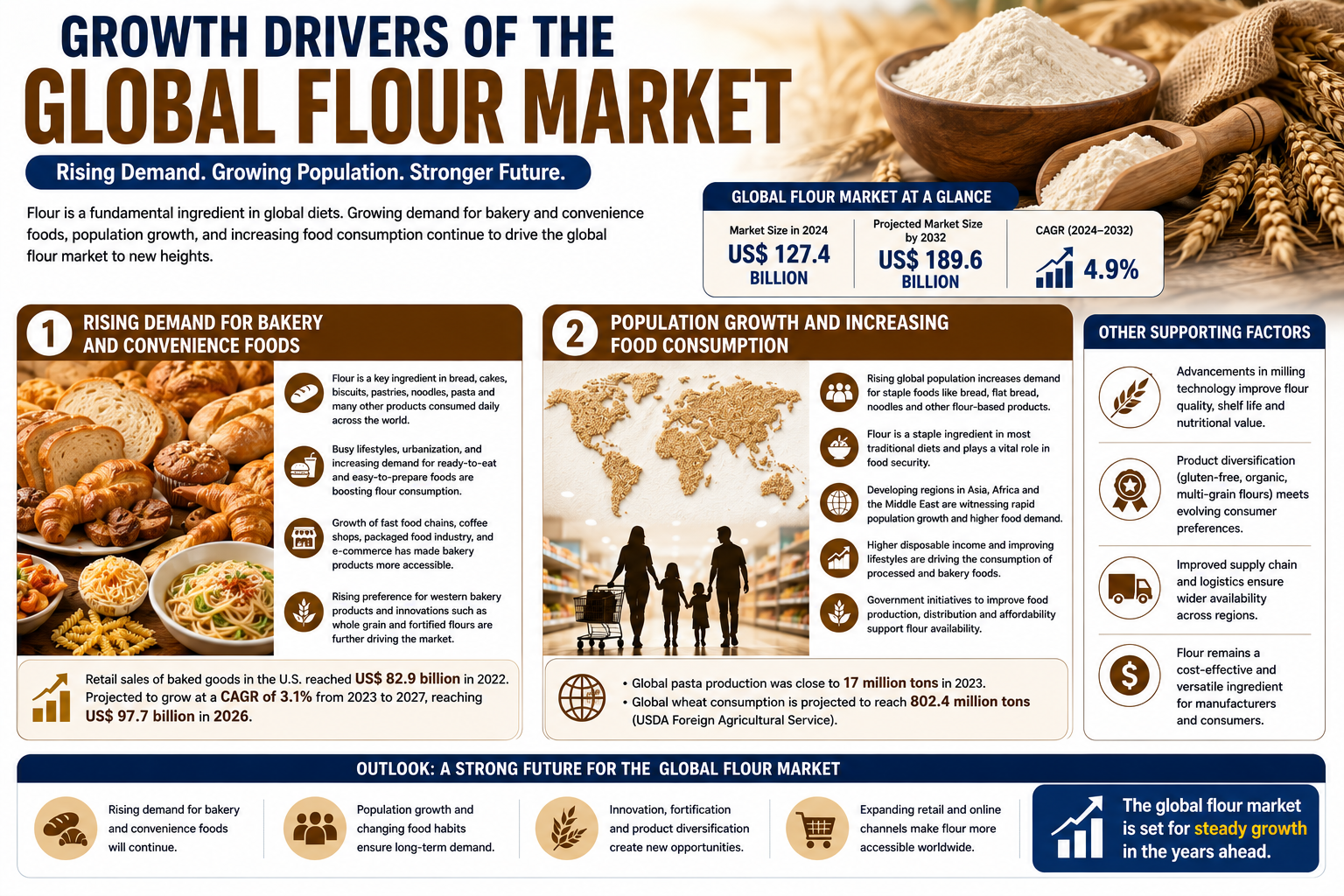
According to Agriculture and Agri-Food Canada, retail sales of baked goods in the United States reached approximately US$82.9 billion in 2022 and are projected to continue growing steadily in the coming years.
The increasing popularity of Western-style bakery products in developing countries is also creating new growth opportunities for flour manufacturers.
As bakery consumption continues rising worldwide, demand for flour is expected to remain strong.
Population Growth and Food Security Continue Supporting Demand
Global population growth remains one of the most important long-term drivers of flour consumption.
As populations expand, demand for staple foods such as bread, noodles, flatbreads, pasta, and other flour-based products naturally increases.
Flour serves as a fundamental ingredient in many traditional diets and plays a vital role in ensuring food security across regions.
Developing countries in Asia, Africa, and the Middle East are experiencing particularly strong population growth, creating additional demand for affordable and accessible food products.
Rising disposable incomes are also encouraging consumers to diversify dietary habits and increase consumption of processed and packaged foods.
According to the USDA Foreign Agricultural Service, global wheat consumption is projected to reach approximately 802.4 million tons, highlighting the immense scale of flour-related food production worldwide.
As food demand continues growing, flour will remain a cornerstone ingredient supporting global nutrition.
Health-Oriented Flour Products Are Gaining Popularity
Consumer preferences are shifting toward healthier and more nutritious food options.
This trend has significantly increased demand for specialty flour products such as whole wheat flour, oat flour, almond flour, rice flour, and fortified flour varieties.
Many consumers are becoming more aware of the nutritional differences between refined and whole-grain products.
Whole wheat flour, in particular, has gained popularity because it retains more fiber, vitamins, and minerals than refined alternatives.
Gluten-free products are also experiencing substantial growth among consumers with celiac disease, gluten sensitivities, or broader wellness goals.
Manufacturers increasingly develop fortified flour products enriched with vitamins, minerals, and other nutrients to address nutritional deficiencies.
The growing focus on healthy eating habits is expected to remain a major growth driver for specialty flour segments.
Innovation Is Transforming Flour Production
Technological advancements within the milling industry are helping manufacturers improve efficiency, quality, and sustainability.
Modern milling technologies enable producers to achieve greater consistency, enhanced nutritional retention, and improved food safety standards.
Companies are also investing in research to develop specialty flour blends tailored to specific dietary requirements and food applications.
In November 2023, King Arthur Baking Company launched a whole wheat flour blend made from 100% regeneratively grown grains, reflecting growing consumer interest in sustainability and nutrient-rich ingredients.
These innovations help manufacturers address evolving consumer expectations while maintaining competitiveness within a dynamic marketplace.
As technology continues advancing, flour producers are expected to benefit from improved production capabilities and broader product portfolios.
Wheat Flour Remains the Dominant Segment
Wheat flour continues to dominate the global flour market due to its versatility, affordability, and extensive use across food categories.
It serves as the primary ingredient in bread, pastries, cakes, biscuits, pasta, noodles, and numerous processed foods.
The unique gluten structure of wheat flour provides elasticity, texture, and volume that are difficult to replicate with many alternative flours.
Consumers and manufacturers alike value wheat flour for its consistency, functionality, and widespread availability.
Food manufacturers continue introducing fortified and whole wheat versions to align with health-conscious consumer preferences.
Because wheat-based foods remain staples in many cultures, wheat flour is expected to maintain its dominant position throughout the forecast period.
Rice Flour Is Benefiting from Gluten-Free Demand
Rice flour has emerged as one of the fastest-growing specialty flour segments.
Made from finely milled rice, it is widely used in gluten-free bakery products, snacks, noodles, and processed foods.
Consumers increasingly view rice flour as a healthier alternative because it is naturally gluten-free and easily digestible.
Its popularity is particularly strong among individuals with gluten intolerance and those following specialized dietary plans.
Food manufacturers continue incorporating rice flour into product formulations to meet growing demand for allergen-friendly foods.
As gluten-free product categories continue expanding globally, rice flour is expected to experience sustained growth.
Bread and Bakery Applications Continue Leading Consumption
The bread and bakery products segment represents one of the largest application areas within the flour market.
Flour serves as the foundational ingredient for bread, cakes, pastries, cookies, muffins, crackers, and numerous baked goods.
Urban lifestyles and increasing demand for convenient food options continue driving bakery consumption worldwide.
The expansion of cafes, bakeries, coffee chains, and quick-service restaurants has further increased demand for flour-based products.
Health-conscious consumers are also creating opportunities for whole-grain, high-protein, and fortified bakery products.
As bakery products remain integral to daily diets in many regions, this application segment is expected to continue driving substantial flour demand.
Snack Foods Are Creating New Growth Opportunities
The growing popularity of snack foods is creating additional opportunities within the flour industry.
Products such as wafers, crackers, biscuits, and packaged snacks rely heavily on specialized flour formulations to achieve desired textures and flavors.
Consumers increasingly seek convenient snack options that fit busy lifestyles and provide satisfying eating experiences.
Food manufacturers continue introducing innovative snack products featuring improved nutritional profiles, unique flavors, and premium ingredients.
Rising disposable incomes and evolving consumption habits are further supporting growth in this segment.
As global snack consumption continues increasing, flour demand within this category is expected to remain strong.
Supermarkets Remain a Critical Distribution Channel
Supermarkets continue serving as one of the most important sales channels for flour products worldwide.
These retail environments provide consumers with access to a wide range of flour varieties, brands, package sizes, and price points.
Consumers benefit from the ability to compare products, evaluate quality, and take advantage of promotional offers.
Modern supermarkets also ensure proper storage conditions, helping maintain product freshness and safety.
The continued expansion of retail infrastructure in emerging markets is increasing flour accessibility and supporting market growth.
As organized retail continues developing globally, supermarkets are expected to remain a dominant distribution channel.
Online Sales Are Expanding Rapidly
Digital commerce is increasingly influencing how consumers purchase food products, including flour.
Online grocery platforms provide convenience, product variety, customer reviews, and home delivery services.
Consumers can access specialty and premium flour products that may not always be available in local stores.
Health-conscious shoppers particularly benefit from online platforms that offer detailed product information and ingredient transparency.
The growth of e-commerce and digital grocery services is creating new opportunities for flour manufacturers to reach broader consumer audiences.
As online food shopping continues becoming mainstream, digital channels are expected to play an increasingly important role in market expansion.
Raw Material Price Volatility Remains a Major Challenge
Despite favorable growth prospects, the flour industry faces several significant challenges.
One of the most important concerns is the volatility of grain prices, particularly wheat.
Weather conditions, droughts, floods, climate change, geopolitical tensions, and trade disruptions can significantly affect grain production and availability.
Rising fuel and transportation costs can further increase production expenses throughout the supply chain.
These fluctuations create uncertainty for manufacturers and can result in higher prices for consumers.
Managing supply chain risks while maintaining profitability remains a major challenge for flour producers worldwide.
Health Concerns About Refined Flour Are Influencing Consumer Behavior
Growing awareness regarding nutrition and wellness is changing consumer attitudes toward refined flour products.
Many health-conscious consumers are reducing consumption of highly processed foods and seeking alternatives perceived as healthier.
Concerns related to obesity, diabetes, digestive health, and nutrient deficiencies have increased interest in whole-grain and specialty flour products.
The popularity of gluten-free and low-carbohydrate diets has further encouraged exploration of alternative ingredients.
Manufacturers must continue adapting product portfolios to align with changing dietary preferences and health trends.
Companies that successfully innovate within health-focused categories are likely to benefit from evolving consumer demand.
Regional Market Insights
United States
The United States flour market benefits from strong demand across bakery, food processing, and foodservice industries. Growing interest in whole wheat, organic, gluten-free, and fortified flour products continues driving innovation. In March 2025, King Arthur Baking Company introduced a new Buttermilk Biscuit Flour Blend to expand its premium baking portfolio.
United Kingdom
The United Kingdom flour market is supported by strong consumption of bread, pastries, biscuits, and home-baking products. Growing demand for organic, whole-grain, and specialty flours reflects increasing consumer interest in health-conscious food choices.
India
India remains one of the world's largest flour-consuming nations due to widespread consumption of wheat-based staples such as roti, chapati, and naan. Rising demand for packaged, fortified, and branded flour products continues driving market growth.
Saudi Arabia
Saudi Arabia's flour market continues expanding due to strong demand for bread, bakery products, and convenience foods. Investments in milling infrastructure and production capacity are supporting domestic market development and food security initiatives.
Competitive Landscape
The global flour market remains highly competitive, with leading companies focusing on product innovation, nutritional enhancement, sustainability, and operational efficiency.
Major market participants include King Arthur Flour Company, Associated British Foods Plc., Hindustan Unilever Ltd., Archer Daniels Midland Company, Conagra Foods Inc., Cargill Incorporated, ITC Ltd., and General Mills Inc.
These organizations continue investing in specialty flour development, advanced milling technologies, fortified products, and sustainable sourcing practices to strengthen their competitive positions.
Strategic product launches, partnerships, and investments in health-oriented flour solutions are expected to remain important growth strategies throughout the forecast period.
Final Thoughts
The global flour market continues serving as a fundamental pillar of the food industry, supporting countless products consumed daily across every region of the world. Growing demand for bakery products, convenience foods, and specialty flour varieties is creating new opportunities for manufacturers while driving innovation throughout the value chain.
At the same time, health-conscious consumers are encouraging the development of whole-grain, fortified, gluten-free, and functional flour products that align with evolving dietary preferences.
With the market projected to grow from US$ 257.82 billion in 2025 to US$ 361.28 billion by 2034, flour will remain an indispensable ingredient within global food systems. Companies that successfully balance nutrition, convenience, innovation, and sustainability will be best positioned to capture future growth opportunities in this essential market.
About the Creator
Enjoyed the story? Support the Creator.
Subscribe for free to receive all their stories in your feed.
Comments
There are no comments for this story
Be the first to respond and start the conversation.