
Global Electric Wheelchair Market to Reach US$8.53 Billion by 2033 as Smart Mobility Solutions Enhance Independence
The growing elderly population, increasing prevalence of mobility disabilities, technological innovations, and expanding healthcare awareness are driving strong growth in the global electric wheelchair market.

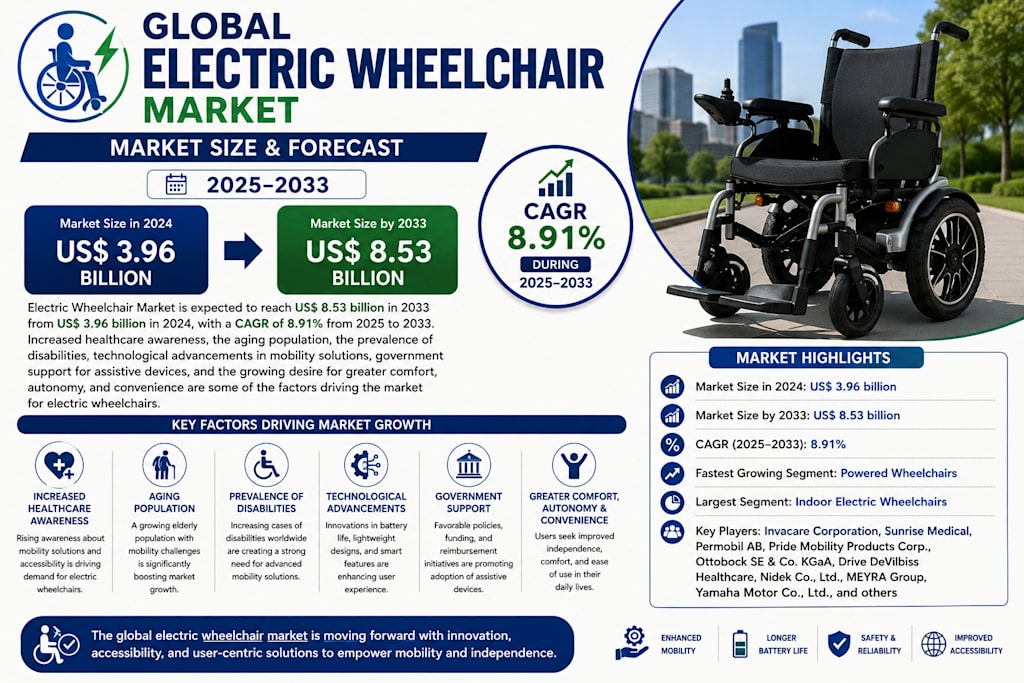
Electric Wheelchairs Are Transforming Mobility and Independence
Mobility is essential for maintaining independence, confidence, and quality of life. For millions of people living with physical disabilities, neurological disorders, injuries, or age-related mobility limitations, electric wheelchairs have become life-changing assistive devices that provide greater freedom and convenience.
Unlike traditional manual wheelchairs, electric wheelchairs use battery-powered motors to enable effortless movement with minimal physical effort. Continuous advances in battery technology, intelligent control systems, lightweight materials, and personalized designs are making these mobility devices increasingly comfortable, reliable, and accessible.
According to the latest market outlook, the Global Electric Wheelchair Market is projected to grow from US$3.96 billion in 2024 to US$8.53 billion by 2033, registering a compound annual growth rate (CAGR) of 8.91% during 2025–2033. Rising healthcare awareness, an aging global population, increasing disability prevalence, and continuous technological innovation are expected to drive long-term market expansion.
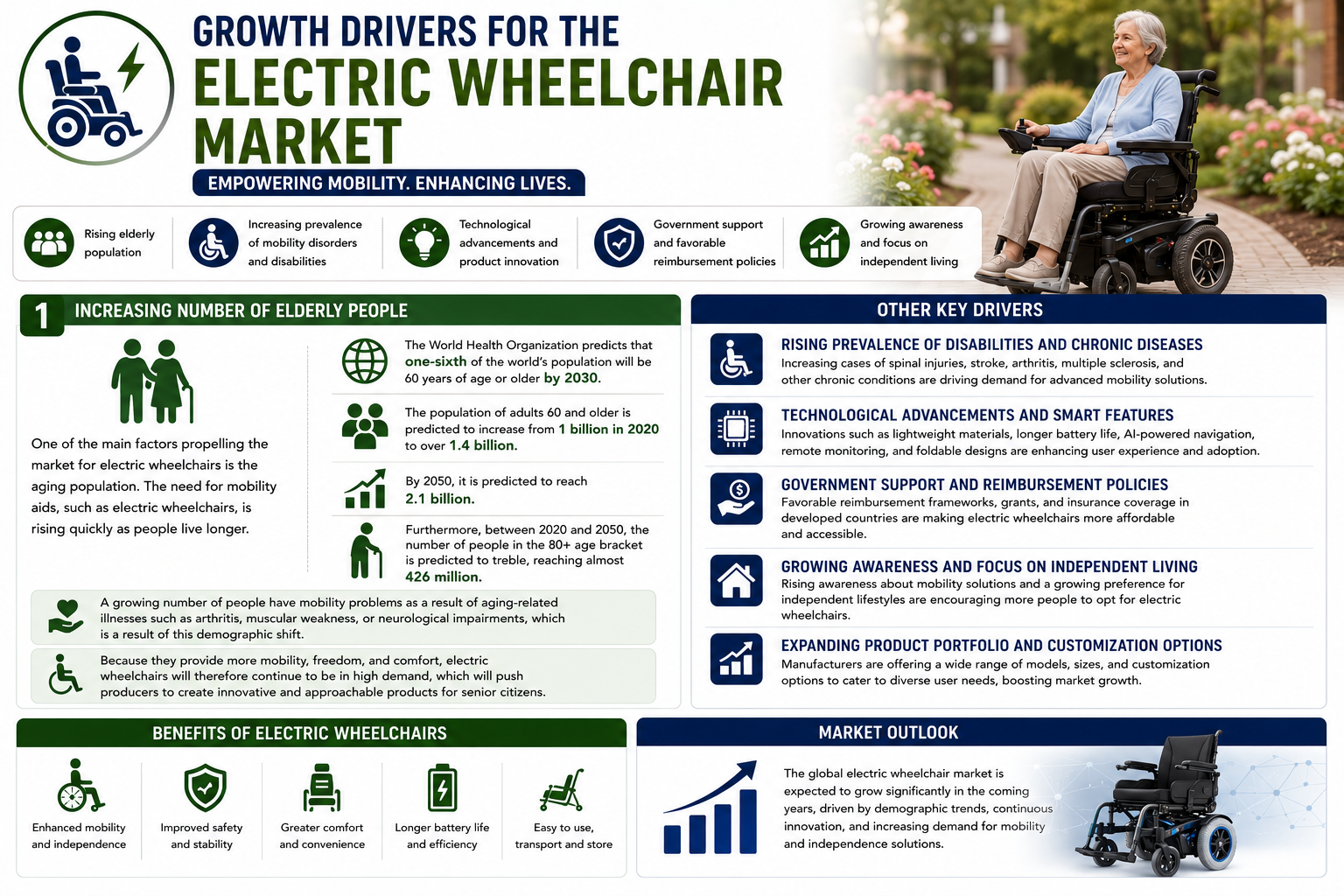
Electric Wheelchairs Improve Everyday Mobility
Electric wheelchairs, also known as powered or motorized wheelchairs, are mobility devices designed to assist individuals who experience difficulty walking or cannot operate manual wheelchairs independently.
These devices use rechargeable batteries to power electric motors, allowing users to navigate with minimal effort using joysticks, touch controls, switches, or other customized control systems.
Modern electric wheelchairs include features such as adjustable seating, headrests, pressure-relief cushions, reclining mechanisms, suspension systems, and programmable driving controls that improve comfort and safety.
They are widely used in hospitals, rehabilitation centers, long-term care facilities, and home healthcare settings.
Aging Population Continues Driving Market Growth
One of the strongest factors supporting market expansion is the rapidly growing elderly population.
As life expectancy continues increasing worldwide, more people experience age-related conditions including arthritis, osteoporosis, muscular weakness, Parkinson's disease, and neurological disorders that reduce mobility.
Electric wheelchairs enable older adults to maintain independence while performing everyday activities with greater confidence and comfort.
The growing number of individuals aged 60 years and above is expected to significantly increase long-term demand for advanced mobility solutions across both developed and emerging economies.
Technological Innovation Is Transforming Mobility
Rapid technological progress continues reshaping the electric wheelchair industry.
Manufacturers are introducing lightweight frames constructed from aluminum alloys and carbon fiber that improve portability without compromising durability.
Advances in lithium-ion battery technology provide longer operating ranges, faster charging, and reduced maintenance compared with traditional batteries.
Modern wheelchairs increasingly incorporate smart navigation, obstacle detection, Bluetooth connectivity, smartphone applications, programmable driving modes, and voice-controlled operation.
Artificial intelligence and intelligent sensor technologies are also improving safety by assisting users during navigation across complex environments.
Growing Healthcare Awareness Supports Adoption
Healthcare awareness continues increasing worldwide as governments and healthcare professionals emphasize rehabilitation, disability inclusion, and independent living.
Patients and caregivers increasingly recognize the advantages of electric wheelchairs in improving mobility, reducing caregiver dependence, and enhancing quality of life.
Hospitals, rehabilitation specialists, and physiotherapists frequently recommend powered mobility devices for individuals with long-term mobility impairments.
Growing awareness regarding assistive technologies continues encouraging wider adoption across healthcare systems.
Government Support Improves Accessibility
Government programs remain an important contributor to market growth.
Many countries provide financial assistance, insurance reimbursement, disability benefits, and healthcare funding that help eligible individuals purchase electric wheelchairs.
Policies promoting accessibility, inclusive infrastructure, and disability rights continue strengthening demand for advanced mobility solutions.
Public healthcare systems increasingly recognize powered mobility devices as essential components of rehabilitation and long-term patient care.
Center Wheel Drive Models Lead the Market
Center wheel drive electric wheelchairs remain among the most popular product categories.
Their tight turning radius provides excellent maneuverability within indoor environments such as homes, hospitals, rehabilitation centers, and assisted living facilities.
Improved stability and precise navigation make these models particularly suitable for users requiring daily mobility in confined spaces.
Continuous design improvements continue enhancing comfort, safety, and driving performance.
Standing Electric Wheelchairs Expand Independence
Standing electric wheelchairs represent one of the most innovative developments within the industry.
These advanced devices enable users to safely transition from sitting to standing positions, improving circulation, reducing pressure injuries, strengthening bones, and facilitating social interaction at eye level.
Standing capability also assists users while performing everyday activities including cooking, shopping, and reaching elevated objects.
Although these models remain relatively expensive, increasing awareness of their health benefits continues supporting market growth.
Home Care Continues Expanding
Home healthcare has become one of the fastest-growing end-user segments for electric wheelchairs.
Many individuals prefer receiving long-term care within their own homes rather than institutional settings.
Electric wheelchairs allow users to maintain independence while reducing reliance on family caregivers and healthcare professionals.
The increasing popularity of home-based rehabilitation and remote healthcare services further strengthens demand for personalized mobility solutions.
Hospitals Remain Major End Users
Hospitals continue representing an important market for electric wheelchairs.
Healthcare providers utilize powered mobility devices during patient rehabilitation, postoperative recovery, neurological care, and long-term treatment of mobility disorders.
Modern hospital environments increasingly prioritize patient comfort and accessibility, encouraging continued investment in advanced mobility equipment.
Growing healthcare expenditure worldwide supports sustained demand from hospitals and rehabilitation facilities.
Regulatory Requirements Present Challenges
Despite strong market growth, manufacturers face strict regulatory requirements before introducing new electric wheelchair models.
Medical device approvals require extensive safety testing, quality assurance, and compliance with national and international healthcare standards.
Differences in regulatory frameworks across countries may delay product launches while increasing development costs.
Manufacturers continue investing heavily in regulatory compliance to ensure patient safety and global market access.
Maintenance Costs Remain a Concern
Electric wheelchairs require regular maintenance to ensure reliable performance.
Batteries, motors, electronic systems, wheels, and control units require periodic servicing and occasional replacement.
Specialized maintenance may be expensive and difficult to access in rural or underserved regions.
Manufacturers continue improving component reliability while expanding service networks to improve customer support and reduce ownership costs.
Regional Markets Continue Supporting Growth
The United States remains one of the world's largest electric wheelchair markets due to advanced healthcare infrastructure, high disability awareness, favorable reimbursement programs, and strong adoption of assistive technologies.
Germany continues leading the European market through its aging population, well-developed healthcare system, and government support for mobility assistance.
India is emerging as a rapidly expanding market driven by improving healthcare access, increasing disability awareness, urbanization, and government initiatives supporting rehabilitation services.
Saudi Arabia continues strengthening its market through expanding healthcare investment, improved accessibility programs, and growing awareness regarding assistive technologies for individuals with mobility impairments.
Together, these regional markets continue driving global demand for electric wheelchairs.
Innovation Will Shape the Future of Mobility
The future of electric wheelchairs will be defined by artificial intelligence, robotics, lightweight engineering, and connected healthcare technologies.
Future models are expected to include autonomous navigation, collision avoidance, smart sensors, voice assistants, Internet of Things (IoT) connectivity, and personalized mobility settings powered by machine learning.
Battery improvements will further increase travel range while reducing charging time.
Manufacturers are also exploring environmentally sustainable materials and energy-efficient technologies that improve product performance while reducing environmental impact.
Final Thoughts
The global electric wheelchair market is entering a period of sustained growth as technological innovation, healthcare awareness, and demographic changes continue expanding demand for advanced mobility solutions.
The projected increase from US$3.96 billion in 2024 to US$8.53 billion by 2033, supported by an 8.91% CAGR, reflects the growing importance of powered mobility devices in improving independence, accessibility, and quality of life.
Although regulatory requirements, maintenance costs, and affordability remain important challenges, continuous advances in battery technology, intelligent controls, lightweight materials, and connected healthcare are expected to position electric wheelchairs as one of the most significant innovations in assistive mobility over the coming decade.
About the Creator
Enjoyed the story? Support the Creator.
Subscribe for free to receive all their stories in your feed.
Comments
There are no comments for this story
Be the first to respond and start the conversation.