
Global Electric Wheelchair Market Growth: How Technology, Aging Populations, and Healthcare Awareness Are Transforming Mobility Solutions
Rising demand for independence, smart mobility innovations, and expanding healthcare access are driving the future of the electric wheelchair industry

Mobility plays a critical role in maintaining independence, confidence, and quality of life. For millions of people living with mobility limitations, electric wheelchairs have become essential tools that enable greater freedom, comfort, and participation in daily activities.
Over the past decade, advances in assistive technology have transformed electric wheelchairs from basic mobility devices into sophisticated solutions featuring smart controls, enhanced battery performance, and customizable support systems. Combined with the rapid growth of aging populations and increased healthcare awareness, these innovations are fueling strong expansion in the global electric wheelchair market.
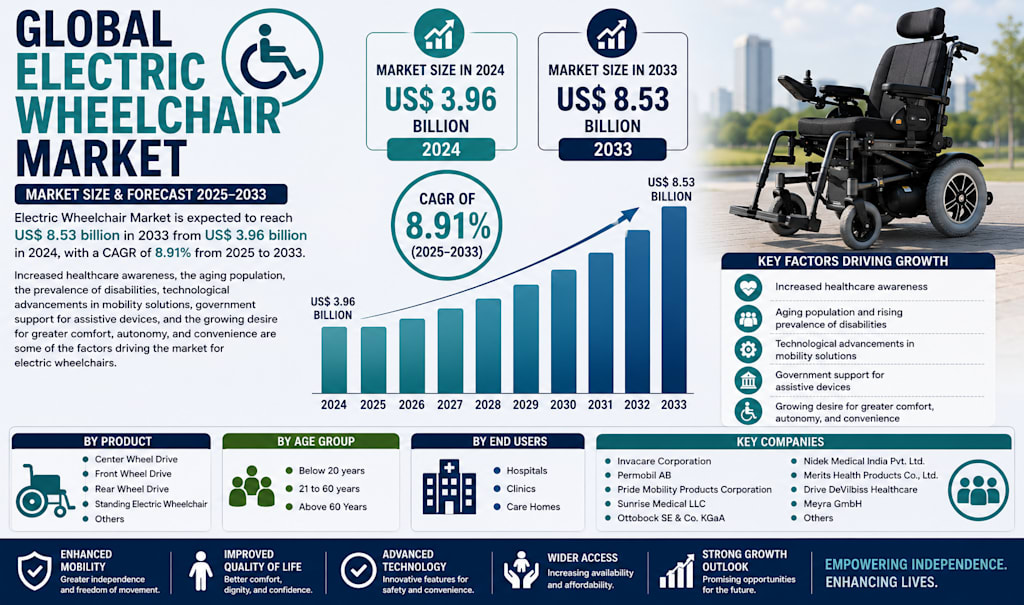
According to Renub Research, the global Electric Wheelchair Market is expected to grow from US$ 3.96 billion in 2024 to US$ 8.53 billion by 2033, registering a CAGR of 8.91% during the forecast period. Growing healthcare awareness, rising disability prevalence, technological innovation, government support programs, and increasing demand for independent living are among the major factors driving market growth.
As healthcare systems place greater emphasis on accessibility and patient-centered care, electric wheelchairs are becoming increasingly important in helping individuals lead active and independent lives.
Understanding Electric Wheelchairs
Electric wheelchairs, often referred to as motorized wheelchairs, are mobility devices powered by rechargeable batteries that assist individuals who experience difficulty walking or moving independently.
Unlike manual wheelchairs, electric wheelchairs use motors and electronic control systems to provide movement with minimal physical effort.
Key components typically include:
- Electric motors
- Rechargeable batteries
- Joystick controls
- Power base systems
- Braking mechanisms
- Cushioned seating
- Adjustable backrests and headrests
- Users can control movement through various interfaces, including:
- Joysticks
- Switch controls
- Voice commands
- Head movement systems
- Breath-actuated controls
- Alternative accessibility interfaces
These devices provide greater comfort and mobility across different terrains, including:
- Pavements
- Grass
- Gravel
- Indoor environments
- Uneven surfaces
In addition to mobility assistance, electric wheelchairs often support posture management, pressure relief, and overall physical well-being.
Aging Populations Are Driving Demand
One of the most significant growth drivers for the electric wheelchair market is the rapid expansion of the global elderly population.
As life expectancy continues increasing worldwide, larger numbers of individuals are experiencing age-related mobility challenges.
Common conditions affecting mobility among older adults include:
- Arthritis
- Osteoporosis
- Muscular weakness
- Joint degeneration
- Neurological disorders
- Balance impairments
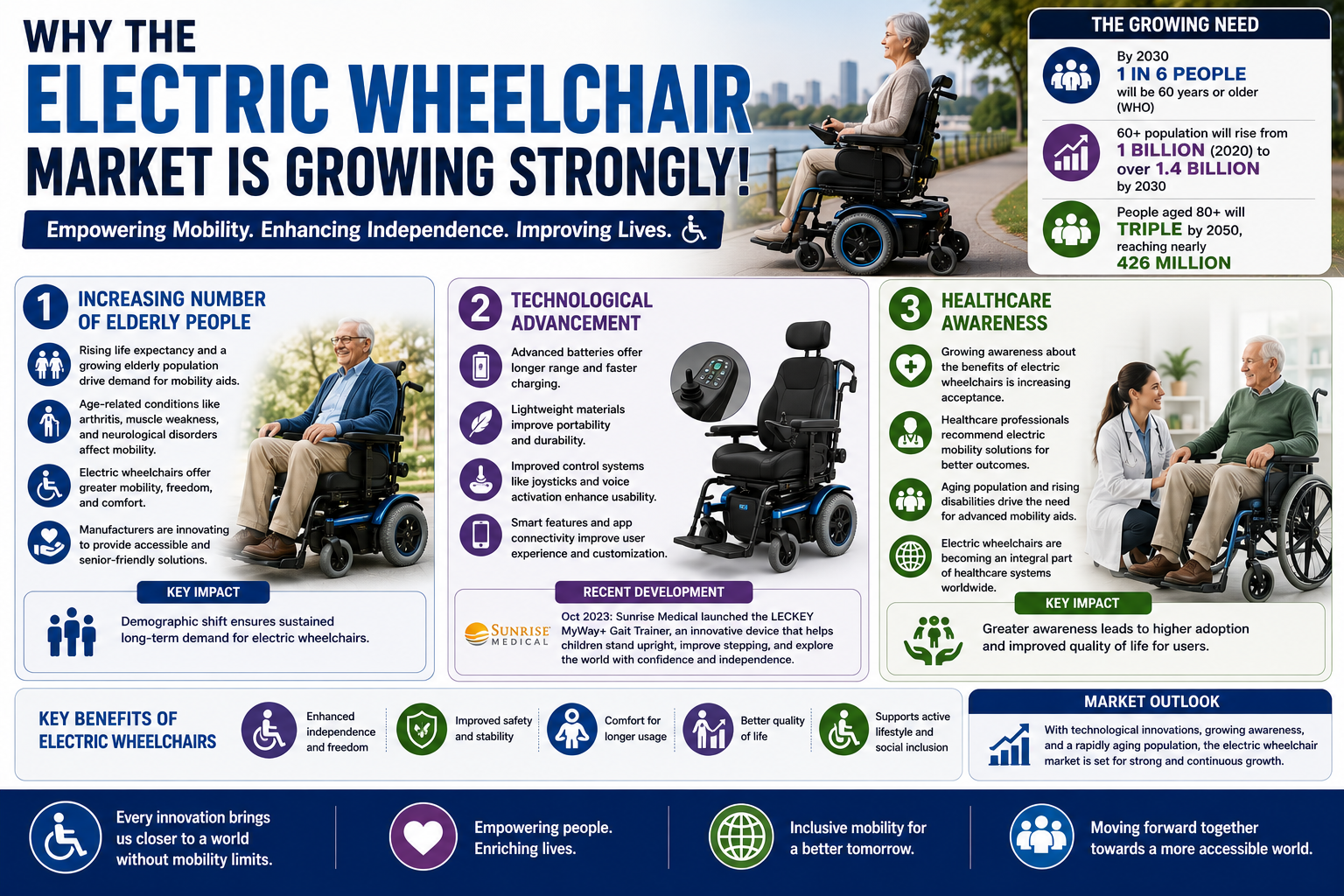
According to projections referenced in the report, the World Health Organization estimates that by 2030, approximately one-sixth of the global population will be aged 60 years or older. The number of individuals aged 60 and above is expected to increase from approximately 1 billion in 2020 to 1.4 billion by 2030 and reach 2.1 billion by 2050. Additionally, the population aged 80 years and older is projected to nearly triple during the same period.
These demographic changes are creating substantial demand for mobility solutions that allow older adults to maintain independence and continue participating in daily activities.
Electric wheelchairs provide a practical solution by reducing physical strain while enhancing mobility and safety.
Technological Advancements Are Revolutionizing Mobility
Technology continues to play a transformative role in the evolution of electric wheelchairs.
Modern devices are becoming smarter, lighter, and more adaptable to individual user needs.
Recent innovations include:
- Longer-lasting batteries
- Lightweight carbon-fiber frames
- Smart control systems
- App connectivity
- Voice-operated controls
- Enhanced safety features
Improved battery technologies are extending travel ranges while reducing charging times, allowing users greater freedom and convenience.
At the same time, lightweight materials make electric wheelchairs easier to transport and maneuver without compromising durability.
Advanced control systems are particularly beneficial for users with limited hand strength or complex mobility challenges. Alternative interfaces such as voice control, head movement tracking, and tongue-operated systems are helping broaden accessibility.
Smart connectivity features allow users and caregivers to monitor:
- Battery status
- Device performance
- Usage patterns
- Maintenance schedules
In October 2023, Sunrise Medical introduced the LECKEY MyWay+ Gait Trainer, a mobility solution designed to support children's independence and exploration through an open-frame design that encourages upright posture and movement.
Such innovations demonstrate how mobility technology continues expanding beyond traditional wheelchair applications.
Growing Healthcare Awareness Is Supporting Adoption
Increasing awareness regarding healthcare and rehabilitation is another major factor driving market expansion.
Patients, caregivers, and healthcare providers increasingly recognize the benefits of advanced mobility devices in improving:
- Quality of life
- Physical health
- Mental well-being
- Social participation
- Independence
Healthcare professionals frequently recommend electric wheelchairs for individuals with long-term mobility limitations because they can reduce physical strain and improve overall functionality.
The broader focus on patient-centered healthcare has also increased demand for assistive technologies that support independent living.
In many healthcare systems, rehabilitation programs now incorporate mobility devices as essential components of long-term care planning.
Growing awareness of disability inclusion and accessibility rights has further encouraged adoption across both developed and emerging markets.
Mobility Solutions Are Becoming More Personalized
Personalization is becoming a key trend within the electric wheelchair market.
Manufacturers increasingly offer customizable features that allow users to tailor devices according to their specific needs.
Common customization options include:
- Adjustable seating systems
- Specialized cushions
- Custom control interfaces
- Advanced positioning systems
- Terrain-specific wheels
- Enhanced suspension systems
These features help improve comfort and functionality while addressing individual mobility challenges.
Customized mobility solutions are particularly valuable for users with neurological disorders, muscular conditions, or complex rehabilitation requirements.
As consumer expectations continue evolving, personalization is expected to become an increasingly important competitive differentiator.
Government Support Is Expanding Market Access
Many governments around the world are implementing policies designed to improve accessibility and disability inclusion.
Support mechanisms often include:
- Reimbursement programs
- Healthcare subsidies
- Assistive technology funding
- Disability support initiatives
- Public healthcare coverage
These programs help reduce financial barriers and improve access to mobility solutions.
Government efforts are particularly important because electric wheelchairs can represent significant investments for many individuals and families.
The availability of reimbursement support often plays a decisive role in purchasing decisions.
Growing recognition of mobility as a fundamental aspect of health and social participation is encouraging policymakers to strengthen support systems for assistive technologies.
Home Care Is Emerging as a Major End-User Segment
While hospitals and clinics remain important markets, home care settings are becoming increasingly significant for electric wheelchair adoption.
Several factors are contributing to this trend:
- Aging populations
- Preference for aging in place
- Growth of home healthcare services
- Advances in portable mobility devices
Many individuals prefer receiving care within familiar home environments rather than institutional settings.
Electric wheelchairs help support this preference by enabling users to maintain mobility and independence while reducing reliance on caregivers.
The growing emphasis on home-based healthcare is expected to strengthen demand throughout the forecast period.
Challenges Facing the Industry
Despite strong growth prospects, the electric wheelchair market faces several important challenges.
Regulatory Complexity
Manufacturers must comply with varying medical device regulations across different countries.
Requirements related to:
- Product safety
- Quality assurance
- Certification
- Clinical testing
can increase costs and delay product launches. These regulatory differences often complicate international expansion efforts.
Maintenance and Repair Requirements
Electric wheelchairs contain sophisticated mechanical and electronic systems that require regular maintenance.
Common service needs include:
- Battery replacement
- Motor servicing
- Software updates
- Electronic component repairs
Maintenance costs can be significant, particularly for users living in areas with limited access to qualified service providers.
Affordability Concerns
Although technology is improving, advanced electric wheelchairs can still be expensive.
For many consumers, purchasing decisions depend heavily on:
- Insurance coverage
- Government assistance
- Financing options
- Reimbursement programs
Expanding affordability remains a critical priority for industry stakeholders.
Regional Markets Driving Growth
United States
The United States remains one of the largest electric wheelchair markets globally due to its advanced healthcare infrastructure and high disability prevalence. According to CDC data cited in the report, approximately 28.7% of U.S. adults live with some form of disability, while 12.2% experience serious mobility limitations.
Germany
Germany leads the European market due to its aging population and strong healthcare support systems. The country's large senior population continues driving demand for mobility assistance devices and rehabilitation technologies.
India
India is experiencing rapid market growth due to increasing healthcare awareness, expanding access to medical services, and government initiatives promoting disability inclusion. Urbanization and rising incomes are further supporting adoption.
Saudi Arabia
Saudi Arabia's market is expanding as healthcare investments increase and awareness of mobility assistance technologies grows. Government programs focused on disability support and healthcare modernization are creating favorable conditions for market development.
Final Thoughts
The global electric wheelchair market is entering a period of significant expansion driven by demographic changes, healthcare innovation, and increasing awareness of accessibility needs.
With the market projected to grow from US$ 3.96 billion in 2024 to US$ 8.53 billion by 2033, electric wheelchairs are becoming increasingly important tools for improving independence, mobility, and quality of life.
Advancements in battery technology, smart controls, lightweight materials, and personalized mobility solutions are helping redefine what electric wheelchairs can achieve.
Although challenges related to affordability, maintenance, and regulatory compliance remain, continued innovation and government support are creating strong momentum for future growth.
As societies around the world place greater emphasis on accessibility, inclusion, and independent living, electric wheelchairs will continue playing a vital role in empowering millions of people to navigate life with greater confidence and freedom.
About the Creator
Enjoyed the story? Support the Creator.
Subscribe for free to receive all their stories in your feed.
Comments
There are no comments for this story
Be the first to respond and start the conversation.