
Global Costume Jewelry Market Set to Reach US$ 56.04 Billion by 2033 as Affordable Fashion Takes Center Stage
From Fast Fashion to Sustainable Style, Costume Jewelry Is Transforming the Global Accessories Industry

Fashion has always been a reflection of personal identity, but in today's rapidly changing style landscape, consumers are increasingly choosing flexibility, affordability, and self-expression over traditional luxury. This shift is creating enormous opportunities for the global costume jewelry industry.
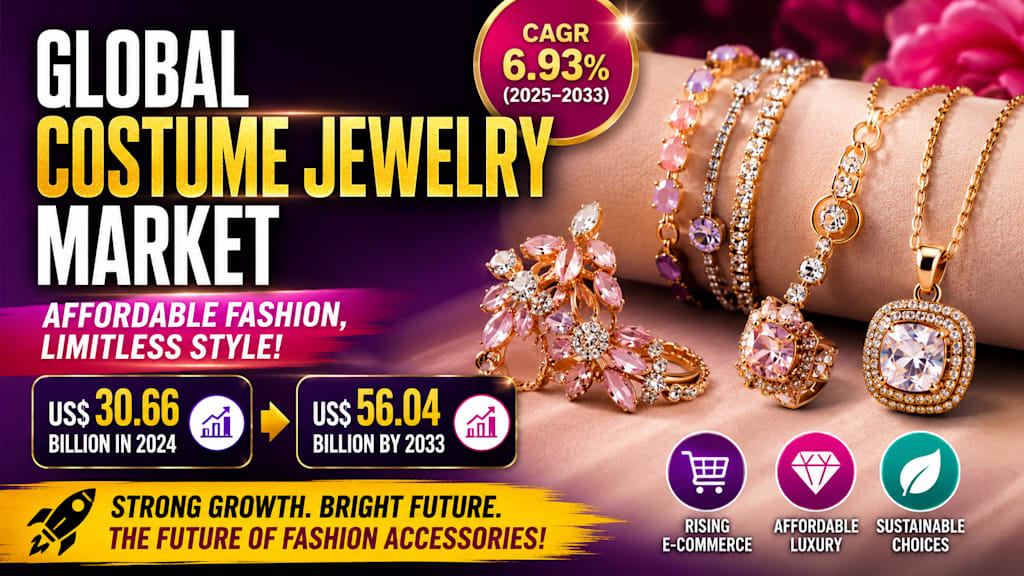
According to Renub Research, the Global Costume Jewelry Market was valued at US$ 30.66 Billion in 2024 and is projected to reach US$ 56.04 Billion by 2033, expanding at a CAGR of 6.93% during 2025–2033. Rising disposable incomes, evolving fashion preferences, growing online retail channels, and increasing demand for affordable luxury accessories are driving significant growth across both developed and emerging economies.
Costume jewelry, often referred to as fashion jewelry, has evolved far beyond its traditional perception as a low-cost alternative to precious metals and gemstones. Today, it represents a vibrant global industry that combines creativity, accessibility, and innovation while appealing to a broad consumer base seeking fashionable accessories without the premium price tag.
The Growing Popularity of Costume Jewelry
Modern consumers are no longer purchasing accessories solely for long-term investment purposes. Instead, many are prioritizing trend-driven products that allow them to update their style frequently without substantial financial commitments.
Costume jewelry is typically made from materials such as base metals, synthetic gemstones, glass, plastic, and other affordable components. While these materials may not possess the intrinsic value of gold or diamonds, they offer significant design flexibility and affordability.
The rise of fast fashion has further accelerated demand. Consumers increasingly seek jewelry that complements seasonal wardrobes, special occasions, and social media-inspired looks. This has encouraged manufacturers and designers to release fresh collections regularly, creating a dynamic and highly responsive marketplace.
Social media platforms have also transformed purchasing behavior. Fashion influencers, celebrities, and digital content creators showcase new jewelry styles daily, encouraging followers to experiment with accessories and adopt emerging trends quickly.
Fashion-Conscious Consumers Are Driving Market Expansion
One of the most significant growth drivers in the costume jewelry market is the increasing fashion awareness among younger generations.
Millennials and Generation Z consumers place considerable emphasis on personal expression and individuality. Unlike previous generations that often invested in a few expensive jewelry pieces, younger consumers prefer variety and versatility.
This demographic is highly influenced by fashion trends, celebrity endorsements, and social media content. As a result, costume jewelry provides an ideal solution by allowing frequent style updates at affordable prices.
The accessibility of fashion jewelry also encourages impulse purchases and repeat buying behavior. Consumers can experiment with bold designs, colors, and styles without the financial risk associated with luxury jewelry.
Brands are responding by launching innovative collections that incorporate contemporary aesthetics, sustainability principles, and customization options, further strengthening market demand.
E-Commerce Is Revolutionizing Jewelry Retail
The digital transformation of retail has significantly reshaped the costume jewelry industry.
Online shopping platforms provide consumers with unprecedented access to thousands of jewelry designs from brands across the globe. This convenience has helped eliminate geographical barriers while enabling smaller and emerging brands to compete effectively against established players.
Consumers benefit from:
Extensive product selection
Competitive pricing
Convenient delivery services
Customer reviews and ratings
Personalized recommendations
Social commerce has emerged as another powerful growth engine. Platforms such as Instagram, TikTok, Pinterest, and Facebook have become essential marketing channels where brands engage directly with customers.
Live shopping events, influencer partnerships, and user-generated content continue to boost consumer engagement and conversion rates. As digital adoption increases worldwide, online channels are expected to capture an even larger share of costume jewelry sales during the forecast period.
Affordable Luxury Is Becoming a Global Trend
Luxury-inspired fashion is no longer limited to high-income consumers.
The increasing availability of premium-looking costume jewelry has enabled consumers to achieve sophisticated styles at a fraction of the cost of fine jewelry. Advanced manufacturing techniques have improved the appearance and quality of fashion jewelry, making it difficult to distinguish some pieces from their luxury counterparts.
This trend aligns perfectly with changing consumer lifestyles.
Remote work arrangements, hybrid workplaces, and casual dress codes have increased demand for versatile accessories suitable for both professional and personal settings. Lightweight necklaces, elegant earrings, stackable rings, and minimalist bracelets are becoming everyday essentials.
Consumers are increasingly prioritizing value, style, and practicality over exclusivity, creating favorable conditions for continued market growth.
Sustainability Is Influencing Purchasing Decisions
Environmental awareness is reshaping the global fashion industry, including costume jewelry.
Modern consumers are becoming more conscious of how products are sourced, manufactured, and packaged. This growing awareness is encouraging brands to adopt sustainable business practices.
Key sustainability initiatives include:
Recycled metals and materials
Eco-friendly packaging
Ethical sourcing practices
Reduced production waste
Carbon footprint reduction programs
Brands that demonstrate environmental responsibility are gaining stronger customer loyalty and attracting socially conscious buyers.
As sustainability becomes a mainstream purchasing consideration, eco-friendly costume jewelry is expected to represent a growing share of the market.
Quality Concerns Remain a Challenge
Despite strong growth prospects, the costume jewelry industry faces several challenges.
One of the primary concerns involves product durability. Because costume jewelry is manufactured using lower-cost materials, issues such as tarnishing, discoloration, breakage, and skin irritation can sometimes occur.
Consumers increasingly expect fashion jewelry to balance affordability with quality. Brands that fail to meet these expectations risk negative reviews, reduced customer retention, and damage to their reputation.
To address these concerns, manufacturers are investing in improved coatings, hypoallergenic materials, and enhanced production standards to deliver better-performing products.
Fierce Competition Continues to Intensify
The costume jewelry market remains highly fragmented.
Thousands of brands, online retailers, independent designers, and fast-fashion companies compete for consumer attention. This intense competition often creates pricing pressure, reducing profit margins and increasing the need for continuous innovation.
Fashion trends evolve rapidly, requiring companies to constantly introduce new collections and refresh inventory. Successful brands must effectively combine:
Creative product development
Digital marketing strategies
Efficient supply chains
Customer engagement initiatives
Competitive pricing models
Those capable of adapting quickly to changing consumer preferences are likely to achieve sustained growth.
Earrings Continue to Lead Product Demand
Among all product categories, earrings remain one of the strongest-performing segments.
Consumers frequently purchase earrings to complement various outfits, occasions, and personal styles. The category benefits from affordability, versatility, and strong gifting potential.
Popular trends include:
Statement earrings
Ear cuffs
Minimalist studs
Layered ear jewelry
Mix-and-match collections
The growing popularity of ear stacking and personalized styling has further strengthened demand globally.
Rings Are Becoming Fashion Statements
Costume rings continue to gain popularity among consumers seeking bold and expressive accessories.
From simple bands to oversized cocktail rings, the category offers extensive variety. Social media trends and celebrity influence have significantly increased interest in stackable rings and themed collections.
The ability to mix and match multiple ring styles encourages repeat purchases while providing consumers with endless styling possibilities.
Offline Retail Maintains Its Importance
Although online shopping continues to expand, physical retail remains highly relevant within the costume jewelry market.
Many consumers still prefer to see, touch, and try jewelry before making purchasing decisions. Department stores, fashion boutiques, shopping malls, and specialty retailers continue to play a critical role in product discovery and customer engagement.
In-store experiences offer advantages such as:
Immediate product availability
Personalized assistance
Physical product evaluation
Seasonal promotions
Impulse purchase opportunities
As a result, omnichannel retail strategies are becoming increasingly important.
Men's Jewelry Segment Shows Strong Potential
Historically dominated by female consumers, the costume jewelry market is witnessing substantial growth in men's accessories.
Bracelets, chains, rings, necklaces, and earrings are becoming increasingly popular among male consumers, particularly younger demographics.
Changing fashion norms, celebrity influence, and growing acceptance of self-expression are contributing to the segment's expansion.
Brands are responding by introducing gender-neutral collections and dedicated men's product lines, creating new growth opportunities.
Emerging Markets Present Significant Opportunities
Countries such as India, Saudi Arabia, Brazil, Indonesia, and several Southeast Asian nations are emerging as key growth markets.
India, in particular, benefits from:
A large young population
Strong cultural affinity for jewelry
Rising disposable incomes
Growing e-commerce penetration
Demand for fusion fashion styles
Similarly, Saudi Arabia's expanding retail sector and evolving fashion preferences are supporting increased adoption of costume jewelry products.
These markets are expected to contribute significantly to global industry expansion throughout the forecast period.
10 Recent Developments from Leading Costume Jewelry Companies
1. Coach
In 2023, Coach launched its first dedicated fashion jewelry collection, "Coach Jewels," featuring necklaces, bracelets, and earrings made using recycled materials.
2. BaubleBar
BaubleBar announced its sustainability initiative aimed at ensuring all costume jewelry products are manufactured using ethical and sustainable methods by 2025.
3. Richline Group
Richline Group partnered with BOSS Logics in 2024 to develop technology-enabled jewelry collections and expand product innovation.
4. American Exchange Group
American Exchange Group acquired Danecraft in 2023, strengthening its jewelry portfolio and expanding its fashion accessory capabilities.
5. Louis Vuitton
Louis Vuitton continued expanding its fashion accessories segment through enhanced jewelry offerings integrated into luxury fashion collections.
6. Cartier
Cartier increased investments in digital engagement and omnichannel retail experiences to strengthen customer relationships globally.
7. Giorgio Armani
Giorgio Armani expanded its accessories portfolio through new seasonal jewelry collections inspired by contemporary fashion trends.
8. Yanbal
Yanbal accelerated direct-selling and digital commerce initiatives across Latin America to increase market penetration.
9. Sabika
Sabika continued launching handcrafted fashion jewelry collections emphasizing customization and independent consultant sales channels.
10. Stella & Dot
Stella & Dot expanded its social-selling model and influencer partnerships to drive customer acquisition and brand visibility.
Final Thoughts
The global costume jewelry industry is entering an exciting growth phase driven by affordability, fashion innovation, digital retail expansion, and changing consumer preferences.
As consumers increasingly prioritize self-expression, versatility, and value, costume jewelry is positioned to become an even more important segment of the global fashion accessories market.
With the market expected to grow from US$ 30.66 Billion in 2024 to US$ 56.04 Billion by 2033, brands that successfully combine trend responsiveness, sustainability, quality, and digital engagement will be best positioned to capture future opportunities.
About the Creator
Enjoyed the story? Support the Creator.
Subscribe for free to receive all their stories in your feed.
Comments
There are no comments for this story
Be the first to respond and start the conversation.