
Global Cookware Market Set to Reach USD 62.37 Billion by 2033 as Home Cooking, Health Awareness, and Smart Kitchen Trends Reshape Consumer Demand
Rising demand for toxin-free cookware, growing e-commerce penetration, and innovation in kitchen technology are driving sustained growth across residential and commercial cooking segments worldwide.

The global cookware market is undergoing a remarkable transformation as consumers increasingly prioritize healthier cooking habits, premium kitchen experiences, and technologically advanced cookware solutions. What was once viewed as a basic household necessity has evolved into a lifestyle-driven product category influenced by social media, culinary trends, sustainability concerns, and digital commerce.
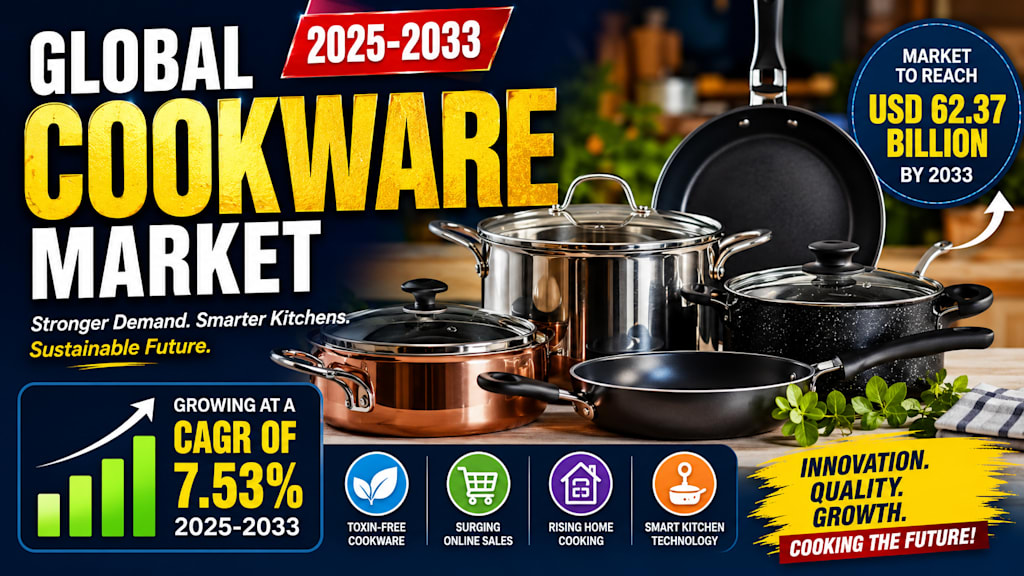
According to Renub Research, the Global Cookware Market was valued at USD 32.45 billion in 2024 and is projected to reach USD 62.37 billion by 2033, expanding at a CAGR of 7.53% during the forecast period from 2025 to 2033. Rising urbanization, increasing disposable incomes, growing health consciousness, and the popularity of home cooking are among the major factors supporting this growth trajectory.
As consumers spend more time preparing meals at home and experimenting with global cuisines, demand for durable, non-toxic, aesthetically pleasing, and technologically advanced cookware continues to rise across developed and emerging economies alike.
Home Cooking Culture Continues to Drive Global Demand
One of the strongest catalysts behind cookware market expansion is the sustained growth of home cooking worldwide.
Over the past few years, consumers have increasingly embraced cooking at home not only as a necessity but also as a hobby and wellness activity. Cooking shows, food bloggers, YouTube chefs, and social media influencers have significantly shaped consumer preferences, inspiring households to invest in premium cookware that delivers professional-quality cooking experiences.
The popularity of international cuisines has also fueled purchases of specialized cookware products such as woks, steamers, grill pans, baking dishes, and cast-iron skillets. Consumers are no longer satisfied with basic kitchen tools; instead, they seek cookware designed for specific cooking styles and culinary techniques.
Millennials and Generation Z consumers, in particular, view cooking as both a creative outlet and a lifestyle statement, encouraging purchases of visually appealing cookware collections that combine functionality with modern aesthetics.
Growing Preference for Healthy and Non-Toxic Cookware
Health awareness is becoming one of the most influential purchasing factors in the cookware industry.
Consumers today are increasingly concerned about chemical exposure from traditional cookware coatings. As a result, demand for ceramic-coated, stainless steel, cast iron, and toxin-free cookware continues to rise globally.
Products marketed as free from PFAS, PFOA, PTFE, lead, and cadmium are attracting significant attention among health-conscious households. Buyers are also evaluating cookware based on sustainability credentials, recyclability, and environmentally friendly manufacturing practices.
Manufacturers are responding by introducing innovative product lines featuring safer coatings, recycled materials, and eco-friendly packaging.
The trend aligns with broader consumer movements toward clean eating, organic food consumption, and healthier lifestyles. As awareness regarding food safety grows, cookware brands capable of demonstrating transparency and product safety are likely to gain a competitive advantage.
Digital Commerce Revolutionizing Cookware Sales
E-commerce has fundamentally changed how consumers research and purchase cookware products.
Online marketplaces offer extensive product variety, detailed specifications, customer reviews, video demonstrations, and price comparisons, empowering buyers to make informed purchasing decisions.
Direct-to-consumer strategies have become increasingly popular among cookware manufacturers seeking stronger customer engagement and higher profit margins. Many brands now leverage digital marketing campaigns, influencer collaborations, recipe content, and virtual cooking demonstrations to showcase product performance.
Major shopping events such as Black Friday, Prime Day, Singles' Day, and regional festive sales continue to generate significant cookware revenue worldwide.
The online channel also allows niche and premium brands to reach global audiences without relying heavily on traditional retail distribution networks.
Smart Kitchen Technology Creating New Opportunities
Technology integration is creating exciting opportunities within the cookware market.
Smart cookware products featuring temperature monitoring, connected sensors, app-based controls, and precision cooking capabilities are gaining traction among tech-savvy consumers.
As smart homes become more common, cookware manufacturers are exploring ways to connect traditional kitchen products with digital ecosystems. Consumers increasingly appreciate solutions that simplify meal preparation while delivering consistent cooking results.
The emergence of induction-compatible cookware has further expanded innovation opportunities, particularly as energy-efficient cooking appliances become more widespread globally.
Manufacturers investing in research and development are likely to benefit from growing consumer interest in intelligent kitchen solutions.
Raw Material Price Volatility Remains a Major Challenge
Despite strong growth prospects, cookware manufacturers face several challenges.
One of the most significant concerns is the volatility of raw material prices. Stainless steel, aluminum, specialty coatings, and other essential manufacturing inputs have experienced substantial price fluctuations in recent years.
Supply chain disruptions, geopolitical uncertainties, transportation costs, and trade regulations continue to affect production expenses.
Manufacturers often face difficult decisions between maintaining product quality and controlling retail prices. Excessive price increases may discourage consumers, especially in price-sensitive markets where affordability remains a key purchasing factor.
Companies must therefore focus on operational efficiency, strategic sourcing, and supply chain resilience to protect profitability.
Intensifying Competition Pressures Industry Participants
The cookware industry has become highly competitive, with numerous global, regional, and local brands competing for market share.
Established players continue to invest heavily in innovation, branding, and product differentiation. Meanwhile, emerging brands frequently enter the market with competitive pricing strategies and specialized offerings.
To remain relevant, manufacturers must continuously introduce new designs, materials, and features that resonate with evolving consumer preferences.
Brand loyalty remains important, but modern consumers are increasingly willing to experiment with new cookware brands if they perceive greater value, innovation, or sustainability benefits.
Stainless Steel Maintains Premium Market Position
Among all material categories, stainless steel cookware continues to enjoy strong global demand.
Consumers appreciate stainless steel products for their durability, corrosion resistance, non-reactive cooking properties, and professional appearance. Premium stainless steel cookware collections featuring multi-layer construction and aluminum cores offer superior heat distribution and cooking performance.
Professional chefs and serious home cooks frequently prefer stainless steel cookware because of its versatility and long service life.
As consumers increasingly view cookware as a long-term investment, premium stainless steel products are expected to maintain their strong position in the global market.
Aluminum Cookware Remains Popular for Everyday Cooking
Aluminum cookware continues to play a vital role in the global cookware landscape due to its affordability, lightweight design, and excellent heat conductivity.
Many households rely on aluminum cookware for daily cooking activities. Advances in anodized aluminum and ceramic-coated aluminum technologies have improved durability and enhanced consumer confidence.
Developing countries remain particularly important markets for aluminum cookware, where affordability often influences purchasing decisions.
The combination of performance and cost-effectiveness ensures continued demand across both residential and commercial applications.
Residential Segment Leads Global Consumption
Residential consumers account for the largest share of global cookware demand.
Factors such as urbanization, rising household formation, increasing homeownership, and changing lifestyle preferences continue to stimulate cookware purchases.
Wedding registries, housewarming gifts, seasonal promotions, and festive shopping periods create recurring sales opportunities for cookware manufacturers and retailers.
Consumers increasingly seek cookware collections that combine functionality, storage convenience, aesthetic appeal, and compatibility with modern cooking appliances.
The growth of apartment living and compact kitchens has also increased demand for multifunctional cookware products that maximize utility while minimizing storage requirements.
Regional Markets Demonstrate Diverse Growth Patterns
United States
The U.S. remains one of the world's most influential cookware markets. Consumers demonstrate strong demand for premium non-stick cookware, stainless steel products, cast iron cookware, and smart kitchen solutions.
Sustainability claims, American manufacturing heritage, and celebrity chef endorsements continue to influence purchasing decisions.
Germany
Germany represents a quality-focused cookware market characterized by strong demand for engineering excellence, sustainability, and long-lasting products.
German consumers often prioritize durability and functionality over aesthetics, making stainless steel and cast iron particularly popular.
India
India's cookware market is experiencing rapid expansion driven by urbanization, rising incomes, and changing consumer lifestyles.
Traditional cookware remains important, but growing demand for induction-compatible, non-stick, and toxin-free products is reshaping market dynamics.
The expansion of e-commerce platforms and increasing digital engagement are accelerating product adoption across urban and semi-urban regions.
Saudi Arabia
Saudi Arabia's cookware industry benefits from economic diversification initiatives, growing urban populations, and expanding hospitality sectors.
Demand for premium cookware continues to rise among affluent households and commercial food service operators.
The country's growing tourism sector is also contributing to increased commercial kitchen investments.
10 Recent Developments Shaping the Competitive Landscape
1. GoodCook Launches Healthy Ceramic Titanium Cookware Collection (October 2023)
GoodCook introduced a Healthy Ceramic Titanium-infused 10-piece cookware set manufactured using recycled aluminum and toxin-free coatings free from PFAS, PFOA, PTFE, lead, and cadmium.
2. Tefal Expands Healthy Cooking Portfolio (March 2022)
Tefal launched its "Day by Day Range" featuring non-stick cookware with coatings designed to meet growing consumer demand for healthier cooking solutions.
3. Heritage Steel Collaborates with Eater (October 2023)
Heritage Steel partnered with Eater to introduce premium cookware collections aimed at home chefs seeking restaurant-quality cooking experiences.
4. GEFU Enters UK Market Through BHETA Membership (March 2025)
German kitchenware specialist GEFU strengthened its international footprint by joining BHETA as part of its UK market expansion strategy.
5. Aequs and Tramontina Form Strategic Joint Venture (February 2025)
India-based Aequs partnered with Brazil's Tramontina to manufacture cookware and consumer products for domestic and international markets.
6. Groupe SEB Increases Saudi Arabia Presence (April 2024)
Groupe SEB acquired a 55% stake in Alesayi Household Appliances, strengthening its distribution network and market reach across Saudi Arabia.
7. TTK Prestige Expands Premium Kitchen Portfolio
TTK Prestige continues expanding its premium cookware offerings, focusing on induction-compatible and health-oriented kitchen solutions.
8. Hawkins Cookers Enhances Product Innovation
Hawkins continues investing in advanced pressure cooking and cookware technologies designed for modern Indian households.
9. Meyer Corporation Expands Sustainable Cookware Initiatives
Meyer Corporation has accelerated efforts toward environmentally responsible cookware manufacturing and sustainable material sourcing.
10. Fissler Strengthens Premium Product Development
Fissler continues introducing high-performance cookware innovations targeting professional chefs and premium home cooking enthusiasts.
Competitive Landscape
Leading manufacturers are competing through innovation, sustainability initiatives, strategic partnerships, digital marketing, and geographic expansion.
Key companies operating in the global cookware market include:
Werhahn Group
Groupe SEB
Meyer Corporation
Fissler
Target
Tramontina
TTK Prestige Ltd
Hawkins Cookers Limited
Farberware
Newell Brands Inc.
Final Thoughts
The global cookware market is entering a period of sustained expansion as consumer lifestyles, health priorities, and kitchen technologies continue to evolve. Rising home cooking trends, growing demand for toxin-free cookware, expanding online retail channels, and innovations in smart kitchen solutions are creating new opportunities for manufacturers worldwide.
With the market expected to grow from USD 32.45 billion in 2024 to USD 62.37 billion by 2033, companies that successfully combine product innovation, sustainability, digital engagement, and consumer trust will be best positioned to capture future growth. As cooking increasingly becomes a lifestyle activity rather than a daily chore, cookware will remain an essential and rapidly evolving category within the global consumer goods industry.
About the Creator
Enjoyed the story? Support the Creator.
Subscribe for free to receive all their stories in your feed.
Comments
There are no comments for this story
Be the first to respond and start the conversation.