
Global Chia Seeds Market Flourishes as Superfood Demand, Plant-Based Diets, and Functional Nutrition Trends Accelerate Growth
Rising health consciousness, growing adoption of vegan lifestyles, and expanding applications in food, beverages, and wellness products are driving remarkable growth across the global chia seeds industry.

In an era where consumers are increasingly focused on health, nutrition, and preventive wellness, few food ingredients have captured global attention quite like chia seeds. Once considered a traditional crop in Central and South America, chia seeds have evolved into one of the world's most recognized superfoods, finding their way into smoothies, breakfast bowls, baked goods, dietary supplements, and functional beverages.
Packed with omega-3 fatty acids, dietary fiber, protein, antioxidants, vitamins, and essential minerals, chia seeds have become a preferred choice for consumers seeking nutrient-dense foods that support active lifestyles. Their versatility, clean-label appeal, and compatibility with vegan, gluten-free, and plant-based diets have further strengthened their popularity across global markets.
As awareness of healthy eating continues expanding and manufacturers increasingly incorporate functional ingredients into their products, the chia seeds market is experiencing exceptional growth. From food and beverage innovations to personal care applications and nutritional supplements, chia seeds are emerging as a key ingredient in the modern wellness economy.
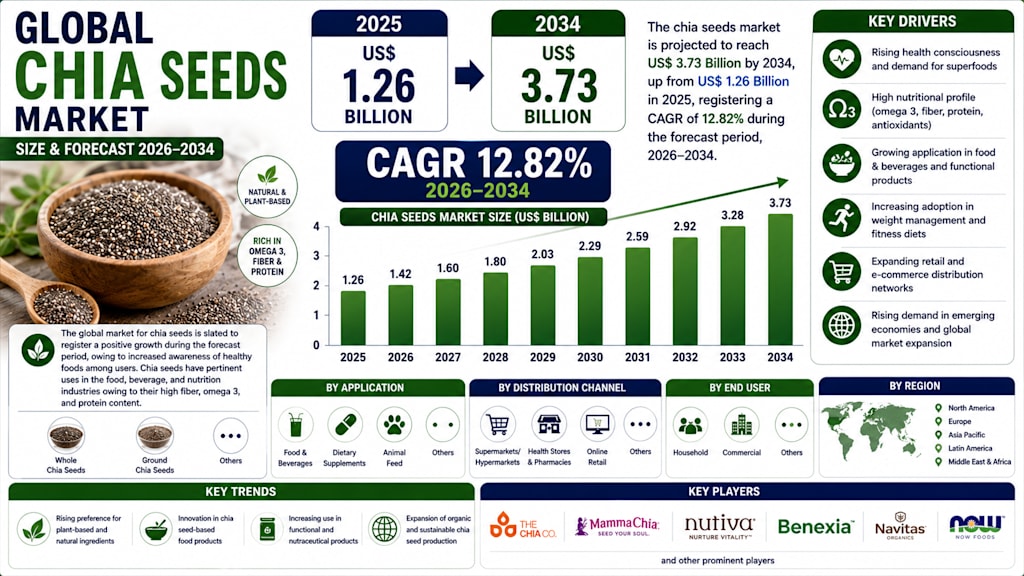
According to Renub Research, the Global Chia Seeds Market is expected to grow from US$1.26 billion in 2025 to US$3.73 billion by 2034, registering an impressive compound annual growth rate (CAGR) of 12.82% between 2026 and 2034. Rising demand for superfoods, expanding plant-based diets, and increasing applications across multiple industries are expected to fuel long-term market expansion.
Chia Seeds Have Become One of the World's Most Popular Superfoods
Chia seeds are tiny edible seeds derived from the Salvia hispanica plant, native to regions of Central and South America.
Despite their small size, chia seeds offer exceptional nutritional value, making them one of the most nutrient-dense foods available today.
They contain high concentrations of dietary fiber, omega-3 fatty acids, plant protein, antioxidants, calcium, magnesium, iron, and various vitamins.
When soaked in liquid, chia seeds absorb water and form a gel-like texture, allowing them to be incorporated into a wide range of food and beverage applications.
Their ability to support digestive health, heart health, blood sugar management, and weight control has contributed significantly to their growing global popularity.
Health Awareness Is Driving Consumer Demand
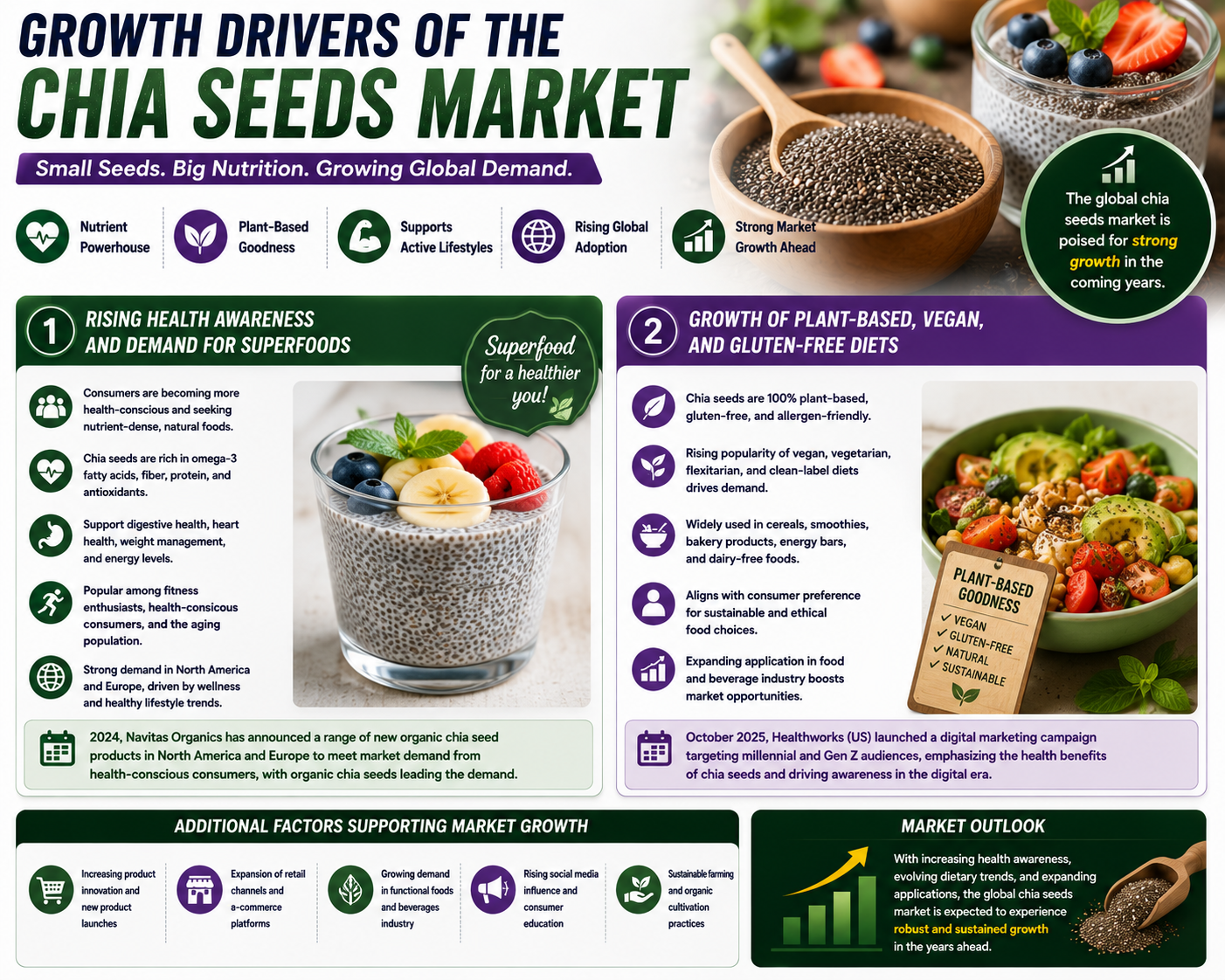
One of the strongest growth drivers for the chia seeds market is the increasing focus on health and wellness among consumers worldwide.
People are becoming more conscious of the relationship between nutrition and long-term health outcomes.
Growing concerns related to obesity, cardiovascular disease, digestive disorders, and lifestyle-related illnesses have encouraged consumers to seek foods with enhanced nutritional benefits.
Chia seeds are widely recognized as a natural source of essential nutrients that support overall wellness.
Health-conscious individuals increasingly incorporate chia seeds into daily diets as part of preventive health strategies and active lifestyle routines.
This trend is particularly evident among fitness enthusiasts, wellness-focused consumers, and aging populations seeking functional foods that promote healthy living.
Superfood Trends Continue Expanding Globally
The global superfood movement continues gaining momentum, creating substantial opportunities for chia seed producers and manufacturers.
Consumers increasingly seek ingredients that deliver concentrated nutritional benefits while remaining natural and minimally processed.
Chia seeds fit perfectly within this category due to their impressive nutrient profile and versatility.
Their reputation as a superfood has helped position them as a premium ingredient across numerous product categories.
As awareness of nutrition continues expanding through social media, healthcare professionals, and wellness influencers, demand for chia-based products is expected to remain strong.
Plant-Based Diets Are Accelerating Market Growth
The global shift toward plant-based nutrition has become one of the most influential trends shaping the food industry.
Consumers are increasingly adopting vegan, vegetarian, flexitarian, and plant-forward dietary patterns for health, environmental, and ethical reasons.
Chia seeds naturally align with these preferences because they are entirely plant-based, gluten-free, and allergen-friendly.
They provide a valuable source of protein and omega-3 fatty acids for individuals reducing or eliminating animal products from their diets.
As plant-based eating continues expanding globally, chia seeds are expected to play an increasingly important role in nutritional formulations and consumer diets.
Gluten-Free and Clean-Label Preferences Support Adoption
Consumer interest in gluten-free and clean-label products continues strengthening demand for chia seeds.
Many consumers actively seek foods with simple ingredient lists and recognizable components.
Chia seeds meet these expectations because they are natural, minimally processed, and free from gluten.
Food manufacturers increasingly use chia seeds in formulations targeting consumers with dietary restrictions or wellness-oriented lifestyles.
Their ability to improve nutritional content while supporting clean-label claims makes them highly attractive within today's food industry.
Food and Beverage Industry Remains the Largest Consumer
The food and beverage sector represents the largest application area within the chia seeds market.
Manufacturers use chia seeds in a wide range of products, including breakfast cereals, granola, bakery goods, yogurts, smoothies, energy bars, functional beverages, and ready-to-eat meals.
Their nutritional profile helps manufacturers enhance product value while appealing to health-conscious consumers.
Chia seeds also function as natural texturizers and stabilizers due to their ability to absorb liquid and form gel-like structures.
As demand for functional foods and nutrient-rich beverages continues increasing, food and beverage applications are expected to remain the primary growth engine for the market.
Functional Nutrition Is Creating New Opportunities
Consumers increasingly expect foods to deliver benefits beyond basic nutrition.
This trend has accelerated the growth of functional foods designed to support digestive health, cardiovascular wellness, immunity, and energy levels.
Chia seeds contribute fiber, protein, antioxidants, and omega-3 fatty acids, making them ideal ingredients for functional nutrition products.
Manufacturers continue incorporating chia seeds into wellness-focused formulations that address specific health goals.
As preventive healthcare and personalized nutrition gain popularity, functional food applications are expected to drive substantial future demand.
Nutraceutical Industry Embraces Chia-Based Ingredients
The nutraceutical sector has become an important contributor to market growth.
Chia seeds are increasingly used in dietary supplements, protein powders, meal replacements, and wellness products targeting health-conscious consumers.
Their rich nutritional composition supports a variety of health claims related to digestive function, cardiovascular health, and overall wellness.
Consumers seeking natural alternatives to synthetic ingredients often view chia-based products as attractive options.
This growing interest in nutrition-focused supplementation continues supporting expansion within the nutraceutical segment.
Chia Oil Emerges as a Premium Product Segment
The chia oil market is experiencing significant growth as consumers seek plant-based sources of omega-3 fatty acids.
Extracted from chia seeds, chia oil is rich in alpha-linolenic acid (ALA), a valuable omega-3 fatty acid associated with numerous health benefits.
The oil is widely used in dietary supplements, functional foods, and premium cooking applications.
Consumers seeking alternatives to fish oil are increasingly turning to chia oil because of its plant-based origin and nutritional value.
Although it remains a premium product, growing awareness of plant-based nutrition continues creating opportunities for chia oil manufacturers.
Whole Chia Seeds Continue Dominating the Market
Whole chia seeds represent one of the largest segments within the market.
Consumers often prefer whole seeds because they are minimally processed, easy to store, and highly versatile.
Whole chia seeds can be added directly to smoothies, cereals, salads, yogurts, and baked goods without extensive preparation.
Their long shelf life and convenience make them particularly attractive to consumers seeking simple ways to improve nutritional intake.
As demand for natural and minimally processed foods continues rising, whole chia seeds are expected to maintain strong market dominance.
Pre-Hydrated Chia Products Gain Popularity
Pre-hydrated chia products represent an emerging niche within the market.
These products contain chia seeds that have already absorbed liquid and formed their characteristic gel texture.
They are commonly used in ready-to-eat beverages, puddings, smoothies, and convenience foods.
The segment appeals particularly to busy consumers seeking healthy products that require no preparation.
Although shelf-life challenges remain, ongoing innovation in packaging and preservation technologies is helping expand market opportunities.
Personal Care Industry Creates Additional Growth Potential
The personal care and cosmetics industry is becoming an increasingly important consumer of chia-derived ingredients.
Chia oil and chia extracts are valued for their antioxidant content, moisturizing properties, and omega-3 fatty acid composition.
Manufacturers use these ingredients in skincare products, facial serums, moisturizers, shampoos, and hair care formulations.
The growing demand for natural beauty products and clean-label cosmetics continues driving interest in plant-based ingredients.
As consumers increasingly prioritize natural personal care solutions, chia-derived ingredients are expected to gain broader acceptance within the beauty industry.
Price Volatility Remains a Market Challenge
Despite strong growth prospects, the chia seeds market faces several challenges.
One of the most significant concerns involves price volatility and supply chain dependence.
Global production remains concentrated in countries such as Bolivia, Paraguay, Argentina, and Mexico.
Climate conditions, crop yields, export regulations, and transportation costs can significantly affect supply availability and pricing.
Because many major consumer markets depend on imports, fluctuations in production and logistics can create uncertainty for manufacturers and retailers.
Managing supply chain stability remains a key priority for industry participants.
Consumer Awareness Remains Limited in Some Regions
Although chia seeds enjoy strong popularity in developed markets, consumer awareness remains relatively limited in certain emerging economies.
Many consumers are unfamiliar with the nutritional benefits, preparation methods, and applications associated with chia seeds.
Price sensitivity also presents challenges because chia seeds are often positioned as premium products compared with traditional grains and seeds.
Competition from alternatives such as flaxseed, sesame seeds, and millet can further limit adoption.
Increasing education, marketing efforts, and local distribution will be essential for supporting broader market penetration.
United States Leads Global Consumption
The United States remains one of the largest and most mature chia seeds markets globally.
Strong consumer awareness regarding health, wellness, and nutrition continues driving demand across food, beverage, and supplement categories.
Chia seeds are widely used in smoothies, energy bars, breakfast bowls, baked goods, and dietary supplements.
The growing popularity of vegan, gluten-free, and plant-based diets has further strengthened adoption.
Manufacturers continue introducing innovative chia-based products designed to appeal to increasingly health-conscious consumers.
United Kingdom Embraces Superfood Nutrition
The United Kingdom's chia seeds market continues expanding as consumers increasingly embrace superfoods and functional nutrition.
Health-conscious shoppers frequently incorporate chia seeds into cereals, smoothies, yogurts, and baked products.
The growing popularity of flexitarian diets and plant-based lifestyles continues supporting demand.
Retail availability has expanded significantly through supermarkets, specialty health stores, and online platforms.
As awareness of nutritional benefits continues growing, the UK remains an important market for chia seed products.
India Emerges as a High-Growth Market
India's chia seeds market is experiencing rapid growth as consumers become more aware of health and nutrition trends.
Urbanization, rising disposable incomes, and increasing interest in functional foods are supporting market expansion.
Fitness enthusiasts, wellness-focused consumers, and younger demographics increasingly incorporate chia seeds into everyday diets.
Local production initiatives and growing domestic brands are helping improve accessibility and affordability.
As awareness continues expanding, India is expected to become one of the most promising growth markets within the global industry.
Saudi Arabia Shows Strong Wellness Potential
Saudi Arabia's chia seeds market is gradually expanding as consumers become more focused on nutrition, fitness, and preventive healthcare.
Growing awareness of obesity, cardiovascular health, and healthy eating habits is encouraging demand for nutrient-rich foods.
Modern retail channels, specialty health stores, and e-commerce platforms are improving product availability.
Although the market remains relatively niche, strong wellness trends and increasing interest in plant-based nutrition provide promising growth opportunities.
Recent Industry Developments Highlight Market Momentum
The chia seeds industry continues experiencing significant innovation and strategic expansion.
In March 2025, Benexia introduced Seeds of Wellness Chia Milk in the United States, offering a plant-based milk alternative derived from whole chia seeds and containing 740 mg of plant-based omega-3 fats per serving.
Meanwhile, Healthworks launched a digital marketing campaign in October 2025 targeting younger consumers and highlighting the nutritional benefits of chia seeds.
These developments reflect the industry's ongoing efforts to expand consumer awareness and diversify product offerings.
Final Thoughts
The global chia seeds market is entering a period of exceptional growth driven by rising health awareness, expanding plant-based diets, and increasing demand for functional nutrition products.
As consumers seek natural, nutrient-dense ingredients that support wellness goals, chia seeds continue gaining popularity across food, beverage, nutraceutical, and personal care applications.
With the market projected to grow from US$1.26 billion in 2025 to US$3.73 billion by 2034, substantial opportunities exist for producers, food manufacturers, retailers, and investors.
While challenges related to supply chain dependence and consumer education remain important considerations, strong demand for superfoods and clean-label nutrition provides a powerful foundation for future expansion.
As wellness trends continue reshaping global food consumption patterns, chia seeds are positioned to remain one of the most influential superfoods in the modern nutrition landscape.
About the Creator
Enjoyed the story? Support the Creator.
Subscribe for free to receive all their stories in your feed.
Comments
There are no comments for this story
Be the first to respond and start the conversation.