
Global Carmine Market Outlook 2026–2034: How Natural Colorants Are Reshaping Food, Cosmetics, and Pharmaceutical Industries
Growing demand for clean-label ingredients, expanding applications in food and beauty products, and increasing preference for natural additives are driving significant growth in the global carmine market.

The global market for natural ingredients is experiencing remarkable growth as consumers become increasingly conscious about what goes into the products they consume every day. From food and beverages to cosmetics and pharmaceuticals, manufacturers are facing growing pressure to replace synthetic ingredients with safer, naturally derived alternatives.
One ingredient benefiting significantly from this shift is carmine, a natural red colorant that has been used for centuries to create vibrant shades in food, cosmetics, and healthcare products. As consumers continue demanding transparency, sustainability, and clean-label formulations, carmine has emerged as one of the most important natural colorants in the global marketplace.
The movement toward natural additives is not simply a trend. It reflects a fundamental change in consumer behavior. People are reading product labels more carefully, questioning artificial ingredients, and choosing products they perceive as healthier and more environmentally responsible. This transformation is encouraging manufacturers to reformulate products and invest heavily in natural alternatives.
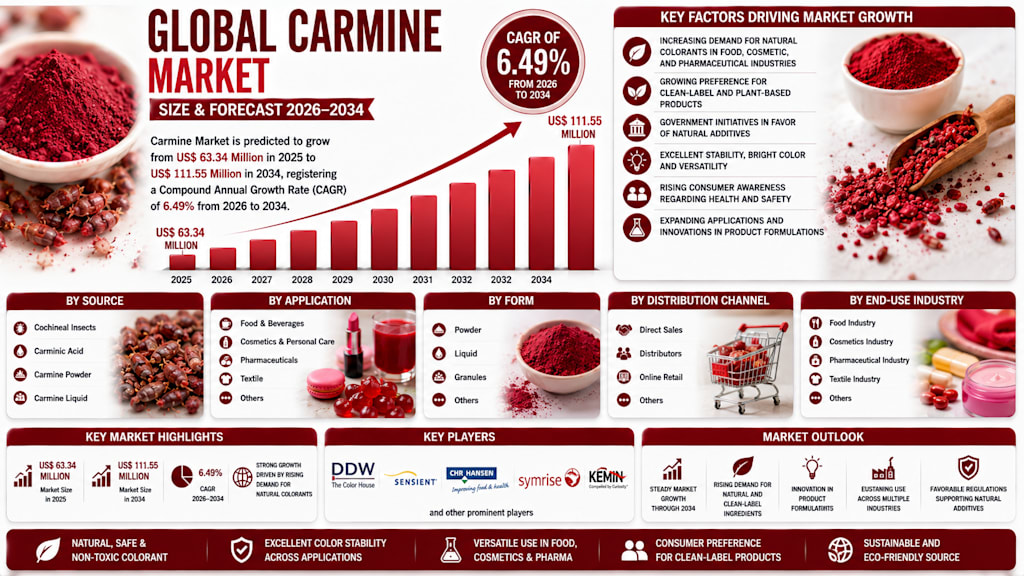
According to Renub Research, the Global Carmine Market is expected to grow from US$ 63.34 million in 2025 to US$ 111.55 million by 2034, registering a compound annual growth rate (CAGR) of 6.49% from 2026 to 2034. Rising demand for natural colorants, expanding food and beverage production, increasing cosmetic applications, and growing consumer preference for clean-label products are among the key factors driving market growth.
As industries worldwide continue embracing natural ingredients, carmine is expected to play an increasingly important role across multiple sectors.
What Is Carmine?
Carmine is a natural red pigment derived from cochineal insects, which are primarily found on cactus plants in Latin American countries such as Peru and Mexico.
The pigment is produced from carminic acid, a substance naturally present within the insects. Through specialized processing techniques, carminic acid is transformed into a bright and highly stable red colorant known as carmine.
One of the major advantages of carmine is its ability to produce a wide range of shades, from light pinks to deep reds and purples. Its exceptional stability under varying temperatures, light exposure, and processing conditions makes it particularly valuable for commercial applications.
Unlike many synthetic dyes, carmine is recognized as a naturally derived ingredient and is approved for use in numerous countries worldwide.
Today, carmine is widely used in products such as yogurt, candies, beverages, baked goods, processed foods, lipsticks, blushes, pharmaceutical coatings, and dietary supplements.
Its combination of natural origin, visual appeal, and performance characteristics has made it one of the most sought-after natural colorants available today.
Growing Demand for Natural and Clean-Label Ingredients
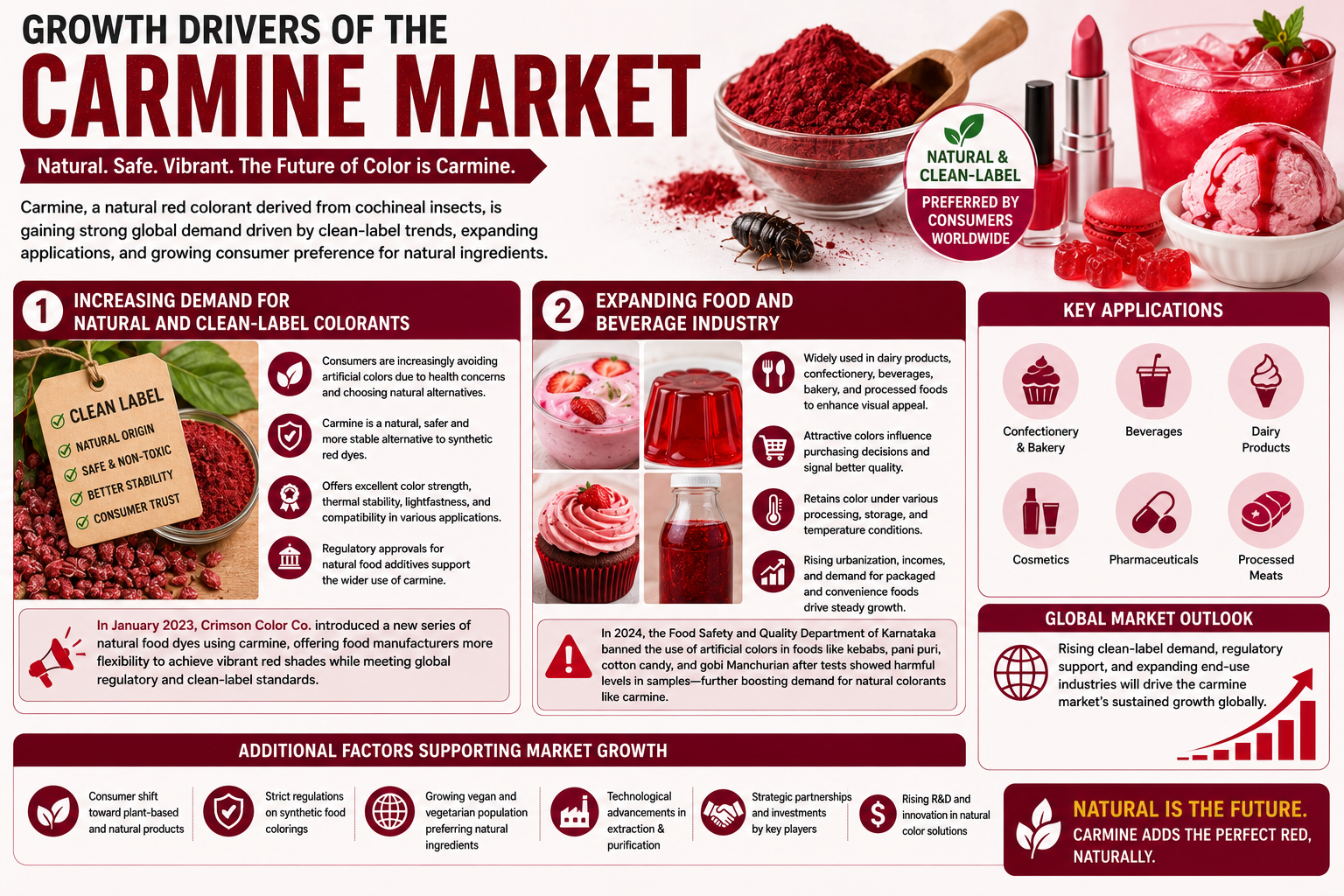
One of the strongest drivers behind the expansion of the carmine market is the growing global demand for natural and clean-label ingredients.
Consumers are becoming increasingly aware of the ingredients present in the products they purchase. Artificial food dyes and synthetic additives have faced growing scrutiny due to concerns regarding potential health effects and overall product quality.
As a result, food and beverage manufacturers are actively reformulating products to replace synthetic dyes with naturally sourced alternatives.
Carmine offers several advantages that make it particularly attractive in this environment.
It provides vibrant coloration, excellent stability, strong color intensity, and compatibility with a wide variety of applications.
Unlike some natural colorants that fade quickly or react poorly during processing, carmine maintains consistent performance even under challenging manufacturing conditions.
Government regulations supporting approved natural food additives have further strengthened market confidence and accelerated adoption across industries.
As clean-label trends continue gaining momentum worldwide, demand for carmine is expected to grow steadily over the coming decade.
Food and Beverage Industry Remains the Largest Consumer
The food and beverage industry remains the largest application segment for carmine.
Visual appearance plays a critical role in consumer purchasing decisions. Brightly colored foods are often associated with freshness, quality, flavor, and premium value.
Manufacturers use carmine extensively in dairy products, beverages, bakery items, confectionery products, snacks, sauces, and processed foods.
Its ability to maintain color consistency during manufacturing, transportation, and storage makes it especially valuable.
As urbanization increases and disposable incomes rise across emerging markets, demand for processed and packaged foods continues growing rapidly.
Consumers increasingly expect products to look attractive while also containing natural ingredients.
This combination of visual appeal and clean-label positioning is helping fuel demand for carmine throughout the global food industry.
Growing regulatory restrictions on certain synthetic food colorings are creating additional opportunities for natural alternatives such as carmine.
Cosmetics Industry Is Creating Significant Growth Opportunities
The cosmetics and personal care sector represents another major growth area for the carmine market.
Consumers are increasingly seeking beauty products formulated with natural and safe ingredients.
As awareness regarding skin health and ingredient transparency continues increasing, cosmetic manufacturers are under pressure to reduce reliance on synthetic pigments.
Carmine has become a preferred ingredient in numerous beauty products due to its vibrant coloration, excellent stability, and long-lasting performance.
It is commonly used in:
Lipsticks
Blushes
Eyeshadows
Face powders
Cosmetic creams
Beauty palettes
Its resistance to fading and compatibility with various cosmetic formulations make it particularly attractive for manufacturers.
Social media, beauty influencers, and increasing global interest in personal grooming are further driving demand for premium cosmetic products.
As the clean beauty movement continues gaining momentum, carmine is expected to remain an important ingredient across the cosmetics industry.
Carmine Is Becoming Essential in Food Processing
The food processing industry has emerged as one of the most important users of carmine.
Processed foods require consistent appearance and quality throughout their shelf life.
Manufacturers rely on carmine to provide stable coloration across a wide range of products, including:
,Dairy products
,Sauces
,Ready-to-eat meals
Processed snacks
Beverages
,Packaged desserts
Carmine's resistance to heat, light, and pH variations makes it especially suitable for industrial food production.
As consumers increasingly demand natural ingredients, food processors are replacing artificial colorants with approved natural alternatives.
The continued expansion of global food manufacturing is expected to support long-term growth in this application segment.
Bakery and Confectionery Applications Continue Expanding
Bakery and confectionery manufacturers rely heavily on visual appeal to attract consumers.
Products such as cakes, pastries, cookies, candies, chewing gum, and frostings frequently incorporate carmine to achieve attractive shades of red, pink, and purple.
Unlike many alternative colorants, carmine remains stable even when exposed to high baking temperatures.
This stability allows manufacturers to maintain product appearance throughout production and storage.
The growing popularity of premium desserts, artisanal bakery products, and clean-label confectionery items is creating additional demand.
Consumers increasingly expect attractive products that contain recognizable and natural ingredients.
This trend is encouraging manufacturers to adopt natural colorants such as carmine across a broader range of bakery and confectionery applications.
Meat Products Industry Benefits from Carmine
The processed meat industry is another significant user of carmine.
Consumers often associate red and pink colors with freshness, quality, and flavor.
During processing and storage, meat products can lose their natural coloration due to oxidation and temperature changes.
Manufacturers use carmine to maintain consistent visual appearance across products such as:
Sausages
Deli meats
Processed meat products
Canned meats
Specialty meat preparations
As clean-label trends continue influencing purchasing behavior, natural colorants are increasingly replacing synthetic alternatives within meat processing applications.
This shift is expected to support additional market growth in the years ahead.
Carmine Powder Dominates Product Demand
Among various product formats, carmine powder remains one of the most widely used forms.
Manufacturers value powdered carmine because it offers:
, Long shelf life
, Easy storage
, Consistent color strength
, Simple integration into dry formulations
, Cost efficiency
Powdered carmine is widely utilized in food production, cosmetic manufacturing, and pharmaceutical applications.
Its versatility and ease of handling make it particularly attractive for large-scale industrial operations.
As product development activities continue expanding globally, demand for powdered carmine is expected to remain strong throughout the forecast period.
Ethical Concerns Present a Market Challenge
Despite strong growth prospects, the carmine market faces several challenges.
One of the most significant concerns involves its animal-derived origin.
Because carmine is extracted from cochineal insects, it is not considered suitable for vegan or vegetarian products.
The growing popularity of plant-based lifestyles and vegan diets is encouraging some consumers to avoid products containing insect-derived ingredients.
This trend has led manufacturers to explore alternative natural colorants such as:
, Beetroot extract
, Anthocyanins
, Fruit-based pigments
, Vegetable-derived colorants
For certain consumers, ethical concerns regarding insect-derived ingredients may limit acceptance of carmine-containing products.
As veganism continues expanding globally, competition from plant-based alternatives is expected to intensify.
Supply Chain Challenges and Price Volatility
Another significant challenge involves supply chain stability.
Carmine production depends heavily on cochineal insect farming, which is concentrated primarily in Peru and Mexico.
This geographic concentration creates vulnerability to:
, Climate change
, Drought conditions
, Agricultural disruptions
, Weather-related events
, Supply shortages
In addition, harvesting and processing cochineal insects is labor-intensive, contributing to higher production costs.
Growing global demand for natural colorants has further increased pressure on available supplies.
Price fluctuations and supply uncertainties can create difficulties for manufacturers seeking stable long-term sourcing arrangements.
Managing these challenges will remain important for sustaining future market growth.
Regional Market Insights
United States
The United States continues to represent one of the largest markets for carmine due to strong demand for natural ingredients across food, beverage, and cosmetics industries.
Manufacturers are increasingly replacing synthetic dyes with natural alternatives to comply with evolving regulations and consumer expectations.
Growing interest in clean-label products continues supporting market expansion.
United Kingdom
The United Kingdom market is benefiting from rising demand for organic, premium, and naturally formulated products.
The bakery, dairy, and confectionery industries remain key consumers of carmine, while the cosmetics sector continues expanding its use of natural pigments.
India
India is emerging as a high-growth market due to rapid urbanization, rising disposable incomes, and expansion of food processing and cosmetics industries.
Growing awareness regarding natural ingredients is encouraging wider adoption of carmine across multiple sectors.
Saudi Arabia
Saudi Arabia's market continues growing as demand increases for premium processed foods, beverages, and cosmetics.
Expanding retail infrastructure and growing awareness regarding ingredient quality are supporting adoption of natural colorants such as carmine.
Competitive Landscape
The global carmine market remains competitive, with companies focusing on product innovation, supply chain optimization, and expanding natural ingredient portfolios.
Major industry participants include:
, Clariant AG
, Chr. Hansen Holding A/S
, Naturex (Givaudan)
, Sensient Technologies Corporation
, The Hershey Company
, Biocon
, Amerilure
, DDW Color House
These companies continue investing in research, product development, and strategic partnerships to strengthen their market positions and meet evolving consumer demands.
Final Thoughts
The global carmine market is entering a period of sustained growth as consumers, regulators, and manufacturers increasingly prioritize natural ingredients over synthetic alternatives. Carmine's exceptional color stability, versatility, and broad regulatory acceptance have positioned it as one of the most important natural colorants in the modern marketplace.
Strong demand from food processing, beverages, bakery products, cosmetics, pharmaceuticals, and personal care applications continues creating significant opportunities across the industry. Although challenges related to vegan preferences and supply chain constraints remain, the overall outlook for the market remains highly positive.
With the market projected to grow from US$ 63.34 million in 2025 to US$ 111.55 million by 2034, carmine is expected to remain a critical ingredient for manufacturers seeking natural, high-performance color solutions. As clean-label trends continue influencing global purchasing behavior, the demand for carmine is likely to expand steadily across both developed and emerging markets.
About the Creator
Enjoyed the story? Support the Creator.
Subscribe for free to receive all their stories in your feed.
Comments
There are no comments for this story
Be the first to respond and start the conversation.