
Global Carmine Market Expands as Natural Colorants Replace Synthetic Dyes Across Food and Cosmetics Industries
The global shift toward clean-label products, natural ingredients, and safer food additives is driving strong growth in the carmine market worldwide.

Market Overview
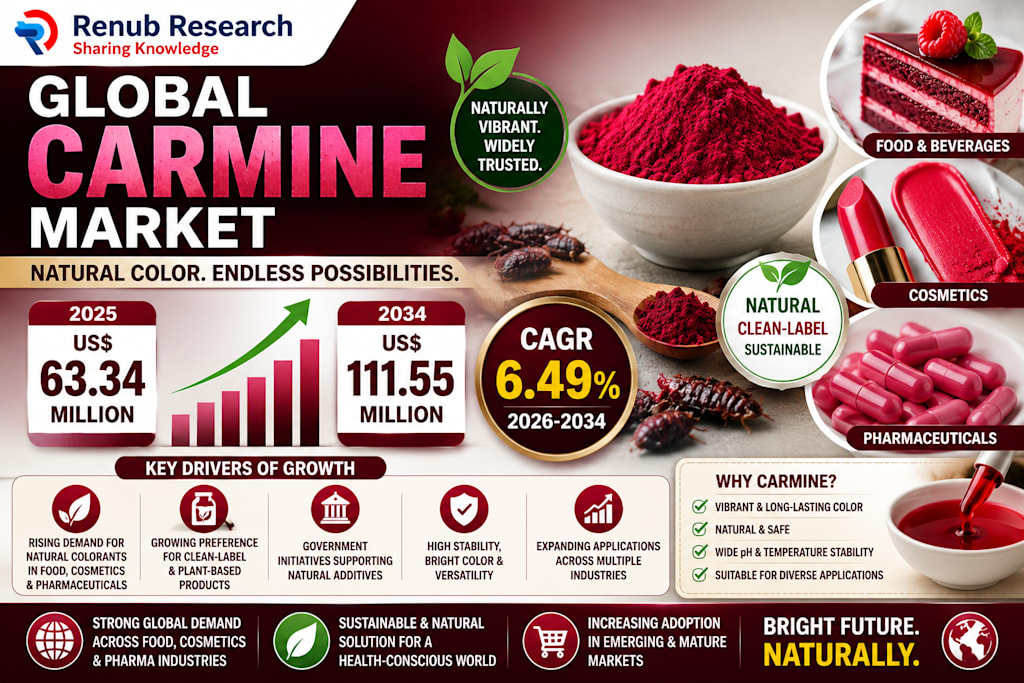
The global Carmine market is expected to grow from US$ 63.34 Million in 2025 to US$ 111.55 Million by 2034, registering a Compound Annual Growth Rate (CAGR) of 6.49% between 2026 and 2034. The market is being driven by rising demand for natural colorants in food, beverages, cosmetics, and pharmaceutical products. Increasing consumer preference for clean-label ingredients and regulatory support for natural additives are also accelerating market growth.
As industries move away from synthetic dyes and artificial ingredients, carmine is gaining global attention because of its stability, vibrant color performance, and natural origin. Food manufacturers, cosmetic brands, and pharmaceutical companies are increasingly adopting natural pigments to align with evolving consumer expectations regarding ingredient transparency and product safety.
What Is Carmine?
Carmine is a natural red dye extracted from cochineal insects, which are commonly found on cactus plants in Latin American countries such as Peru and Mexico. The pigment is produced by processing carminic acid obtained from these insects, resulting in a highly stable and vibrant red coloring agent.
The dye is widely used across several industries because it can produce shades ranging from pink to deep red while maintaining excellent color consistency under different processing conditions.
Carmine is commonly used in:
- Yogurt
- Candies
- Beverages
- Bakery products
- Lipsticks
- Blushes
- Pharmaceutical formulations
Its natural origin and strong performance characteristics have helped it become one of the most recognized natural colorants globally.
Natural and Clean-Label Trends Are Driving Demand
One of the strongest growth drivers in the carmine market is the global movement toward natural and clean-label products.
Consumers are becoming increasingly cautious about synthetic food additives and artificial colorings because of growing concerns regarding potential health risks. This shift in awareness is encouraging food and beverage companies to reformulate products using natural alternatives such as carmine.
Carmine offers several advantages that make it attractive for manufacturers:
- Strong color intensity
- Excellent heat stability
- Light resistance
- pH stability
Compatibility with multiple food systems
These properties allow manufacturers to maintain product appearance while also meeting consumer demand for cleaner ingredient labels.
Regulatory support for approved natural additives is further strengthening market adoption. Governments and food safety authorities in several countries are encouraging safer ingredient use, pushing manufacturers to replace artificial dyes with natural solutions.
The source material notes that in January 2023, Crimson Color Co. introduced a new line of natural food dyes based on carmine technology to help manufacturers create bright red colors while complying with strict regulatory standards.
Food and Beverage Industry Remains the Largest Consumer
The food and beverage industry continues to be one of the biggest end-users of carmine globally.
Manufacturers use carmine extensively in:
- Dairy products
- Confectionery
- Bakery items
- Processed foods
- Beverages
- Desserts
because visual appeal strongly influences purchasing decisions. Consumers often associate brighter and more attractive food colors with freshness, quality, and better taste.
Urbanization and rising disposable incomes are also increasing demand for packaged and processed foods worldwide, which further supports the use of food colorants.
One of carmine’s biggest strengths is its ability to maintain color consistency under challenging processing conditions such as high heat, storage, and transportation. This makes it especially useful in industrial-scale food production.
The report also references increasing government scrutiny regarding artificial food colors. For example, Karnataka’s Food Safety and Quality Department issued notices regarding harmful synthetic food color usage after tests on several food samples revealed excessive artificial coloring levels.
Such developments are encouraging manufacturers to shift toward safer natural alternatives like carmine.
Cosmetics Industry Is Becoming a Major Growth Engine
The cosmetics and personal care industry is another major contributor to the global carmine market.
Carmine is widely used in products such as:
- Lipsticks
- Blushes
- Eyeshadows
- Facial makeup products
because of its rich red and pink pigmentation and strong resistance to fading.
Consumer demand for natural beauty and clean cosmetic products has risen sharply in recent years. Buyers increasingly want transparency regarding cosmetic ingredients, especially products applied directly to the skin and lips.
Social media influence, beauty trends, rising disposable incomes, and growing personal grooming awareness are further supporting growth in the global beauty industry.
Manufacturers are responding by launching more natural and clean-beauty product lines that rely on naturally sourced pigments such as carmine.
The report highlights that in June 2023, Scarlet Shades Ltd. partnered with a major cosmetic brand to launch a range of carmine-based lipsticks and blushes.
Vegan and Ethical Concerns Present a Major Challenge
Despite strong market growth, the carmine industry faces increasing ethical and consumer perception challenges.
Because carmine is derived from insects, it is not considered suitable for vegans or strict vegetarians. As plant-based lifestyles and vegan diets continue gaining popularity globally, some consumers are actively avoiding products containing animal-derived ingredients.
This trend has encouraged manufacturers to explore alternative natural colorants such as:
- Beetroot extracts
- Anthocyanins
- Fruit-based pigments
- Plant-derived red dyes
In addition, some consumers are uncomfortable using products sourced from insects, even when the ingredients are considered safe.
As vegan-friendly product positioning becomes more important in global retail markets, especially in Europe and North America, carmine manufacturers may face increasing pressure from plant-based alternatives.
Supply Chain Challenges Affect Market Stability
Supply chain limitations are another important concern for the global carmine industry.
Carmine production depends heavily on cochineal insect farming, which is geographically concentrated in countries such as Peru and Mexico. This makes the supply chain vulnerable to climate conditions, agricultural disruptions, droughts, and environmental instability.
The harvesting and processing of cochineal insects is also labor-intensive, contributing to higher production costs and price fluctuations.
As global demand for natural colorants rises, maintaining consistent supply levels has become increasingly difficult. Manufacturers may struggle with raw material availability and pricing stability, especially during periods of supply disruption.
These supply chain risks remain one of the biggest long-term operational challenges facing the carmine market.
Bakery and Confectionery Segment Continues to Grow
Carmine plays a major role in the bakery and confectionery industry because of its ability to deliver attractive red, pink, and purple shades.
It is widely used in:
- Cakes
- Pastries
- Cookies
- Candies
- Chewing gums
- Icings
to enhance visual appeal.
This segment is particularly important because color strongly influences purchasing decisions in confectionery products targeted toward children and younger consumers.
Carmine’s resistance to heat and storage conditions also makes it highly suitable for baked products exposed to high processing temperatures.
As premium bakery products increasingly adopt natural ingredients and clean-label positioning, demand for natural food colorants like carmine is expected to continue rising steadily.
Meat Products Segment Uses Carmine for Appearance and Freshness
Carmine is also widely used in processed meat products as a natural color enhancer.
Products such as sausages, deli meats, canned meats, and processed meat products often lose their natural appearance during storage and processing. Carmine helps maintain a fresh-looking red or pink appearance that consumers associate with quality.
The increasing demand for natural additives in processed foods is encouraging manufacturers to replace synthetic meat colorants with natural solutions.
Clean-label trends and regulatory approvals are also strengthening carmine adoption in meat applications.
Carmine Powder Holds Strong Market Position
Among different product forms, carmine powder remains one of the most widely used because of its versatility and ease of application.
Carmine powder is popular in food, cosmetic, and pharmaceutical manufacturing because it:
- Mixes easily into dry formulations
- Offers strong color concentration
- Provides long shelf life
- Maintains consistent quality
Manufacturers prefer powdered formats for bakery mixes, powdered beverages, cosmetic products, and dry food systems where precise color control is important.
Food Processing Industry Continues Expanding Applications
The food processing industry is steadily increasing its use of carmine as consumer demand for natural ingredients rises globally.
Carmine is commonly used in:
- Sauces
- Snacks
- Ready-to-eat foods
- Dairy products
- Processed beverages
because of its ability to maintain stable color during processing, transportation, and storage.
Urbanization and lifestyle changes are driving stronger demand for processed foods worldwide, creating additional opportunities for natural food coloring solutions.
As more food manufacturers adopt clean-label strategies, carmine’s role within processed food applications is expected to strengthen further.
United States Market Benefits from Clean-Label Movement
The United States carmine market continues growing because of increasing consumer preference for natural ingredients and stricter scrutiny of synthetic additives.
Food and beverage manufacturers are actively replacing artificial dyes with natural alternatives to meet consumer expectations and regulatory standards.
The cosmetics sector is also contributing strongly to demand growth, particularly for natural makeup formulations.
The report notes that in February 2025, Debut announced a scientific breakthrough involving biosynthetic production methods for carmine pigments, potentially reducing dependence on traditional insect-based extraction methods.
India and Saudi Arabia Emerging as Growth Markets
India’s carmine market is expanding rapidly because of rising urbanization, growing food processing industries, and increasing cosmetic consumption. Consumers are becoming more aware of natural ingredients, while online and retail distribution channels are improving product accessibility.
Saudi Arabia is also seeing steady growth driven by demand for processed foods, premium food products, and natural food additives. The cosmetics industry and expanding retail infrastructure are further supporting market development in the region.
Key Industry Players
Major companies operating in the global carmine market include:
- Clariant AG
- Chr. Hansen Holding A/S
- Naturex (Givaudan)
- Sensient Technologies Corporation
- The Hershey Company
- Biocon
- Amerilure
- DDW Color House
These companies are investing in innovation, natural ingredient development, supply chain optimization, and product diversification to maintain market competitiveness.
Final Thoughts
The global carmine market is benefiting from one of the strongest consumer shifts in the modern food and cosmetics industry: the movement toward natural, transparent, and clean-label ingredients. Rising concerns regarding artificial dyes, combined with growing demand for safer and more sustainable products, are positioning carmine as a key natural coloring solution across multiple industries.
However, ethical concerns surrounding insect-derived ingredients and supply chain limitations remain important long-term challenges. Manufacturers will likely need to balance traditional production methods with innovation and alternative sourcing strategies to sustain future growth.
About the Creator
Enjoyed the story? Support the Creator.
Subscribe for free to receive all their stories in your feed.
Comments
There are no comments for this story
Be the first to respond and start the conversation.