
Global Cardiac Bio Implant Devices Market to Reach US$79.21 Billion by 2034 as Biocompatible Technologies Advance Cardiovascular Care
Rising cardiovascular disease prevalence, breakthroughs in biomaterials, growing adoption of minimally invasive procedures, and continuous innovation in bioengineered implants are driving strong growth in the global cardiac bio implant devices market.

Cardiac Bio Implant Devices Are Revolutionizing Modern Cardiovascular Treatment
Cardiovascular disease remains the leading cause of death worldwide, creating an urgent need for innovative medical technologies capable of improving survival and long-term patient outcomes. Advances in biotechnology, tissue engineering, and biomaterials have transformed cardiac treatment by enabling the development of bio implant devices that integrate more naturally with the human body while improving safety and clinical performance.
Cardiac bio implant devices—including bioengineered heart valves, pacemakers, implantable cardioverter defibrillators (ICDs), cardiac resynchronization therapy (CRT) systems, and tissue-based implants—have become essential tools in treating coronary artery disease, heart failure, arrhythmias, and structural heart disorders. Their superior biocompatibility and long-term effectiveness continue driving adoption across healthcare systems worldwide.
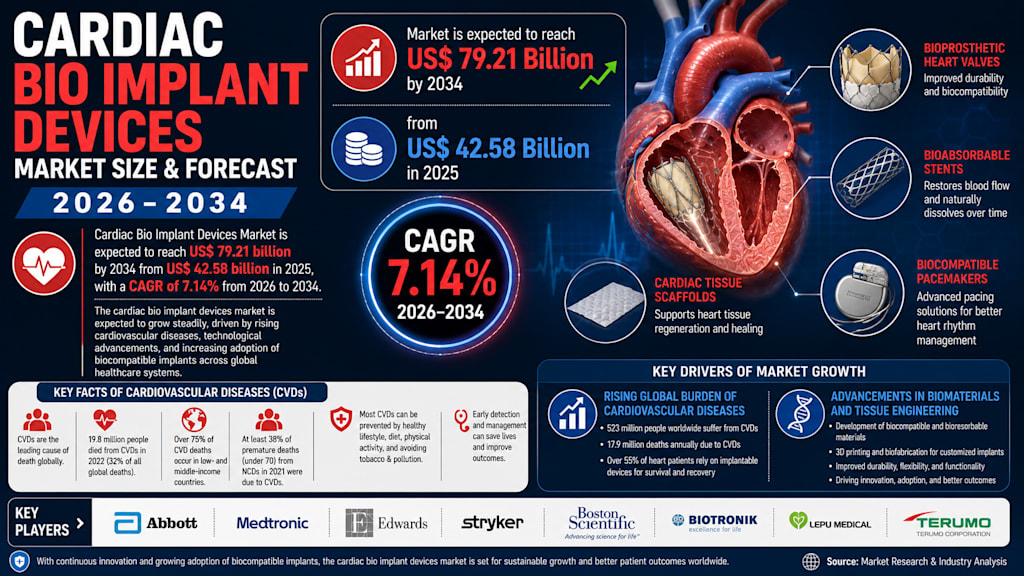
According to the latest market outlook, the Global Cardiac Bio Implant Devices Market is projected to grow from US$42.58 billion in 2025 to US$79.21 billion by 2034, registering a compound annual growth rate (CAGR) of 7.14% during 2026–2034. Rising cardiovascular disease prevalence, technological innovation, expanding use of minimally invasive procedures, and increasing demand for biocompatible implant solutions continue supporting long-term market growth.
Cardiac Bio Implant Devices Improve Long-Term Heart Function
Cardiac bio implant devices are advanced medical implants designed to restore or improve cardiovascular function while minimizing adverse biological reactions.
These devices include pacemakers, implantable cardioverter defibrillators, cardiac resynchronization therapy systems, tissue-engineered heart valves, vascular implants, and bioengineered stents.
Unlike conventional implants, bio implant devices utilize advanced biomaterials that improve compatibility with surrounding tissues, reduce inflammatory responses, and promote better healing.
Their growing clinical success continues expanding applications across multiple cardiovascular conditions.
Rising Cardiovascular Disease Continues Driving Market Growth
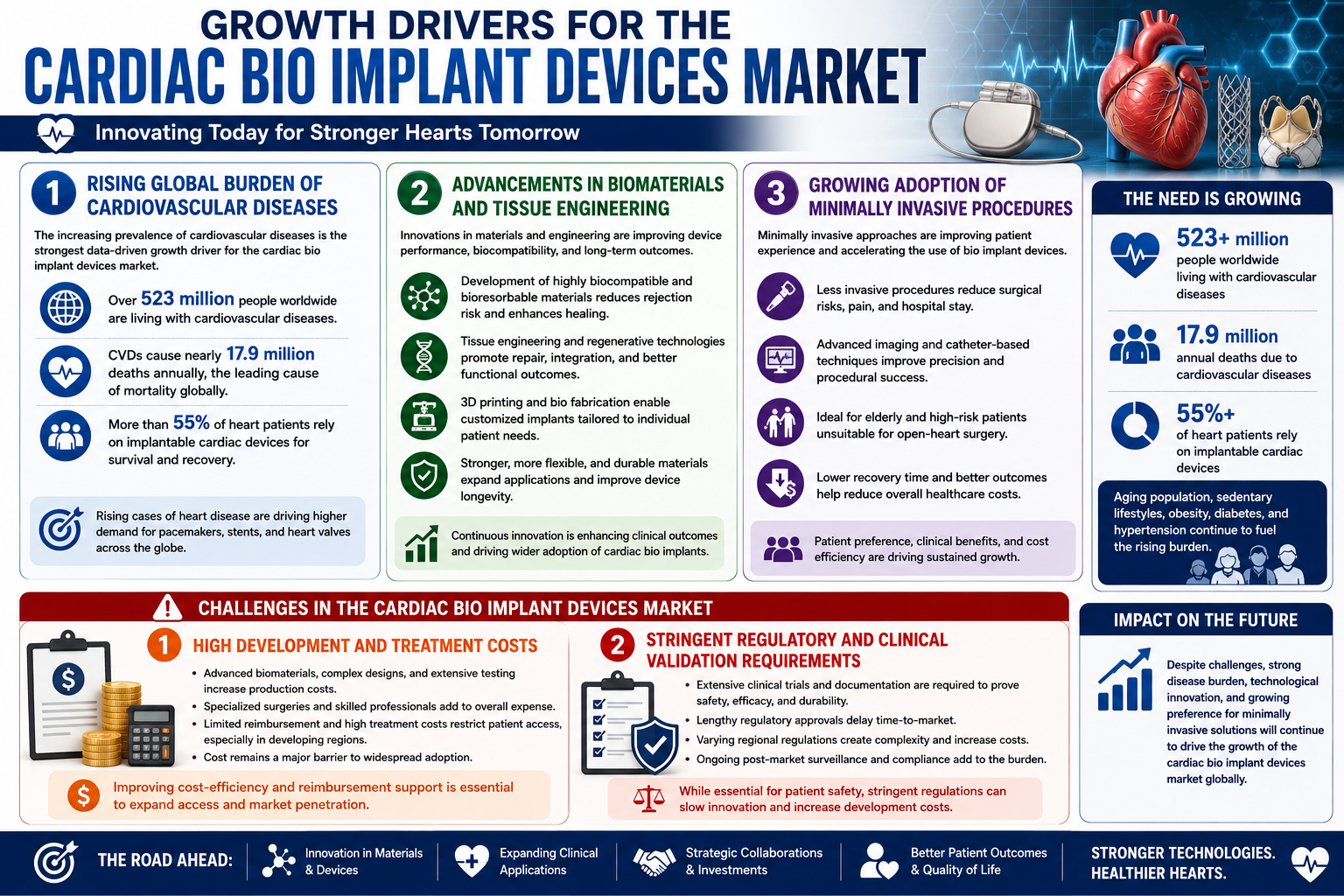
One of the strongest drivers of market expansion is the increasing global burden of cardiovascular disease.
Heart disease remains the leading cause of mortality worldwide, with millions of patients requiring long-term treatment for coronary artery disease, heart failure, arrhythmias, and valvular disorders.
Population aging, sedentary lifestyles, obesity, hypertension, diabetes, and smoking continue increasing cardiovascular risk across both developed and emerging economies.
As the number of patients requiring implantable cardiac therapies continues growing, demand for advanced bio implant devices is expected to rise steadily.
Biomaterial Innovation Enhances Clinical Outcomes
Continuous advances in biomaterials are transforming cardiac implant technology.
Researchers are developing highly biocompatible materials that integrate naturally with human tissues while reducing immune reactions and improving long-term implant durability.
Innovations in bioresorbable polymers, regenerative medicine, tissue engineering, and biological scaffolds are enabling the creation of next-generation cardiac implants with improved healing characteristics.
These technologies continue enhancing both patient safety and clinical performance.
Minimally Invasive Procedures Accelerate Adoption
The increasing preference for minimally invasive cardiac procedures represents another major growth driver.
Modern catheter-based implantation techniques reduce surgical trauma, shorten hospital stays, minimize postoperative complications, and accelerate patient recovery.
Cardiac bio implant devices are increasingly designed for minimally invasive delivery using advanced catheter technologies.
These procedures are particularly beneficial for elderly patients and individuals considered high-risk candidates for conventional open-heart surgery.
Healthcare providers continue expanding minimally invasive cardiac treatment programs worldwide.
Personalized Medicine Creates New Opportunities
Personalized healthcare is increasingly influencing cardiac implant development.
Advances in imaging technologies, digital modeling, and 3D printing enable manufacturers to design implants that better match individual patient anatomy.
Customized implants improve procedural precision while enhancing long-term treatment success.
The growing integration of precision medicine with biomaterial science is expected to further strengthen market growth over the coming decade.
Pacemakers Continue Leading the Market
Pacemakers remain one of the largest product categories within the cardiac bio implant devices market.
These devices regulate abnormal heart rhythms by delivering electrical impulses that maintain appropriate cardiac function.
Modern pacemakers feature extended battery life, wireless communication, remote monitoring capabilities, and compact designs that improve patient comfort.
Growing incidence of cardiac rhythm disorders continues supporting demand for advanced pacing technologies.
Implantable Cardioverter Defibrillators Expand Clinical Use
Implantable cardioverter defibrillators (ICDs) continue playing a critical role in preventing sudden cardiac death.
These devices continuously monitor heart rhythms and automatically deliver life-saving electrical therapy when dangerous arrhythmias occur.
Technological advances have significantly improved device reliability, battery performance, remote monitoring, and patient safety.
Increasing awareness regarding sudden cardiac arrest prevention continues supporting ICD adoption worldwide.
Cardiac Resynchronization Therapy Improves Heart Failure Management
Cardiac resynchronization therapy (CRT) has become an essential treatment option for selected patients with heart failure.
CRT devices synchronize ventricular contractions, improving cardiac efficiency and reducing symptoms associated with advanced heart failure.
Clinical studies continue demonstrating improvements in quality of life, hospitalization rates, and survival following CRT implantation.
Growing heart failure prevalence continues driving demand for these advanced therapeutic systems.
Hospitals Remain the Largest End Users
Hospitals continue representing the largest end-user segment within the cardiac bio implant devices market.
Specialized cardiac centers possess advanced catheterization laboratories, hybrid operating rooms, imaging technologies, and multidisciplinary cardiovascular teams required for complex implantation procedures.
Hospitals also conduct clinical research and physician training that accelerate adoption of innovative implant technologies.
Growing investment in cardiovascular care infrastructure continues strengthening hospital demand for bio implant devices.
High Development Costs Present Challenges
Despite impressive technological progress, cardiac bio implant devices remain expensive to develop and manufacture.
Advanced biomaterials, extensive clinical testing, regulatory compliance, and sophisticated manufacturing processes contribute to high production costs.
Patients may also face substantial treatment expenses depending on reimbursement policies and healthcare coverage.
Reducing manufacturing costs while maintaining high quality remains an important industry objective.
Regulatory Approval Processes Remain Complex
Cardiac bio implant devices must undergo rigorous regulatory review before commercialization.
Manufacturers are required to demonstrate long-term safety, effectiveness, durability, and clinical performance through comprehensive laboratory studies and clinical trials.
Regulatory requirements differ across countries, increasing both development complexity and approval timelines.
Although these standards protect patient safety, they may delay market entry for innovative products.
Regional Markets Continue Driving Growth
The United States remains the world's largest cardiac bio implant devices market because of advanced cardiovascular care, strong healthcare expenditure, extensive clinical research, and widespread adoption of innovative implant technologies.
The United Kingdom continues expanding through growing investment in advanced cardiac care, increasing demand for minimally invasive procedures, and strong collaboration between healthcare institutions and medical device manufacturers.
India has emerged as a rapidly growing market owing to its large cardiovascular disease burden, expanding healthcare infrastructure, increasing physician expertise, and rising access to advanced cardiac treatments.
The United Arab Emirates continues strengthening demand through healthcare modernization, expansion of specialized cardiac centers, increasing medical tourism, and growing investment in advanced medical technologies.
Together, these regional markets continue shaping the future of the global cardiac bio implant devices industry.
Innovation Will Shape the Future of Cardiac Bio Implants
The future of cardiac bio implant devices will be driven by regenerative medicine, artificial intelligence, tissue engineering, bioresorbable materials, and smart implant technologies.
Manufacturers continue developing implants capable of enhanced tissue integration, real-time physiological monitoring, wireless communication, and personalized treatment.
Advances in 3D bioprinting, biological scaffolds, and next-generation biomaterials are expected to further improve implant performance while expanding treatment possibilities.
As cardiovascular medicine increasingly embraces personalized and minimally invasive care, cardiac bio implant devices will continue playing a central role in improving long-term patient outcomes.
Final Thoughts
The global cardiac bio implant devices market continues experiencing steady expansion as healthcare systems increasingly adopt innovative implant technologies that improve cardiovascular treatment while enhancing patient safety and long-term clinical outcomes.
The projected growth from US$42.58 billion in 2025 to US$79.21 billion by 2034, supported by a 7.14% CAGR, reflects rising cardiovascular disease prevalence, rapid advances in biomaterials, expanding minimally invasive procedures, and growing demand for personalized cardiac care.
Although high development costs and complex regulatory requirements remain important challenges, continuous innovation in tissue engineering, regenerative medicine, artificial intelligence, and biocompatible materials positions the cardiac bio implant devices industry for sustained long-term growth. As cardiovascular healthcare continues evolving, bio implant technologies will remain at the forefront of next-generation heart disease treatment.
About the Creator
Enjoyed the story? Support the Creator.
Subscribe for free to receive all their stories in your feed.
Comments
There are no comments for this story
Be the first to respond and start the conversation.