
Global Car Rental Market Set to Reach USD 300 Billion by 2033 as Tourism Recovery, Digital Booking Platforms, and Flexible Mobility Drive Growth
Global Car Rental Industry Enters a New Era of Mobility and Convenience

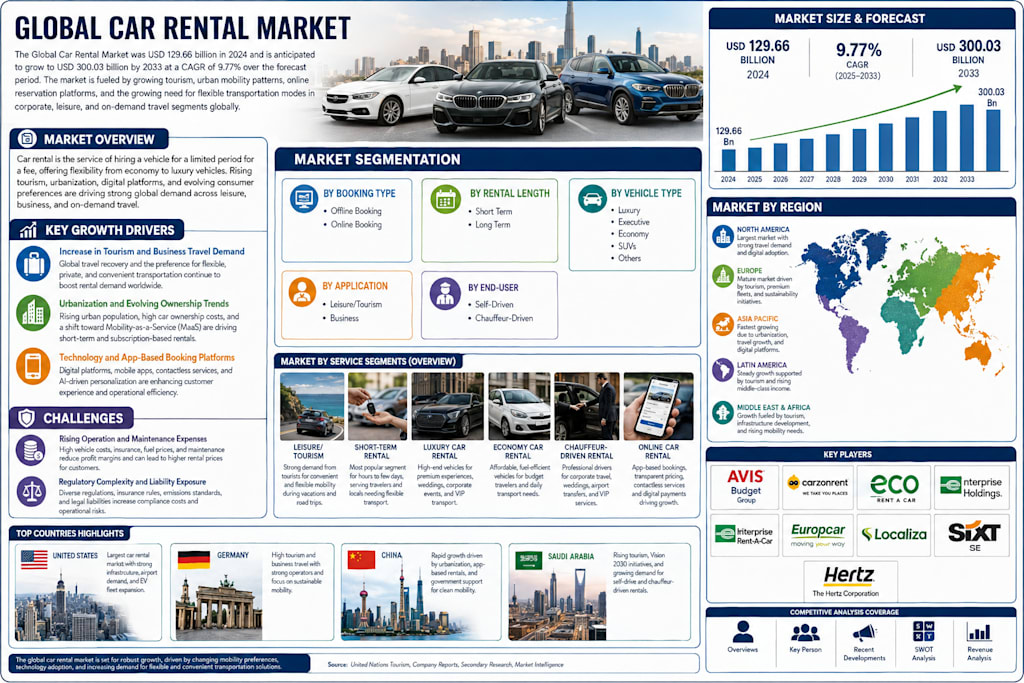
The global car rental market is witnessing remarkable expansion as consumers increasingly prioritize flexibility, convenience, and cost-effective transportation solutions. According to recent industry analysis, the Global Car Rental Market was valued at USD 129.66 billion in 2024 and is projected to reach USD 300.03 billion by 2033, growing at a CAGR of 9.77% during the forecast period.
The growth of the market is being fueled by a combination of rising tourism activities, increasing business travel, urbanization, digital transformation, and changing attitudes toward vehicle ownership. Consumers across the world are embracing rental services as an alternative to owning vehicles, particularly in urban areas where parking constraints, traffic congestion, and ownership costs continue to rise.
As mobility preferences evolve, car rental companies are transforming their business models by integrating advanced technologies, expanding fleet options, and offering seamless digital experiences. From economy vehicles to luxury cars and chauffeur-driven services, the industry is diversifying to meet the demands of a wide range of customer segments.
Rising Global Tourism Creating Strong Demand for Rental Vehicles
One of the most significant growth drivers for the car rental industry is the continued recovery and expansion of global tourism.
Travelers increasingly prefer rental vehicles because they provide freedom, flexibility, and privacy during trips. Whether exploring tourist destinations, attending business meetings, or visiting remote locations, rental cars offer convenient transportation without the limitations associated with public transit systems.
The recovery of international travel has substantially boosted demand for airport-based rental services. Major tourist destinations across North America, Europe, Asia-Pacific, and the Middle East are witnessing strong growth in vehicle bookings as visitor numbers approach pre-pandemic levels.
The tourism sector has regained momentum globally, encouraging both domestic and international travelers to choose rental vehicles for sightseeing, family vacations, and road trips. Car rental providers are capitalizing on this trend by expanding airport operations and introducing digital reservation systems that simplify vehicle pickup and return processes.
As travelers seek personalized experiences and flexible itineraries, rental vehicles continue to play a critical role in modern tourism infrastructure.
Urbanization and Changing Attitudes Toward Vehicle Ownership
Rapid urbanization is transforming transportation habits worldwide.
In densely populated cities, the costs associated with vehicle ownership—including parking fees, maintenance expenses, fuel costs, and insurance premiums—have become increasingly burdensome. As a result, consumers are exploring alternatives that provide access to transportation without long-term financial commitments.
Younger generations, particularly Millennials and Generation Z, are embracing the concept of Mobility-as-a-Service (MaaS). Rather than purchasing cars, many urban residents prefer on-demand access to vehicles through rental platforms and subscription-based services.
This shift is contributing significantly to the expansion of short-term rentals, car-sharing programs, and flexible mobility solutions. Urban consumers appreciate the convenience of renting a vehicle only when needed, reducing ownership expenses while maintaining access to transportation.
The trend is especially visible in major metropolitan areas where traffic congestion and environmental regulations discourage private vehicle ownership.
Digital Transformation Revolutionizing the Customer Experience
Technology has become one of the most influential factors shaping the future of the car rental market.
Online booking platforms and mobile applications have simplified the rental process, enabling customers to browse available vehicles, compare prices, make reservations, and complete payments within minutes.
Modern rental services increasingly feature:
Contactless vehicle pickup and return
Mobile-based reservations
Real-time vehicle availability tracking
GPS-enabled fleet management
Digital documentation
AI-powered customer recommendations
Keyless vehicle access
These innovations enhance convenience while improving operational efficiency for rental companies.
Artificial intelligence and data analytics are also helping operators optimize fleet utilization, forecast demand patterns, and personalize customer experiences. As consumers increasingly expect frictionless digital interactions, technology adoption is becoming a key competitive differentiator across the industry.
The rise of app-based rental businesses and self-drive platforms demonstrates the growing importance of digital ecosystems in shaping future mobility services.
Growing Popularity of Online Car Rental Platforms
The online booking segment has emerged as one of the fastest-growing areas within the global car rental market.
Consumers increasingly prefer digital channels due to their transparency, convenience, and flexibility. Through online platforms, customers can compare vehicle options, view pricing structures, access customer reviews, and secure reservations instantly.
Digital platforms also provide additional benefits such as:
Flexible cancellation policies
Promotional discounts
Loyalty rewards programs
Mobile payment integration
Customer support services
Companies operating in this space continue to invest heavily in user-friendly interfaces and digital innovations designed to improve customer satisfaction.
The expansion of internet connectivity and smartphone adoption across emerging markets is expected to further accelerate growth within the online rental segment over the coming years.
Short-Term Rentals Remain the Core of Industry Revenue
Short-term car rentals continue to represent the largest share of the market.
These services typically range from hourly bookings to several days and are widely used by tourists, business travelers, and local consumers seeking temporary transportation.
Demand is particularly strong at airports, transportation hubs, and urban centers where travelers require immediate mobility solutions.
The rise of flexible travel patterns, remote work arrangements, and spontaneous leisure trips has further increased the attractiveness of short-term rental options.
Many providers are also introducing hourly rental models and subscription packages to cater to changing consumer preferences and improve vehicle utilization rates.
As convenience remains a primary factor influencing customer decisions, short-term rentals are expected to maintain their dominance throughout the forecast period.
Luxury Car Rentals Gaining Momentum Worldwide
The luxury car rental segment is experiencing significant growth as consumers increasingly seek premium travel experiences.
Luxury vehicles are commonly rented for:
Weddings
Corporate events
VIP transportation
Special occasions
Executive travel
Luxury tourism experiences
High-end brands such as Mercedes-Benz, BMW, Audi, and Tesla are frequently included in premium rental fleets.
The growing popularity of luxury tourism, influencer-driven travel trends, and experiential spending is contributing to increased demand for upscale rental services.
Many providers now offer concierge services, chauffeur options, and customized rental packages designed to attract affluent travelers and corporate clients.
The emergence of premium electric vehicles within luxury fleets is also creating new opportunities for market expansion.
Economy Vehicle Rentals Continue to Attract Cost-Conscious Consumers
While luxury rentals are growing, economy vehicles remain the backbone of the industry in terms of volume.
Budget-conscious travelers, families, students, and business users continue to favor fuel-efficient and affordable rental options. Economy cars offer lower rental costs, improved fuel economy, and reduced environmental impact compared to larger vehicles.
During periods of economic uncertainty and inflation, consumers often prioritize affordability, making economy rentals an attractive transportation solution.
Rental companies frequently use economy vehicles as entry-level offerings to attract new customers and build long-term relationships.
As sustainability becomes a growing concern, many providers are introducing hybrid and electric vehicles within their economy fleets to appeal to environmentally conscious consumers.
Leisure and Tourism Segment Dominates Market Demand
Leisure and tourism applications remain the largest contributors to global car rental revenues.
Vacation travelers frequently choose rental vehicles to explore destinations independently and access attractions that may not be easily reachable through public transportation.
Tourist hotspots across Europe, North America, Southeast Asia, and the Middle East continue to generate substantial rental demand, particularly during peak travel seasons.
Partnerships between rental companies, airlines, hotels, and travel agencies have further strengthened this segment by offering integrated travel packages that include accommodation, flights, and vehicle rentals.
As tourism activity continues to recover globally, leisure travel is expected to remain a major growth engine for the industry.
Chauffeur-Driven Services Expanding Premium Mobility Offerings
Chauffeur-driven rental services are becoming increasingly popular among corporate travelers, VIP clients, and luxury tourists.
These services provide added convenience, comfort, and safety while eliminating the need for customers to drive themselves.
Demand is particularly strong in regions such as:
Middle East
Asia-Pacific
Europe
Major global business hubs
Customers frequently utilize chauffeur-driven vehicles for airport transfers, executive transportation, conferences, weddings, and high-profile events.
As travelers place greater emphasis on comfort and premium experiences, this segment is expected to continue expanding across both developed and emerging markets.
Challenges Impacting Market Growth
Rising Operational Costs
Despite strong growth prospects, rental operators face mounting operational expenses.
Vehicle acquisition costs have increased due to supply chain disruptions and semiconductor shortages. At the same time, insurance premiums, maintenance expenses, labor costs, and fuel prices continue to rise.
These factors place pressure on profit margins and may lead to higher rental prices for consumers.
Maintaining fleet quality while controlling costs remains a significant challenge for operators worldwide.
Regulatory and Legal Complexities
Operating across multiple regions requires compliance with diverse regulations governing:
Insurance requirements
Vehicle safety standards
Taxation policies
Driver verification procedures
Environmental regulations
Additionally, liability risks associated with accidents, theft, and misuse create operational challenges.
The transition toward electric and hybrid vehicle fleets introduces further complexities, including charging infrastructure investments and workforce training requirements.
Companies must navigate these regulatory pressures while maintaining service quality and profitability.
Regional Market Insights
United States
The United States remains the largest and most mature car rental market globally. Strong travel demand, extensive highway networks, and a well-established rental ecosystem support continued industry growth.
Airport rentals, digital booking platforms, and electric vehicle adoption are key trends shaping the market.
Germany
Germany benefits from strong tourism activity, business travel demand, and world-class transportation infrastructure. The country's focus on sustainability is accelerating the integration of electric and hybrid vehicles into rental fleets.
China
China's rapidly growing middle class, urbanization, and expanding domestic tourism sector are fueling substantial demand for rental services. Mobile-based booking platforms and government support for electric vehicles are driving market innovation.
Saudi Arabia
Saudi Arabia is emerging as a high-growth market supported by Vision 2030 initiatives, tourism development projects, infrastructure investments, and growing domestic mobility needs.
The expansion of digital booking platforms and increasing participation of women drivers are contributing to market growth.
Competitive Landscape
The global car rental industry remains highly competitive, with leading companies focusing on digital transformation, fleet expansion, sustainability initiatives, and customer experience enhancement.
Major industry participants include:
Avis Budget Group, Inc.
Carzonrent India Private Limited
Eco Rent A Car
Enterprise Holdings Inc.
Enterprise Rent-A-Car
Europcar
Localiza
Sixt SE
The Hertz Corporation
These companies continue to invest in electric vehicles, mobile applications, contactless rental solutions, and strategic partnerships to strengthen their market positions and meet evolving customer expectations.
Future Outlook
The future of the global car rental market appears exceptionally promising as consumers increasingly prioritize flexibility, convenience, and digital-first transportation solutions.
Growth will be supported by recovering tourism activity, urban mobility trends, expanding online booking platforms, and increasing demand for short-term transportation alternatives. Additionally, advancements in electric vehicles, autonomous driving technologies, and mobility-as-a-service platforms are expected to reshape the industry landscape over the next decade.
As transportation preferences continue to evolve, car rental services will play a critical role in providing accessible, sustainable, and cost-effective mobility solutions worldwide. Companies that successfully combine digital innovation, operational efficiency, and customer-centric offerings will be best positioned to capitalize on the substantial opportunities emerging within this rapidly expanding global market.
About the Creator
Enjoyed the story? Support the Creator.
Subscribe for free to receive all their stories in your feed.
Comments
There are no comments for this story
Be the first to respond and start the conversation.