
Global Candle Market Illuminates Growth as Home Décor, Wellness, and Luxury Living Trends Drive Demand
Rising consumer interest in self-care, home ambiance, aromatherapy, and premium lifestyle products is fueling significant expansion in the global candle industry.

Candles have evolved far beyond their traditional role as a simple source of light. In today's world, they have become symbols of comfort, relaxation, wellness, and personal expression. Whether used to create a cozy atmosphere at home, enhance meditation sessions, elevate luxury hotel experiences, or celebrate special occasions, candles have established themselves as an essential part of modern lifestyles.
As consumers increasingly invest in self-care routines, home décor, and wellness-focused products, the global candle industry is experiencing remarkable growth. Scented candles, luxury collections, eco-friendly wax alternatives, and designer collaborations are transforming what was once considered a basic household product into a thriving lifestyle category.
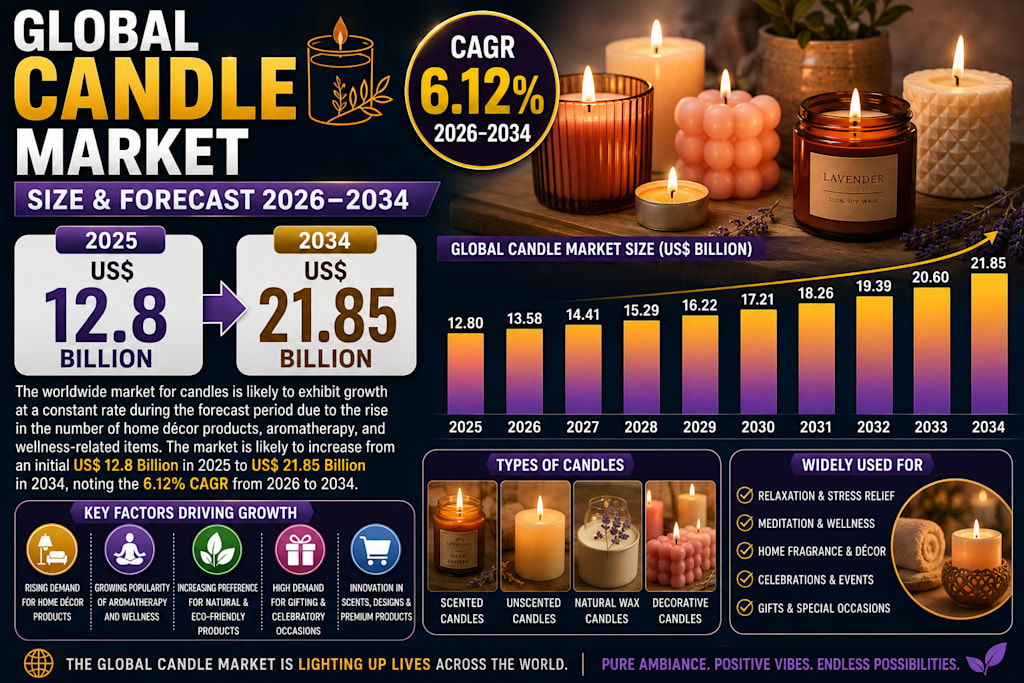
According to Renub Research, the Global Candle Market is expected to grow from US$12.8 billion in 2025 to US$21.85 billion by 2034, registering a compound annual growth rate (CAGR) of 6.12% between 2026 and 2034. Growing demand for home fragrance products, wellness solutions, decorative accessories, and premium gifting items is expected to support this sustained market expansion.
Candles Have Become More Than Just a Source of Light
For centuries, candles served primarily as a practical solution for illumination. Today, however, their role has expanded significantly.
Modern consumers use candles to create atmosphere, express personal style, improve relaxation, and enhance living spaces. Candles have become closely associated with emotional well-being, mindfulness, and interior design.
Manufacturers now offer an extensive variety of products, including scented candles, decorative candles, aromatherapy candles, luxury candles, religious candles, and seasonal collections.
The shift from utility to lifestyle product has significantly expanded the industry's consumer base and created opportunities for innovation across multiple market segments.
As lifestyle preferences continue evolving, candles are increasingly viewed as affordable luxury products that enhance everyday experiences.
Home Décor Trends Are Fueling Market Growth
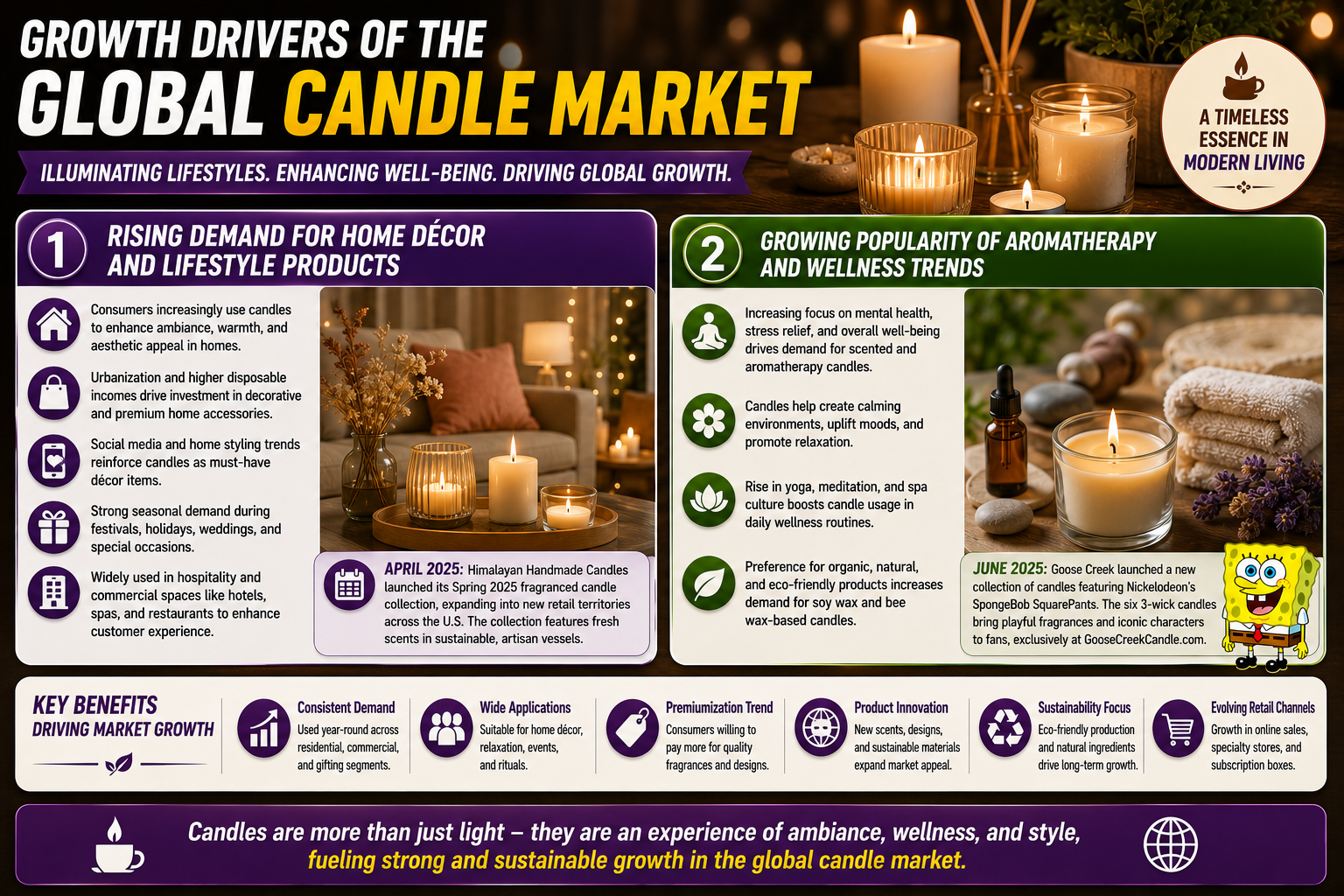
One of the strongest drivers of the global candle market is the growing emphasis on home décor.
Consumers are spending more time and money creating aesthetically pleasing living environments that reflect their personalities and lifestyles. Candles play a central role in this trend because they offer both visual appeal and functional benefits.
Decorative candles help create warmth, ambiance, and sophistication in homes, apartments, offices, restaurants, and hospitality venues.
Social media platforms have also contributed significantly to candle popularity. Interior design trends showcased on platforms such as Instagram, Pinterest, and TikTok frequently feature candles as key decorative elements.
As home styling continues gaining importance among consumers, candles are expected to remain a staple accessory within modern interior design.
Aromatherapy Is Driving Consumer Demand
The rapid growth of the wellness industry has created substantial opportunities for candle manufacturers.
Consumers increasingly seek products that promote relaxation, stress relief, and emotional well-being. Aromatherapy candles have become particularly popular because they combine fragrance with sensory experiences that support mindfulness and self-care.
Essential oils such as lavender, eucalyptus, sandalwood, vanilla, chamomile, and citrus are commonly incorporated into candle formulations designed to encourage relaxation and mood enhancement.
Many consumers now use scented candles as part of their daily wellness routines, including meditation, yoga, reading, bathing, and sleep preparation.
As mental health awareness and wellness-focused lifestyles continue expanding globally, demand for aromatherapy candles is expected to increase significantly.
Self-Care Culture Supports Industry Expansion
The self-care movement has become a powerful force influencing consumer purchasing behavior.
Individuals increasingly prioritize products that contribute to relaxation, comfort, and emotional balance. Candles have emerged as affordable wellness products that help create calming environments without requiring significant financial investment.
Unlike many luxury goods, candles offer consumers a simple way to enhance their surroundings and elevate everyday experiences.
This accessibility has broadened the market considerably, attracting consumers across multiple income levels and demographic groups.
The growing popularity of self-care routines is expected to remain a key factor supporting long-term market growth.
Scented Candles Dominate Consumer Preferences
Among all candle categories, scented candles continue to represent the largest and most dynamic segment.
Consumers are increasingly drawn to products that provide both fragrance and decorative value. Scented candles offer a unique combination of sensory appeal, emotional connection, and functional benefits.
Manufacturers frequently release seasonal collections featuring fragrances inspired by holidays, nature, desserts, travel destinations, and luxury experiences.
Popular scent categories include floral, woody, fruity, citrus, herbal, and gourmand fragrances.
The emotional impact of scent has become a major marketing advantage, helping brands establish strong customer loyalty and repeat purchasing behavior.
As fragrance innovation continues evolving, scented candles are expected to remain at the forefront of market growth.
Product Innovation Is Transforming the Industry
Innovation has become one of the defining characteristics of the modern candle market.
Manufacturers are constantly developing new fragrances, packaging designs, wax formulations, and product concepts to attract consumers.
Luxury brands increasingly collaborate with designers, celebrities, and entertainment franchises to create exclusive collections that generate excitement and demand.
Personalized candles featuring custom labels, engraved containers, and gift-oriented packaging have also gained popularity.
Advances in clean-burning technologies, longer-lasting formulations, and premium fragrance blends are further enhancing product quality and consumer satisfaction.
This continuous innovation helps brands differentiate themselves within an increasingly competitive marketplace.
Natural Wax Candles Gain Popularity
Consumer interest in sustainability has created growing demand for environmentally friendly candle products.
Traditional paraffin wax candles, derived from petroleum-based materials, face increasing scrutiny due to concerns regarding indoor air quality and environmental impact.
As a result, many consumers are switching to alternatives such as soy wax, beeswax, coconut wax, and palm wax candles.
These products are often perceived as cleaner-burning, more sustainable, and healthier options for home use.
Manufacturers have responded by expanding their portfolios of natural wax candles and emphasizing eco-friendly sourcing practices.
The shift toward sustainable products is expected to remain a major trend throughout the forecast period.
Palm Wax Candles Benefit from Sustainability Trends
Palm wax candles have emerged as an important segment within the market.
Derived from palm oil, palm wax is biodegradable and known for its distinctive crystalline appearance, which creates unique decorative effects.
Consumers appreciate palm wax candles for their clean-burning properties and aesthetic appeal.
However, sustainability concerns related to palm oil production have increased attention on responsible sourcing practices.
Manufacturers using certified sustainable palm oil are likely to gain competitive advantages as environmentally conscious consumers become increasingly selective about product origins.
Luxury Candles Become Lifestyle Statements
The luxury candle segment continues to experience strong growth worldwide.
Premium candles have evolved into aspirational lifestyle products associated with elegance, sophistication, and exclusivity.
Luxury brands differentiate themselves through high-quality ingredients, artisan craftsmanship, designer packaging, and distinctive fragrances.
Consumers increasingly purchase luxury candles not only for personal use but also as premium gifts.
Hotels, spas, upscale retailers, and luxury residences further contribute to demand for high-end candle products.
As disposable incomes rise and consumers seek elevated experiences, the luxury candle segment is expected to remain one of the industry's fastest-growing categories.
Pillar Candles Remain Timeless Favorites
Pillar candles continue to maintain strong popularity due to their versatility and visual appeal.
Their freestanding design allows them to serve as decorative centerpieces in homes, restaurants, hotels, and event venues.
Pillar candles are often chosen for weddings, religious ceremonies, and formal gatherings because of their elegant appearance and long burn times.
Innovations in colors, textures, and wax materials have helped keep this traditional product category relevant in modern markets.
Their combination of functionality and aesthetic value ensures continued consumer demand.
Taper Candles Benefit from Traditional and Decorative Appeal
Taper candles remain closely associated with elegance, ceremony, and traditional décor.
Often used in formal dining settings, weddings, religious events, and upscale interior design schemes, taper candles maintain strong cultural significance across many regions.
Their distinctive shape and timeless appearance make them popular choices for consumers seeking classic decorative elements.
As interest in vintage and traditional home décor continues growing, taper candles are expected to retain a loyal customer base.
Supermarkets and Hypermarkets Drive Accessibility
Distribution channels play a crucial role in supporting market growth.
Supermarkets and hypermarkets remain among the most important retail outlets for candle sales worldwide. These stores provide consumers with convenient access to a broad range of products, including scented candles, decorative candles, seasonal collections, and utility candles.
Impulse purchases contribute significantly to sales, particularly during holiday seasons and special occasions.
In addition to traditional retail channels, online commerce continues expanding rapidly, enabling consumers to explore premium and niche brands from around the world.
The combination of physical and digital distribution channels is helping broaden market reach and enhance consumer accessibility.
The United States Leads Global Consumption
The United States represents one of the largest candle markets globally.
American consumers demonstrate strong interest in home fragrance products, wellness items, and seasonal décor, making candles a highly popular household purchase.
Demand is particularly strong during major holidays such as Christmas, Thanksgiving, and Halloween, when candles are frequently used for decoration and gifting purposes.
The growing popularity of soy wax candles, aromatherapy products, and luxury candle brands has further strengthened market growth.
A robust retail infrastructure and strong consumer spending continue supporting the country's leadership position within the global candle industry.
The United Kingdom Embraces Sustainable Candle Products
The United Kingdom remains another important market for candles, particularly within premium and sustainable segments.
British consumers increasingly prefer products made from natural waxes, recyclable packaging, and cruelty-free ingredients.
Scented candles, gifting collections, and home fragrance products remain highly popular, especially during colder months and holiday seasons.
Retailers have responded by expanding their offerings of premium and eco-friendly candle brands.
As sustainability becomes a more important purchasing factor, the UK market is expected to continue evolving toward environmentally responsible products.
Saudi Arabia Experiences Growing Demand
Saudi Arabia's candle market is benefiting from rising disposable incomes, urbanization, and growing interest in luxury home décor.
Candles are commonly used in homes, hotels, restaurants, spas, and hospitality venues to create sophisticated and welcoming environments.
Regional fragrance preferences such as oud, musk, amber, and floral notes have influenced product development within the market.
As tourism and hospitality sectors continue expanding, demand for premium candles is expected to increase further.
Environmental and Competitive Challenges Persist
Despite strong growth prospects, the candle industry faces several challenges.
Environmental concerns related to traditional paraffin wax products continue influencing consumer perceptions and regulatory discussions. Manufacturers must increasingly invest in sustainable materials, cleaner formulations, and transparent sourcing practices.
The market is also highly competitive, with numerous local, regional, and international brands competing for consumer attention.
Price sensitivity remains an important consideration, particularly in emerging markets where candles may still be viewed as discretionary purchases.
Balancing quality, innovation, sustainability, and affordability will remain critical for long-term success.
Final Thoughts
The global candle market is experiencing a remarkable transformation as consumers increasingly view candles as essential components of wellness, home décor, and lifestyle enhancement.
Driven by rising demand for aromatherapy products, luxury experiences, sustainable materials, and personalized home environments, the industry continues to evolve far beyond its traditional origins.
With the market projected to grow from US$12.8 billion in 2025 to US$21.85 billion by 2034, manufacturers, retailers, and investors have significant opportunities to benefit from changing consumer preferences and expanding global demand.
While challenges related to sustainability, competition, and cost pressures remain, continued innovation and strong consumer engagement are expected to support long-term growth.
As people around the world continue seeking comfort, relaxation, and beauty within their everyday lives, candles are likely to remain one of the most enduring and emotionally resonant products in the global marketplace.
About the Creator
Enjoyed the story? Support the Creator.
Subscribe for free to receive all their stories in your feed.
Comments
There are no comments for this story
Be the first to respond and start the conversation.