
Global Breakfast Cereals Market Expands as Health-Conscious Consumers Embrace Convenient and Nutritious Morning Meals
Rising demand for ready-to-eat breakfast solutions, growing health awareness, and continuous product innovation are fueling steady growth across the global breakfast cereals industry.

Breakfast remains one of the most important meals of the day, but modern lifestyles have dramatically changed how people consume it. Busy work schedules, urban living, and the growing preference for convenient meal options have transformed breakfast habits worldwide. As a result, breakfast cereals have become a staple choice for millions of consumers seeking a quick, nutritious, and easy-to-prepare morning meal.
Over the years, the breakfast cereals industry has evolved far beyond traditional cornflakes and oats. Manufacturers now offer a wide range of products, including high-protein cereals, gluten-free options, organic varieties, granola, muesli, and fortified cereals tailored to specific dietary needs. These innovations have helped cereals maintain relevance in an increasingly competitive food market.
The growing focus on health, nutrition, and convenience continues to create opportunities for cereal manufacturers worldwide. Combined with expanding retail networks and rising consumer awareness about balanced diets, the market is poised for sustained growth throughout the next decade.
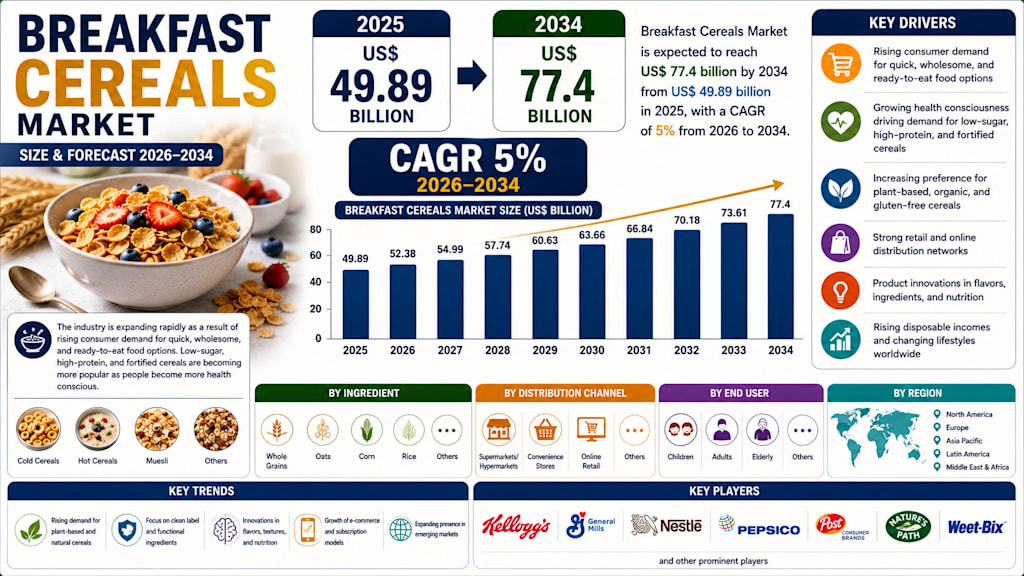
According to Renub Research, the Global Breakfast Cereals Market is expected to grow from US$49.89 billion in 2025 to US$77.4 billion by 2034, registering a compound annual growth rate (CAGR) of 5% between 2026 and 2034. Rising demand for convenient and nutritious food options, increasing health awareness, and ongoing innovation in functional cereal products are expected to drive market expansion.
Breakfast Cereals Have Become a Modern Household Staple
Breakfast cereals represent a major segment of the global packaged food industry.
The category includes ready-to-eat cereals, hot cereals, granola, muesli, oatmeal, and fortified cereal products designed to provide quick and convenient nutrition.
Consumers increasingly choose cereals because they require minimal preparation while offering a balance of carbohydrates, fiber, vitamins, minerals, and protein.
The versatility of cereals also contributes to their popularity. Many products can be consumed with milk, yogurt, fruits, nuts, or plant-based alternatives, making them suitable for a wide variety of dietary preferences.
As urbanization and busy lifestyles continue shaping food consumption patterns, breakfast cereals remain one of the most practical meal solutions available.
Health and Wellness Trends Continue Driving Demand
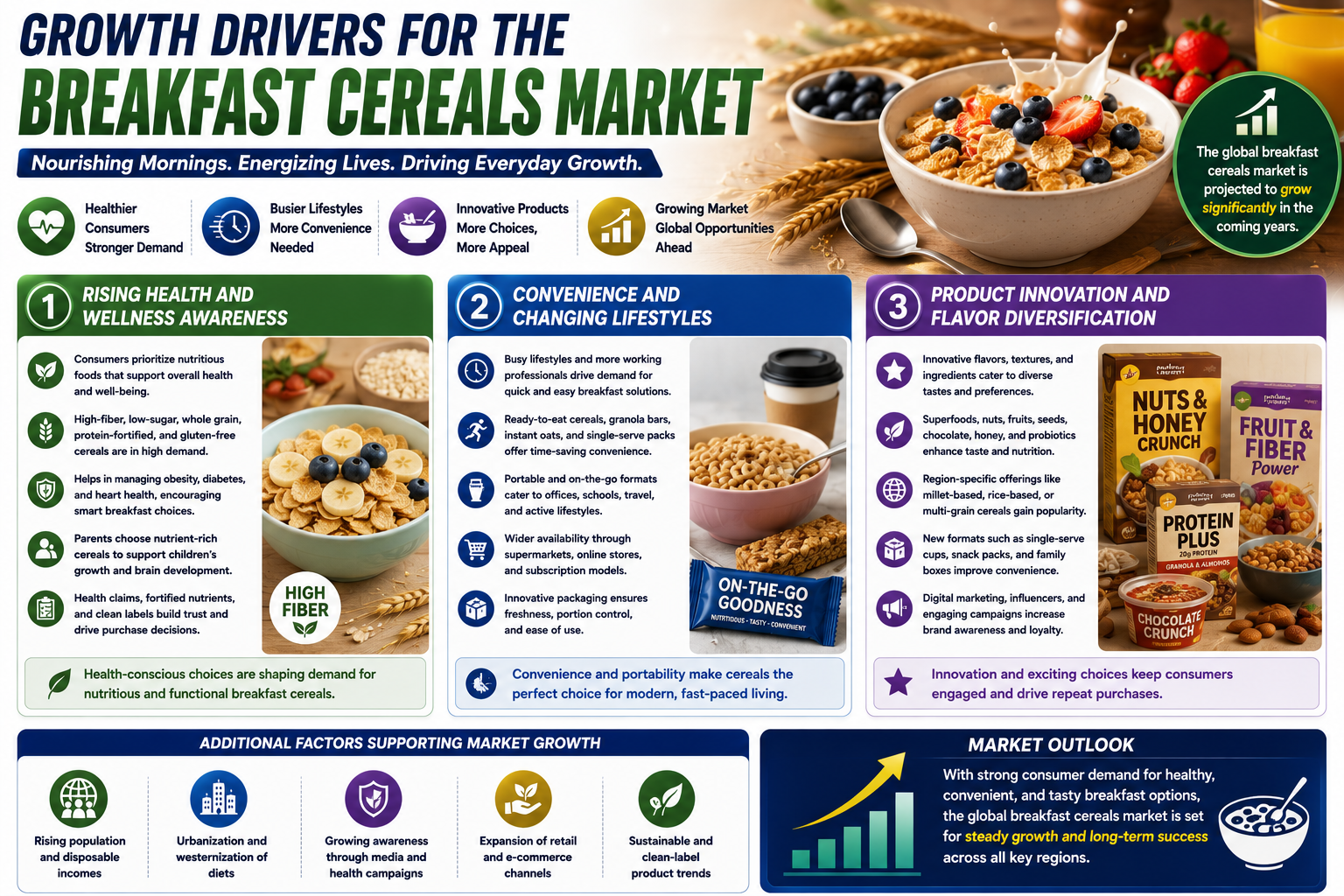
One of the strongest growth drivers for the breakfast cereals market is the increasing focus on health and wellness.
Consumers are paying closer attention to nutrition labels, ingredient lists, and the overall health benefits of the foods they consume.
This trend has fueled demand for cereals that are high in fiber, rich in protein, fortified with vitamins and minerals, and free from artificial additives.
Products designed to support digestive health, weight management, heart health, and energy levels are becoming increasingly popular among health-conscious consumers.
Parents are also seeking nutritious breakfast options for children, creating strong demand for fortified cereals enriched with essential nutrients such as iron, calcium, and vitamins.
As awareness of obesity, diabetes, and cardiovascular health continues growing, healthier cereal formulations are expected to remain a key market driver.
Functional Nutrition Is Reshaping Product Development
Consumers increasingly expect foods to provide benefits beyond basic nutrition.
This shift has encouraged cereal manufacturers to develop functional products that address specific wellness goals.
High-protein cereals appeal to fitness enthusiasts and active consumers, while high-fiber options support digestive health and satiety.
Gluten-free cereals serve individuals with dietary restrictions, while fortified products address nutritional deficiencies.
The rise of functional nutrition has transformed breakfast cereals from simple convenience foods into targeted wellness products capable of serving diverse consumer needs.
Manufacturers that successfully combine nutrition, taste, and convenience are likely to capture significant market share in the coming years.
Convenience Remains a Powerful Market Driver
Convenience continues to be one of the most important reasons consumers choose breakfast cereals.
Modern lifestyles leave many individuals with limited time for preparing traditional breakfasts.
Ready-to-eat cereals offer a fast, simple solution that requires little to no preparation.
Single-serve packs, instant oatmeal cups, granola snack packs, and portable cereal formats have further enhanced convenience.
These products appeal particularly to working professionals, students, and busy families seeking nutritious meal options without lengthy preparation times.
The continued growth of urban populations and fast-paced lifestyles ensures that convenience will remain a major factor supporting market expansion.
On-the-Go Consumption Supports Growth
The rise of mobile lifestyles has increased demand for portable breakfast solutions.
Consumers increasingly eat breakfast during commutes, at workplaces, or while traveling.
Manufacturers have responded by introducing innovative packaging formats that support on-the-go consumption.
Resealable pouches, portion-controlled packs, microwaveable containers, and cereal bars have expanded the category's appeal.
These convenient formats allow consumers to maintain healthy eating habits despite busy schedules, strengthening the market's long-term growth prospects.
Product Innovation Continues to Attract Consumers
Innovation remains a critical factor in the breakfast cereals industry's success.
Manufacturers continuously introduce new flavors, ingredients, textures, and formulations designed to capture consumer interest.
Products featuring superfoods, nuts, fruits, seeds, probiotics, and plant-based ingredients have become increasingly common.
Flavor innovation also plays a major role in maintaining consumer engagement.
While traditional flavors remain popular, manufacturers increasingly offer indulgent options featuring chocolate, honey, berries, vanilla, and caramel.
By combining nutrition with enjoyable taste experiences, cereal brands can attract a broader customer base and encourage repeat purchases.
Clean-Label Products Gain Momentum
Consumers increasingly prefer products with transparent ingredient lists and minimal processing.
The clean-label movement has encouraged cereal manufacturers to reduce artificial additives, preservatives, and excessive sugar content.
Organic cereals, non-GMO products, and naturally sourced ingredients are becoming more attractive to health-conscious shoppers.
Brands that emphasize transparency, sustainability, and ingredient quality are often better positioned to build consumer trust and loyalty.
As demand for clean-label products continues rising, manufacturers are expected to invest further in reformulation and product development initiatives.
Ready-to-Eat Cereals Dominate the Market
Ready-to-eat cereals remain the largest segment within the breakfast cereals market.
Their popularity stems from convenience, wide availability, and extensive flavor variety.
Consumers appreciate products that can be consumed immediately without cooking or lengthy preparation.
Ready-to-eat cereals are particularly popular among families, children, students, and working professionals.
The segment also benefits from strong retail visibility, extensive marketing campaigns, and continuous product innovation.
As convenience remains a priority for modern consumers, ready-to-eat cereals are expected to maintain their dominant market position.
Hot Cereals Continue Attracting Health-Focused Consumers
Hot cereals such as oatmeal and porridge continue to enjoy strong demand among health-conscious consumers.
These products are widely recognized for their nutritional value, fiber content, and heart-health benefits.
Many consumers perceive hot cereals as wholesome and minimally processed alternatives to more heavily marketed breakfast products.
Manufacturers are expanding this category through flavored varieties, instant preparation formats, and protein-enhanced formulations.
The growing popularity of wellness-focused diets is expected to support continued demand within the hot cereals segment.
Organic Cereals Gain Market Share
The organic breakfast cereals segment is experiencing notable growth.
Consumers increasingly seek products produced without synthetic pesticides, artificial fertilizers, or genetically modified ingredients.
Organic cereals appeal particularly to families with young children and consumers prioritizing sustainability and environmental responsibility.
Although organic products often command premium prices, many consumers view them as worthwhile investments in long-term health and well-being.
As organic food consumption continues expanding globally, breakfast cereals are expected to benefit from this trend.
Online Retail Is Expanding Consumer Access
E-commerce has become an increasingly important distribution channel for breakfast cereals.
Consumers appreciate the convenience of ordering products online and having them delivered directly to their homes.
Digital platforms also provide access to a broader range of products, including specialty, organic, and international cereal brands.
Subscription services, personalized recommendations, and targeted digital marketing further enhance online purchasing experiences.
As online grocery shopping continues growing worldwide, cereal manufacturers are expected to strengthen their digital distribution strategies.
Raw Material Price Volatility Creates Challenges
Despite strong growth prospects, the breakfast cereals market faces several challenges.
One of the most significant concerns involves fluctuating raw material prices.
Ingredients such as wheat, corn, oats, rice, and sugar are subject to price volatility caused by weather conditions, crop failures, supply chain disruptions, and global commodity market fluctuations.
Rising costs for packaging materials, transportation, and energy can further impact profitability.
Manufacturers must carefully manage sourcing strategies and operational efficiency to maintain competitive pricing while preserving margins.
Sugar Content Scrutiny Influences Product Reformulation
Health concerns regarding sugar consumption continue affecting the breakfast cereals industry.
Many traditional cereals have faced criticism for containing high levels of added sugar, particularly products marketed toward children.
As governments, healthcare organizations, and consumers focus on reducing sugar intake, manufacturers are increasingly reformulating products to meet evolving expectations.
Lower-sugar alternatives, natural sweeteners, and healthier ingredient profiles are becoming important competitive advantages.
Brands that successfully balance nutrition and taste are likely to benefit from changing consumer preferences.
United States Leads Global Market Demand
The United States remains one of the largest and most mature breakfast cereals markets globally.
Consumer demand for convenience, nutrition, and ready-to-eat products continues driving market growth.
Health-focused innovations, including high-fiber, protein-enriched, gluten-free, and low-sugar cereals, are particularly popular among American consumers.
Major industry players maintain strong market positions through extensive branding, product innovation, and broad distribution networks.
Despite competition from alternative breakfast options such as protein shakes and yogurt, cereals remain a staple choice for millions of U.S. households.
United Kingdom Emphasizes Healthier Breakfast Choices
The United Kingdom breakfast cereals market continues evolving toward healthier product offerings.
Consumers increasingly prefer whole-grain, low-sugar, and high-fiber cereals that align with broader wellness goals.
Functional cereals supporting digestive health, weight management, and energy levels have gained popularity.
Leading brands continue investing in product innovation while adapting to strict food labeling and nutritional regulations.
The country's focus on balanced nutrition supports continued demand for healthier breakfast cereal products.
India Emerges as a Rapidly Growing Market
India represents one of the fastest-growing breakfast cereals markets globally.
Urbanization, rising disposable incomes, and changing lifestyles are encouraging consumers to adopt convenient breakfast solutions.
Working professionals, students, and younger consumers increasingly choose ready-to-eat cereals, oats, and granola products.
Health awareness and government nutrition initiatives further support market growth.
While traditional breakfast foods remain popular, cereals are steadily gaining acceptance among urban households seeking convenience and balanced nutrition.
UAE Benefits from Urban Lifestyles and Health Awareness
The UAE breakfast cereals market continues expanding due to rising health awareness, urbanization, and a multicultural consumer base.
Ready-to-eat cereals, granola, oats, and fortified products appeal to professionals, expatriates, and families seeking convenient meal options.
Modern retail channels, including supermarkets, hypermarkets, and e-commerce platforms, provide broad product accessibility.
Growing interest in healthy living and balanced diets is expected to support continued market growth throughout the region.
Recent Product Launches Highlight Industry Innovation
The breakfast cereals industry continues witnessing strong innovation activity.
In April 2025, Kellogg introduced High Protein Bites cereal featuring plant-based protein and high-fiber content.
The same month, PepsiCo's Life brand launched Mighty Life multigrain cereals designed to support immune health and bone strength.
In March 2025, Nestlé India introduced a refined sugar-free version of CEREGROW cereal targeted at children aged two to six years.
Meanwhile, Seven Sundays launched Little Crispies, a gluten-free cereal line made with sorghum, honey, and coconut oil in February 2025.
These developments demonstrate the industry's commitment to meeting evolving consumer demands through innovation.
Final Thoughts
The global breakfast cereals market continues to evolve as consumers seek healthier, more convenient, and increasingly personalized food options.
Driven by rising health awareness, changing lifestyles, functional nutrition trends, and ongoing product innovation, the industry remains well-positioned for long-term growth.
With the market expected to grow from US$49.89 billion in 2025 to US$77.4 billion by 2034, significant opportunities exist for manufacturers, retailers, ingredient suppliers, and investors.
Although challenges related to raw material costs and sugar reduction remain important considerations, the industry's ability to adapt through innovation and consumer-focused product development provides a strong foundation for future expansion.
As consumers worldwide continue prioritizing convenience, nutrition, and wellness, breakfast cereals are expected to remain a central part of modern breakfast routines.
About the Creator
Enjoyed the story? Support the Creator.
Subscribe for free to receive all their stories in your feed.
Comments
There are no comments for this story
Be the first to respond and start the conversation.