
Global Biopsy Devices Market Expands as Early Cancer Detection and Minimally Invasive Diagnostics Drive Healthcare Innovation
Rising cancer incidence, advancements in image-guided procedures, and growing demand for accurate diagnostic technologies are fueling steady growth across the global biopsy devices industry.

The global healthcare industry is increasingly focused on one critical objective: diagnosing diseases earlier and more accurately. As cancer rates continue to rise worldwide and healthcare systems prioritize preventive care, biopsy procedures have become an essential component of modern diagnostic medicine.
Biopsy devices play a crucial role in helping physicians identify cancer, inflammatory conditions, autoimmune disorders, and infectious diseases through tissue and cell sample analysis. Over the past decade, technological advancements have transformed biopsy procedures from highly invasive interventions into safer, faster, and more precise diagnostic techniques.
Today, image-guided biopsy systems, minimally invasive devices, and advanced tissue-sampling technologies are improving patient outcomes while enhancing diagnostic accuracy. As healthcare infrastructure expands globally and awareness of early disease detection increases, demand for biopsy devices is expected to grow steadily throughout the coming years.
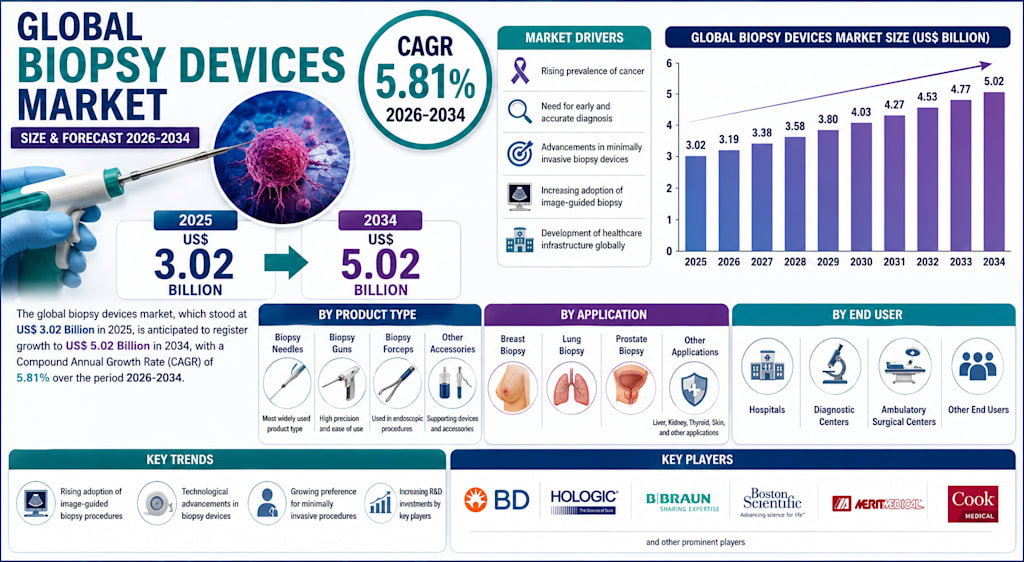
According to Renub Research, the Global Biopsy Devices Market is projected to grow from US$3.02 billion in 2025 to US$5.02 billion by 2034, registering a compound annual growth rate (CAGR) of 5.81% between 2026 and 2034. Rising cancer prevalence, advancements in minimally invasive technologies, and increasing demand for accurate diagnostic procedures are expected to drive sustained market expansion.
Biopsy Devices Have Become Essential Tools in Modern Diagnostics
Biopsy devices are specialized medical instruments used to extract tissue or cell samples from the body for laboratory analysis.
These samples help healthcare professionals diagnose diseases, evaluate abnormalities, determine cancer stages, and guide treatment decisions.
Biopsy procedures are commonly performed on organs and tissues such as the breast, lungs, prostate, liver, gastrointestinal tract, kidneys, and bone marrow.
Modern biopsy systems include needles, forceps, vacuum-assisted devices, biopsy guns, and image-guided sampling technologies.
When combined with advanced imaging techniques such as ultrasound, computed tomography (CT), magnetic resonance imaging (MRI), and mammography, biopsy devices provide highly accurate diagnostic information while minimizing patient discomfort.
The growing emphasis on precision medicine and early disease detection continues strengthening the importance of biopsy procedures across healthcare systems worldwide.
Rising Cancer Rates Are Driving Demand
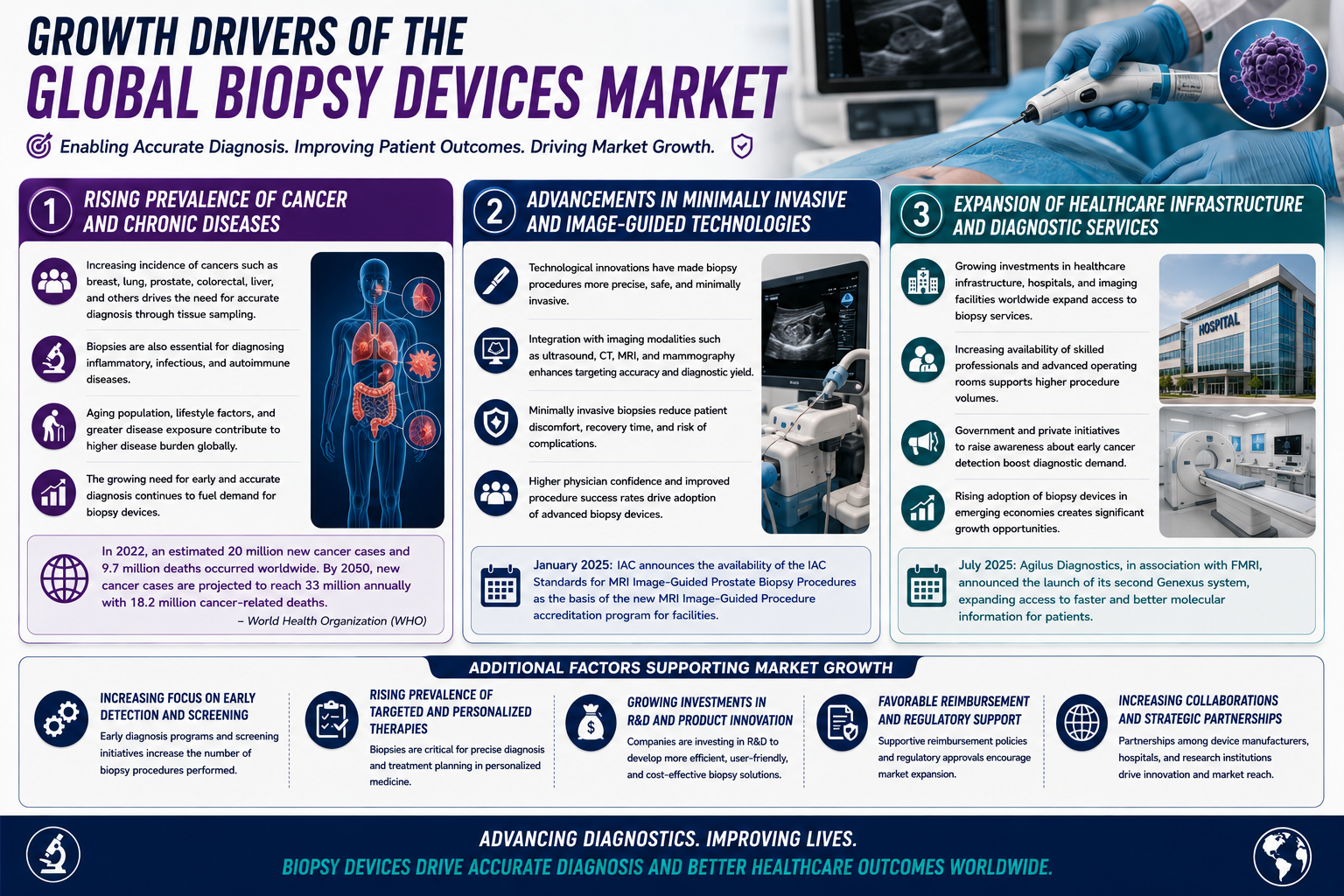
One of the most significant growth drivers for the biopsy devices market is the increasing prevalence of cancer worldwide.
Biopsy remains the gold standard for confirming many cancer diagnoses because tissue analysis provides critical information regarding tumor type, stage, and treatment strategy.
Breast cancer, lung cancer, prostate cancer, liver cancer, and colorectal cancer frequently require biopsy procedures as part of the diagnostic process.
According to the market report, approximately 20 million new cancer cases and 9.7 million cancer-related deaths were recorded globally in 2022. Furthermore, projections indicate that annual cancer cases could reach 33 million by 2050, while cancer-related deaths may rise to 18.2 million per year.
These alarming statistics highlight the growing need for reliable and efficient diagnostic technologies.
As healthcare providers prioritize earlier diagnosis and treatment intervention, demand for biopsy devices is expected to continue increasing.
Chronic Diseases Are Expanding Diagnostic Requirements
Beyond cancer diagnosis, biopsy devices are increasingly used to identify inflammatory, autoimmune, infectious, and chronic diseases.
Conditions affecting the liver, kidneys, lungs, gastrointestinal system, and immune system often require tissue sampling for definitive diagnosis.
As global populations age and chronic disease prevalence rises, healthcare systems are conducting more diagnostic procedures than ever before.
This broader range of applications is helping expand the role of biopsy devices beyond oncology and creating additional opportunities for market growth.
Minimally Invasive Procedures Are Transforming Patient Care
One of the most important developments within the biopsy devices market is the shift toward minimally invasive diagnostic techniques.
Traditional surgical biopsies often involve larger incisions, longer recovery periods, and greater risks of complications.
Modern biopsy technologies allow physicians to obtain diagnostic samples using smaller instruments and less invasive approaches.
These procedures typically reduce pain, minimize scarring, lower infection risks, and shorten recovery times.
Patients increasingly prefer minimally invasive options because they offer improved comfort and faster return to normal activities.
Healthcare providers also benefit from reduced procedure times and lower complication rates.
As minimally invasive medicine continues gaining popularity, demand for advanced biopsy devices is expected to strengthen significantly.
Image-Guided Technologies Are Improving Accuracy
The integration of advanced imaging technologies with biopsy procedures represents another major growth catalyst.
Image-guided biopsy systems utilize technologies such as ultrasound, CT scans, MRI, and mammography to help physicians locate suspicious lesions with exceptional precision.
These imaging modalities enable clinicians to target difficult-to-reach areas while minimizing damage to surrounding tissues.
Improved visualization significantly enhances diagnostic accuracy and reduces the likelihood of inconclusive results.
Image-guided procedures have become particularly important for diagnosing cancers in organs such as the breast, lungs, liver, and prostate.
In January 2025, the Intersocietal Accreditation Commission (IAC) introduced standards supporting MRI image-guided prostate biopsy procedures as part of a new accreditation program.
Such developments highlight the growing importance of advanced imaging technologies within the biopsy market.
Expanding Healthcare Infrastructure Supports Market Growth
Healthcare infrastructure development is playing a critical role in expanding access to diagnostic services worldwide.
Governments and private healthcare organizations continue investing heavily in hospitals, cancer treatment centers, diagnostic laboratories, and imaging facilities.
Improved access to healthcare services increases the number of patients undergoing diagnostic evaluations and biopsy procedures.
Emerging economies are particularly important contributors to this trend, as healthcare modernization efforts continue accelerating.
Greater availability of trained medical professionals, advanced imaging equipment, and specialized diagnostic facilities is expected to support long-term market growth.
Public Awareness Campaigns Encourage Early Detection
Awareness programs promoting cancer screening and preventive healthcare have become increasingly influential.
Healthcare organizations, governments, and advocacy groups continue educating populations about the importance of early disease detection.
As individuals become more aware of screening recommendations and diagnostic options, they are more likely to seek medical evaluation at earlier stages of disease progression.
Earlier diagnosis often improves treatment outcomes while increasing demand for biopsy procedures and related technologies.
The growing focus on preventive healthcare remains an important factor supporting market expansion.
Biopsy Needles Continue to Dominate Product Demand
Among various product categories, biopsy needles represent one of the most important segments within the market.
Biopsy needles are widely used for collecting tissue samples from organs including the breast, prostate, liver, kidneys, and lungs.
Their popularity stems from their effectiveness, affordability, and compatibility with minimally invasive procedures.
Disposable biopsy needles have become particularly important because they reduce contamination risks and improve patient safety.
Healthcare providers value biopsy needles for their ability to deliver accurate diagnostic samples while minimizing discomfort and complications.
As minimally invasive diagnostics continue expanding, demand for biopsy needles is expected to remain strong.
Prostate Biopsy Devices Benefit from Aging Populations
The prostate biopsy devices segment continues experiencing significant growth.
Prostate cancer remains one of the most common cancers affecting men worldwide, particularly among older populations.
Biopsy procedures play a critical role in confirming diagnoses following abnormal prostate-specific antigen (PSA) test results or suspicious imaging findings.
Technological improvements have enhanced procedural accuracy while reducing infection risks and patient discomfort.
Growing awareness of prostate health and increasing screening participation continue supporting demand for advanced prostate biopsy systems.
Healthcare providers increasingly invest in modern equipment that improves diagnostic confidence and treatment planning.
Lung Biopsy Devices Gain Importance
Lung cancer remains one of the leading causes of cancer-related mortality globally.
As a result, demand for lung biopsy devices continues rising steadily.
Modern lung biopsy procedures often utilize CT guidance and bronchoscopic technologies to improve accuracy and reduce complications.
Advances in needle design, forceps technology, and imaging integration have significantly enhanced procedural outcomes.
The growing prevalence of respiratory diseases and lung cancer ensures continued demand for reliable lung biopsy solutions.
Early diagnosis remains critical for improving survival rates and treatment effectiveness.
CT-Guided Biopsy Systems Improve Precision
CT-guided biopsy devices represent one of the most technologically advanced segments within the market.
These systems enable clinicians to accurately target tumors and lesions located in challenging anatomical regions such as the lungs, liver, pancreas, and bones.
High-resolution imaging capabilities allow physicians to obtain precise tissue samples while minimizing procedural risks.
Although CT-guided systems require significant investment, their diagnostic accuracy makes them essential within advanced healthcare facilities.
The growing emphasis on precision diagnostics continues driving adoption of CT-guided biopsy technologies.
Diagnostic and Imaging Centers Become Key End Users
Diagnostic and imaging centers represent an increasingly important end-user segment within the biopsy devices market.
These facilities specialize in outpatient diagnostic services and often focus heavily on image-guided procedures.
Their advanced imaging capabilities, specialized expertise, and cost-effective service models have made them attractive alternatives to traditional hospital-based diagnostics.
The rapid expansion of private diagnostic networks in urban and semi-urban areas is creating new opportunities for biopsy device manufacturers.
As healthcare systems increasingly emphasize efficiency and accessibility, diagnostic centers are expected to play an even greater role in future market growth.
High Costs Remain a Significant Challenge
Despite strong market prospects, cost remains one of the industry's most important challenges.
Advanced biopsy devices often require sophisticated imaging systems, specialized training, and complex procedural infrastructure.
These factors contribute to higher equipment and operational expenses.
Healthcare providers in cost-sensitive markets may face difficulties adopting the latest technologies due to budget constraints.
Patients in regions with limited insurance coverage may also encounter financial barriers to accessing advanced diagnostic procedures.
Addressing affordability concerns remains essential for expanding market penetration globally.
Regulatory Requirements Can Slow Innovation
Medical device manufacturers must comply with rigorous regulatory standards designed to ensure patient safety and product effectiveness.
Obtaining approvals for new biopsy technologies often requires extensive clinical testing and documentation.
Different countries maintain unique regulatory frameworks, increasing complexity for global manufacturers.
These requirements can lengthen product development timelines and increase costs.
While regulation is essential for maintaining quality and safety, it can create challenges for companies seeking to introduce innovative solutions rapidly.
Procedural Risks Continue to Influence Patient Decisions
Although biopsy procedures are generally safe, some patients remain concerned about potential complications.
Risks such as bleeding, infection, pain, tissue damage, and the need for follow-up interventions can influence patient acceptance.
Manufacturers continue focusing on technologies that reduce procedural risks while improving patient comfort.
The continued development of minimally invasive devices and image-guided techniques is helping address these concerns and improve overall patient experiences.
United States Leads the Global Market
The United States remains one of the largest and most technologically advanced biopsy device markets worldwide.
A strong healthcare infrastructure, high cancer prevalence, advanced imaging capabilities, and widespread adoption of minimally invasive procedures support robust demand.
Healthcare providers in the United States frequently adopt new diagnostic technologies that improve accuracy and patient outcomes.
In May 2025, BiBB Instruments AB and TaeWoong Medical USA signed a letter of intent to collaborate on promoting and commercializing EndoDrill GI Biopsy Systems within the U.S. market.
Such partnerships demonstrate the ongoing innovation and commercialization activity within the sector.
United Kingdom Strengthens Early Detection Programs
The United Kingdom continues investing heavily in cancer screening and early diagnosis initiatives.
National Health Service (NHS) programs actively promote screening for breast, prostate, and lung cancers, helping sustain demand for biopsy procedures.
Technological modernization and partnerships with private diagnostic providers further strengthen market opportunities.
Despite budget pressures within public healthcare systems, the country's focus on early detection remains a strong driver of biopsy device adoption.
India Emerges as a High-Growth Market
India's biopsy devices market is experiencing rapid expansion due to increasing cancer incidence, healthcare infrastructure improvements, and growing public awareness.
Government initiatives and private-sector investments are improving access to diagnostic services across urban and semi-urban regions.
In December 2024, PanGIA Biotech announced a partnership with Canary Oncoceutics to introduce the PanGIA Prostate Assay, an AI-integrated urine-based liquid biopsy solution for prostate cancer detection in India.
Such developments highlight the country's growing importance within the global diagnostic landscape.
Saudi Arabia Invests in Advanced Healthcare
Saudi Arabia continues strengthening its healthcare infrastructure through major investments in hospitals, diagnostic centers, and oncology services.
Growing awareness of cancer diagnosis and increasing adoption of advanced imaging technologies are supporting market expansion.
In February 2025, healthcare investments included the development of a new Oncology Center of Excellence by Johns Hopkins Aramco Healthcare and significant expansion efforts by Aster Pharmacy.
These initiatives reflect the country's commitment to improving healthcare access and diagnostic capabilities.
Final Thoughts
The global biopsy devices market is entering a period of sustained growth driven by rising cancer prevalence, increasing demand for early diagnosis, and ongoing advancements in minimally invasive medical technologies.
As healthcare systems focus on precision medicine, preventive care, and improved patient outcomes, biopsy devices will remain essential tools for disease detection and treatment planning.
With the market projected to grow from US$3.02 billion in 2025 to US$5.02 billion by 2034, significant opportunities exist for medical device manufacturers, healthcare providers, diagnostic centers, and investors.
While challenges related to cost, regulation, and procedural risks remain, continuous innovation in imaging technologies and minimally invasive solutions is expected to support long-term market expansion.
As early diagnosis becomes increasingly central to modern healthcare strategies, biopsy devices will continue playing a vital role in improving global health outcomes.
About the Creator
Enjoyed the story? Support the Creator.
Subscribe for free to receive all their stories in your feed.
Comments
There are no comments for this story
Be the first to respond and start the conversation.