
Global Anti-Venom Market Set for Strong Growth as Snakebite Awareness and Medical Innovation Improve Access to Life-Saving Treatments
Rising snakebite incidents, advances in antivenom development, and expanding government healthcare initiatives are driving growth across the global anti-venom industry.

Introduction: A Critical Lifeline in Global Healthcare
Every year, millions of people around the world face potentially life-threatening encounters with venomous snakes, scorpions, spiders, and other dangerous creatures. While many of these incidents occur in rural and underserved regions, their impact extends far beyond local communities, affecting public health systems, economies, and healthcare infrastructure worldwide.
One of the most effective tools for treating venomous bites and stings is anti-venom. This life-saving biological treatment has become an essential component of emergency medical care, helping healthcare professionals neutralize toxins and prevent severe complications or death.
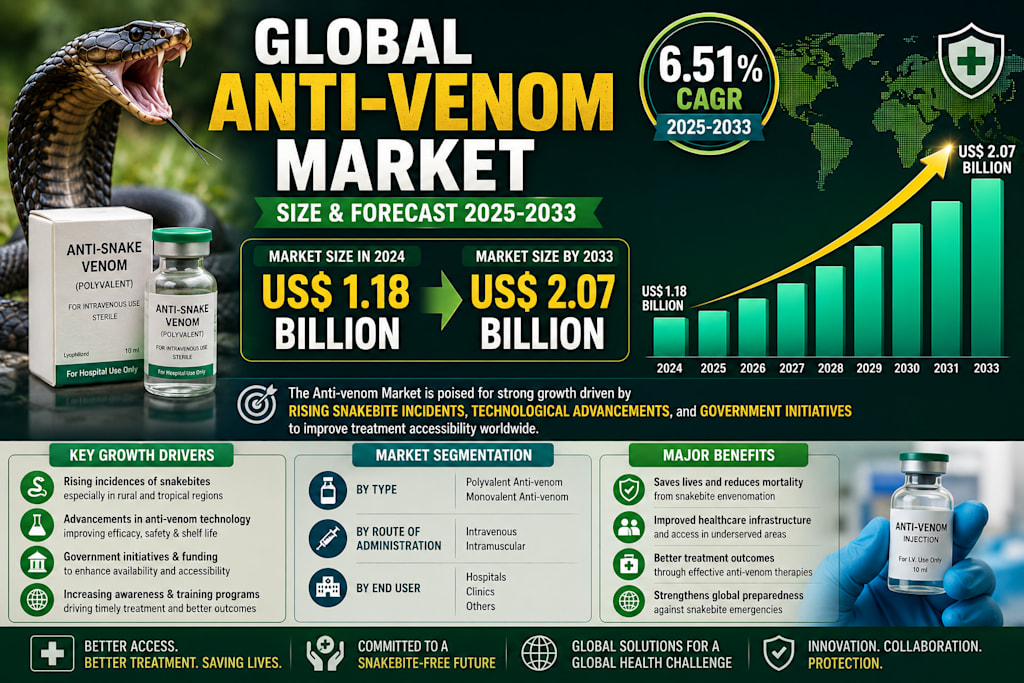
According to Renub Research, the Global Anti-Venom Market was valued at approximately US$ 1.18 billion in 2024 and is expected to reach US$ 2.07 billion by 2033, expanding at a compound annual growth rate (CAGR) of 6.51% between 2025 and 2033. Growth is being driven by increasing snakebite incidents, improvements in anti-venom technology, and government initiatives aimed at improving treatment accessibility worldwide.
As healthcare systems place greater emphasis on emergency preparedness and public health protection, anti-venom products are becoming increasingly important in reducing mortality and improving patient outcomes.
Understanding Anti-Venom and Its Medical Importance
Anti-venom, also known as antivenin, is a biological product used to treat venomous bites and stings. It is typically produced by immunizing animals such as horses or sheep with small amounts of venom. Over time, these animals develop antibodies against the venom, which are then collected and processed into anti-venom products.
When administered to a patient after a venomous bite or sting, anti-venom works by neutralizing toxins circulating in the body. This significantly reduces the risk of severe complications such as organ damage, paralysis, tissue destruction, and death.
Anti-venom is widely used to treat snakebites, scorpion stings, spider bites, and other venom-related medical emergencies. In many parts of the world, particularly in tropical and subtropical regions, it remains one of the most critical life-saving treatments available.
The growing recognition of snakebite envenoming as a major public health issue has further increased attention on anti-venom availability and accessibility.
Rising Snakebite Cases Continue to Drive Demand
One of the primary factors supporting growth in the anti-venom market is the increasing number of venomous animal encounters worldwide.
Many developing countries, particularly those with large rural populations, experience significant numbers of snakebite incidents each year. Agricultural workers, forest dwellers, and communities living near natural habitats are especially vulnerable.
As populations expand into previously undeveloped areas and outdoor activities become more common, the risk of encounters with venomous creatures continues to increase. These trends are contributing to growing demand for effective treatment options.
Healthcare providers and governments are increasingly recognizing the importance of maintaining adequate anti-venom supplies in hospitals and emergency care facilities. Improved awareness and diagnosis are also leading to more reported cases and greater demand for treatment.
As a result, anti-venom remains a critical healthcare product in both developed and emerging economies.
Public Health Awareness Is Improving Treatment Outcomes
Growing public awareness of venomous bites and stings is playing an important role in market development.
Educational campaigns conducted by governments, healthcare organizations, and non-governmental organizations have helped communities better understand the dangers associated with venomous animals. These efforts encourage individuals to seek medical treatment quickly after a bite or sting rather than relying solely on traditional remedies.
Early treatment is often essential for achieving positive outcomes. The availability of anti-venom within the first few hours after envenomation can significantly reduce complications and improve survival rates.
Awareness campaigns also help healthcare professionals recognize symptoms more effectively and ensure that patients receive appropriate treatment without unnecessary delays.
As education initiatives continue expanding, demand for anti-venom products is expected to increase further.
Advances in Biotechnology Are Transforming Anti-Venom Development
Technological innovation has become one of the most important forces shaping the future of the anti-venom industry.
Historically, anti-venom production was a complex process associated with challenges such as limited specificity, allergic reactions, and supply constraints. Today, advances in biotechnology, immunology, and pharmaceutical research are helping improve both safety and effectiveness.
Researchers are developing next-generation anti-venom formulations with greater purity, reduced side effects, and enhanced toxin-neutralizing capabilities. Improvements in antibody production technologies are also helping manufacturers create more targeted treatments for specific venom types.
The report highlights several important developments, including Bharat Serums and Vaccines' collaboration with the Indian Institute of Science to advance anti-venom therapies in India. Such initiatives demonstrate the industry's commitment to innovation and improved patient outcomes.
As scientific understanding of venom biology continues to improve, future anti-venom products are expected to become even more effective and accessible.
Government Support Is Expanding Access to Treatment
Government initiatives have emerged as a major growth driver for the anti-venom market.
Many countries have recognized snakebite envenoming as a neglected public health issue requiring coordinated intervention. National healthcare programs increasingly include anti-venom procurement, distribution, and training initiatives designed to improve treatment access in high-risk regions.
Investments in rural healthcare infrastructure have been particularly important because many venomous bite incidents occur in remote communities with limited medical resources.
Governments are also partnering with research institutions and pharmaceutical manufacturers to support anti-venom development and production. These collaborations help strengthen supply chains and improve treatment availability.
As public health systems continue prioritizing emergency preparedness, government support is expected to remain a key contributor to market growth.
Research Collaborations Are Accelerating Innovation
Partnerships between pharmaceutical companies, research institutes, and healthcare organizations are creating new opportunities for innovation.
The report highlights several notable developments, including Bharat Serums and Vaccines' collaboration with the Indian Institute of Science and MicroPharm Limited's acquisition of Sanofi Pasteur's antivenom product portfolio. These initiatives are helping strengthen research capabilities and expand treatment options across multiple regions.
Collaborative research efforts allow organizations to share expertise, improve production processes, and develop therapies tailored to regional venom profiles. This is particularly important because venom composition can vary significantly between species and geographic locations.
By working together, industry participants can accelerate scientific progress while improving patient access to life-saving treatments.
Emerging Markets Offer Significant Growth Opportunities
Developing countries represent some of the most promising growth opportunities for the anti-venom industry.
Many regions in Asia, Africa, Latin America, and parts of the Middle East experience high rates of venomous bites and stings. However, access to effective treatment remains limited in certain areas due to infrastructure challenges, supply constraints, and affordability concerns.
Improving healthcare access, expanding distribution networks, and increasing public health investments are helping address these challenges. International organizations and healthcare agencies are also working to improve anti-venom availability in underserved communities.
As healthcare systems strengthen and awareness increases, emerging markets are expected to contribute significantly to future industry growth.
Sustainability Is Becoming a Strategic Priority
Sustainability is playing an increasingly important role within the anti-venom industry.
Manufacturers and research institutions are adopting environmentally responsible practices aimed at reducing waste, improving energy efficiency, and minimizing environmental impact. Sustainable manufacturing processes help ensure long-term operational viability while supporting broader public health objectives.
Organizations such as the Butantan Institute and South African Vaccine Producers have implemented initiatives focused on renewable energy, responsible resource management, and environmentally conscious production methods.
These efforts demonstrate how biotechnology companies can balance scientific advancement with environmental responsibility.
As sustainability becomes a growing priority across healthcare sectors, anti-venom manufacturers are expected to continue investing in greener production practices.
Product Innovation Continues to Shape the Industry
Recent product developments illustrate the ongoing evolution of the anti-venom market.
In 2024, VINS Bioproducts continued expanding its global presence by supplying life-saving immunoglobulins and anti-sera products to more than 70 countries. The company's investments in advanced manufacturing facilities and equine farms highlight the importance of production capacity within the industry.
Similarly, Ophirex received U.S. FDA Fast Track Designation for varespladib-methyl, a promising treatment for snakebite envenoming. Such developments demonstrate the growing interest in next-generation therapies that may complement or enhance traditional anti-venom treatments.
As research progresses, product innovation is expected to remain a key competitive factor.
Challenges Continue to Affect Market Growth
Despite positive growth prospects, several challenges remain.
One of the most significant issues is the complexity of anti-venom production. Manufacturing biological products requires specialized facilities, highly trained personnel, strict quality controls, and substantial investment. These factors contribute to high production costs and can limit availability in resource-constrained regions.
Supply chain management also presents challenges because anti-venom products often require controlled storage and transportation conditions.
Another concern involves affordability. In some countries, anti-venom treatments remain expensive relative to local income levels, creating barriers to access for vulnerable populations.
Addressing these challenges through innovation, public-private partnerships, and expanded healthcare investment will be essential for future market growth.
Leading Companies Driving Industry Development
The anti-venom market includes a diverse group of biotechnology, pharmaceutical, and vaccine manufacturers dedicated to improving treatment outcomes worldwide.
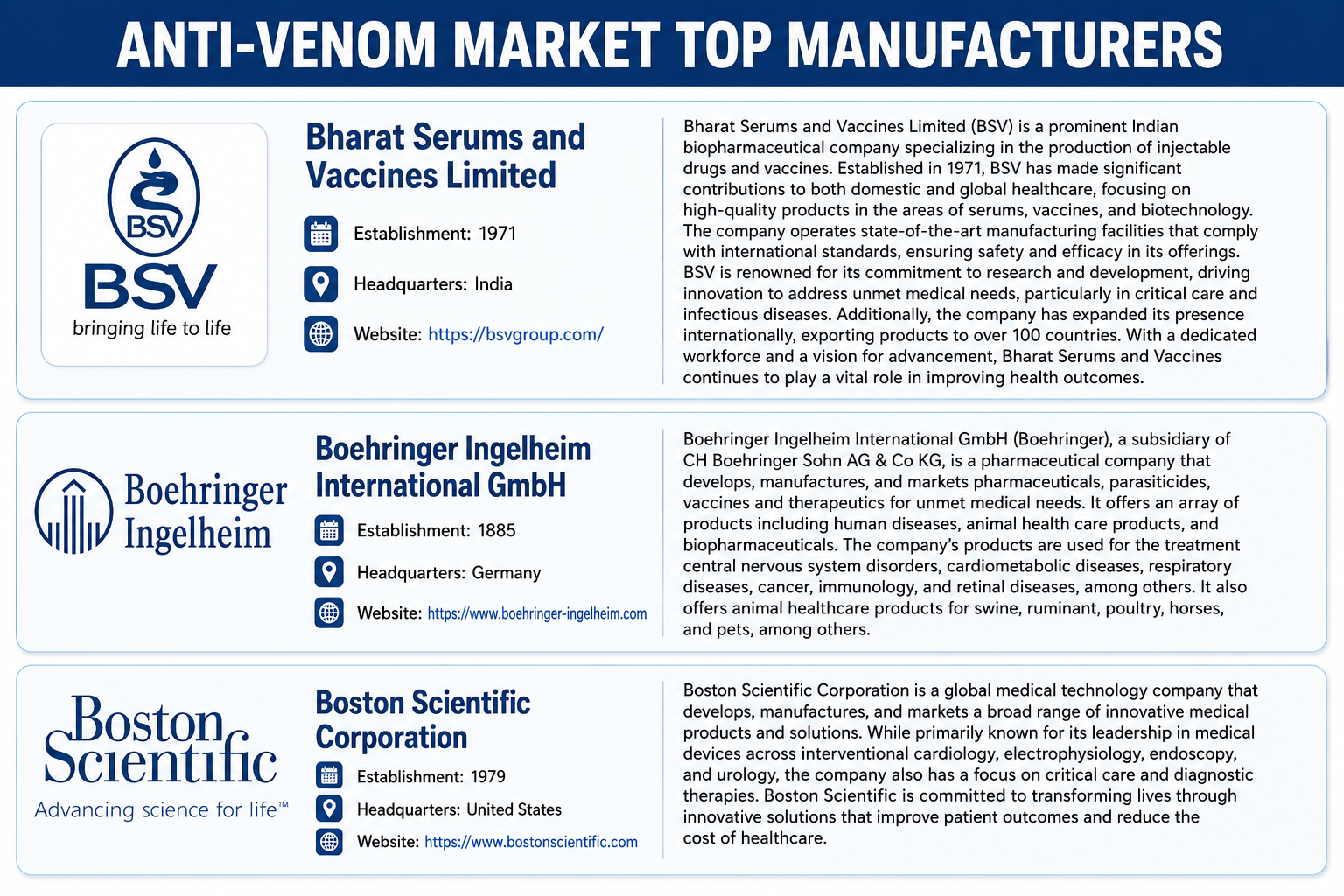
Key industry participants include Bharat Serums and Vaccines Limited, Boehringer Ingelheim International GmbH, CSL Limited, Merck & Co. Inc., Merck KGaA, Pfizer Inc., VINS Bioproducts Limited, Haffkine Bio-Pharmaceutical Corporation Limited, Instituto Bioclon S.A. de C.V., MicroPharm Limited, Sanofi S.A., Butantan Institute, Laboratorios Silanes S.A. de C.V., and Serum Institute of India Pvt. Ltd.
These organizations continue investing in research, manufacturing capabilities, and global distribution networks to improve treatment accessibility and effectiveness.
Final Thoughts
The global anti-venom market is entering a period of steady growth driven by increasing awareness of venom-related health risks, technological innovation, and stronger public health initiatives.
With the market expected to grow from US$ 1.18 billion in 2024 to US$ 2.07 billion by 2033, anti-venom products will remain a critical component of emergency medical care worldwide. Rising snakebite incidents, expanding healthcare infrastructure, and advancements in biotechnology are creating favorable conditions for continued industry expansion.
As governments, healthcare providers, and pharmaceutical companies work together to improve accessibility and treatment outcomes, anti-venom therapies will continue saving lives and strengthening healthcare systems across both developed and emerging markets. The coming decade is likely to bring further innovation, broader availability, and improved protection for communities most vulnerable to venomous animal encounters.
About the Creator
Enjoyed the story? Support the Creator.
Subscribe for free to receive all their stories in your feed.
Comments
There are no comments for this story
Be the first to respond and start the conversation.