
Germany's Diabetes Device Market Is Entering a New Era of Digital Healthcare
Rising diabetes cases, strong reimbursement policies, and growing adoption of connected health technologies are accelerating the transformation of diabetes care across Germany.

Diabetes has become one of the most significant public health challenges of the modern era. Across the globe, millions of people live with the condition, requiring constant monitoring, medication management, and lifestyle adjustments to maintain healthy blood sugar levels. As healthcare systems seek better ways to manage chronic diseases, medical technology is playing an increasingly important role in improving patient outcomes and reducing long-term complications.
Germany is emerging as one of the leading examples of this healthcare transformation.
With a strong healthcare infrastructure, widespread insurance coverage, and a growing commitment to digital health innovation, the country has become one of Europe's most important markets for diabetes management technologies. Advanced glucose monitoring systems, connected insulin delivery devices, mobile health applications, and cloud-based healthcare platforms are changing how patients and healthcare providers approach diabetes care.
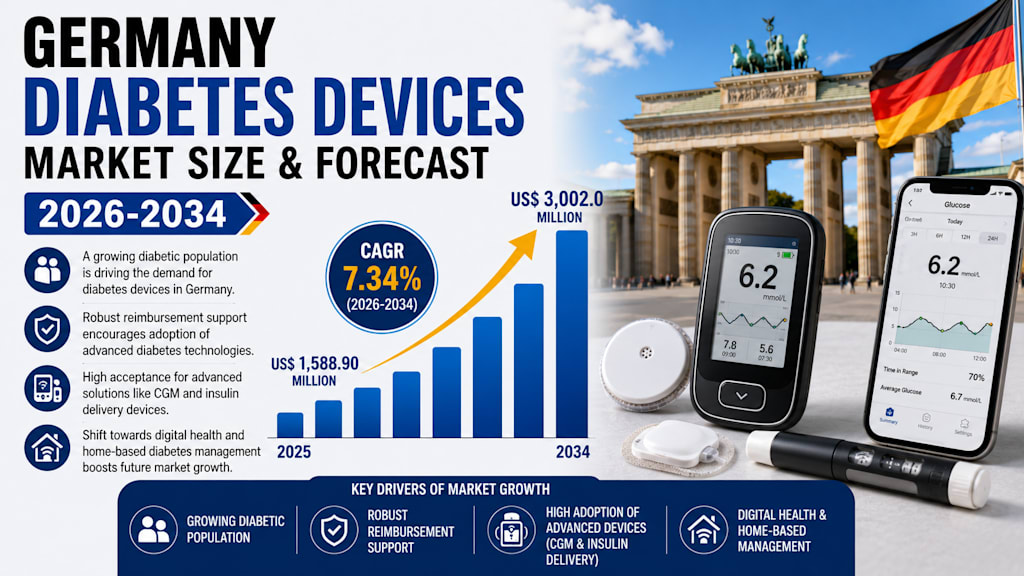
According to Renub Research, the Germany Diabetes Devices Market is expected to grow from US$ 1,588.90 million in 2025 to US$ 3,002.0 million by 2034, registering a compound annual growth rate (CAGR) of 7.34% between 2026 and 2034. This strong growth reflects increasing demand for innovative diabetes management solutions that support more effective and personalized treatment strategies.
As diabetes prevalence continues to rise and healthcare systems emphasize preventive care, Germany's diabetes device market is positioned for substantial expansion in the years ahead.
The Growing Burden of Diabetes in Germany
Diabetes is no longer viewed as a condition affecting only a limited segment of the population. Today, it impacts millions of people across all age groups and remains one of the leading causes of long-term health complications.
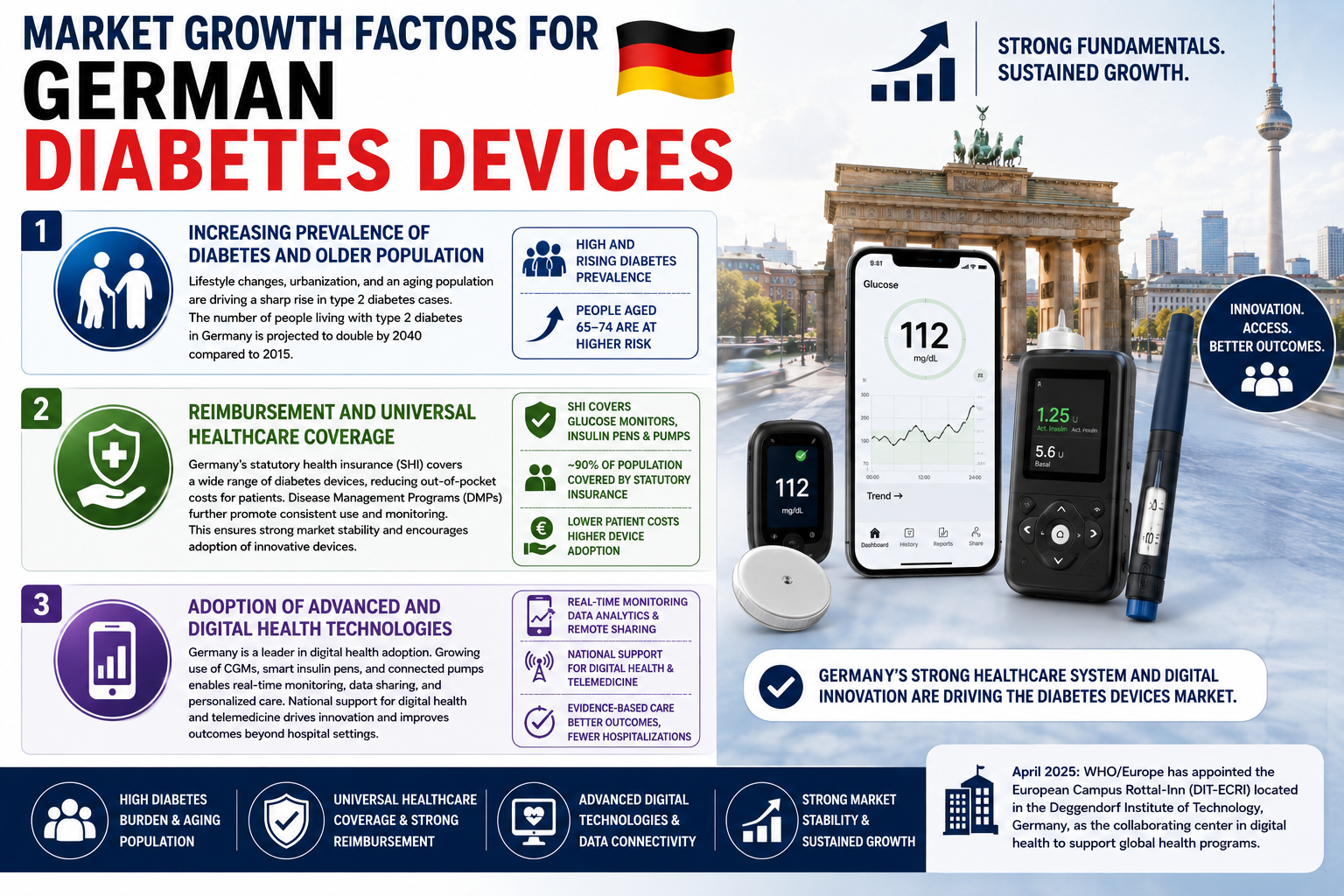
Germany has one of the largest diabetic populations in Europe. Lifestyle changes, urbanization, dietary habits, and reduced physical activity have contributed to increasing rates of type 2 diabetes over the past several decades. At the same time, demographic changes are creating additional challenges for healthcare providers.
As the population ages, the number of individuals at risk for diabetes continues to increase. Older adults are particularly vulnerable because age-related metabolic changes often contribute to insulin resistance and other health conditions associated with diabetes.
Healthcare experts anticipate that the number of people living with type 2 diabetes in Germany could continue rising significantly in the coming decades. This trend is creating strong demand for technologies that enable better disease management while helping reduce the risk of costly complications.
The need for regular monitoring, accurate insulin administration, and personalized treatment plans has made diabetes devices an essential component of modern healthcare delivery.
Why Diabetes Devices Matter
Managing diabetes requires continuous attention. Patients must monitor blood glucose levels, adjust medications, follow dietary recommendations, and maintain active communication with healthcare providers.
Diabetes devices simplify many of these responsibilities.
Modern diabetes technologies include self-monitoring blood glucose meters, continuous glucose monitoring systems, insulin pens, and insulin pumps. These devices provide real-time information about glucose levels, helping patients make informed decisions about treatment and lifestyle choices.
Beyond convenience, these technologies play a critical role in preventing serious complications. Proper glucose control can significantly reduce the risk of cardiovascular disease, nerve damage, kidney disorders, vision problems, and other diabetes-related conditions.
Today's devices also incorporate digital connectivity features that allow patients to share health data directly with healthcare professionals through mobile applications and cloud-based systems. This continuous flow of information supports more personalized and proactive care.
As healthcare increasingly moves toward data-driven decision-making, diabetes devices are becoming indispensable tools for both patients and clinicians.
Germany's Healthcare System Supports Innovation
One of Germany's greatest strengths is its healthcare system.
The country's statutory health insurance framework covers a large majority of the population and plays a central role in supporting access to advanced diabetes technologies. Reimbursement programs significantly reduce financial barriers for patients, encouraging wider adoption of glucose monitoring systems, insulin pens, and insulin pumps.
This reimbursement support creates a stable environment for innovation.
When patients have affordable access to new technologies, healthcare providers are more likely to recommend advanced solutions that improve treatment outcomes. Physicians can focus on selecting the most appropriate therapy rather than worrying primarily about cost limitations.
Germany's Disease Management Programs further contribute to adoption by promoting structured diabetes care and encouraging regular monitoring. These initiatives help patients maintain better control of their condition while reducing the likelihood of severe complications.
As a result, Germany has become one of Europe's most supportive markets for diabetes device manufacturers and healthcare technology innovators.
Digital Health Is Changing Diabetes Management
Germany's commitment to digital healthcare is creating new opportunities throughout the diabetes device market.
Healthcare providers increasingly rely on connected technologies that enable real-time monitoring and remote patient management. Continuous glucose monitoring systems, smart insulin pens, and cloud-connected insulin pumps are becoming integral components of modern diabetes care.
Digital health platforms allow patients to track glucose trends, receive alerts, monitor treatment adherence, and share information directly with healthcare teams. This level of connectivity improves communication while providing physicians with more comprehensive data for clinical decision-making.
Telemedicine has further accelerated this transformation.
Remote consultations and virtual monitoring services allow healthcare professionals to support patients without requiring frequent in-person visits. For individuals managing chronic conditions such as diabetes, these capabilities improve convenience while maintaining high standards of care.
Germany's emphasis on evidence-based medicine has also contributed to the adoption of digital technologies. Healthcare providers increasingly recognize the value of continuous data collection in improving treatment outcomes and supporting personalized care strategies.
As digital health initiatives continue expanding, connected diabetes devices are expected to become even more important.
Continuous Glucose Monitoring Leads Market Growth
Among all diabetes technologies, Continuous Glucose Monitoring systems represent one of the fastest-growing segments of the German market.
Traditional blood glucose testing typically requires finger-stick measurements several times each day. While effective, this approach provides only periodic snapshots of glucose levels.
CGM systems offer a more comprehensive solution.
Small wearable sensors continuously measure glucose levels and transmit data to smartphones or monitoring devices throughout the day and night. Patients receive real-time insights into glucose fluctuations, helping them make more informed decisions about food, exercise, medication, and daily activities.
The technology has been widely embraced by patients with type 1 diabetes and insulin-dependent type 2 diabetes. Real-time alerts help users identify potentially dangerous low or high glucose events before complications occur.
Healthcare providers also benefit from access to detailed glucose trends, allowing for more precise treatment adjustments and improved long-term management.
As sensor accuracy improves and reimbursement support remains strong, CGM adoption is expected to continue accelerating throughout Germany.
Self-Monitoring Devices Continue to Play an Important Role
Despite the rapid rise of continuous monitoring technologies, self-monitoring blood glucose devices remain an essential component of diabetes care.
These devices continue to serve millions of patients across Germany, particularly individuals with type 2 diabetes who require routine glucose testing but may not need continuous monitoring.
Manufacturers have introduced numerous improvements over the years, including faster testing times, smaller blood sample requirements, improved accuracy, smartphone connectivity, and user-friendly interfaces.
Healthcare professionals continue to rely on these devices for diagnosis, treatment adjustments, and confirmation of glucose readings. Their affordability and familiarity make them an attractive option for many patients.
While CGM technology continues gaining market share, self-monitoring devices are expected to remain an important segment due to their accessibility and cost-effectiveness.
Insulin Delivery Technology Continues to Advance
Insulin delivery systems are undergoing significant innovation as manufacturers focus on improving convenience, accuracy, and patient adherence.
Insulin pens currently represent the most widely used insulin delivery method in Germany. Their simple design, portability, and ease of use make them particularly popular among patients with type 2 diabetes and older adults.
Compared with traditional syringe-based methods, insulin pens reduce preparation time and help minimize dosing errors. Many patients find them more comfortable and convenient, leading to improved treatment compliance.
The introduction of smart insulin pens has added a new level of functionality. These devices can store dosing information, connect to mobile applications, provide reminders, and generate treatment reports for healthcare providers.
These capabilities enhance patient engagement while supporting more informed clinical decision-making.
As Germany's population continues to age, demand for intuitive and technologically advanced insulin delivery solutions is expected to remain strong.
The Future of Insulin Pumps
Insulin pumps represent one of the most advanced forms of diabetes management technology available today.
These devices deliver insulin continuously throughout the day, allowing for more precise glucose control and greater flexibility compared with traditional injection methods.
Although insulin pumps currently serve a smaller patient population than insulin pens, their adoption is gradually increasing. Patients with type 1 diabetes and individuals requiring intensive insulin therapy often experience significant benefits from pump technology.
Recent innovations have focused on integrating insulin pumps with continuous glucose monitoring systems. These hybrid systems automatically adjust insulin delivery based on real-time glucose readings, bringing diabetes management closer to automated control.
The combination of advanced algorithms, sensor technology, and insulin delivery is helping create more personalized treatment experiences.
As awareness grows and technology continues improving, insulin pumps are expected to capture a larger share of the market.
Challenges Facing the Industry
Despite strong growth prospects, the German diabetes devices market faces several challenges.
One of the most significant barriers involves regulatory complexity. Medical devices must comply with strict European and German regulations designed to ensure safety, quality, and effectiveness. While these requirements protect patients, they can also increase development costs and delay product launches.
Manufacturers must demonstrate clear clinical benefits before gaining reimbursement approval, adding another layer of complexity to the commercialization process.
Cost containment is another important issue.
Although reimbursement support is extensive, insurers continuously evaluate the cost-effectiveness of new technologies. Manufacturers face ongoing pressure to justify pricing through measurable clinical outcomes and improved patient results.
Hospitals and healthcare providers may also prioritize cost-efficient solutions unless premium technologies offer substantial advantages.
Successfully balancing innovation, affordability, and regulatory compliance will remain essential for companies competing in this market.
Looking Toward the Future
The future of diabetes care in Germany will likely be shaped by digital integration, artificial intelligence, and increasingly personalized treatment approaches.
Connected devices will continue generating valuable health data that can support predictive analytics and proactive care. Artificial intelligence may help identify patterns, anticipate complications, and recommend treatment adjustments before problems arise.
At the same time, healthcare providers will continue embracing remote monitoring and telemedicine solutions that improve patient access while reducing healthcare system burdens.
As technology becomes more sophisticated and patient-centered, diabetes management is expected to become increasingly efficient and effective.
Final Thoughts
Germany's diabetes devices market reflects the broader evolution of healthcare toward technology-enabled, patient-focused care. Rising diabetes prevalence, an aging population, strong reimbursement support, and widespread acceptance of digital health solutions are creating favorable conditions for sustained growth.
With the market projected to increase from US$ 1,588.90 million in 2025 to US$ 3,002.0 million by 2034, the sector is entering a period of significant opportunity. Continuous glucose monitoring systems, smart insulin pens, insulin pumps, and connected healthcare platforms are transforming how diabetes is managed across the country.
As innovation continues and healthcare systems prioritize preventive care, Germany is well-positioned to remain one of Europe's leading markets for advanced diabetes management technologies. The lessons emerging from this transformation may help shape the future of chronic disease care far beyond Germany's borders.
About the Creator
Enjoyed the story? Support the Creator.
Subscribe for free to receive all their stories in your feed.
Comments
There are no comments for this story
Be the first to respond and start the conversation.