
Germany's Cashless Future: How E-Commerce Payments Are Transforming Online Shopping
Secure digital wallets, bank-based payments, and mobile commerce are reshaping how German consumers shop online.

Germany has long been known for its cautious approach to financial transactions. For decades, cash remained one of the country's preferred methods of payment, reflecting a culture that values privacy, security, and financial control. However, the rapid growth of online shopping and digital commerce is gradually transforming consumer behavior, creating new opportunities for payment providers and retailers alike.
Today, Germany stands as one of Europe's most advanced e-commerce markets, supported by strong digital infrastructure, widespread internet access, and growing consumer confidence in online transactions. As shopping habits continue to evolve, payment systems are becoming one of the most critical components of the digital retail experience.
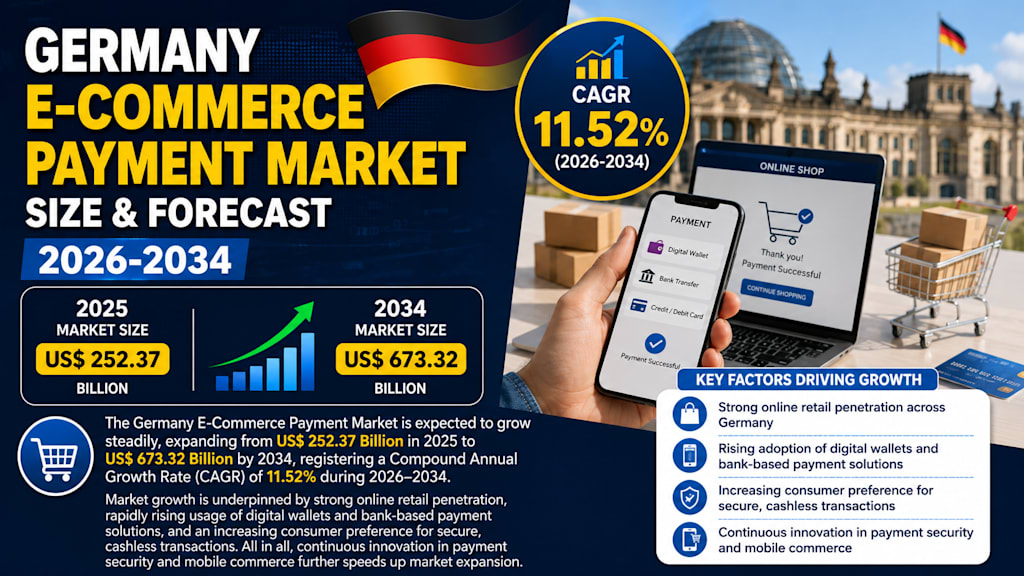
According to Renub Research, the Germany E-Commerce Payment Market is expected to grow from US$252.37 billion in 2025 to US$673.32 billion by 2034, expanding at a compound annual growth rate (CAGR) of 11.52 percent between 2026 and 2034. This impressive growth highlights the increasing role of digital payments in Germany's rapidly expanding online economy.
The transformation is about much more than convenience. It reflects changing consumer expectations, advances in security technology, and the growing importance of seamless digital experiences.
Germany's E-Commerce Boom Continues
Online shopping has become an essential part of everyday life for millions of German consumers. Whether purchasing electronics, fashion items, groceries, personal care products, or digital subscriptions, shoppers increasingly prefer the convenience of online retail platforms.
Several factors have contributed to this shift. Faster internet connectivity, widespread smartphone adoption, improved delivery networks, and greater trust in online merchants have encouraged consumers to make more purchases digitally.
Traditional retailers have also embraced digital transformation by expanding their online presence and adopting omnichannel strategies that combine physical stores with e-commerce platforms. As a result, payment providers face increasing demand for reliable, secure, and efficient solutions capable of supporting growing transaction volumes.
For merchants, smooth payment experiences are no longer optional. Consumers expect checkout processes to be fast, intuitive, and secure. Any friction during payment can lead to abandoned shopping carts and lost revenue opportunities.
Security Remains a Top Priority
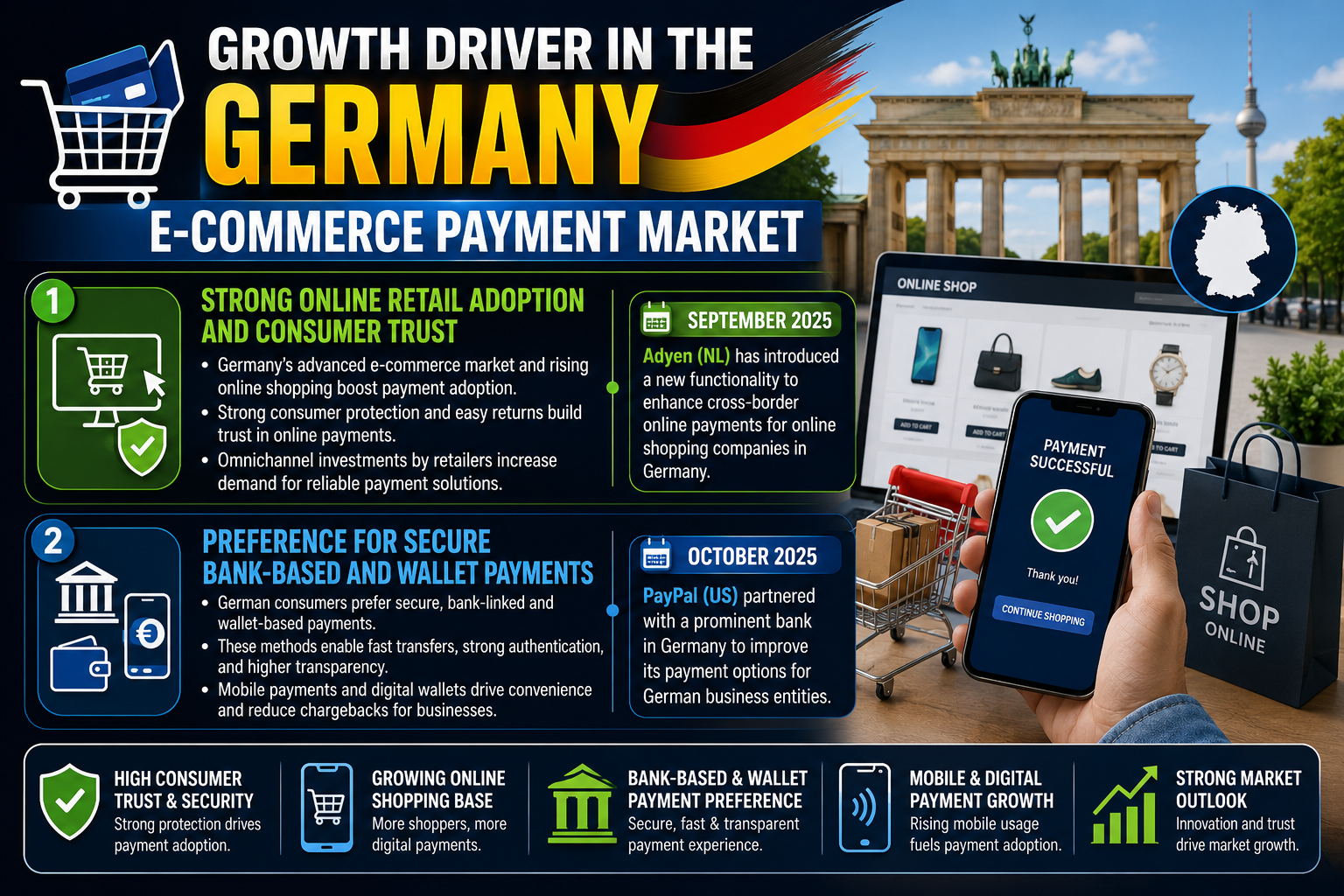
One of the defining characteristics of Germany's payment landscape is its strong emphasis on security and privacy.
German consumers are highly conscious of how their personal and financial information is handled. This preference has influenced the development of payment systems that prioritize transparency, authentication, and data protection.
Strict regulatory frameworks have further strengthened consumer confidence. Payment providers operating in Germany must comply with rigorous standards designed to protect users from fraud and unauthorized transactions. Strong customer authentication requirements and advanced encryption technologies have become standard components of modern payment platforms.
As cyber threats continue to evolve, investment in payment security remains a major focus for industry participants. Companies are increasingly using artificial intelligence and machine learning to identify suspicious activity and prevent fraud before it occurs.
This commitment to security plays a significant role in driving consumer trust and encouraging continued adoption of digital payment solutions.
Digital Wallets Are Gaining Momentum
Among the fastest-growing segments of the market are digital wallets.
Consumers appreciate the convenience of storing payment credentials securely and completing purchases with just a few taps. Digital wallets eliminate the need to repeatedly enter payment information, reducing checkout times while improving user experience.
The appeal of digital wallets extends beyond convenience. Advanced security features such as encryption, tokenization, and multi-factor authentication align closely with Germany's strong emphasis on privacy protection.
As mobile commerce continues expanding, digital wallets are becoming increasingly important. Consumers frequently shop using smartphones and tablets, making streamlined payment solutions essential for merchants seeking to maximize conversions.
Digital wallets also support additional features such as loyalty programs, instant refunds, and integrated payment management tools, creating a more comprehensive shopping experience.
Bank-Based Payments Continue to Thrive
Unlike some markets where credit cards dominate online transactions, Germany has traditionally favored bank-based payment methods.
Many consumers prefer direct connections between online purchases and their bank accounts because these solutions offer greater transparency and control over spending. Bank-based payments often provide immediate transaction confirmation while minimizing concerns about debt accumulation.
This preference has contributed to the popularity of account-to-account payment systems and online banking integrations. These methods enable consumers to complete purchases securely without relying heavily on traditional credit card networks.
For merchants, bank-based payments can offer lower transaction costs and reduced chargeback risks, making them attractive alternatives within the broader payment ecosystem.
The continued popularity of these solutions demonstrates that innovation in payments does not always require replacing existing preferences. Instead, successful providers often enhance familiar methods through improved technology and user experiences.
Buy Now, Pay Later Is Expanding Consumer Choice
The Buy Now, Pay Later (BNPL) segment has emerged as another important driver of market growth.
BNPL services allow consumers to spread payments over time while maintaining greater control over their finances. This flexibility appeals to shoppers who prefer alternatives to traditional credit products.
German consumers are particularly attracted to payment solutions that emphasize transparency and responsible spending. BNPL providers have responded by offering straightforward repayment structures that align with these preferences.
For retailers, BNPL services can increase conversion rates and encourage larger purchases by reducing immediate financial barriers. Consumers often feel more comfortable making significant purchases when flexible payment options are available.
As awareness and adoption continue growing, BNPL is expected to become an increasingly important component of Germany's digital payment ecosystem.
Mobile Commerce Is Changing Consumer Behavior
The rise of smartphones has dramatically influenced how Germans shop online.
Consumers increasingly browse products, compare prices, and complete purchases directly from mobile devices. This shift has created growing demand for payment systems optimized for mobile experiences.
Mobile-first payment solutions prioritize speed, simplicity, and convenience. Features such as biometric authentication, one-click checkout, and integrated digital wallets help reduce friction and improve customer satisfaction.
Social commerce and app-based shopping are further accelerating mobile payment adoption. Consumers increasingly discover products through social media platforms and complete purchases without leaving the application.
As mobile commerce continues expanding, payment providers must ensure their solutions deliver seamless experiences across a variety of devices and channels.
Industry-Specific Payment Trends
Different sectors within Germany's e-commerce market have unique payment requirements.
The electronics and media sector relies heavily on secure payment methods because purchases often involve higher transaction values. Consumers seek trustworthy solutions that provide protection against fraud while supporting subscriptions and recurring payments.
Fashion retailers place significant emphasis on flexibility. Since consumers frequently order multiple sizes or return items, payment systems must accommodate efficient refund processing and post-purchase adjustments. Quick refunds help strengthen customer trust and encourage repeat business.
The food and personal care segment prioritizes reliability and speed. Customers purchasing groceries or essential products expect payment systems to function smoothly without delays or interruptions. Failed transactions can negatively impact customer satisfaction and retention.
Understanding these industry-specific requirements allows payment providers to develop more targeted solutions that address unique customer expectations.
Challenges Facing the Market
Despite strong growth prospects, the Germany e-commerce payment market faces several challenges.
One major issue is regulatory complexity. While strict regulations help protect consumers, they also increase compliance requirements for payment providers and merchants. Businesses must continuously update systems and processes to meet evolving standards.
Smaller merchants often face difficulties managing these additional costs and technical requirements. Compliance investments can limit resources available for innovation and expansion.
Another challenge is the fragmentation of consumer payment preferences. German shoppers use a variety of payment methods, including bank transfers, invoices, digital wallets, cards, and BNPL solutions. Merchants must support multiple options to maximize conversion rates and meet customer expectations.
Balancing flexibility, security, and operational efficiency remains an ongoing challenge for businesses throughout the market.
The Future of Digital Payments in Germany
The future of Germany's e-commerce payment market appears highly promising.
Continued growth in online shopping, increasing smartphone usage, advances in payment security, and the expansion of digital financial services will create significant opportunities for payment providers and merchants.
Artificial intelligence will likely play an increasingly important role in fraud prevention, customer personalization, and payment optimization. Open banking initiatives may further enhance account-based payment solutions, while innovations in mobile commerce continue improving convenience.
As consumers become more comfortable with digital transactions, payment experiences will become even more integrated into everyday life.
The companies that successfully combine security, convenience, transparency, and innovation will be best positioned to capture future growth.
Final Thoughts
Germany's e-commerce payment market is undergoing a significant transformation driven by digital innovation, evolving consumer behavior, and growing confidence in online transactions.
With the market projected to expand from US$252.37 billion in 2025 to US$673.32 billion by 2034, digital payments are becoming one of the most important foundations of the country's online economy. Strong security standards, increasing adoption of digital wallets, growing mobile commerce, and flexible payment options are helping shape a more connected and convenient shopping experience.
As technology continues to advance and e-commerce becomes even more deeply embedded in everyday life, the future of payments in Germany will be defined by one key principle: making transactions faster, safer, and simpler for everyone involved.
About the Creator
Enjoyed the story? Support the Creator.
Subscribe for free to receive all their stories in your feed.
Comments
There are no comments for this story
Be the first to respond and start the conversation.