
Germany Anemia Treatment Market Set for Strong Growth as Aging Population and Advanced Therapies Drive Demand
Renub Research Forecasts Germany Anemia Treatment Market to Reach US$ 1.05 Billion by 2034

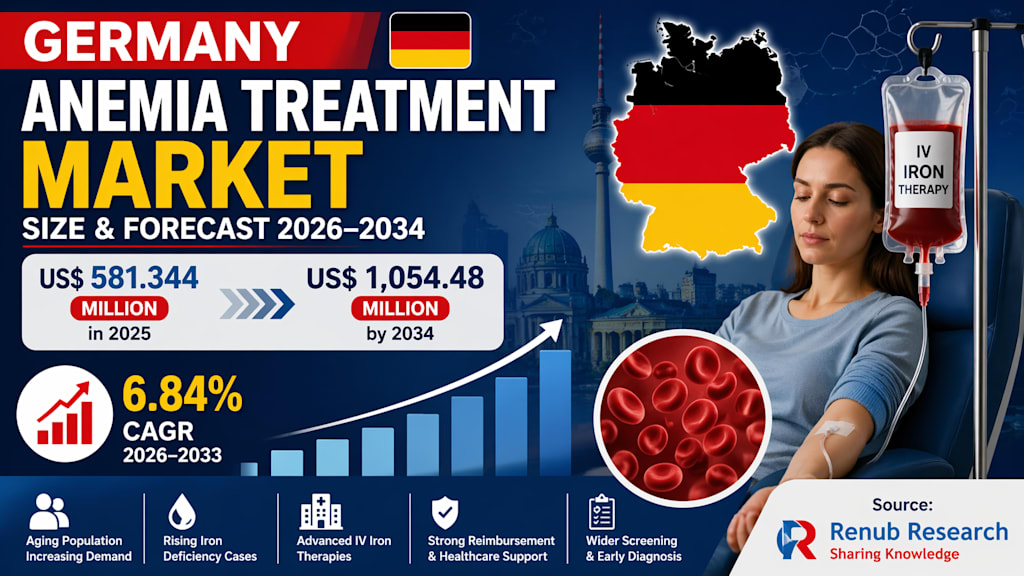
Germany’s healthcare industry is entering a new phase of expansion in anemia care. With an aging population, rising chronic disease cases, better diagnostics, and modern therapies becoming widely accessible, the country’s anemia treatment market is projected to grow steadily over the next decade. According to Renub Research, the Germany Anemia Treatment Market is expected to rise from US$ 581.344 million in 2025 to US$ 1,054.48 million by 2034, expanding at a CAGR of 6.84% during the forecast period.
This growth highlights the increasing importance of anemia management in one of Europe’s most advanced healthcare systems.
Understanding the Rising Need for Anemia Treatment
Anemia is more than occasional tiredness or weakness. It is a medical condition in which the body lacks enough healthy red blood cells or hemoglobin to carry oxygen effectively. If untreated, anemia can lead to fatigue, dizziness, shortness of breath, poor concentration, and in severe cases, cardiovascular complications.
Germany is witnessing a steady increase in patients requiring anemia treatment because of:
- Growing elderly population
- Iron deficiency among women and children
- Higher cases of chronic kidney disease (CKD)
- Cancer-related anemia
- Nutritional deficiencies
- Better health screenings and early diagnosis
As awareness rises, more people are seeking treatment earlier, boosting demand for medications and specialized therapies.
Why Germany Is a Key Market in Europe
Germany is known for its robust medical infrastructure, universal healthcare access, and strong pharmaceutical ecosystem. These advantages make it one of Europe’s most attractive healthcare markets.
Patients in Germany benefit from:
- Well-equipped hospitals
- Modern diagnostic laboratories
- Public insurance coverage
- Specialist hematology clinics
- Strong research institutions
- Access to new treatment technologies
Because of these factors, patients can receive faster diagnosis and better long-term management than in many other countries.
Major Growth Drivers Powering the Market
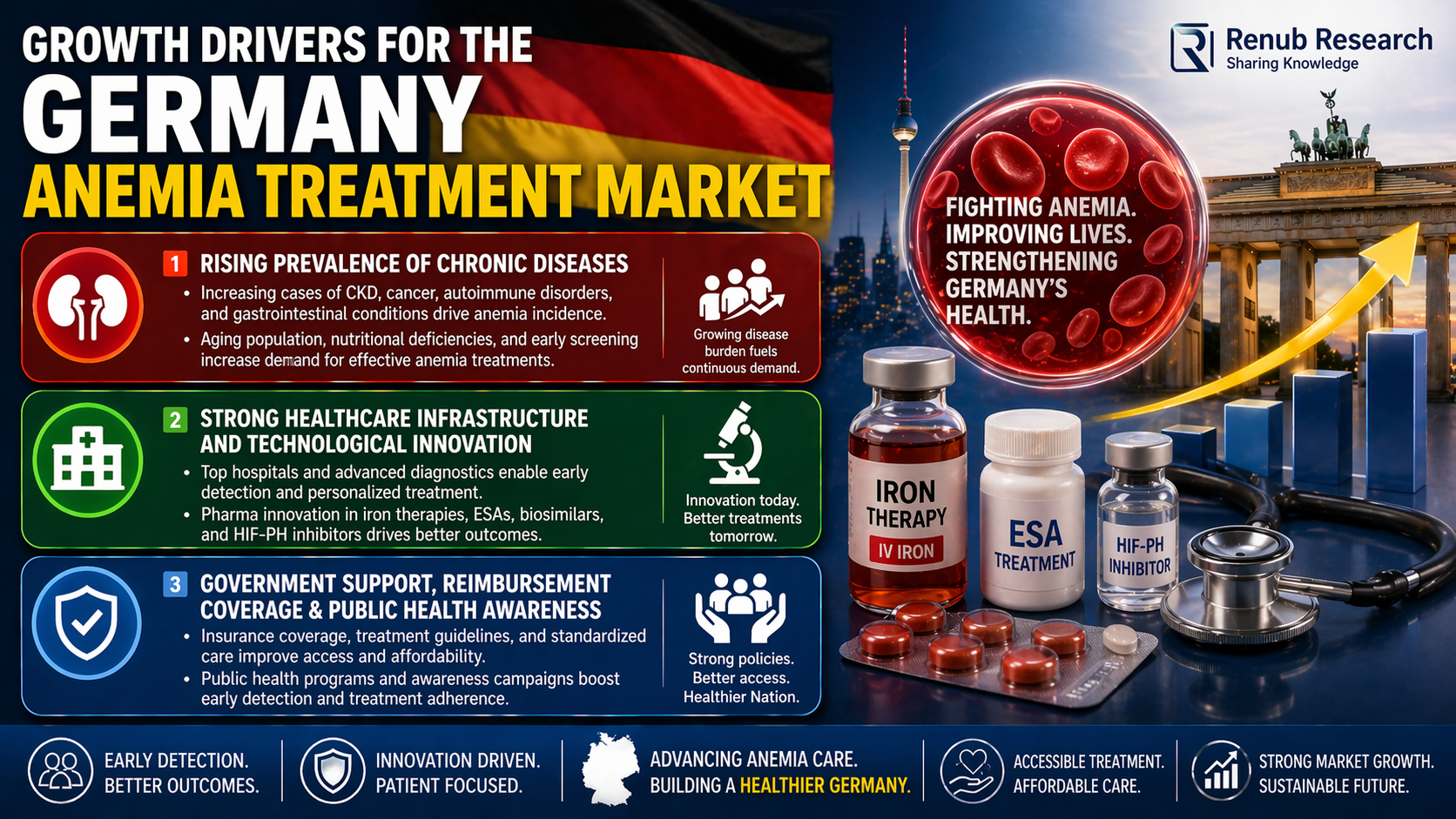
1. Aging Population Increasing Disease Burden
Germany has one of Europe’s oldest populations. Older adults are more vulnerable to anemia due to:
- Reduced nutrient absorption
- Chronic inflammation
- Kidney disease
- Cancer treatments
- Lower iron stores
As the elderly population grows, anemia treatment demand is expected to rise sharply.
2. Increase in Chronic Kidney Disease and Cancer Cases
Many patients with CKD develop anemia because damaged kidneys cannot produce enough erythropoietin, a hormone needed for red blood cell production.
Likewise, chemotherapy and cancer itself often reduce blood counts. This has increased the use of:
- Erythropoiesis-stimulating agents (ESAs)
- Intravenous iron
- Supportive hospital therapies
- Personalized treatment programs
3. Shift Toward Advanced IV Iron Therapies
Traditional oral iron tablets remain common, but many patients experience slow results or stomach discomfort.
Germany is rapidly adopting modern intravenous iron solutions because they offer:
- Faster hemoglobin recovery
- Better absorption
- Fewer doses
- Improved patient compliance
- Effective treatment in hospital settings
This trend is significantly lifting overall market revenue.
4. Strong Public Reimbursement Policies
Germany’s statutory healthcare insurance system covers many essential anemia therapies. This reduces financial barriers and ensures broad treatment access.
Coverage often includes:
- Iron supplements
- IV iron treatment
- ESAs
- Diagnostics
- Hospital procedures
Reimbursement support remains a major reason Germany continues to outperform many neighboring markets.
Key Challenges Facing the Industry
Despite strong momentum, several obstacles remain.
High Cost of New Therapies
Innovative biologics, long-acting injectables, and HIF-PH inhibitors can place pressure on healthcare budgets. Hospitals and insurers may delay adoption if pricing is high.
Underdiagnosis in Mild Cases
Many people ignore fatigue or weakness and do not undergo testing. Mild anemia often remains undetected until symptoms worsen.
Regional Gaps in Access
Urban centers enjoy faster access to specialists, while rural communities may face slower diagnostics and fewer treatment options.
Germany’s Top City Markets Leading Expansion
Berlin
Berlin is one of Germany’s most research-driven healthcare hubs. Leading institutions such as Charité and biotech startups are accelerating innovation in hematology, diagnostics, and personalized treatment.
The city also runs strong awareness programs focused on maternal health, refugees, and elderly residents.
Frankfurt
Frankfurt benefits from major hospitals, pharmaceutical activity, and corporate wellness programs. Demand is strong among professionals, migrant communities, and CKD patients.
Munich
Munich’s world-class hospitals and biotech ecosystem support high adoption of advanced therapies. The city is also seeing growth in oncology-related anemia treatment.
Hamburg
Hamburg’s industrial workforce and large medical network are creating demand for nutritional screening, chronic disease management, and infusion therapies.
Key Treatment Segments Driving Revenue
Germany’s anemia treatment market includes several major therapy categories:
By Disease Type
- Iron Deficiency Anemia
- CKD Anemia
- Sickle Cell Anemia
- Aplastic Anemia
- Thalassemia
- Rare Blood Disorders
By Therapy Type
- Oral Iron Supplements
- Intravenous Iron
- ESAs
- Iron Chelators
- HIF-PH Inhibitors
- Other Supportive Treatments
Competitive Landscape
Several global pharmaceutical leaders are active in Germany’s anemia treatment ecosystem, including:
- Sanofi
- Pfizer
- Novartis
- Roche
- Takeda
- Johnson & Johnson
- GSK plc
- Akebia Therapeutics
These companies are investing in next-generation therapies, biosimilars, research partnerships, and better treatment accessibility.
Recent Industry Developments
Recent announcements show growing confidence in Germany’s healthcare manufacturing sector.
In 2024, Sanofi announced a €1.3 billion investment to expand insulin production in Frankfurt.
Akebia Therapeutics signed a licensing agreement with MEDICE to commercialize Vafseo® across Europe, including Germany.
These moves may indirectly strengthen supply chains and innovation for anemia care.
Final Thoughts
Germany’s anemia treatment market is on a clear upward path. The combination of aging demographics, chronic disease growth, advanced IV iron therapies, insurance coverage, and world-class healthcare infrastructure is creating long-term momentum.
As patients seek earlier diagnosis and more effective treatment, Germany is positioned to remain one of Europe’s most important anemia care markets.
With revenues expected to exceed US$ 1.05 billion by 2034, this sector offers strong opportunities for pharmaceutical companies, healthcare providers, and investors alike.
About the Creator
Enjoyed the story? Support the Creator.
Subscribe for free to receive all their stories in your feed.
Comments
There are no comments for this story
Be the first to respond and start the conversation.