
GCC Foodservice Market: How Are Urbanization, Tourism, and Digital Innovation Reshaping Dining Across the Gulf?
Rapid urban development, growing tourism, evolving consumer lifestyles, and technology-driven dining experiences are accelerating growth in the GCC foodservice market through 2034.

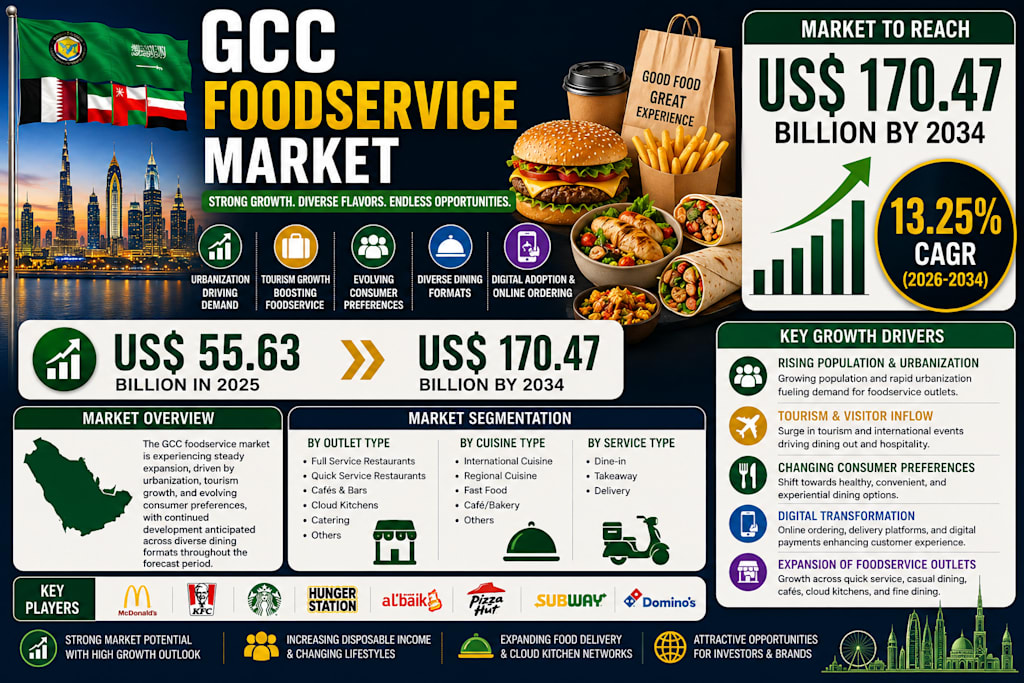
The Gulf Cooperation Council (GCC) region has emerged as one of the world's most dynamic foodservice markets. Driven by strong economic growth, rising disposable incomes, urbanization, tourism expansion, and a young, digitally connected population, the industry continues to evolve at an impressive pace. Across countries such as Saudi Arabia, the United Arab Emirates, Kuwait, Bahrain, Qatar, and Oman, consumers are increasingly embracing diverse dining experiences that extend beyond traditional eating habits.
From luxury fine dining establishments and international restaurant chains to cloud kitchens and food delivery platforms, the GCC foodservice landscape has become highly diverse and competitive. Consumers now seek convenience, quality, innovation, and memorable dining experiences, encouraging operators to continuously adapt their business models.
Technology is also playing a transformative role. Mobile ordering, digital payments, delivery platforms, and data-driven personalization are redefining customer interactions and operational efficiency. Combined with ambitious government initiatives supporting tourism and economic diversification, these factors are creating substantial growth opportunities throughout the region.
According to Renub Research, the GCC Foodservice Market is projected to grow from US$ 55.63 billion in 2025 to US$ 170.47 billion by 2034, registering an impressive CAGR of 13.25% from 2026 to 2034. Urbanization, tourism development, digital transformation, and changing consumer preferences are expected to continue driving market expansion across the Gulf region.

Understanding the GCC Foodservice Industry
The GCC foodservice industry encompasses businesses involved in preparing and serving food and beverages outside the home. The market includes full-service restaurants, quick-service restaurants (QSRs), cafes, bars, catering services, cloud kitchens, fine dining establishments, and institutional foodservice providers.
Over the past decade, the industry has evolved from a relatively traditional market into a sophisticated ecosystem offering diverse dining concepts and global culinary experiences.
The region's multicultural population has played a major role in this transformation. Millions of expatriates from Asia, Europe, North America, and Africa contribute to demand for international cuisines, while local consumers increasingly explore global food trends.
The result is a highly dynamic industry capable of serving a broad range of tastes, dietary preferences, and dining occasions.
Growing Dining-Out Culture Drives Market Expansion
One of the most significant drivers of growth in the GCC foodservice market is the increasing popularity of dining out.
Social gatherings and shared meals remain deeply embedded within Gulf culture. Families, friends, and colleagues frequently meet at restaurants and cafes, creating consistent demand across multiple foodservice categories.
As disposable incomes rise, consumers are increasingly willing to spend on premium dining experiences, international cuisines, and specialty food concepts.
Younger generations are particularly influential in driving this trend. They actively seek new culinary experiences, unique restaurant concepts, and visually appealing food offerings that can be shared on social media platforms.
Urban lifestyles and busy schedules have also reduced the amount of time available for home cooking, making foodservice options more attractive for daily meals.
This growing dining-out culture continues to support strong and sustained industry growth throughout the GCC region.
Retail and Entertainment Development Supports Foodservice Growth
Massive investments in retail and entertainment infrastructure have significantly strengthened the GCC foodservice ecosystem.
Shopping malls, mixed-use developments, entertainment districts, waterfront destinations, and cultural attractions attract large volumes of visitors and provide ideal locations for restaurants and cafes.
Foodservice operators benefit from consistent foot traffic generated by cinemas, theme parks, leisure centers, and shopping destinations.
Many modern developments now integrate foodservice as a central component of the overall consumer experience, encouraging visitors to spend more time and money at these locations.
Large-scale infrastructure projects across the region continue creating new opportunities for foodservice expansion and innovation.
As retail and entertainment sectors continue growing, demand for foodservice offerings is expected to increase accordingly.
Tourism Is Fueling Industry Growth
Tourism remains one of the strongest catalysts supporting foodservice demand across the GCC.
Governments throughout the region are investing heavily in tourism infrastructure, hospitality projects, cultural attractions, and international events to diversify their economies beyond oil revenues.
Tourists often seek diverse dining experiences, creating opportunities for local restaurants, international chains, cafes, and catering providers.
Hotels, resorts, airports, convention centers, and entertainment venues generate substantial foodservice revenues through both domestic and international visitor spending.
Major events, exhibitions, sports tournaments, and cultural festivals further boost demand throughout the year.
As tourism continues expanding across the GCC, foodservice providers are expected to benefit from increasing customer volumes and spending.
Digital Transformation Is Reshaping Consumer Behavior
Technology has become a defining feature of the modern GCC foodservice industry.
Consumers increasingly use smartphones and mobile applications to browse menus, place orders, schedule deliveries, and make payments. Digital convenience has fundamentally changed how customers interact with foodservice brands.
Operators have embraced digital platforms to improve accessibility, streamline operations, and strengthen customer engagement.
Mobile applications provide personalized recommendations, loyalty rewards, promotional offers, and real-time order tracking that enhance consumer experiences.
Meanwhile, data analytics enables businesses to better understand customer preferences, optimize menus, and improve operational efficiency.
As digital adoption continues accelerating throughout the Gulf region, technology will remain a key driver of industry growth and competitiveness.
Cloud Kitchens Continue Expanding
The rapid growth of food delivery services has accelerated the adoption of cloud kitchens across GCC countries.
Cloud kitchens operate without traditional dine-in facilities and focus exclusively on preparing food for delivery orders. This model reduces rental expenses, staffing requirements, and operational complexity.
Operators can efficiently manage multiple virtual brands from a single kitchen location, improving profitability and market reach.
Cloud kitchens are particularly attractive in densely populated urban areas where delivery demand remains high.
Their flexibility allows businesses to test new concepts, respond quickly to consumer trends, and expand into new markets without substantial capital investment.
As online ordering continues gaining popularity, cloud kitchens are expected to play an increasingly important role in the regional foodservice ecosystem.
Innovative Dining Concepts Attract Modern Consumers
Consumers throughout the GCC increasingly seek unique and memorable dining experiences.
This demand has encouraged operators to experiment with themed restaurants, fusion cuisines, immersive dining environments, open kitchens, and highly customized menu offerings.
Specialty cafes and niche dining concepts have also gained popularity as consumers look for experiences that go beyond traditional restaurant formats.
Sustainability-focused concepts, farm-to-table dining, and ethically sourced ingredients are becoming increasingly relevant to modern consumers.
Innovation allows operators to differentiate themselves in an increasingly competitive market while creating stronger emotional connections with customers.
The adoption of creative dining concepts is expected to remain an important growth driver throughout the forecast period.
Recent Industry Developments Highlight Strong Momentum
The GCC foodservice industry continues attracting significant investment and expansion activity.
In September 2025, Brunch & Cake opened its sixth location at Palm Jumeirah Mall, offering all-day dining options, pastries, cakes, croissants, and specialty menu items.
In July 2025, Little Caesars launched its first restaurant in the United Arab Emirates, marking a major milestone in the company's global expansion strategy.
In June 2025, Papa John's introduced a croissant pizza in the UAE, combining a flaky pastry-style crust with traditional pizza toppings.
Meanwhile, Pret A Manger entered Saudi Arabia in April 2025 with its first outlet in Riyadh's Olaya Towers.
These developments illustrate the strong confidence both local and international brands have in the GCC foodservice market.
Quick Service Restaurants Continue Growing
Quick-service restaurants remain one of the fastest-growing segments within the industry.
Consumers appreciate QSRs for their affordability, speed, convenience, and consistent quality. Busy urban lifestyles make quick-service options particularly attractive for everyday dining occasions.
International brands continue expanding their presence, while local chains strengthen their market positions through menu innovation and regional customization.
The combination of dine-in, takeaway, drive-thru, and delivery options further enhances consumer convenience.
As urbanization and digital ordering continue increasing, QSRs are expected to remain major contributors to industry growth.
Challenges Facing the GCC Foodservice Market
Workforce and Talent Management
Managing a skilled workforce remains a significant challenge throughout the GCC foodservice industry.
Operators rely heavily on diverse labor pools and must invest continuously in recruitment, training, and retention initiatives.
High employee turnover can negatively affect service quality and operational consistency.
Maintaining standardized experiences across multiple locations requires ongoing investment in workforce development and management practices.
Addressing labor-related challenges remains essential for achieving long-term success within the competitive foodservice sector.
Supply Chain and Sourcing Constraints
Supply chain management presents another major challenge.
Many GCC countries rely heavily on imported food ingredients, making operators vulnerable to global supply disruptions, transportation delays, and price fluctuations.
Maintaining ingredient quality, freshness, and availability requires sophisticated logistics and inventory management systems.
Growing demand for sustainable and locally sourced ingredients adds further complexity.
Operators must carefully manage supplier relationships and procurement strategies to ensure operational stability and customer satisfaction.
United Arab Emirates Leads Regional Innovation
The UAE remains one of the most advanced foodservice markets in the GCC.
Its multicultural population, strong tourism sector, world-class infrastructure, and high consumer spending create ideal conditions for industry growth.
The country continues attracting international restaurant brands while fostering innovation in digital ordering, delivery services, and dining concepts.
The UAE's leadership position makes it a major contributor to regional foodservice development.
Saudi Arabia Represents the Largest Growth Opportunity
Saudi Arabia is one of the region's most important foodservice markets.
Its large and youthful population, rapid urbanization, and ambitious economic diversification initiatives continue creating significant opportunities for operators.
Digital adoption, tourism growth, and changing consumer preferences are accelerating demand across multiple foodservice formats.
The Kingdom is expected to remain a major driver of GCC market growth throughout the forecast period.
Kuwait and Bahrain Continue Expanding
Kuwait benefits from strong consumer spending and a well-established dining-out culture.
Consumers increasingly seek high-quality food, innovative dining experiences, and diverse cuisines, supporting market expansion.
Meanwhile, Bahrain's growing hospitality sector and evolving consumer preferences continue creating opportunities for restaurants, cafes, and delivery-focused businesses.
Future Outlook
The future of the GCC foodservice market appears exceptionally promising.
Urbanization, tourism development, digital transformation, rising consumer spending, and innovative dining concepts are expected to continue fueling strong growth through 2034.
Businesses that successfully combine convenience, quality, technology, sustainability, and customer experience will be best positioned to capitalize on emerging opportunities.
As governments continue investing in economic diversification and lifestyle-oriented infrastructure, the foodservice sector is expected to remain one of the region's most dynamic industries.
Final Thoughts
The GCC foodservice market has evolved into a sophisticated and rapidly expanding industry driven by urban lifestyles, tourism growth, technological innovation, and changing consumer expectations. From cloud kitchens and delivery platforms to luxury dining and experiential restaurant concepts, the market continues to offer significant opportunities across multiple segments.
With the market projected to grow from US$ 55.63 billion in 2025 to US$ 170.47 billion by 2034, the region presents substantial opportunities for restaurant operators, franchise groups, technology providers, hospitality companies, and investors. Organizations that embrace innovation, operational excellence, and consumer-centric strategies will be best positioned to succeed in the GCC's rapidly evolving foodservice landscape.
About the Creator
Enjoyed the story? Support the Creator.
Subscribe for free to receive all their stories in your feed.
Comments
There are no comments for this story
Be the first to respond and start the conversation.