
Frozen for the Future: How Innovation and Convenience Are Driving Growth in the Global Frozen Food Market
Rising demand for ready-to-eat meals, advances in freezing technology, expanding e-commerce channels, and changing consumer lifestyles are reshaping the future of the frozen food industry.

Once viewed primarily as a source of basic vegetables and simple frozen dinners, the frozen food category has transformed into one of the most innovative and rapidly evolving segments of the global food industry. Today’s consumers can choose from an extensive range of frozen products, including gourmet meals, plant-based alternatives, premium seafood, international cuisine, healthy snacks, and restaurant-quality ready-to-cook options.
This evolution reflects broader changes in modern lifestyles.
As consumers balance busy work schedules, family responsibilities, and growing expectations for convenience, frozen foods offer a practical solution that combines accessibility, quality, and long shelf life.
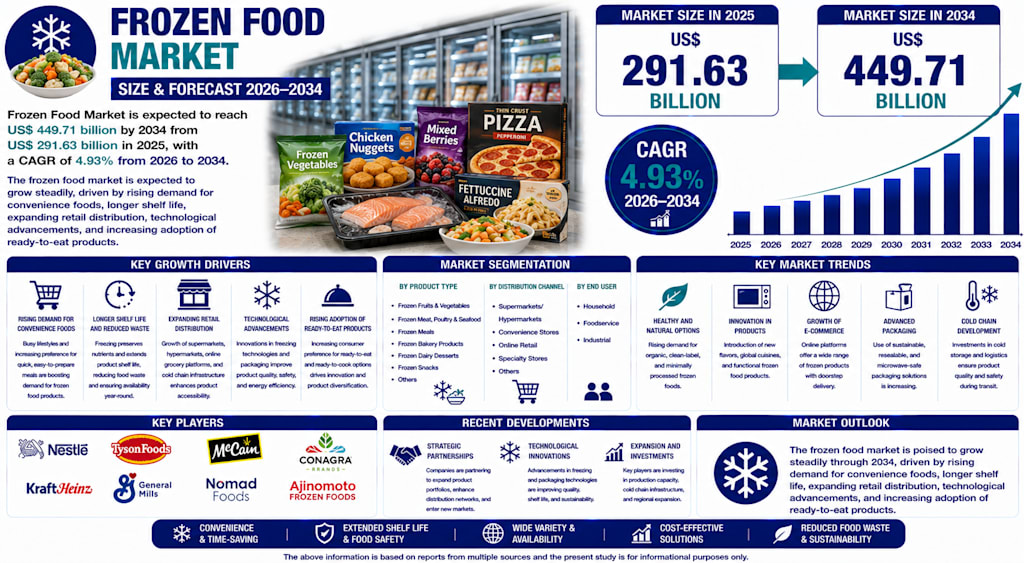
According to Renub Research, the Global Frozen Food Market is expected to grow from US$ 291.63 billion in 2025 to US$ 449.71 billion by 2034, expanding at a compound annual growth rate (CAGR) of 4.93% between 2026 and 2034. Rising demand for convenience foods, technological advancements in freezing methods, expanding retail distribution networks, and increasing adoption of ready-to-eat products are among the key factors supporting market growth.
As innovation continues to reshape food consumption patterns worldwide, frozen foods are becoming an increasingly important part of modern diets.

The Evolution of the Frozen Food Industry
The frozen food industry focuses on preserving food products at low temperatures to maintain freshness, nutritional value, texture, and flavor over extended periods.
Products commonly found within the frozen food category include:
Vegetables, fruits, meat products, seafood, snacks, desserts, ready meals, and ready-to-cook offerings.
Modern freezing technologies have significantly improved product quality compared to earlier generations of frozen foods.
Consumers today benefit from products that retain much of their original taste, nutritional content, and texture while offering exceptional convenience.
As urbanization accelerates and consumer lifestyles become increasingly fast-paced, frozen foods continue gaining acceptance across diverse demographic groups.
Convenience Is the Market’s Biggest Growth Driver
One of the strongest factors fueling market growth is the increasing demand for convenient meal solutions.
Modern consumers often face time constraints that limit opportunities for traditional meal preparation.
Frozen foods address this challenge by providing products that are:
Easy to store, quick to prepare, portion controlled, and available across numerous meal categories.
Busy professionals, students, working parents, and urban households increasingly rely on frozen products to simplify daily meal planning.
The availability of diverse offerings—including ethnic cuisine, premium entrees, breakfast products, snacks, and desserts—has further strengthened consumer interest.
As lifestyles continue evolving, convenience-driven consumption is expected to remain a major driver of frozen food demand.
Ready-to-Eat and Ready-to-Cook Products Gain Popularity
Consumers are increasingly seeking products that reduce preparation time without compromising quality.
This trend has accelerated demand for:
Ready-to-eat meals, ready-to-cook dishes, frozen snacks, meal kits, and prepared food solutions.
Manufacturers continue expanding product portfolios to meet changing consumer expectations.
Today's frozen meals often feature:
Restaurant-inspired recipes, healthier ingredients, international flavors, premium proteins, and balanced nutritional profiles.
These innovations have helped change perceptions surrounding frozen foods, positioning them as practical and attractive alternatives to traditional meal preparation.
The growing popularity of ready-to-eat and ready-to-cook products is expected to remain a key market growth catalyst.
Technology Is Transforming Product Quality
Technological advancements have significantly improved the frozen food industry's ability to preserve food quality.
Modern freezing methods such as quick freezing help maintain:
Texture, flavor, appearance, and nutritional value more effectively than traditional techniques.
Quick freezing minimizes the formation of large ice crystals that can damage food structure.
As a result, consumers receive products that more closely resemble fresh alternatives after preparation.
Advancements in cold storage systems, transportation technologies, and packaging solutions further support quality preservation throughout the supply chain.
These innovations have enhanced consumer confidence and expanded opportunities for manufacturers across multiple product categories.
Cold Chain Infrastructure Supports Global Expansion
A robust cold chain network is essential to the success of the frozen food industry.
Cold chain systems ensure that products remain at appropriate temperatures during:
Storage, transportation, distribution, and retail display.
Investments in modern cold storage facilities, refrigerated transportation, and logistics infrastructure are helping improve product quality and availability worldwide.
Emerging markets are particularly benefiting from improvements in cold chain capabilities.
As infrastructure expands, manufacturers gain access to new consumer markets while reducing spoilage and operational inefficiencies.
Enhanced cold chain performance remains a crucial factor supporting future industry growth.
E-Commerce Is Changing How Consumers Buy Frozen Foods
Digital commerce is transforming food purchasing behavior across the globe.
Online grocery platforms have become increasingly popular among consumers seeking convenience and broader product selection.
Frozen food manufacturers and retailers are adapting by strengthening online distribution capabilities.
Improved cold-chain delivery solutions now allow frozen products to be transported directly to consumers while maintaining quality standards.
Benefits include:
Home delivery convenience, greater product accessibility, subscription services, and expanded brand visibility.
As online grocery shopping continues growing, e-commerce will play an increasingly important role in shaping frozen food consumption patterns.
Food Waste Reduction Supports Consumer Adoption
Food waste has become a growing concern for consumers, businesses, and governments alike.
Frozen foods offer significant advantages in this area.
Because products remain usable for extended periods, consumers can better manage household food consumption and reduce spoilage.
Longer shelf life also benefits retailers by improving inventory management and reducing product losses.
These advantages align with broader sustainability goals focused on resource efficiency and waste reduction.
As awareness regarding food waste continues increasing, frozen foods are likely to gain additional support from environmentally conscious consumers.
Healthier Frozen Products Are Expanding Market Appeal
The frozen food industry is increasingly responding to health-conscious consumer preferences.
Manufacturers are introducing products featuring:
Organic ingredients, reduced sodium levels, lower calorie content, plant-based proteins, clean-label formulations, and nutrient-rich recipes.
Consumers increasingly expect frozen foods to provide both convenience and nutritional value.
As a result, healthier frozen product categories continue expanding.
This trend is helping the industry attract new customer segments while improving perceptions regarding product quality and wellness benefits.
Frozen Vegetables Continue to Thrive
Frozen vegetables remain one of the most important segments within the market.
Products such as:
Green peas, corn, mixed vegetables, carrots, cauliflower, and vegetable blends offer consumers convenient access to nutritious ingredients year-round.
Advancements in freezing technology help preserve vitamins and minerals while maintaining product quality.
Frozen vegetables also reduce preparation time and food waste, making them particularly attractive for busy households.
As consumers continue prioritizing convenience and nutrition, this segment is expected to remain a major contributor to market growth.
Frozen Meat Products Gain Momentum
Frozen meat products represent another significant growth segment.
Categories include:
Chicken, fish, pork, mutton, seafood, and value-added protein products.
Consumers increasingly seek convenient protein options that offer consistent quality and extended shelf life.
Technological improvements in freezing and packaging have enhanced product freshness and safety, supporting broader adoption.
The growing popularity of ready-to-cook and marinated protein products further contributes to segment expansion.
United States Remains a Global Leader
The United States frozen food market remains one of the most developed and influential worldwide.
Strong demand for convenience foods, advanced cold-chain infrastructure, and widespread retail availability support continued growth.
American consumers increasingly purchase:
Frozen meals, frozen snacks, frozen vegetables, and premium ready-to-cook products.
Health-focused innovations and organic frozen offerings are also gaining popularity.
The expansion of online grocery services further strengthens market accessibility and consumer engagement.
United Kingdom Embraces Convenience and Sustainability
The United Kingdom frozen food market continues experiencing steady growth.
Consumers increasingly appreciate frozen products for their:
Affordability, long shelf life, convenience, and ability to reduce food waste.
Demand is also increasing for healthier alternatives, including plant-based frozen meals and lower-calorie product options.
Retailers continue expanding frozen product selections while strengthening private-label offerings.
The growth of online grocery shopping further supports market development throughout the country.
China Emerges as a High-Growth Market
China's frozen food market is expanding rapidly due to urbanization, rising incomes, and changing dietary habits.
Consumers increasingly seek:
Ready-to-cook meals, frozen snacks, packaged foods, and convenience-oriented meal solutions.
Investments in cold chain logistics and modern retail infrastructure are improving product availability and quality.
Meanwhile, expanding e-commerce platforms are making frozen foods more accessible across urban and regional markets.
These factors continue positioning China as one of the industry's most promising growth opportunities.
UAE Benefits from Diverse Consumer Demand
The United Arab Emirates frozen food market is growing steadily due to strong demand for convenient and imported food products.
A multicultural population creates demand for a wide variety of frozen cuisine options.
Expanding supermarket networks, online grocery services, and improvements in cold storage infrastructure support continued market growth.
Government initiatives focused on food security and logistics modernization further strengthen the market's long-term outlook.
Recent Industry Developments Highlight Innovation
The frozen food industry continues witnessing significant product innovation.
In May 2025, HyFun Foods expanded its ready-to-cook frozen snack portfolio by introducing Indian street-food-inspired products such as Mumbai Aloo Vada and announcing plans for Spicy Paneer Patty offerings.
In January 2025, Kitchen Joy launched a new range of Thai-inspired frozen meals across more than 580 Tesco stores in the United Kingdom, featuring products such as Chicken Panang, Green Curry, Tom Yum, and Spicy Sesame Chicken Noodles.
Also in January 2025, Siniora Foods announced a US$40 million investment in a new production facility in Saudi Arabia aimed at expanding frozen food and cold-cut manufacturing capabilities.
These developments illustrate the industry's commitment to innovation, regional expansion, and consumer-focused product development.
Challenges Facing the Industry
Despite strong growth prospects, the frozen food market faces several challenges.
One major concern is the high energy consumption associated with cold storage and transportation.
Maintaining low temperatures throughout the supply chain requires substantial electricity usage, increasing operational costs for manufacturers and retailers. Rising energy prices and environmental concerns add further pressure.
Consumer perception also remains a challenge.
Some consumers continue associating frozen foods with lower freshness or reduced nutritional value compared to fresh alternatives.
Although modern freezing technologies effectively preserve nutrients and quality, misconceptions persist in certain markets.
Manufacturers must continue investing in consumer education, transparency, and product innovation to address these concerns.
Successfully overcoming these challenges will be important for sustaining long-term industry growth.
Final Thoughts
The global frozen food market is undergoing a remarkable transformation driven by convenience, innovation, and evolving consumer expectations.
Advancements in freezing technology, cold-chain infrastructure, e-commerce, and product development have elevated frozen foods from simple pantry staples to sophisticated meal solutions.
Consumers increasingly value products that combine quality, nutrition, convenience, and sustainability—attributes that modern frozen foods are increasingly able to deliver.
With the market projected to grow from US$ 291.63 billion in 2025 to US$ 449.71 billion by 2034, opportunities for innovation and expansion remain substantial.
As lifestyles continue becoming more fast-paced and global food systems seek greater efficiency, frozen foods will play an increasingly important role in helping consumers access convenient, safe, and high-quality meals for years to come.
About the Creator
Enjoyed the story? Support the Creator.
Subscribe for free to receive all their stories in your feed.
Comments
There are no comments for this story
Be the first to respond and start the conversation.