
From Silver to Clad: What U.S. Dimes Are Made of Today
From Silver to Clad: What U.S. Dimes Are Made of Today

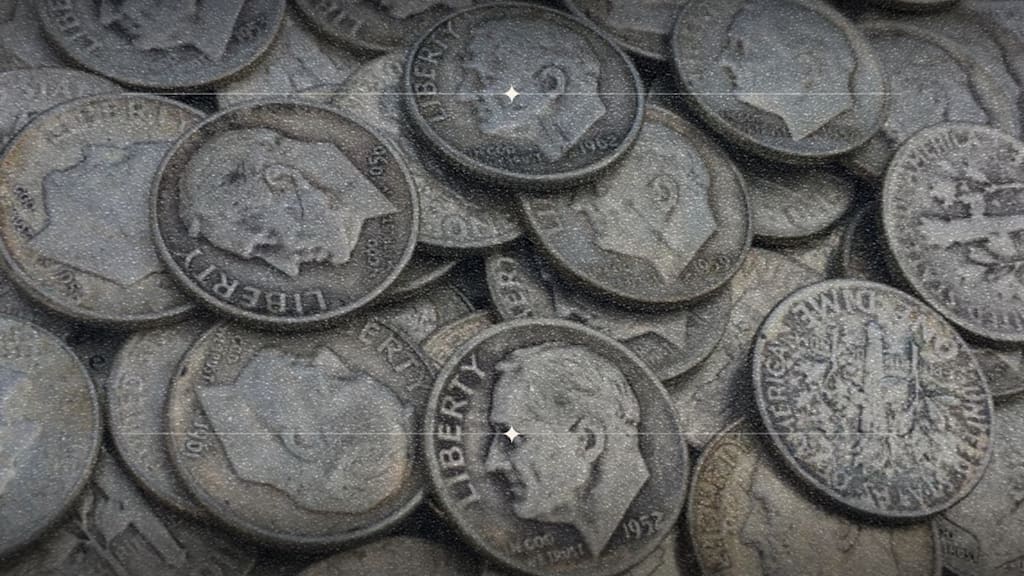
Ask someone what a dime is made of and there's a good chance they'll say silver.
That's understandable.
The coin looks silver. Millions of Americans remember when silver coins actually circulated. And for much of our nation's history, dimes really did contain precious metal.
Today they don't.
Modern U.S. dimes are made from a copper core sandwiched between outer layers of copper-nickel alloy. The silver appearance remains, but the silver itself is long gone.
That change tells an important story.
It explains why older dimes are still sought after by precious metals investors. It explains why silver vanished from circulation. And it offers a useful lesson about the difference between money backed by valuable metal and money produced as cheaply as possible.
Anyone interested in physical silver ownership should understand what happened to the humble dime.
The Silver Dime Wasn't Retired for Being Worthless
More Americans are asking questions about money.
They're watching inflation chip away at purchasing power. They're seeing government debt reach levels that would have been difficult to imagine a generation ago. And many are discovering that the coins and currency in circulation today bear little resemblance to what previous generations used.
The dime is a perfect example.
Before 1965, every dime contained 90% silver.
Today, none do.
Silver wasn't removed because it lost value. Quite the opposite.
By the early 1960s, silver had become too valuable to leave in circulation. The metal inside many coins was approaching, and eventually exceeding, the face value stamped on them.
People began saving silver coins. The government responded by removing silver from everyday coinage.
The lesson is straightforward.
When a coin contains something valuable, people tend to hold onto it. When it doesn't, they spend it.
That reality hasn't changed.
What Is a Modern U.S. Dime Made Of?
Modern dimes use what's known as clad construction.
Each coin contains:
A pure copper core
Outer layers made from copper-nickel alloy
Those layers are bonded together before the coin is struck.
The result is a durable ten-cent piece that can survive years in circulation without wearing down quickly. It also costs far less to produce than a silver coin.
To the casual observer, a modern dime doesn't look much different than a silver dime.
That's where confusion begins.
The appearance is similar. The composition is not.
A dime minted today contains no silver at all. Its value comes from government decree, not from the metal inside it.
When Did Dimes Stop Containing Silver?
The change occurred in 1965.
Before then, dimes were made from an alloy containing 90% silver and 10% copper.
Americans carried them every day. Nobody thought much about the silver content because silver coins were simply normal money.
As silver prices moved higher, that changed.
People began pulling silver coins from circulation. Hoarding increased. The economics no longer worked from the government's perspective.
Rather than continue using silver, the Mint switched to clad coinage.
The divide remains simple today:
Dimes dated 1964 and earlier generally contain silver.
Dimes dated 1965 and later generally do not.
For collectors and silver buyers, that single date matters.
Why Pre-1965 Silver Dimes Remain Popular
Many investors are surprised to learn that old dimes still trade actively in the precious metals market.
They're commonly sold as constitutional silver.
Some people call them junk silver, though the term has always been somewhat misleading. There's nothing junky about a coin containing real silver.
Several factors keep these coins in demand.
Recognizability
Most Americans know what a dime looks like.
That familiarity makes silver dimes easy to identify and easy to understand.
Fractional Silver Ownership
A silver dime contains only a fraction of an ounce of silver.
That appeals to investors who prefer smaller units rather than large bars or one-ounce coins.
Historical Significance
These coins come from a period when circulating U.S. money contained meaningful precious metal content.
Many buyers appreciate that connection to America's monetary past.
Strong Liquidity
Dealers have bought and sold silver dimes for decades.
The market is well established, and pricing is widely understood throughout the industry.
Key Factors to Consider When Evaluating Silver Dimes
Silver content matters.
It's not the only thing that matters.
Premiums
Every silver product carries a premium above the market price of the metal.
Silver dimes, Silver Eagles, rounds, and bars all trade differently.
Investors who compare premiums carefully can often stretch their precious metals budget further.
Liquidity
Liquidity is simply the ability to sell.
Constitutional silver enjoys broad recognition among dealers and investors, which generally makes resale straightforward.
Storage
One advantage of silver dimes is density.
A considerable amount of silver can fit into a relatively small space.
The tradeoff is organization. Hundreds or thousands of small coins require more sorting and accounting than larger bullion products.
Purpose
The most important question has nothing to do with the coin itself.
What's your objective?
Some investors want recognizable silver. Others want the lowest possible premium. Some simply appreciate the historical aspect.
The answer helps determine whether silver dimes belong in a broader precious metals portfolio.
A Simple Decision Framework
If you're interested in American monetary history, silver dimes are an excellent place to start.
If you want small, easily recognizable units of silver, constitutional silver may be worth considering.
If minimizing premiums is your primary objective, compare dimes with rounds, bars, and sovereign bullion products.
If liquidity matters most, focus on products that dealers buy and sell every day.
And if short-term price swings concern you, remember that many precious metals owners aren't trying to trade silver. They're trying to preserve purchasing power over time.
Common Concerns About Silver Dimes
Are Silver Dimes Too Small to Matter?
No.
Individually, each coin contains a modest amount of silver. Collectively, they can represent a meaningful holding.
Many investors prefer having smaller units available.
Are Silver Dimes Difficult to Sell?
Generally not.
Constitutional silver remains one of the most widely recognized segments of the precious metals market.
Most established dealers understand exactly what they are.
Are Silver Eagles Better Than Silver Dimes?
That depends on what you're looking for.
Silver Eagles carry government-minted bullion status and contain one full ounce of silver.
Silver dimes offer smaller denominations, a lower individual purchase price, and historical appeal.
Both have advantages.
What If Silver Prices Drop After I Buy?
Every silver buyer eventually asks this question.
Those focused on long-term wealth preservation tend to spend less time worrying about short-term price moves and more time thinking about purchasing power over years and decades.
That mindset has served many precious metals investors well.
What the Modern Dime Reveals About Money
The modern dime still looks like silver.
But appearances can be deceiving.
Today's dime contains a copper core and copper-nickel outer layers. The silver that once gave the coin intrinsic value disappeared more than sixty years ago.
That change wasn't accidental.
It reflected a simple reality: silver became too valuable to remain in circulation.
For precious metals investors, the dime provides a useful reminder. Currency and money are not always the same thing. Governments can change the composition of coins. They can reduce metal content. They can substitute cheaper materials.
They cannot manufacture silver.
That's one reason pre-1965 dimes continue to attract buyers today.
The coin itself may be small. The lesson it teaches about money is not.
About the Creator
Stefan Gleason
Stefan Gleason is President and CEO of Money Metals, the company recently named "Best Overall Online Precious Metals Dealer" by Investopedia. A graduate of the University of Florida, Gleason is a seasoned business leader and investor.
Enjoyed the story? Support the Creator.
Subscribe for free to receive all their stories in your feed.
Comments