
From $1 Billion to $39.5 Billion in One Year
How a Chinese quant trader built a 78% stake in an AI unicorn – and became the world's richest AI founder without VC dilution.
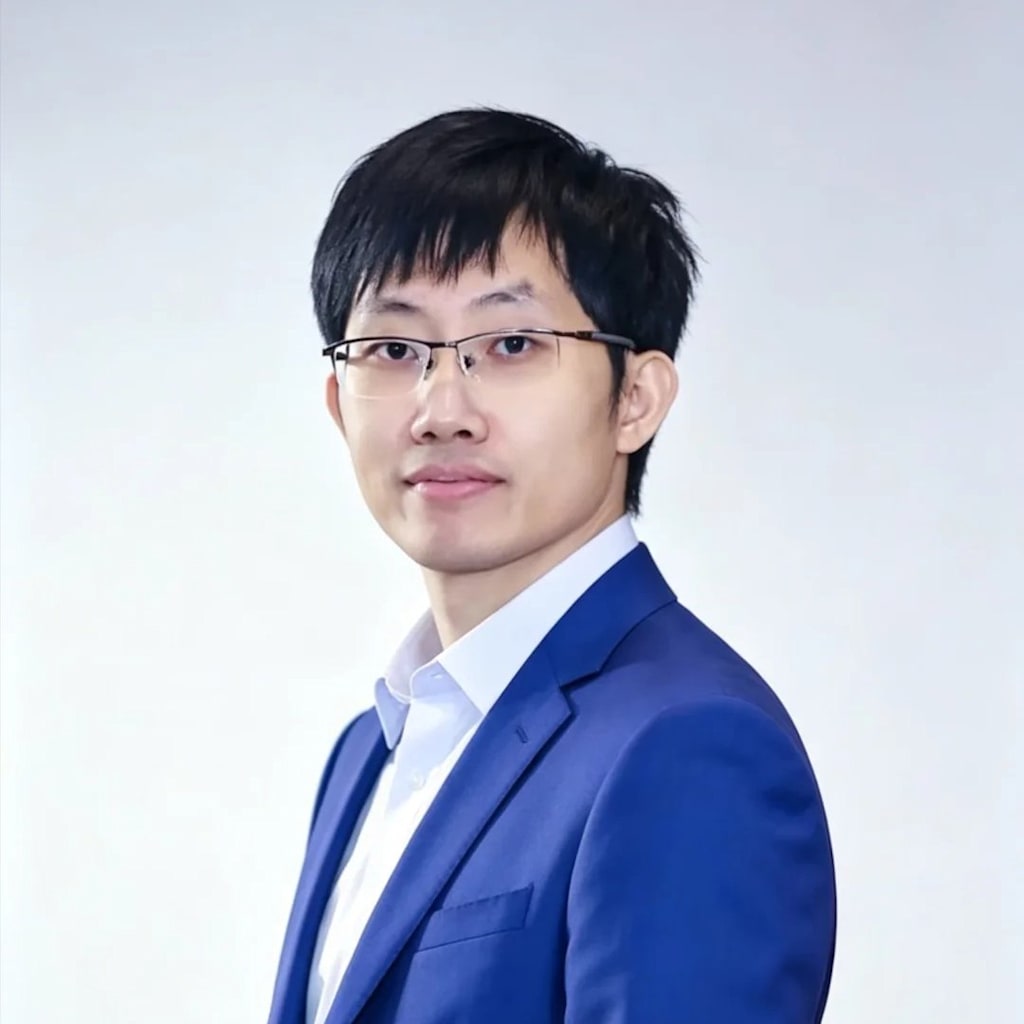
In August 2026, financial research firm bestbrokers published a ranking based on Forbes‘ real‑time billionaire list. As of July 27, 2026, DeepSeek founder Liang Wenfeng had a net worth of $39.5 billion, up 3,850% from $1 billion a year earlier. That growth rate was the highest among global billionaires in that period.
The entire increase came from a single asset: Liang’s stake in DeepSeek. Tracing DeepSeek’s journey from founding to its first financing round explains how that number was built.
I. Accumulation in the Quantitative Era: 2013–2023
Liang Wenfeng was born in 1985 in Zhanjiang, Guangdong. In 2002, he enrolled at Zhejiang University, majoring in Electronic and Information Engineering, and received his master‘s degree in 2010. During his college years, he was exposed to machine learning applications in financial data.
In 2013, together with his Zhejiang University classmate Xu Jin, he founded Hangzhou Jacobi Investment Management. In 2015, High‑Flyer Quant began operations as a quantitative investment firm. In 2016, High‑Flyer launched its first AI‑driven trading model, and by 2017 it had automated all investment strategies with AI.
High‑Flyer’s assets under management exceeded RMB 10 billion in 2019 and surpassed RMB 100 billion in 2021. During this period, the firm independently developed the “Firefly No.1” and “Firefly No.2” training platforms, investing over RMB 1 billion cumulatively in computing infrastructure. These investments later provided the hardware and engineering foundation for large‑model training.
II. DeepSeek‘s Founding and Financing Strategy: July 2023 – March 2026
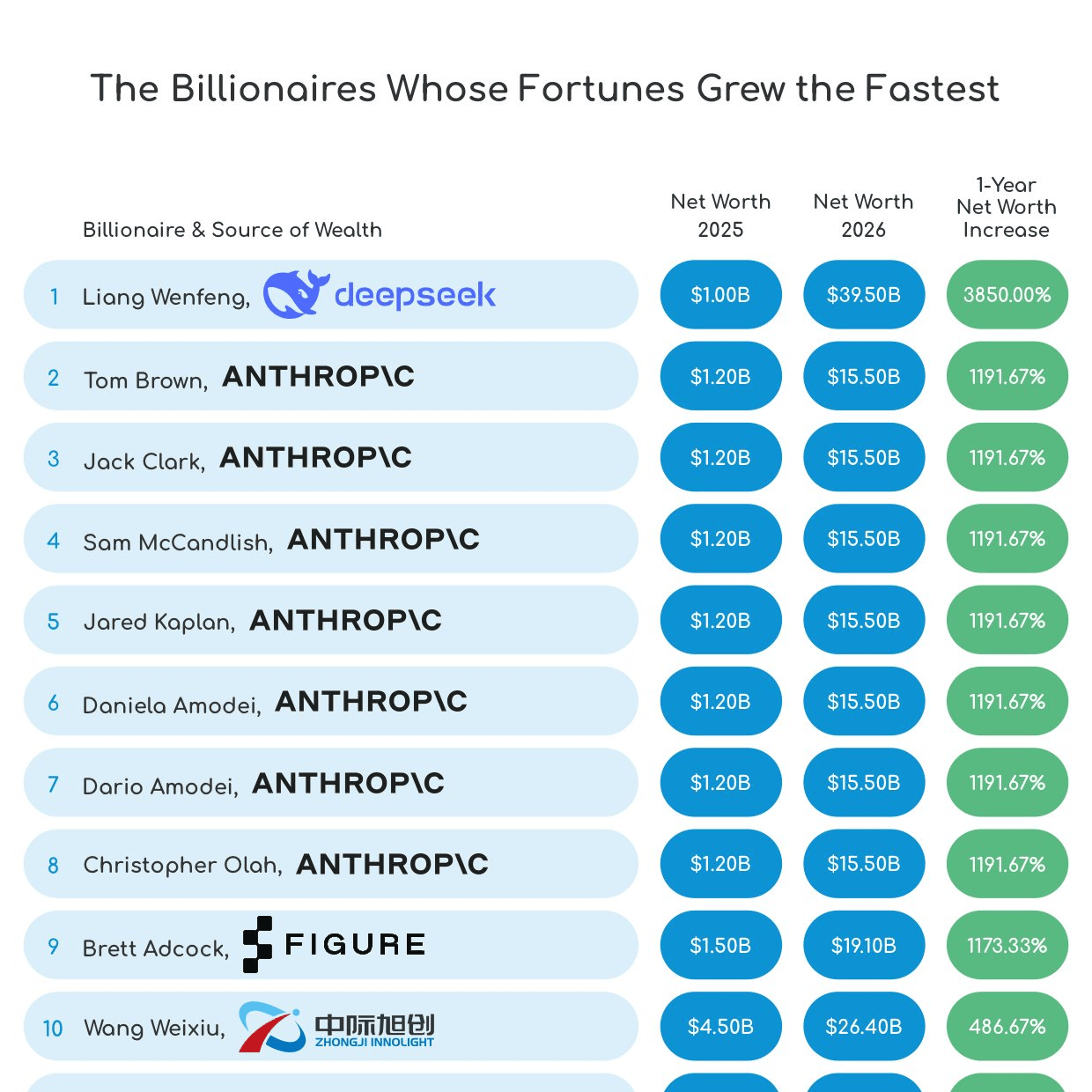
In July 2023, Liang Wenfeng incubated DeepSeek from within High‑Flyer Quant, stating that R&D funding would come from High‑Flyer’s own earnings.
After its founding, DeepSeek did not seek external financing. Until March 2026, all R&D, computing procurement, and personnel costs were covered by High‑Flyer‘s operating profits. This strategy allowed Liang to retain absolute control over equity: DeepSeek was wholly incubated by him, and initial equity was almost entirely held by him personally.
Team size: as of early 2026, DeepSeek had 139 engineers and researchers. Over the same period, OpenAI had about 1,200 researchers and Anthropic about 500.
In 2025, Forbes valued DeepSeek at roughly $15 billion, corresponding to Liang’s personal wealth of about $11.5 billion. That valuation was based on publicly available technical information and comparable company benchmarks, not on a priced financing round. As of March 2026, Liang‘s wealth remained around $11.5 billion.
III. Technical Milestones: May 2024 – January 2025
In May 2024, DeepSeek released its V2 model, with API pricing set at about 1% of GPT‑4 Turbo’s. In December of the same year, DeepSeek‑V3 launched, outperforming mainstream open‑source models on multiple benchmark tests and approaching GPT‑4o and Claude 3.5‑Sonnet on certain tasks.
On January 20, 2025, DeepSeek released the R1 model. It matched OpenAI‘s o1 on mathematics, coding, and natural‑language reasoning tasks, with a training cost of $5.576 million – about 5% of GPT‑4’s estimated training expense. (Note: the dash here is a hyphen minus, not an em dash; we keep it as a short dash in technical contexts.) In its technical reports, DeepSeek disclosed its use of Mixture of Experts (MoE), Multi‑head Latent Attention (MLA), and Group Relative Policy Optimization (GRPO) algorithms, all of which reduced inference‑stage compute consumption.
These three releases built DeepSeek‘s reputation within the industry. Throughout 2025, usage of its models among overseas developer communities gradually increased, but did not generate major commercial revenue. According to OpenRouter, DeepSeek’s API call share stood at roughly 9% by the end of 2025.
IV. First Financing Round and Valuation Jump: April–June 2026
In April 2026, DeepSeek initiated its first external financing round, with a market valuation of about $10 billion. As industrial capital, including Tencent, became involved, the valuation rose rapidly within two months.
In June 2026, the round closed. Total financing amounted to $7.4 billion, with a post‑money valuation of $50 billion. The financing structure had several unusual features:
All external investor funds, except the National AI Industry Investment Fund, were injected into a limited partnership managed by Liang Wenfeng, rather than directly into the DeepSeek entity.
Most financial investors did not have voting rights and accepted lock‑up periods of up to five years.
Liang Wenfeng personally invested approximately $3 billion of his own capital in this round.
After the round, Liang Wenfeng held about 78% of DeepSeek‘s shares. At the $50 billion post‑money valuation, his stake was worth roughly $39 billion. After deducting his personal investment of $3 billion, his net wealth from DeepSeek stood at about $36 billion, broadly consistent with Forbes’ $39.5 billion figure (which includes other assets).
For comparison, Anthropic and OpenAI have valuations near or above $1 trillion, but their founders each hold less than 10%. Liang‘s 78% stake is the highest among founders of global AI model development companies.
V. Commercialization Data: First Half of 2026
After the financing closed, DeepSeek’s commercialization metrics began to shift.
According to OpenRouter platform data, DeepSeek‘s Token call share rose from 9% to 18% between January and June 2026. Data from corporate expense management platform Ramp showed DeepSeek ranked first on its “Trending Software Vendors” list in Q2 2026, with U.S. companies directly paying for its API services.
During the same period, DeepSeek did not disclose specific revenue figures. Industry analysts estimated its annualized recurring revenue (ARR) at several hundred million dollars, but the company has not confirmed this.
VI. The Mathematics of Equity Concentration and Wealth Effect
Liang Wenfeng’s wealth increase from $1 billion to $39.5 billion can be broken into three phases:
July 2025 (baseline): Forbes‘ reference valuation of $15 billion, with ~78% ownership, implied about $11.5 billion in personal wealth. However, Forbes’ 2025 list showed his net worth as $1 billion. The discrepancy stems from different valuation methodologies; the $1 billion figure may have been based on net asset value or an early conservative estimate, rather than the fair value of DeepSeek equity.
March 2026: No financing occurred; valuation unchanged; wealth remained around $11.5 billion.
April–June 2026: Financing closed; valuation jumped from $10 billion to $50 billion; ownership remained at 78%; wealth directly corresponded to $39 billion.
The core leverage is high ownership percentage multiplied by valuation multiple expansion. DeepSeek‘s valuation grew 5‑fold (from $10B to $50B), and with Liang’s 78% stake, the founder captured 3.9 times the company‘s value increase.
VII. External Comparisons and Industry Position
According to the Bloomberg Billionaires Index, as of August 2026, Liang Wenfeng’s net worth exceeded that of Anthropic founder Dario Amodei and OpenAI co‑founder Greg Brockman, making him the wealthiest founder in the AI model development sector.
The ranking rests on a simple fact: Anthropic and OpenAI have higher valuations, but their equity is far more dispersed, with founding teams typically holding less than 5%–10% in aggregate. DeepSeek‘s valuation is lower than either, but its ownership concentration is significantly higher.
About the Creator
Jin
Writer of reamstories
https://reamstories.com/jin
Enjoyed the story? Support the Creator.
Subscribe for free to receive all their stories in your feed. You could also become a paid subscriber, letting them know you appreciate their work.
Comments
There are no comments for this story
Be the first to respond and start the conversation.