
France Watch Market: Why Are Luxury Timepieces and Smartwatches Fueling Growth Across France?
Strong demand for luxury watches, rising smartwatch adoption, evolving fashion preferences, and increasing consumer interest in wearable technology are driving the expansion of France’s watch market through 2034.

France has long been synonymous with luxury, fashion, and refined craftsmanship. From haute couture and premium accessories to iconic luxury brands, French consumers have consistently demonstrated an appreciation for elegance and quality. Watches occupy a unique position within this culture, serving both as practical timekeeping devices and symbols of personal style, sophistication, and social status.
Today, the French watch market is evolving rapidly as traditional luxury timepieces coexist with advanced smartwatches that offer health monitoring, connectivity, and fitness tracking capabilities. Consumers increasingly seek products that combine functionality, design, innovation, and prestige.
As a result, France's watch industry is benefiting from multiple growth drivers, including rising disposable incomes, technological advancements, growing interest in wearable devices, and changing fashion trends.
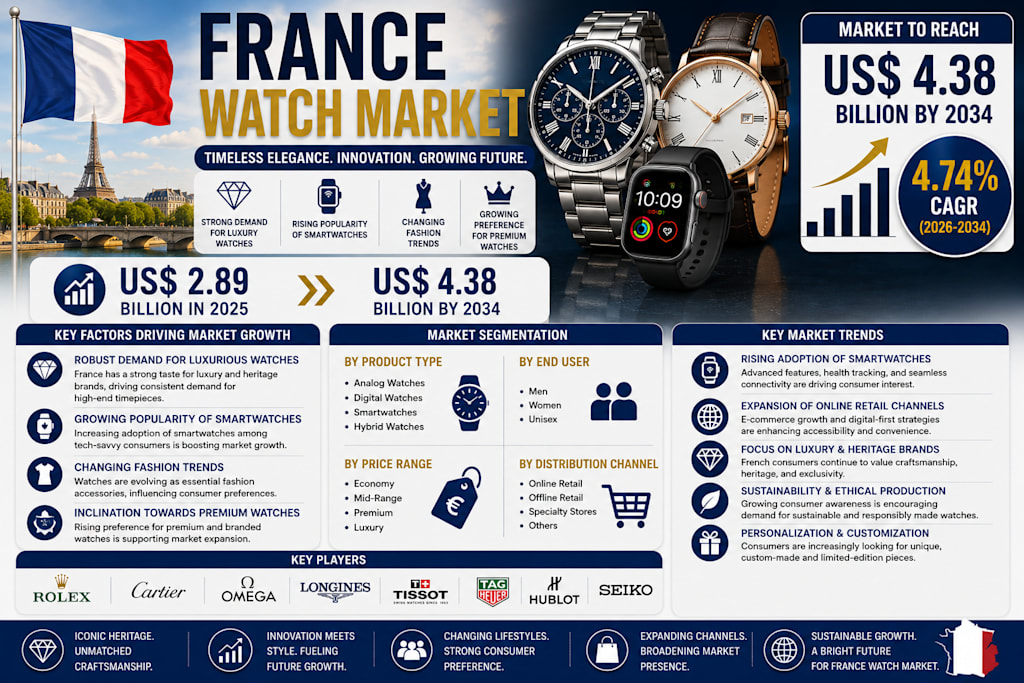
According to Renub Research, the France Watch Market is expected to grow from US$ 2.89 billion in 2025 to US$ 4.38 billion by 2034, registering a CAGR of 4.74% between 2026 and 2034. Strong demand for luxury watches, increasing smartwatch adoption, evolving fashion trends, and growing preference for premium products are expected to drive market growth throughout the forecast period.

Watches Continue to Hold Cultural and Fashion Significance
A watch is more than simply a device used to tell time. Modern watches often include features such as alarms, date displays, fitness tracking, smartphone connectivity, GPS navigation, and health monitoring capabilities.
Historically, watches utilized mechanical and quartz movements. Today, electronic and smartwatches have introduced digital functionality that extends far beyond traditional timekeeping.
In France, watches continue to occupy a special place within consumer culture. French consumers place significant emphasis on style, elegance, and craftsmanship, making watches important fashion accessories as well as practical tools.
Luxury timepieces are frequently associated with achievement, prestige, and sophistication, while smartwatches appeal to younger consumers who prioritize convenience, connectivity, and health tracking.
This combination of tradition and innovation creates a dynamic and evolving marketplace.
Luxury Watches Remain the Cornerstone of the Market
One of the strongest drivers of growth in France's watch industry is the enduring demand for luxury and designer watches.
France has a deep-rooted luxury culture that continues to influence consumer behavior. High-end watches are widely viewed as symbols of success, refinement, and personal achievement. Many consumers purchase luxury watches not only for their functionality but also for their craftsmanship, heritage, and exclusivity.
The presence of globally recognized luxury brands and France's influential fashion industry further strengthens this segment.
Luxury watches are particularly popular among affluent consumers and international tourists who visit France, especially Paris. Many buyers view premium watches as long-term investments due to their durability, prestige, and potential appreciation in value.
Limited-edition collections and artisanal craftsmanship add further appeal by creating exclusivity and rarity.
In November 2024, French independent watchmaker Awake introduced The Poppies, a special edition of its Son Mai Métiers d'Art collection. Featuring a distinctive red dial inspired by Vietnamese artistic traditions and housed in a 39 mm case with an automatic movement, the watch demonstrated how craftsmanship and storytelling continue to enhance the luxury segment.
Smartwatch Adoption Accelerates Across France
Another major growth driver is the increasing popularity of smartwatches and wearable technologies.
Consumers are becoming more health-conscious and digitally connected, creating strong demand for devices that offer multiple functionalities beyond telling time.
Modern smartwatches allow users to track physical activity, monitor heart rates, measure sleep quality, receive notifications, navigate using GPS, and stay connected to smartphones.
Younger consumers are particularly attracted to smartwatches because they align naturally with digital lifestyles. Their ability to integrate seamlessly with mobile applications and daily routines enhances their appeal.
Continuous improvements in battery performance, sensor accuracy, user interfaces, and design aesthetics have further increased consumer adoption.
In December 2023, Amazfit, owned by Zepp Health, introduced four special-edition versions of its Amazfit Balance smartwatch. The environmentally conscious product line utilized fully recyclable packaging, while a portion of proceeds supported urban forestry projects throughout Europe. Such innovations reflect how technology and sustainability increasingly intersect within the smartwatch segment.
Health and Wellness Trends Support Wearable Technology
Health awareness has become one of the most significant influences on consumer purchasing behavior.
French consumers are increasingly interested in monitoring personal wellness and maintaining active lifestyles. Smartwatches provide convenient access to real-time health information, enabling users to track exercise performance, sleep quality, calorie expenditure, and other important metrics.
The integration of fitness and health tools into everyday wearable devices has expanded the appeal of watches beyond traditional consumer segments.
Many consumers now view smartwatches as essential wellness companions that support healthier lifestyles and informed decision-making.
As preventive healthcare and fitness trends continue growing, demand for health-focused wearable technology is expected to remain strong.
Fashion Trends Continue to Shape Consumer Preferences
Fashion plays a particularly important role within the French watch market.
French consumers frequently view watches as extensions of personal style and identity. Rather than owning a single watch, many consumers purchase multiple timepieces to complement different outfits, occasions, and lifestyle needs.
Manufacturers continually introduce new collections featuring innovative materials, colors, dial designs, and strap options designed to align with changing fashion preferences.
Collaborations with designers, influencers, and luxury fashion houses further strengthen consumer interest.
Customization options have also gained popularity, allowing consumers to personalize their watches through interchangeable straps and unique styling elements.
France's influence on global fashion trends ensures that style will remain a major driver of watch purchases for years to come.
E-Commerce Expands Consumer Access
The rapid growth of e-commerce is transforming how French consumers shop for watches.
Online platforms provide convenient access to extensive product selections, competitive pricing, detailed specifications, customer reviews, and direct-to-consumer purchasing options.
Consumers increasingly appreciate the ability to compare products and research brands before making purchasing decisions.
In May 2023, jewelry and watch e-commerce platform Katchin expanded its operations into France and Germany following successful growth in the United Kingdom, illustrating the increasing importance of online retail channels in the watch industry.
At the same time, physical retail stores continue to play an important role, particularly within the luxury segment where consumers value personalized service and hands-on product experiences.
Many brands now utilize omnichannel strategies that seamlessly integrate digital and physical shopping environments.
Electronic Watches Represent a Fast-Growing Segment
Electronic watches, particularly smartwatches, continue to gain market share within France.
Consumers appreciate the versatility of these devices, which combine timekeeping with health tracking, smartphone connectivity, GPS navigation, communication tools, and productivity features.
Technological advancements have improved battery life, processing performance, display quality, and overall user experience.
The segment appeals to a broad demographic range, including professionals, students, fitness enthusiasts, and health-conscious consumers.
As digital lifestyles continue expanding, electronic watches are expected to remain among the fastest-growing categories within the French watch market.
Mechanical Watches Retain Their Prestige
Despite the rise of wearable technology, mechanical watches continue to occupy a respected and profitable niche.
French consumers have a longstanding appreciation for craftsmanship, heritage, and luxury. Mechanical watches embody these qualities through intricate engineering, artistic design, and traditional manufacturing techniques.
Collectors and enthusiasts often regard mechanical watches as wearable works of art.
Many premium mechanical watches feature hand-finished movements, limited production runs, and heritage-inspired designs that enhance their desirability.
The emotional and cultural value associated with mechanical watchmaking helps ensure the continued relevance of this segment despite technological disruption.
Men's Watches Continue to Generate Strong Demand
The men's watch segment remains one of the largest categories within France's watch industry.
Consumers purchase watches for professional, social, and fashion-related purposes. Product offerings range from affordable casual watches to sophisticated luxury timepieces and advanced smartwatches.
Many men view watches as important symbols of personal taste, refinement, and achievement.
Manufacturers continue introducing products that balance elegance, functionality, performance, and technological innovation.
Growing interest in both luxury watches and wearable technology continues driving segment growth.
Luxury Watches Benefit from Tourism
Tourism plays a significant role in supporting France's luxury watch market.
Millions of international visitors travel to France each year, with Paris serving as one of the world's leading destinations for luxury shopping.
Many tourists purchase premium watches as souvenirs, gifts, investments, or status symbols.
Luxury boutiques, flagship stores, and department stores benefit from this influx of high-spending consumers.
The combination of domestic demand and international tourism creates a particularly favorable environment for luxury watch sales.
Challenges Facing the France Watch Market
Intense Competition and Market Saturation
One of the primary challenges facing the industry is intense competition.
The French watch market includes a broad range of domestic and international brands competing across multiple price categories.
From affordable fashion watches to premium luxury timepieces, consumers enjoy extensive choice. This creates pressure on manufacturers to continuously innovate and differentiate their products.
Marketing expenses, promotional activities, and pricing competition can negatively affect profitability.
Counterfeit products also pose challenges by undermining brand value and consumer trust.
Competition from Smartphones and Digital Devices
The widespread use of smartphones has reduced reliance on traditional watches for basic timekeeping.
Many consumers use smartphones to access time, notifications, and information throughout the day.
Although smartwatches have helped address this challenge by offering additional functionality, traditional watches must increasingly compete based on design, craftsmanship, and emotional appeal.
Changing consumer preferences continue reshaping the competitive landscape.
Paris Leads the National Market
Paris remains the most important watch market in France.
As a global center for luxury, fashion, and tourism, Paris generates strong demand for both premium watches and advanced smartwatches.
The city's affluent consumer base and large tourist population contribute significantly to sales volumes.
Luxury boutiques, flagship stores, department stores, and specialty retailers create a highly developed retail ecosystem that supports continued market growth.
Marseille Balances Practicality and Style
Marseille represents a diverse market where consumers seek watches that combine functionality, durability, and style.
Demand is distributed across affordable, mid-range, and premium products.
Fitness-focused smartwatches have gained popularity among consumers seeking active lifestyle solutions, while traditional watches continue serving everyday fashion needs.
Strasbourg Benefits from European Influences
Strasbourg's proximity to major European markets influences local consumer preferences.
The city exhibits demand for both traditional and contemporary watch styles, including luxury mechanical watches and technologically advanced smartwatches.
Cross-border tourism and shopping activities further contribute to market development.
Toulouse Drives Smartwatch Demand
Toulouse's strong technology and industrial sectors contribute to growing smartwatch adoption.
Young professionals, students, and technology-oriented consumers increasingly favor wearable devices that offer practical functionality and connectivity.
At the same time, traditional watches continue to maintain relevance for formal and professional settings.
Future Outlook
The future of the France watch market remains highly promising.
Growing demand for luxury products, increasing smartwatch adoption, evolving fashion trends, expanding digital retail channels, and continuous product innovation are expected to support sustained market growth through 2034.
Manufacturers that successfully combine craftsmanship, technology, personalization, and sustainability will be best positioned to capitalize on emerging opportunities.
As consumers continue seeking products that blend functionality with self-expression, watches are expected to remain an essential component of French lifestyle and fashion culture.
Final Thoughts
The France watch market represents a fascinating convergence of tradition and innovation. Luxury timepieces continue to embody prestige, artistry, and heritage, while smartwatches are redefining consumer expectations through health monitoring, connectivity, and convenience.
With the market projected to grow from US$ 2.89 billion in 2025 to US$ 4.38 billion by 2034, significant opportunities exist for luxury brands, technology companies, retailers, and watchmakers. Businesses that balance timeless design with modern functionality will be best positioned to succeed in France’s evolving watch industry.
About the Creator
Enjoyed the story? Support the Creator.
Subscribe for free to receive all their stories in your feed.
Comments
There are no comments for this story
Be the first to respond and start the conversation.