
Forged in Britain: Why the United Kingdom Steel Market Is Heading Toward an $82.49 Billion Future
From Industrial Legacy to Green Growth, UK Steel Enters a New Era

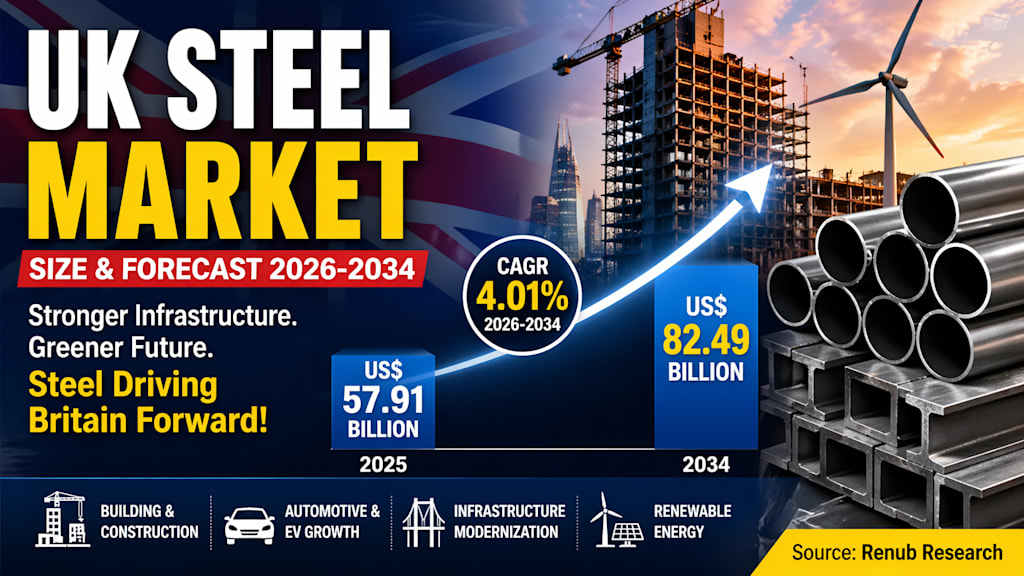
Steel has long been one of the most important materials powering modern civilization. From bridges and railways to skyscrapers, cars, appliances, and renewable energy systems, steel remains the backbone of industrial development. In the United Kingdom, the steel sector has played a historic role for generations—and now, it is stepping into a fresh phase of modernization, sustainability, and economic opportunity.
According to Renub Research, the United Kingdom Steel Market is expected to rise from US$ 57.91 Billion in 2025 to US$ 82.49 Billion in 2034, growing at a CAGR of 4.01% from 2026 to 2034. This growth reflects strong demand from construction, automotive manufacturing, infrastructure expansion, and renewable energy projects.
The future of British steel is no longer just about factories—it is about innovation, resilience, and cleaner industrial progress.
Why Steel Still Matters in the Modern Economy
Steel is one of the most versatile materials in the world. It is strong, durable, recyclable, and adaptable. By adjusting carbon levels or adding alloying elements such as chromium or nickel, steel can be transformed for multiple uses.
In the UK, steel supports industries such as:
- Building and construction
- Rail and transport systems
- Automotive manufacturing
- Aerospace engineering
- Machinery and industrial equipment
- Renewable energy installations
- Home appliances and electronics
Because steel can be recycled repeatedly without losing quality, it is also central to circular economy goals and net-zero ambitions.
Infrastructure Projects Fueling Demand
One of the biggest reasons for market growth is the UK's continued investment in infrastructure modernization.
Steel is essential in:
- Railway stations and tracks
- Roads and bridges
- Airports and ports
- Urban regeneration projects
- Warehouses and logistics parks
- Data centers and industrial buildings
As cities expand and old districts are redeveloped into commercial and residential hubs, demand for beams, rebar, steel frames, and fabricated components rises sharply.
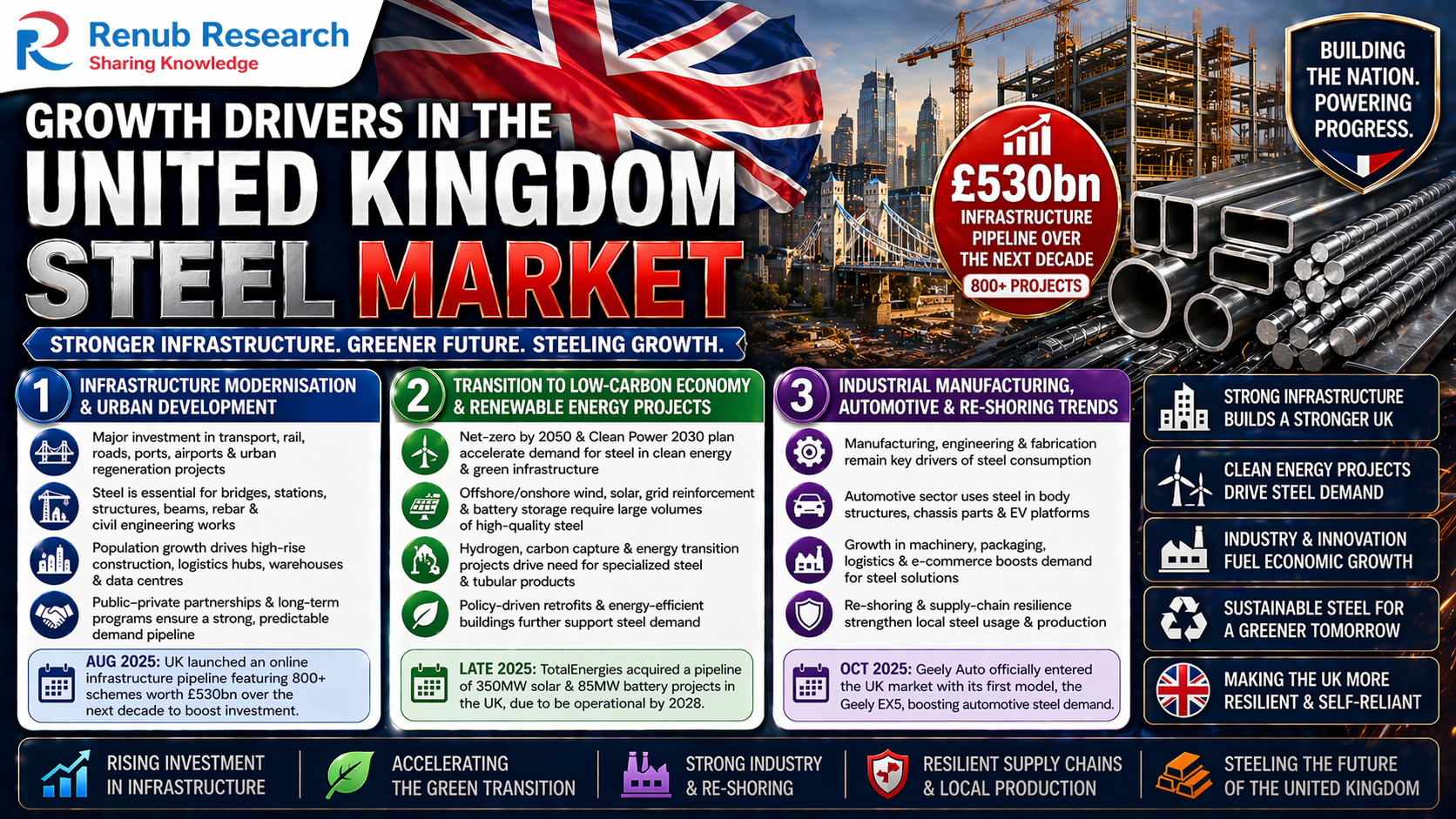
According to the market report, in August 2025 the National Infrastructure and Service Transformation Authority introduced a digital pipeline featuring more than 800 public and private sector projects worth £530 billion over the next decade. This creates a long-term opportunity for steel suppliers and contractors.
Green Energy Is Creating a New Steel Boom
The UK’s net-zero commitments are reshaping industrial demand. As the nation pushes toward cleaner energy, steel has become indispensable in the transition.
Steel is used in:
- Offshore wind turbines
- Solar panel mounting structures
- Grid transmission towers
- Battery storage systems
- Hydrogen facilities
- Carbon capture infrastructure
Large renewable projects require vast amounts of specialized steel products that can withstand harsh environmental conditions.
The report notes that TotalEnergies holds 1.1GW of installed renewable capacity in the UK, with another 4.5GW under development. Additional solar and battery projects are expected to become operational by 2028.
This means steel demand is no longer tied only to traditional construction—it is now deeply connected to the energy future.
Automotive Sector Keeps Steel Strong
The UK automotive industry remains a major consumer of steel, especially advanced high-strength grades used in vehicle production.
Steel is commonly used in:
- Vehicle body structures
- Crash safety systems
- Chassis components
- Seats and steering systems
- Exhaust systems
- Battery enclosures for EVs
Electric vehicles are increasing demand for lighter, stronger, and more efficient steel materials.
The report highlights that Geely Auto officially entered the UK market in October 2025 with its first model, the EX5, signaling new momentum in the domestic EV space.
As more manufacturers launch EV platforms, steel innovation will remain essential.
Flat Steel Market Expanding Across Industries
Flat steel includes hot-rolled, cold-rolled, galvanized, and coated sheets used in many industrial sectors.
This segment is widely used in:
- Automotive panels
- Roofing systems
- Cladding and wall systems
- Packaging
- Machinery manufacturing
- Consumer appliances
Flat steel demand depends heavily on industrial output, vehicle manufacturing, and commercial construction. Service centers also add value by cutting and processing steel for just-in-time delivery.
Structural Steel Demand Rising in Construction
Structural steel is the backbone of many modern buildings and infrastructure systems.
Popular uses include:
- High-rise towers
- Warehouses
- Factories
- Shopping centers
- Bridges
- Multi-storey parking structures
Why builders prefer structural steel:
- Faster installation
- Strong strength-to-weight ratio
- Design flexibility
- Easier modular construction
- Efficient large-span structures
As Britain continues urban redevelopment, structural steel demand is expected to stay robust.
Steel in Everyday Appliances
Steel is also a hidden hero in household products.
It is used in:
- Refrigerators
- Washing machines
- Dishwashers
- Ovens
- Cookers
- Internal frames and drums
Manufacturers value steel for corrosion resistance, strength, durability, and sleek finishing options. As UK consumers upgrade kitchens and appliances, this segment supports steady steel consumption.
Major Regional Markets Driving Growth
London
London is one of the biggest centers of steel demand due to commercial towers, transport hubs, regeneration projects, and data centers. High-rise construction continues to require massive steel volumes.
Manchester
Manchester’s urban transformation, housing growth, and logistics developments are creating strong demand for structural steel and reinforcement materials.
Liverpool
As a major port city, Liverpool needs steel for warehouses, maritime facilities, commercial developments, and waterfront regeneration.
Edinburgh
Edinburgh’s infrastructure upgrades, healthcare facilities, educational campuses, and heritage refurbishments continue to support steel consumption.
Challenges Facing the Industry
Despite strong growth prospects, the UK steel market faces several hurdles.
High Energy Costs
Steelmaking is energy-intensive. Rising gas and electricity prices can hurt profit margins and reduce competitiveness.
Environmental Compliance Costs
Cleaner production methods require investment in new technologies, carbon reduction systems, and process upgrades.
Import Competition
Lower-cost imported steel from overseas markets can pressure domestic pricing and market share.
Cyclical Demand
Construction and automotive sectors can fluctuate depending on economic conditions, affecting steel orders and utilization rates.
Leading Companies in the Market
Some major global companies active in the UK steel ecosystem include:
- ArcelorMittal
- Tata Steel
- Nippon Steel Corporation
- Nucor Corporation
- United States Steel Corporation
- Hyundai Steel
What the Future Looks Like
The next decade could redefine British steel. Growth will increasingly come from:
- Green construction materials
- Offshore wind expansion
- EV manufacturing
- Smart infrastructure
- Recycled steel production
- Lightweight advanced alloys
- Digital supply chain modernization
The industry’s future success will depend on balancing sustainability with competitiveness.
Final Thoughts
The United Kingdom steel market is proving that traditional industries can evolve into future-ready sectors. With market value expected to climb to US$ 82.49 Billion by 2034, steel remains deeply connected to the nation’s infrastructure, manufacturing strength, and green energy transition.
About the Creator
Enjoyed the story? Support the Creator.
Subscribe for free to receive all their stories in your feed.
Comments
There are no comments for this story
Be the first to respond and start the conversation.