
Flavored Milk Market Outlook 2026–2034: How Healthy Ready-to-Drink Beverages Are Reshaping Consumer Preferences
Rising demand for nutritious on-the-go drinks, growing popularity among younger consumers, and continuous product innovation are driving significant growth in the global flavored milk market.

The global beverage industry is evolving rapidly as consumers increasingly seek products that combine convenience, nutrition, and great taste. Modern lifestyles have created strong demand for ready-to-drink beverages that can easily fit into busy daily routines while still delivering important health benefits.
Among the categories benefiting from this trend, flavored milk has emerged as one of the fastest-growing dairy beverage segments worldwide. Combining the nutritional value of traditional milk with enjoyable flavors such as chocolate, vanilla, strawberry, and fruit blends, flavored milk appeals to consumers across multiple age groups.
Children, teenagers, young professionals, athletes, and health-conscious consumers are increasingly incorporating flavored milk into their diets as a convenient source of protein, calcium, vitamins, and essential nutrients. At the same time, manufacturers continue introducing innovative flavors, healthier formulations, and attractive packaging solutions to meet evolving consumer expectations.
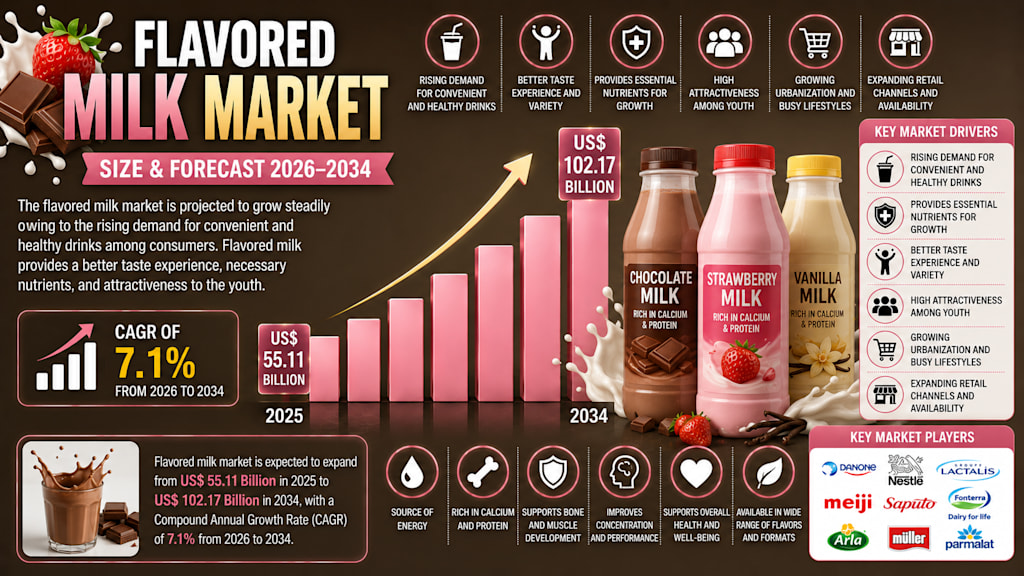
According to Renub Research, the global Flavored Milk Market is expected to grow from US$ 55.11 billion in 2025 to US$ 102.17 billion by 2034, registering a compound annual growth rate (CAGR) of 7.1% from 2026 to 2034. Rising demand for nutritious ready-to-drink beverages, growing popularity among younger consumers, expanding retail distribution networks, and continuous product innovation are among the key factors supporting market expansion.
As consumers continue prioritizing convenience and wellness, flavored milk is positioned to become an increasingly important segment within the global dairy industry.
Understanding the Growing Popularity of Flavored Milk
Flavored milk is a dairy-based beverage produced by combining milk with flavoring ingredients such as chocolate, vanilla, strawberry, banana, fruit extracts, and other natural or artificial flavors.
Many products are also fortified with vitamins, minerals, and additional nutrients to enhance their nutritional profile. Despite its added flavors, flavored milk retains many of the core health benefits associated with regular milk, including calcium, protein, potassium, vitamin D, and vitamin B12.
The product is available in multiple formats, including ready-to-drink bottles, cartons, pouches, and powdered mixes.
One of the primary reasons for its popularity is its ability to make milk more appealing to consumers who may not enjoy the taste of plain milk. Children and teenagers, in particular, often prefer flavored varieties while still benefiting from the nutritional value of dairy products.
Flavored milk is also commonly consumed as a post-workout recovery beverage due to its balance of carbohydrates and protein, which can support muscle recovery and energy replenishment.
As awareness of nutrition continues growing, flavored milk is increasingly viewed as a practical alternative to sugary soft drinks and less nutritious beverages.
Rising Demand for Convenient and Nutritious Beverages
One of the strongest drivers of growth in the flavored milk market is the increasing consumer demand for beverages that combine convenience and nutrition.
Today's consumers often lead fast-paced lifestyles that leave little time for meal preparation or elaborate dietary planning. As a result, ready-to-drink products that provide essential nutrients in portable formats have become increasingly attractive.
Flavored milk fits perfectly within this trend because it offers a combination of taste, convenience, and health benefits.
Parents frequently choose flavored milk as a healthier beverage option for their children compared to carbonated soft drinks and other sugary alternatives. The product provides important nutrients that support growth and development while remaining appealing to younger consumers.
Portable packaging formats such as bottles and cartons further enhance convenience, allowing consumers to enjoy flavored milk at school, work, during travel, or after exercise.
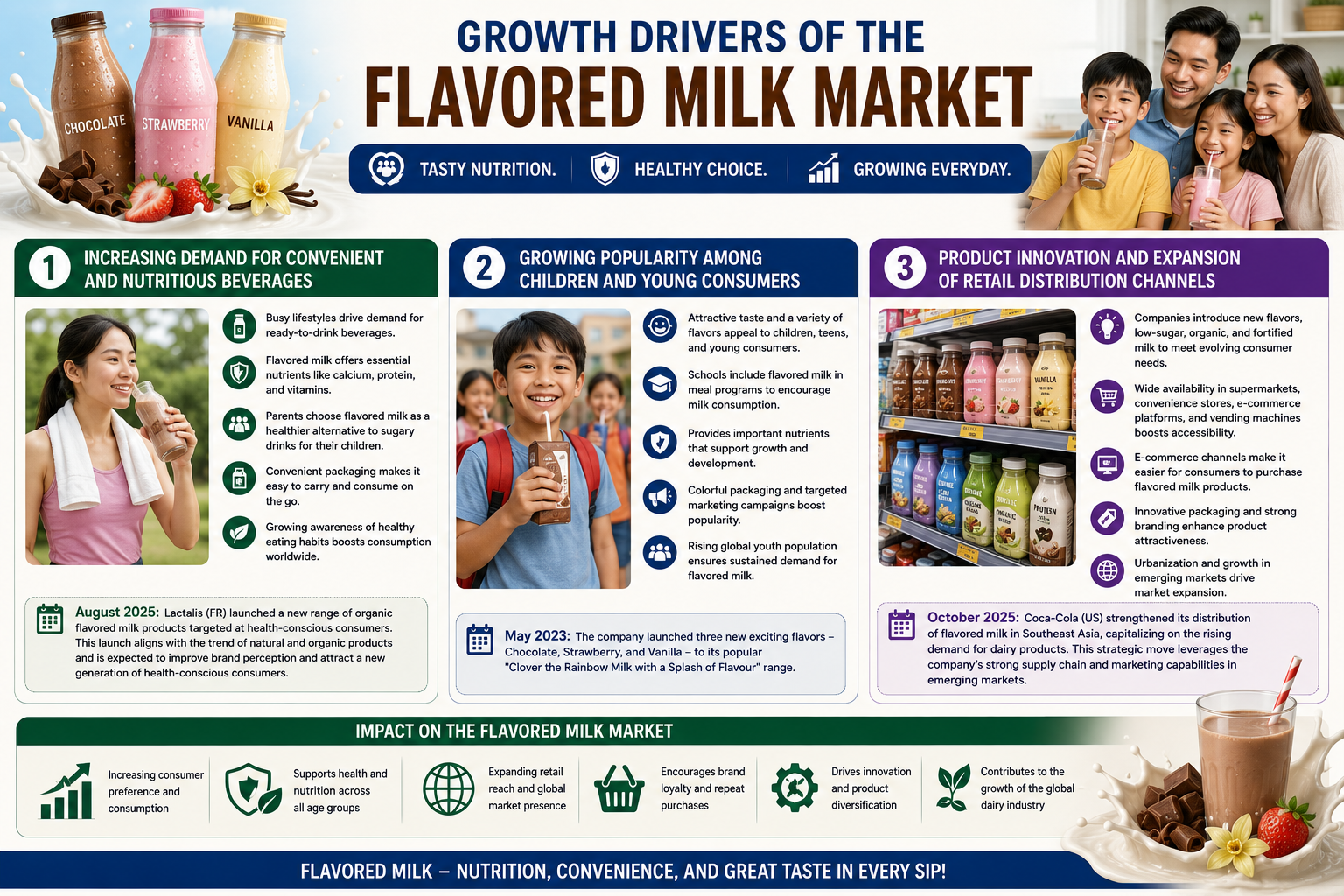
In August 2025, Lactalis introduced a new line of organic flavored milk products designed specifically for health-conscious consumers, reflecting the industry's growing focus on wellness-oriented product development.
As consumer interest in healthy convenience products continues expanding, flavored milk is expected to experience sustained demand growth.
Children and Young Consumers Are Driving Market Expansion
Young consumers represent one of the most important customer segments within the flavored milk market.
Many children and teenagers dislike the taste of plain milk, making flavored varieties an effective way to encourage dairy consumption while ensuring adequate nutrient intake.
Educational institutions frequently include flavored milk within school meal programs to promote healthier beverage choices among students.
Popular flavors such as chocolate, strawberry, and vanilla continue attracting strong consumer interest because they provide familiar and enjoyable taste experiences.
Manufacturers increasingly utilize colorful packaging, engaging branding, and targeted marketing campaigns designed to appeal to younger audiences.
Parents also appreciate flavored milk because it delivers essential nutrients needed for healthy growth and development while satisfying children's taste preferences.
In May 2023, Clover expanded its Rainbow Milk product line by introducing three new flavors: Chocolate, Strawberry, and Vanilla, further strengthening its appeal among younger consumers.
As global youth populations continue growing and awareness regarding childhood nutrition increases, demand for flavored milk is expected to remain strong.
Product Innovation Is Creating New Growth Opportunities
Innovation has become a major competitive strategy within the flavored milk industry.
Manufacturers are continually developing new flavors, formulations, and nutritional enhancements to meet changing consumer preferences and differentiate their products.
Low-sugar, reduced-calorie, organic, fortified, and functional flavored milk products are becoming increasingly common as companies respond to growing health awareness.
Many brands are also incorporating additional nutrients, including protein, probiotics, vitamins, and minerals, to create products that deliver enhanced health benefits.
Packaging innovation is equally important. Attractive designs, portable containers, and environmentally friendly packaging solutions help improve consumer engagement and brand visibility.
Manufacturers are also investing heavily in marketing campaigns and digital engagement strategies designed to strengthen consumer loyalty and increase product awareness.
In October 2025, Coca-Cola expanded flavored milk distribution across Southeast Asia to capitalize on rising regional demand for dairy beverages and strengthen its presence within the category.
Continuous innovation is expected to remain a critical factor supporting long-term market growth.
Expanding Retail and Distribution Networks
The development of modern retail infrastructure has significantly improved access to flavored milk products worldwide.
Consumers can now purchase flavored milk through supermarkets, hypermarkets, convenience stores, specialty retailers, vending machines, and online platforms.
Convenience stores play a particularly important role because they cater to consumers seeking quick, ready-to-drink beverage options during busy daily schedules.
Retailers increasingly allocate more shelf space to flavored milk products as demand continues rising.
The expansion of cold-chain logistics networks has further improved product availability and quality by ensuring efficient storage and transportation.
Manufacturers are also benefiting from broader geographic reach, allowing them to access consumers in both urban and rural markets.
As retail infrastructure continues improving globally, flavored milk availability is expected to increase further, supporting continued market expansion.
Online Sales Are Transforming Consumer Purchasing Behavior
Digital commerce has become an increasingly important sales channel for flavored milk products.
Consumers appreciate the convenience of browsing, comparing, and purchasing products online from the comfort of their homes.
E-commerce platforms provide access to a broader selection of flavors, brands, and product formats than many traditional retail outlets.
Subscription services, bulk-purchase options, and home delivery programs are making online purchasing even more attractive.
Manufacturers and retailers also benefit from direct consumer engagement, personalized marketing opportunities, and valuable customer data.
The widespread adoption of smartphones, digital payment systems, and improved logistics infrastructure continues supporting rapid growth in online beverage sales.
As digital commerce becomes increasingly integrated into daily life, online channels are expected to play an even larger role within the flavored milk market.
Fresh Flavored Milk Continues Gaining Popularity
The flavored fresh milk segment remains one of the most important categories within the overall market.
Fresh flavored milk is produced using liquid milk combined with flavoring ingredients and typically requires refrigerated storage.
Consumers often perceive fresh flavored milk as more natural and nutritionally superior compared to highly processed alternatives.
The product is widely consumed at home, in schools, offices, and food-service establishments.
Growing interest in fresh and minimally processed foods is encouraging consumers to choose fresh dairy beverages whenever possible.
Advancements in refrigeration technology and distribution systems have improved product accessibility while maintaining quality standards.
As health-conscious consumers increasingly seek natural beverage options, fresh flavored milk is expected to maintain strong market performance.
Flavored Milk Powder Remains Important in Emerging Markets
Flavored milk powder represents another important segment within the market.
Produced by drying milk and incorporating flavoring ingredients, flavored milk powder offers extended shelf life and easier storage compared to liquid products.
The category is particularly valuable in regions where refrigeration infrastructure may be limited.
Consumers appreciate its convenience, affordability, and versatility, as it can be prepared simply by mixing with water.
Manufacturers increasingly offer fortified versions that provide enhanced nutritional value while maintaining affordability.
Flavored milk powder is also widely used in food-service applications, baking, desserts, and beverage preparation.
As demand for practical and long-lasting dairy products continues growing, flavored milk powder is expected to remain an important market segment.
Plastic Packaging Dominates the Market
Plastic-based packaging continues to represent a major segment within the flavored milk industry.
Plastic bottles provide durability, lightweight transportation, convenience, and cost-effectiveness, making them highly attractive for manufacturers and consumers alike.
Ready-to-drink flavored milk products are commonly packaged in resealable plastic containers that enhance portability and user convenience.
Plastic packaging also helps maintain product freshness while protecting against contamination.
The growth of on-the-go consumption habits continues supporting demand for portable packaging formats.
At the same time, manufacturers are increasingly exploring recyclable and sustainable packaging solutions to address environmental concerns.
As convenience remains a key purchasing factor, plastic-based packaging is expected to maintain a strong market presence.
Health Concerns Regarding Sugar Content
Despite strong growth prospects, the flavored milk market faces several challenges.
One of the most significant concerns involves sugar content.
Many flavored milk products contain added sugars that improve taste but may contribute to obesity, diabetes, and dental health issues when consumed excessively.
Health-conscious consumers are becoming increasingly selective regarding beverage choices and nutritional content.
Parents are also paying closer attention to sugar consumption among children, influencing purchasing decisions.
Governments and public health organizations continue promoting sugar reduction initiatives that may affect product formulations and consumer perceptions.
In response, manufacturers are developing low-sugar, reduced-calorie, and naturally sweetened alternatives designed to address these concerns while maintaining product appeal.
Successfully balancing taste and nutrition will remain a critical challenge for industry participants moving forward.
Competition from Plant-Based Alternatives
The growing popularity of plant-based beverages represents another significant challenge for traditional flavored milk producers.
Consumers increasingly choose alternatives such as almond milk, oat milk, soy milk, and coconut-based beverages for health, dietary, ethical, or environmental reasons.
Many plant-based products are available in flavored varieties and are marketed as sustainable alternatives to dairy.
The rise of vegan and flexitarian lifestyles has further accelerated demand for dairy alternatives.
Manufacturers of traditional flavored milk products must continue innovating to remain competitive and appeal to evolving consumer preferences.
Some dairy companies are even expanding into plant-based categories themselves to diversify product portfolios and capture new growth opportunities.
As consumer choice expands, competition within the broader beverage market is expected to intensify.
Regional Market Insights
The United States remains one of the largest flavored milk markets globally due to strong dairy consumption habits, extensive retail infrastructure, and high awareness regarding nutrition. In October 2025, Barebells expanded its U.S. product portfolio through the introduction of a new Milk Drinks range, reflecting continued innovation within the category.
The United Kingdom continues experiencing steady growth driven by increasing demand for convenient dairy beverages and healthier alternatives to soft drinks. In March 2025, YAZOO launched its new Inspirations range featuring Birthday Cake and Caramel Blondie flavors, targeting consumers seeking indulgent on-the-go beverage options.
India represents one of the fastest-growing markets due to urbanization, rising disposable incomes, expanding organized retail, and increasing awareness of nutrition. In March 2024, Nestlé India partnered with ITC Limited to launch flavored milk beverages under the Nestlé Chocolate Spreads brand.
Saudi Arabia continues experiencing strong growth supported by increasing health awareness, rising incomes, and demand for ready-to-drink beverages. In May 2022, SADAFCO launched SAUDIA Oat Milk, highlighting growing interest in both dairy and alternative beverage categories across the region.
Competitive Landscape
Competition within the flavored milk industry remains intense as companies focus on innovation, nutrition, branding, and distribution expansion.
Major market participants include Danone SA, Arla Foods, Saputo Inc., The Hershey Company, Fonterra Co-operative Group, Nestlé S.A., Meiji Holdings Co. Ltd., and Amul Industries Pvt Ltd.
These organizations continue investing in product development, healthier formulations, retail expansion, and digital marketing initiatives to strengthen market positions and attract new consumers.
Strategic partnerships, flavor innovation, and premium product offerings are expected to remain key competitive strategies throughout the forecast period.
Final Thoughts
The global flavored milk market is benefiting from powerful consumer trends centered on convenience, nutrition, and enjoyable beverage experiences. As busy lifestyles continue driving demand for ready-to-drink products, flavored milk offers a compelling combination of taste, portability, and nutritional value.
Innovation in flavors, formulations, packaging, and distribution channels continues creating new opportunities across both developed and emerging markets. At the same time, growing awareness regarding health and wellness is encouraging manufacturers to develop products that better align with modern consumer expectations.
With the market projected to grow from US$ 55.11 billion in 2025 to US$ 102.17 billion by 2034, flavored milk is expected to remain one of the most dynamic and rapidly expanding categories within the global dairy beverage industry. As consumers continue seeking healthier and more convenient beverage solutions, the future of flavored milk looks increasingly promising.
About the Creator
Enjoyed the story? Support the Creator.
Subscribe for free to receive all their stories in your feed.
Comments
There are no comments for this story
Be the first to respond and start the conversation.