
Flame Retardants Market Set for Steady Growth as Fire Safety Becomes a Global Priority
Rising construction activity, stricter regulations, and expanding electronics manufacturing are fueling demand for advanced flame-retardant materials worldwide.

Fire safety has become one of the most important considerations across industries ranging from construction and transportation to electronics and consumer goods. As governments tighten safety regulations and businesses invest in safer materials, the global flame retardants market is entering a period of sustained expansion.
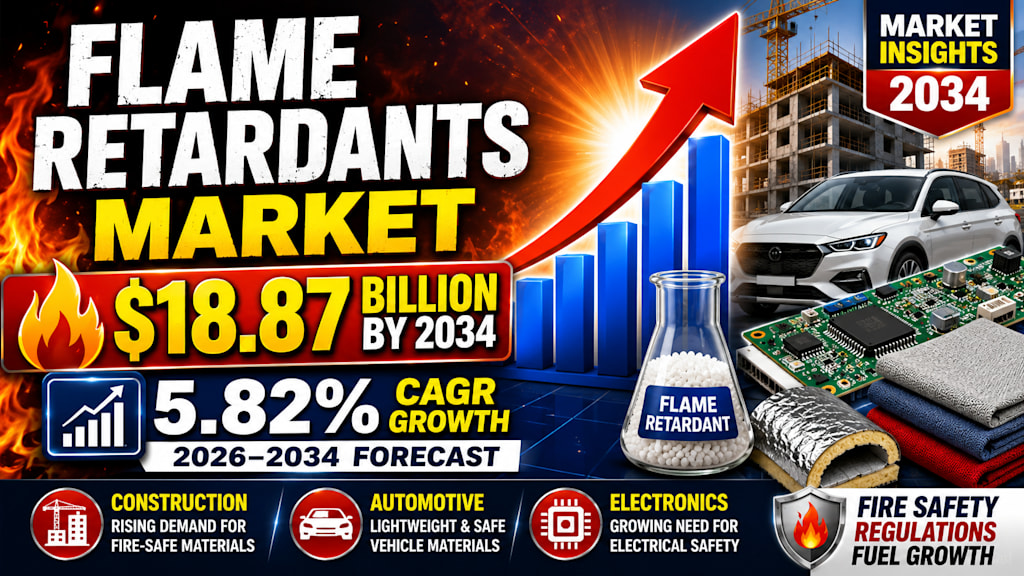
According to industry estimates, the global flame retardants market is expected to grow from approximately US$ 11.34 billion in 2025 to US$ 18.87 billion by 2034, representing a compound annual growth rate (CAGR) of 5.82% during the forecast period. This growth reflects increasing awareness about fire hazards, expanding industrial activity, and the rising adoption of fire-resistant materials in both developed and emerging economies.
The market's upward trajectory is not simply about compliance with regulations. It is also a response to changing consumer expectations, evolving technologies, and a growing focus on sustainability. As industries seek innovative ways to reduce fire risks while minimizing environmental impact, flame retardants are becoming a critical component of modern manufacturing and infrastructure development.
Understanding the Role of Flame Retardants
Flame retardants are chemical substances added to materials to slow down, suppress, or prevent the spread of fire. These compounds are commonly incorporated into plastics, textiles, insulation materials, coatings, cables, and various composite products.
Their primary purpose is to improve fire resistance and provide valuable time during emergencies, potentially saving lives and reducing property damage. In many applications, flame retardants also help decrease heat release and smoke production, making evacuation safer and reducing the overall severity of fire incidents.
Today, flame retardants are used extensively in residential buildings, commercial facilities, industrial plants, vehicles, electrical systems, and consumer electronics. As the world becomes increasingly dependent on technology and complex infrastructure, the need for reliable fire protection solutions continues to grow.
Why the Market Is Expanding
Several factors are contributing to the increasing demand for flame retardants across global markets.
Stricter Fire Safety Regulations
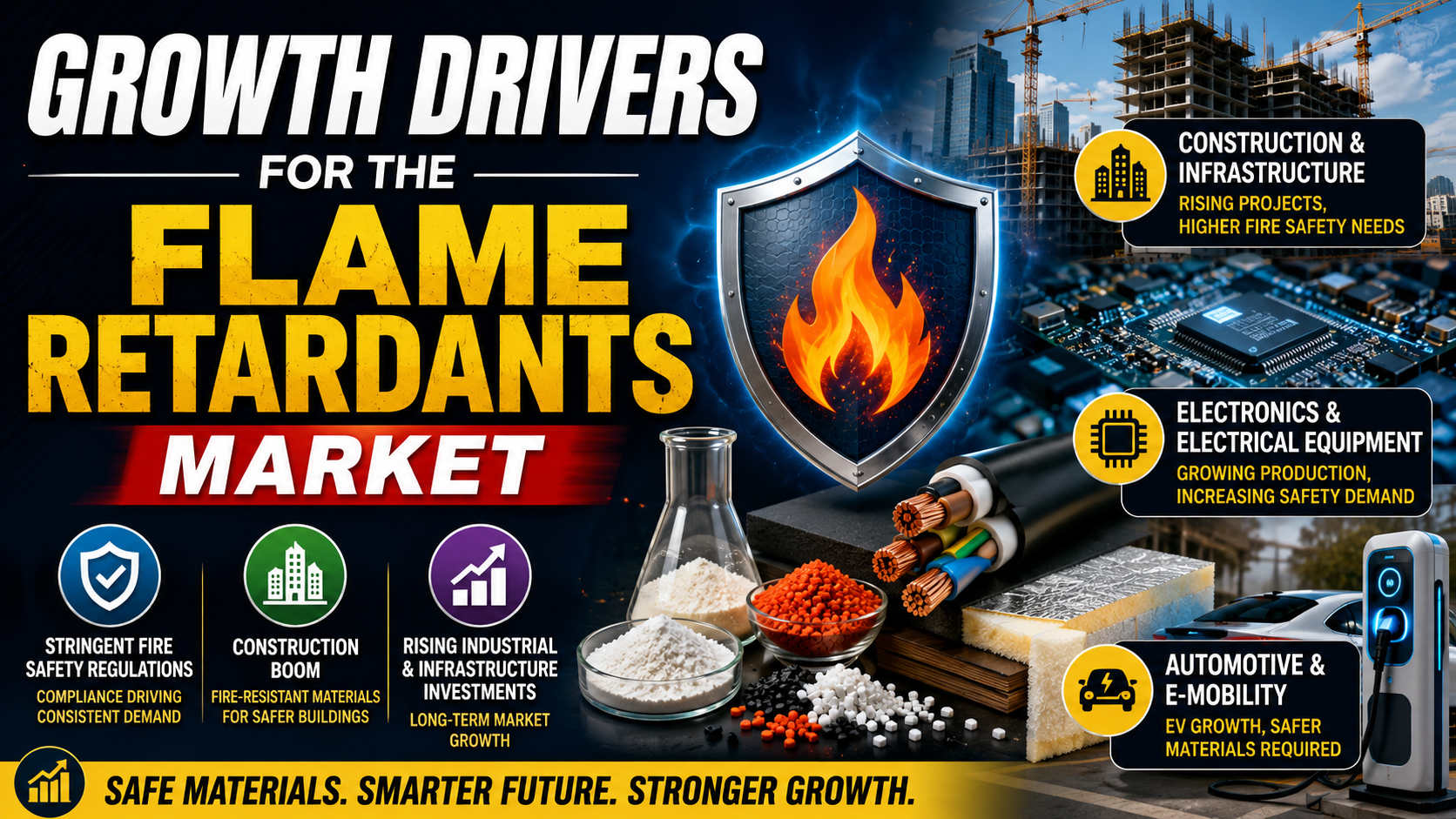
One of the strongest drivers of market growth is the introduction and enforcement of rigorous fire safety regulations. Governments and regulatory agencies are implementing stricter standards to reduce fire-related accidents and fatalities.
Building codes in many countries now require the use of fire-resistant materials in insulation systems, structural components, wiring, and electrical installations. Similarly, manufacturers in the automotive and electronics sectors must meet increasingly demanding safety standards before products can enter the market.
As regulatory frameworks continue to evolve, businesses are investing more heavily in advanced flame-retardant solutions to ensure compliance and maintain competitiveness.
Construction and Infrastructure Development
The global construction industry remains a major consumer of flame retardants. Rapid urbanization, population growth, and infrastructure investments are creating strong demand for safer building materials.
Modern construction projects often incorporate flame-retardant insulation, cables, coatings, and structural materials to enhance fire resistance. This trend is particularly evident in high-rise buildings, commercial complexes, airports, hospitals, and educational institutions where fire safety requirements are especially stringent.
The growing popularity of smart cities and energy-efficient buildings is also supporting market growth. As developers seek sustainable and safe construction materials, flame retardants are becoming increasingly important in achieving both goals.
Growth of Electronics Manufacturing
The electronics industry represents another significant source of demand. Smartphones, computers, appliances, data center equipment, and industrial electronics all contain components that must meet fire safety standards.
As electronic devices become more powerful and compact, heat generation and fire risks increase. Flame retardants help mitigate these risks by protecting circuit boards, connectors, housings, and cables from ignition.
The rapid expansion of digital infrastructure worldwide, including cloud computing facilities and communication networks, further strengthens demand for advanced flame-retardant materials.
Electric Vehicle Adoption
The rise of electric vehicles (EVs) is creating new opportunities for the flame retardants industry. Battery systems, charging infrastructure, and electrical components require enhanced fire protection to ensure passenger safety and regulatory compliance.
Manufacturers are increasingly developing specialized flame-retardant materials designed specifically for electric mobility applications. These innovations are expected to become an important growth segment over the next decade as EV adoption accelerates globally.
The Shift Toward Sustainable Solutions
Historically, halogenated flame retardants dominated the market due to their effectiveness and affordability. However, environmental and health concerns have prompted regulators and manufacturers to explore safer alternatives.
Many traditional flame retardants have faced scrutiny because of their potential environmental persistence and toxicity. As a result, non-halogenated flame retardants are gaining popularity across multiple industries.
Phosphorus-based, nitrogen-based, mineral, and inorganic flame retardants are emerging as attractive alternatives. These solutions often offer improved environmental profiles while maintaining strong fire protection performance.
The transition toward eco-friendly products reflects a broader movement within the chemical industry toward sustainable innovation. Companies are investing heavily in research and development to create solutions that balance safety, environmental responsibility, and performance.
Challenges Facing the Industry
Despite strong growth prospects, the flame retardants market faces several challenges.
Environmental Concerns
Environmental regulations continue to place pressure on manufacturers to reduce the use of potentially harmful chemicals. Compliance with evolving standards can be costly and time-consuming, particularly for companies operating across multiple regions.
Manufacturers must continually invest in product reformulation, testing, and certification to meet changing regulatory requirements.
Cost of Green Alternatives
While eco-friendly flame retardants offer significant advantages, they can be more expensive than conventional solutions. In some cases, higher concentrations may be required to achieve comparable performance levels.
This creates cost challenges for manufacturers, particularly in price-sensitive markets. Balancing environmental responsibility with affordability remains a key concern throughout the industry.
Performance Trade-Offs
Developing sustainable flame-retardant solutions without compromising material performance is another challenge. Some alternatives can affect product durability, flexibility, or mechanical strength.
As a result, ongoing research focuses on improving compatibility between flame retardants and modern materials used across industries.
Regional Markets Driving Growth
The flame retardants market is expanding worldwide, but certain regions are playing especially important roles in shaping industry trends.
United States
The United States remains one of the largest markets for flame retardants, supported by stringent safety regulations and a strong manufacturing base.
Demand is particularly strong in construction, electronics, automotive manufacturing, and infrastructure projects. Growing adoption of electric vehicles and increasing investment in advanced technologies are further strengthening market prospects.
Additionally, environmental awareness is encouraging the adoption of non-halogenated flame-retardant solutions throughout the country.
Germany
Germany represents one of Europe's most significant flame retardants markets. The country's emphasis on engineering excellence, sustainability, and industrial innovation creates favorable conditions for advanced fire protection technologies.
Strong demand from the automotive and electronics industries, combined with strict European Union regulations, continues to support market expansion.
Research and development activities in Germany are also contributing to innovations in environmentally friendly flame-retardant materials.
China
China is experiencing particularly strong growth due to rapid industrialization, urban development, and expanding manufacturing activities.
Large-scale infrastructure projects, increasing construction activity, and booming electronics production are driving substantial demand for flame retardants. The country's growing electric vehicle industry further enhances growth opportunities.
As Chinese regulators place greater emphasis on environmental protection and safety standards, demand for advanced and sustainable flame-retardant solutions is expected to rise.
Saudi Arabia
Saudi Arabia's ambitious infrastructure development plans are creating significant opportunities for the flame retardants industry.
Major commercial, residential, and industrial projects require high-performance fire-resistant materials to meet modern safety standards. Growth in transportation, energy, and industrial sectors is also contributing to increased adoption of flame-retardant products.
The market is benefiting from rising awareness of fire safety and ongoing modernization efforts throughout the region.
Recent Industry Innovations
Innovation remains a key competitive factor within the flame retardants industry.
Recent product launches highlight the industry's focus on sustainability, performance, and emerging applications.
In late 2024, several manufacturers introduced next-generation flame-retardant technologies designed to improve environmental performance while maintaining strong fire protection characteristics. These innovations include advanced phosphorus-based formulations, halogen-free industrial cables, and lightweight materials developed specifically for electric vehicle battery protection.
Such developments demonstrate how manufacturers are responding to changing customer expectations and regulatory requirements. The trend toward safer, more efficient, and environmentally responsible solutions is likely to accelerate over the coming years.
Looking Ahead
The future of the flame retardants market appears increasingly promising. Urbanization, technological advancement, stricter regulations, and rising safety awareness are creating long-term demand across multiple sectors.
Construction, electronics, transportation, and renewable energy applications are expected to remain key growth engines. At the same time, ongoing innovation in sustainable materials will help address environmental concerns and open new opportunities for manufacturers.
Companies that successfully combine fire protection performance with environmental responsibility are likely to gain a competitive advantage in the evolving marketplace.
As industries worldwide continue to prioritize safety and resilience, flame retardants will remain a vital component of modern materials and infrastructure.
Final Thoughts
Fire safety is no longer viewed as a secondary consideration—it is now a fundamental requirement across nearly every industry. This shift is driving significant investment in flame-retardant technologies and creating strong growth opportunities for manufacturers around the world.
With the global flame retardants market projected to grow from US$ 11.34 billion in 2025 to US$ 18.87 billion by 2034, the industry is positioned for steady expansion. Increasing construction activity, electronics manufacturing, electric vehicle adoption, and stricter safety regulations will continue to shape demand in the years ahead.
While challenges related to sustainability and regulatory compliance remain, ongoing innovation is helping the industry evolve toward safer and more environmentally responsible solutions. For businesses, regulators, and consumers alike, flame retardants will continue to play an essential role in creating a safer future.
About the Creator
Enjoyed the story? Support the Creator.
Subscribe for free to receive all their stories in your feed.
Comments
There are no comments for this story
Be the first to respond and start the conversation.