
Feeding a Changing World: How Innovation and Convenience Are Transforming the Global Food Processing Market
Rising demand for ready-to-eat foods, automation technologies, food safety advancements, and evolving consumer lifestyles are driving unprecedented growth across the global food processing industry.

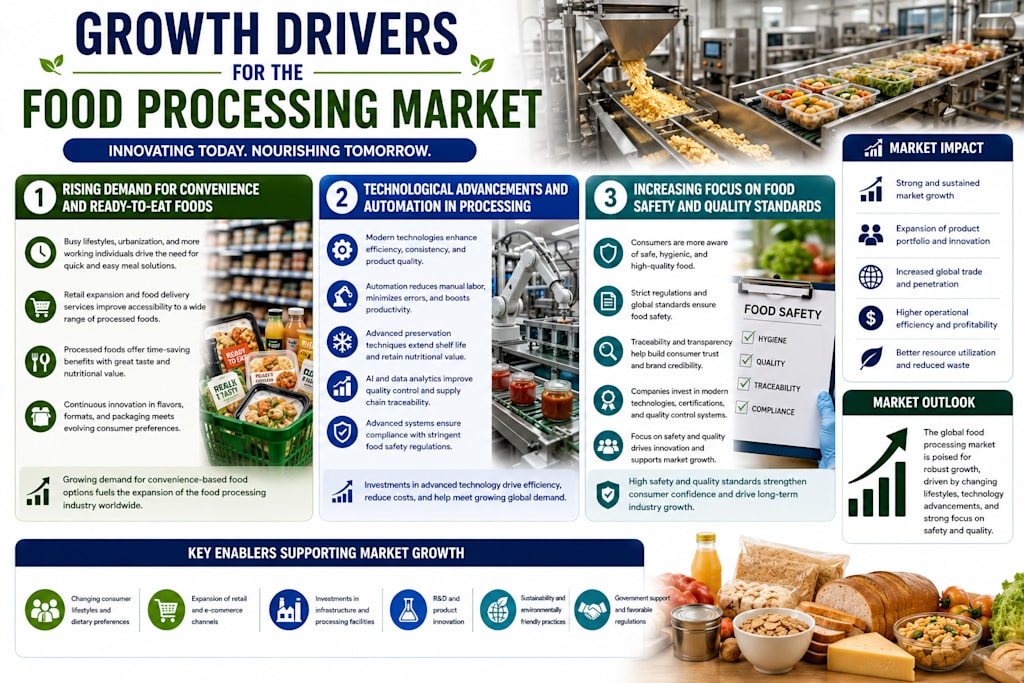
As populations expand, urbanization accelerates, and consumer lifestyles become increasingly fast-paced, the demand for safe, convenient, and high-quality food products continues to rise. What was once a relatively simple process of preserving agricultural products has evolved into a sophisticated industry powered by advanced technologies, automation, artificial intelligence, and global supply chains.
Today, food processing touches nearly every aspect of daily life.
From frozen meals and packaged snacks to dairy products, beverages, bakery items, and ready-to-eat meals, processed foods play a vital role in meeting the nutritional needs of billions of people worldwide.
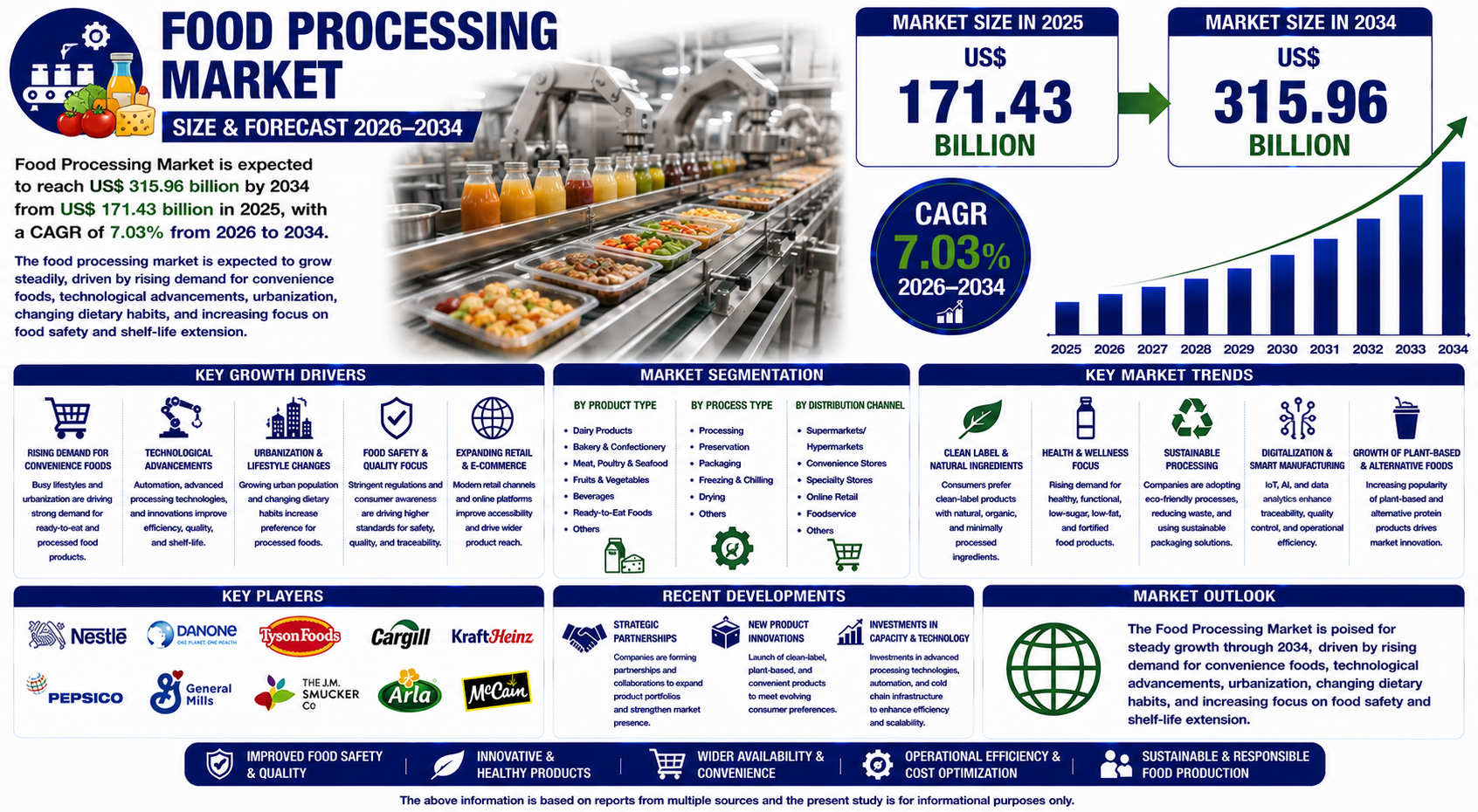
According to Renub Research, the Global Food Processing Market is projected to grow from US$ 171.43 billion in 2025 to US$ 315.96 billion by 2034, expanding at a compound annual growth rate (CAGR) of 7.03% from 2026 to 2034. Rising demand for convenience foods, technological advancements, urbanization, changing dietary habits, and increased emphasis on food safety and shelf-life extension are driving market expansion.
As consumer expectations continue evolving, the food processing industry is becoming increasingly innovative, efficient, and essential to global food security.
The Critical Role of Food Processing
Food processing refers to the transformation of raw agricultural materials into consumable food products through various methods such as:
Cleaning, sorting, preservation, packaging, freezing, drying, cooking, and distribution.
The industry serves as a bridge between agricultural production and consumer demand.
By extending shelf life, improving food safety, reducing waste, and enhancing convenience, food processing enables food products to reach consumers efficiently while maintaining quality and nutritional value.
Modern food processing encompasses a wide range of product categories, including:
Packaged foods, frozen foods, dairy products, meat products, beverages, bakery products, snacks, and ready-to-eat meals.
As global food demand continues increasing, efficient processing systems remain critical to ensuring reliable food availability worldwide.
Convenience Foods Are Driving Market Expansion
One of the most significant drivers of growth is the increasing consumer preference for convenience foods.
Modern lifestyles leave many consumers with limited time for meal preparation.
As a result, demand for:
Ready-to-eat meals, frozen foods, pre-packaged snacks, meal kits, and convenience beverages continues rising.
Urbanization and the growing participation of women in the workforce have further accelerated this trend.
Consumers increasingly seek products that provide:
Speed, convenience, consistency, and nutritional value without requiring extensive preparation.
Food manufacturers continue responding with innovative product offerings, improved packaging formats, and expanded distribution channels.
The growing popularity of convenience-oriented food products remains a powerful catalyst for market growth.
Technology Is Revolutionizing Food Manufacturing
Technological innovation has become a cornerstone of modern food processing.
Advanced manufacturing technologies help companies improve efficiency, enhance quality control, reduce waste, and scale production more effectively.
Key innovations include:
Automation systems, robotics, artificial intelligence, machine learning, predictive analytics, smart sensors, and advanced preservation technologies.
Automation reduces manual labor requirements while improving consistency and productivity.
Artificial intelligence enables real-time monitoring of production processes, helping manufacturers identify inefficiencies and maintain quality standards.
Data-driven decision-making is also improving supply chain management and production planning.
As technology adoption accelerates, food processing facilities are becoming increasingly intelligent and efficient.
Food Safety Remains a Top Priority
Food safety has become one of the most important concerns for both consumers and regulators.
Rising awareness regarding foodborne illnesses and contamination risks has increased demand for higher safety standards throughout the supply chain.
Governments worldwide continue implementing stringent regulations governing:
Food production, processing, labeling, packaging, traceability, and quality control.
Manufacturers are investing heavily in advanced testing systems, monitoring technologies, and quality assurance programs to ensure compliance.
Consumers increasingly expect transparency regarding ingredients, sourcing, and manufacturing practices.
As food safety requirements continue becoming more rigorous, investments in processing technologies and compliance systems are expected to increase.
Packaging Innovation Is Creating New Opportunities
Packaging has become a major area of innovation within the food processing industry.
Modern consumers seek products that are not only convenient but also environmentally responsible.
Manufacturers are increasingly adopting:
Sustainable packaging, recyclable materials, biodegradable solutions, smart packaging technologies, and extended shelf-life packaging systems.
Advanced packaging helps preserve freshness, reduce food waste, improve transportation efficiency, and enhance consumer convenience.
Smart packaging technologies can also provide information regarding freshness, storage conditions, and product authenticity.
As sustainability concerns continue influencing purchasing decisions, packaging innovation is expected to remain a major growth driver.
Health and Wellness Trends Are Reshaping Product Development
Consumers are becoming increasingly health conscious, creating new opportunities for food processors.
Demand is growing for products that offer:
Organic ingredients, low-fat formulations, reduced sugar content, plant-based alternatives, fortified foods, and clean-label products.
Consumers increasingly scrutinize ingredient lists and seek products with recognizable, minimally processed components.
Food manufacturers are responding by reformulating products and introducing healthier alternatives.
Functional foods that provide additional health benefits beyond basic nutrition are also gaining popularity.
As wellness-focused consumption continues expanding, health-oriented product innovation will remain central to industry growth.
E-Commerce Is Expanding Market Reach
The rapid growth of e-commerce has transformed food retail and distribution.
Consumers increasingly purchase food products online due to:
Convenience, broader product selection, home delivery services, and subscription-based purchasing options.
Food processing companies are adapting by strengthening digital capabilities and expanding direct-to-consumer sales channels.
Online grocery platforms and food delivery services have become important distribution partners.
Improved logistics infrastructure and digital payment systems further support market growth.
As online food purchasing becomes increasingly mainstream, e-commerce will continue influencing processing, packaging, and distribution strategies.
Preservation Technologies Extend Shelf Life
Advanced preservation techniques are helping manufacturers meet consumer demand while reducing food waste.
Technologies such as:
Freezing, vacuum packaging, dehydration, pasteurization, modified atmosphere packaging, and advanced drying methods significantly improve product stability.
These innovations help maintain nutritional value, flavor, and product quality while extending shelf life.
Longer shelf life benefits manufacturers, retailers, and consumers by improving inventory management and reducing spoilage.
As global food distribution networks expand, preservation technologies will remain increasingly important.
United States Leads Through Innovation
The United States remains one of the world's most advanced food processing markets.
Strong consumer demand, sophisticated infrastructure, advanced manufacturing capabilities, and a highly developed retail sector support continued growth.
American consumers increasingly seek:
Convenience foods, organic products, clean-label offerings, and functional nutrition solutions.
Major food manufacturers continue investing in automation, artificial intelligence, and advanced packaging technologies.
The rapid growth of online grocery shopping further strengthens market opportunities.
Combined with strict food safety regulations and strong innovation capabilities, the United States remains a key driver of global industry development.
United Kingdom Emphasizes Health and Sustainability
The United Kingdom food processing market is heavily influenced by health-conscious consumer behavior and sustainability initiatives.
Demand continues increasing for:
Organic products, reduced-sugar formulations, plant-based foods, and environmentally friendly packaging solutions.
Manufacturers are actively reformulating products to align with evolving nutritional expectations and government guidelines.
Strong retail competition and growing private-label offerings further encourage innovation.
The expansion of online grocery services also supports market growth throughout the country.
China Emerges as a Major Growth Engine
China represents one of the fastest-growing food processing markets globally.
Rapid urbanization, rising disposable incomes, and changing dietary habits continue increasing demand for packaged and processed food products.
The growing middle class is driving consumption of:
Convenience foods, ready-to-eat meals, premium products, and imported food brands.
Investments in food safety infrastructure and advanced processing technologies are improving industry capabilities.
Meanwhile, expanding e-commerce platforms provide consumers with greater access to diverse food products.
These factors continue positioning China as a major contributor to global market growth.
United Arab Emirates Expands Through Food Security Investments
The UAE food processing market is benefiting from strong government support for food security and domestic production.
High demand for packaged foods, convenience products, and premium imported goods continues driving market development.
Investments in processing facilities, logistics infrastructure, and food technology are helping strengthen local capabilities.
The country's diverse population also creates demand for a wide range of international food products.
Combined with growing retail infrastructure and rising consumer spending, these factors support continued market expansion.
Challenges Facing the Industry
Despite strong growth prospects, the food processing market faces several significant challenges.
Supply chain disruptions remain a major concern.
Raw material availability and pricing are influenced by weather conditions, geopolitical developments, transportation constraints, and agricultural productivity.
These disruptions can increase operational costs and affect production schedules. Manufacturers must invest in supply chain resilience and sourcing diversification to mitigate risks.
Regulatory compliance also presents ongoing challenges.
Food processors must comply with increasingly complex requirements related to safety, labeling, traceability, and environmental sustainability.
Maintaining compliance often requires substantial investments in quality control systems, certifications, documentation, and monitoring technologies. Smaller companies may face particular difficulties managing these obligations.
Successfully navigating these challenges will be critical for sustaining long-term growth.
Final Thoughts
The global food processing market continues to evolve in response to changing consumer expectations, technological innovation, and increasing demand for convenience.
From advanced automation systems and sustainable packaging to health-focused product development and digital distribution channels, the industry is undergoing a profound transformation.
Food processors are investing heavily in innovation to improve efficiency, enhance safety, reduce waste, and deliver products that align with modern lifestyles.
With the market projected to grow from US$ 171.43 billion in 2025 to US$ 315.96 billion by 2034, opportunities for expansion remain substantial.
As populations grow and food systems become increasingly complex, the food processing industry will continue serving as a critical link between agricultural production and consumer demand—helping feed a rapidly changing world with greater efficiency, safety, and innovation.
About the Creator
Enjoyed the story? Support the Creator.
Subscribe for free to receive all their stories in your feed.
Comments
There are no comments for this story
Be the first to respond and start the conversation.