
Europe Whey Protein Ingredients Market: Why Is Whey Protein Becoming a Key Ingredient in Europe’s Nutrition Revolution?
Rising fitness awareness, growing demand for functional foods, strong dairy industry foundations, and expanding applications in sports and medical nutrition are fueling the growth of the Europe whey protein ingredients market through 2034.

The European nutrition industry is undergoing a significant transformation as consumers increasingly prioritize health, fitness, and preventive wellness. Among the many ingredients gaining attention, whey protein has emerged as one of the most valuable and widely used nutritional components. Once primarily associated with bodybuilding supplements, whey protein is now found in a growing range of products, including protein beverages, functional foods, nutritional supplements, infant formulas, and medical nutrition solutions.
Its popularity stems from a combination of nutritional quality, digestibility, versatility, and scientific validation. Consumers across Europe are increasingly incorporating protein-rich products into their daily routines, creating substantial opportunities for manufacturers and ingredient suppliers.
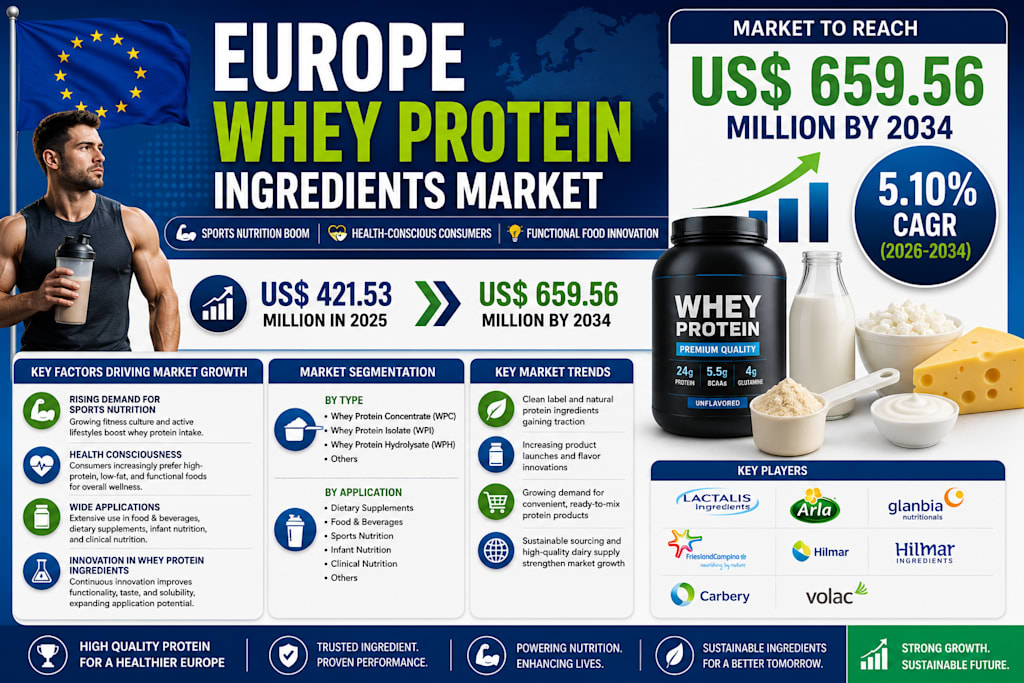
According to Renub Research, the Europe Whey Protein Ingredients Market is expected to grow from US$ 421.53 million in 2025 to US$ 659.56 million by 2034, expanding at a CAGR of 5.10% between 2026 and 2034. Rising demand for sports nutrition products, increasing health consciousness, expanding applications in food and beverages, and continuous innovation in whey protein formulations are expected to drive market growth throughout the forecast period.
Understanding Whey Protein Ingredients
Whey protein ingredients are high-quality proteins derived from whey, the liquid byproduct generated during cheese production. Rich in essential amino acids and highly digestible proteins, whey is considered one of the most effective protein sources available for muscle recovery, growth, and overall nutrition.
Whey protein ingredients are commonly available in three primary forms: whey protein concentrate, whey protein isolate, and hydrolyzed whey protein. Each type differs in protein concentration, processing techniques, and nutritional characteristics.
Whey protein concentrate contains moderate protein levels along with lactose and fats, making it a versatile and cost-effective ingredient. Whey protein isolate undergoes additional processing to remove most fats and carbohydrates, resulting in a higher protein concentration. Hydrolyzed whey protein is partially broken down through enzymatic processes, allowing for faster digestion and absorption.
These ingredients are widely utilized in protein powders, shakes, bars, ready-to-drink beverages, yogurts, bakery products, infant formulas, and various nutritional supplements. Their versatility continues to drive demand across multiple industries throughout Europe.
Growing Health Awareness Fuels Demand
One of the strongest drivers of the European whey protein ingredients market is increasing health consciousness among consumers.
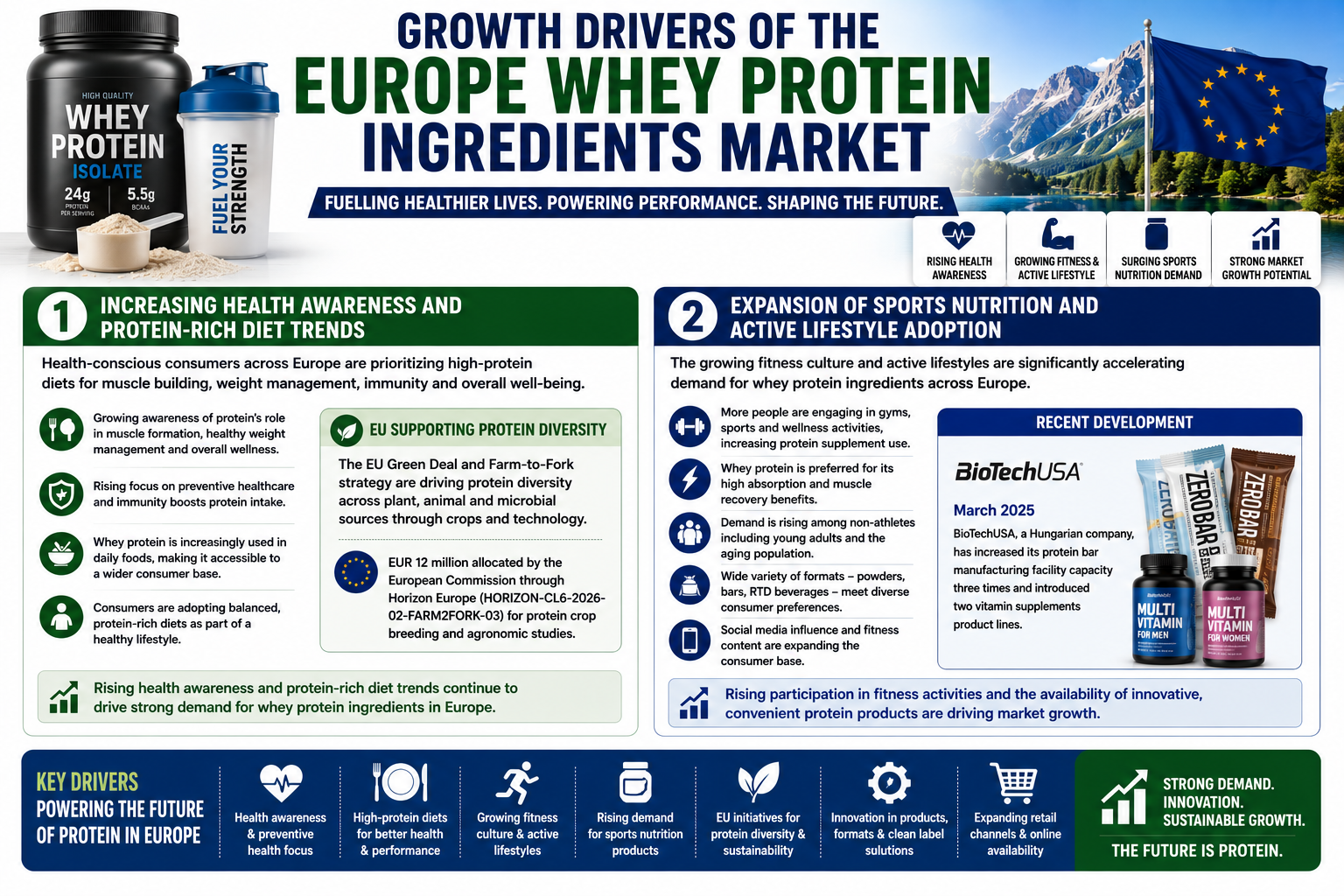
Modern consumers are becoming more aware of the relationship between nutrition and overall wellness. Protein is increasingly recognized as an essential nutrient that supports muscle maintenance, weight management, metabolic health, and immune function.
Consumers are actively seeking foods and beverages that provide nutritional benefits beyond basic sustenance. Whey protein fits well within this trend because of its superior amino acid profile and well-documented health benefits.
Growing concerns regarding obesity, diabetes, cardiovascular health, and healthy aging are encouraging individuals to adopt protein-rich diets. Whey protein ingredients are increasingly incorporated into daily meal plans not only by athletes but also by ordinary consumers seeking healthier lifestyles.
Preventive healthcare trends are further accelerating protein consumption across Europe, creating favorable conditions for market expansion.
Fitness Culture and Sports Nutrition Drive Market Growth
Europe's expanding fitness culture continues to create strong demand for whey protein ingredients.
Participation in gym memberships, strength training programs, endurance sports, wellness activities, and recreational fitness continues to rise throughout the region. As consumers become more physically active, demand for effective recovery and performance nutrition products grows accordingly.
Whey protein remains one of the most trusted ingredients within sports nutrition due to its rapid absorption and ability to support muscle recovery following exercise.
Protein powders, ready-to-drink beverages, recovery shakes, protein bars, and performance supplements all rely heavily on whey protein ingredients.
Importantly, sports nutrition is no longer limited to professional athletes. Everyday consumers increasingly use whey protein products to support general wellness, maintain lean muscle mass, and improve dietary protein intake.
In March 2025, Hungarian nutrition company BioTechUSA significantly expanded its protein bar manufacturing capacity while also launching new vitamin supplement product lines, reflecting continued growth in the broader sports nutrition market.
Strong Dairy Industry Supports Supply Stability
Europe's highly developed dairy industry provides a strong foundation for whey protein production.
Because whey is generated as a byproduct of cheese manufacturing, regions with extensive dairy operations benefit from consistent access to raw materials required for protein production.
Countries such as Germany, France, the Netherlands, Ireland, and Denmark maintain sophisticated dairy sectors that support large-scale whey processing operations.
This established infrastructure enables efficient production of whey protein concentrates, isolates, and hydrolysates while maintaining high quality standards.
The integration between dairy production and protein ingredient manufacturing also contributes to supply reliability and cost efficiency, helping Europe maintain a competitive position within global protein markets.
Innovation Continues to Expand Applications
Innovation remains one of the most important factors shaping the future of the whey protein ingredients market.
Manufacturers continue investing in advanced processing technologies that improve protein purity, functionality, taste, texture, and digestibility.
New formulations are enabling whey protein to be incorporated into an increasingly diverse range of products, including functional beverages, bakery items, dairy products, medical nutrition formulations, and ready-to-eat foods.
Companies are also focusing on clean-label solutions, premium ingredients, and sustainable manufacturing practices to align with changing consumer expectations.
In addition, innovations in hydrolysis and filtration technologies are enhancing the nutritional value and versatility of whey protein ingredients.
These developments are expanding market opportunities while strengthening consumer acceptance across multiple demographic groups.
Functional Foods Create Significant Opportunities
The rise of functional foods represents a major opportunity for whey protein ingredient suppliers.
Consumers increasingly seek foods that provide health benefits beyond basic nutrition. Protein-enriched foods are becoming particularly popular because of their associations with satiety, weight management, muscle maintenance, and overall wellness.
Manufacturers are incorporating whey protein into yogurts, cereals, bakery products, beverages, snacks, desserts, and meal replacements.
The combination of functionality and convenience makes these products attractive to busy consumers seeking healthier dietary choices.
Growing demand for protein-fortified foods is expected to remain a significant growth driver for the European whey protein ingredients market over the coming decade.
Whey Protein Beverages Gain Consumer Popularity
One of the fastest-growing applications for whey protein ingredients is within the beverage sector.
Ready-to-drink protein beverages offer convenience, portability, and nutritional benefits that appeal to modern lifestyles. Consumers increasingly use these products as meal replacements, recovery drinks, or healthy snacks.
The market now includes a wide variety of protein shakes, smoothies, flavored beverages, and functional drinks formulated with whey protein.
Manufacturers continue introducing new flavors, improved textures, and enhanced nutritional profiles designed to attract broader consumer audiences.
The growing popularity of convenient nutrition solutions is expected to support continued expansion within the whey protein beverage segment.
Elderly Nutrition Becomes a Major Growth Segment
Europe's aging population is creating substantial demand for protein-enriched nutritional products.
Healthcare professionals increasingly emphasize adequate protein intake as an important factor in preserving muscle mass, strength, and mobility among older adults.
Whey protein ingredients are frequently incorporated into nutritional supplements, clinical nutrition products, and medical foods designed specifically for elderly consumers.
Hospitals, healthcare facilities, and caregivers increasingly recommend protein-enriched products to address age-related nutritional challenges and support recovery from illness.
Manufacturers are responding by developing specialized formulations that are highly digestible, palatable, and tailored to the needs of older individuals.
As demographic aging continues throughout Europe, elderly nutrition is expected to remain an important market segment.
Whey Protein Concentrate Remains Widely Used
Whey protein concentrate (WPC) continues to represent one of the most commonly utilized forms of whey protein.
Its balanced composition, affordability, and functional properties make it suitable for a broad range of applications. WPC is widely used in bakery products, dairy foods, beverages, nutritional supplements, and sports nutrition products.
Its emulsification and texturizing capabilities further increase its value for food manufacturers.
As consumers continue prioritizing protein intake, demand for whey protein concentrate ingredients is expected to remain robust across multiple industries.
Challenges Facing the Europe Whey Protein Ingredients Market
Despite strong growth prospects, several challenges continue to affect the industry.
Growing Competition from Plant-Based Proteins
One of the most significant challenges facing whey protein producers is increasing competition from plant-based alternatives.
Consumers concerned about sustainability, animal welfare, and environmental impact are increasingly exploring proteins derived from soy, peas, hemp, rice, and other plant sources.
The growing popularity of vegan, vegetarian, and flexitarian diets has encouraged manufacturers to expand plant-protein product portfolios.
While whey protein continues to offer superior nutritional quality, competition from alternative proteins is expected to intensify.
Price Volatility and Dairy Supply Dependence
Whey protein production remains closely tied to dairy industry performance.
Fluctuations in milk prices, feed costs, weather conditions, and dairy production levels can significantly affect whey availability and ingredient pricing.
Supply chain disruptions and transportation challenges may also influence production costs and market stability.
Manufacturers must continuously optimize sourcing strategies and improve operational efficiency to manage these risks effectively.
Germany Leads Regional Development
Germany represents one of Europe's most advanced whey protein ingredients markets.
The country benefits from a strong dairy sector, sophisticated food processing industry, and highly health-conscious consumer base. Whey protein is extensively utilized across sports nutrition, functional foods, and dietary supplement applications.
In October 2024, Infinite Roots and the Hamburg University of Technology received €2.6 million in government funding to explore technologies capable of converting whey into a cultivation medium for mycelium production, highlighting ongoing innovation within the sector.
United Kingdom Maintains Strong Consumer Demand
The United Kingdom continues to demonstrate strong demand for whey protein products.
Fitness culture, active lifestyles, and increasing interest in functional foods contribute significantly to market growth. Whey protein remains a core ingredient within protein powders, bars, and ready-to-drink beverages.
The country's advanced retail infrastructure and e-commerce ecosystem further support widespread product accessibility and consumer adoption.
France Benefits from Dairy Heritage
France's rich dairy tradition provides a strong foundation for whey protein ingredient production.
French consumers increasingly incorporate protein-rich products into their diets for fitness, wellness, and weight management purposes. Whey protein applications continue expanding across dairy products, beverages, bakery products, and nutritional supplements.
Strong emphasis on quality and local sourcing further supports demand for premium whey protein ingredients throughout the country.
Future Outlook
The future of the Europe whey protein ingredients market remains highly promising.
Growing health awareness, expanding sports nutrition participation, increasing demand for functional foods, and rising elderly nutrition requirements are expected to sustain market growth through 2034.
Continued innovation in processing technologies, product formulations, and sustainability initiatives will further strengthen market opportunities.
Manufacturers that successfully balance nutritional performance, affordability, clean-label positioning, and environmental responsibility will be best positioned for long-term success.
Final Thoughts
The Europe whey protein ingredients market continues to evolve from a niche sports nutrition category into a cornerstone of modern health and wellness products. Its superior nutritional profile, versatility, and broad applicability across multiple industries make whey protein one of the most valuable ingredients within the European nutrition landscape.
With the market projected to grow from US$ 421.53 million in 2025 to US$ 659.56 million by 2034, opportunities remain strong for ingredient suppliers, food manufacturers, supplement companies, and healthcare nutrition providers. As consumers increasingly prioritize protein-rich diets and functional nutrition, whey protein ingredients are expected to remain at the forefront of innovation and market growth.
About the Creator
Enjoyed the story? Support the Creator.
Subscribe for free to receive all their stories in your feed.
Comments
There are no comments for this story
Be the first to respond and start the conversation.