
Europe Sugar-Free Energy Drinks Market: Why Are Health-Conscious Consumers Fueling a New Wave of Growth?
Rising wellness awareness, growing fitness participation, demand for low-calorie beverages, and continuous product innovation are driving the rapid expansion of Europe’s sugar-free energy drinks market through 2034.

The European beverage industry is experiencing a major transformation as consumers increasingly prioritize health, wellness, and nutritional balance. While traditional energy drinks remain popular, concerns regarding sugar consumption, obesity, diabetes, and overall health have encouraged many consumers to seek healthier alternatives.
Among the fastest-growing categories benefiting from this shift are sugar-free energy drinks. These beverages provide the stimulation, alertness, and performance enhancement associated with traditional energy drinks while eliminating the added sugars and calories that many consumers now actively avoid.
From fitness enthusiasts and athletes to students and busy professionals, sugar-free energy drinks have become a preferred option for individuals seeking energy support without compromising health goals. As manufacturers continue introducing innovative formulations and natural ingredients, the category is rapidly gaining momentum throughout Europe.
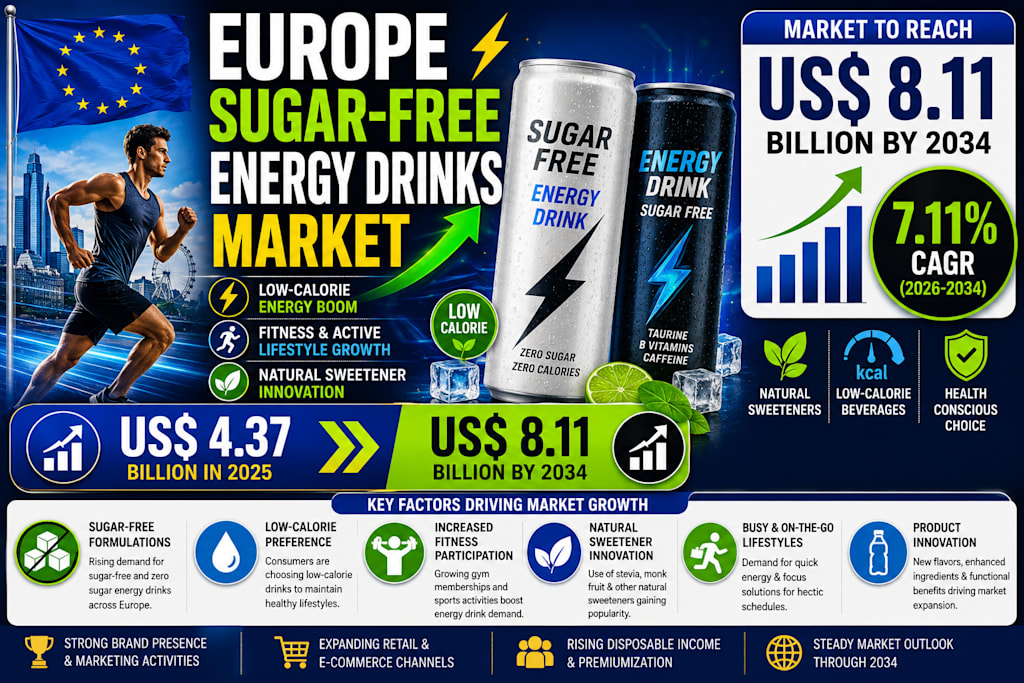
According to Renub Research, the Europe Sugar-Free Energy Drinks Market is expected to grow from US$ 4.37 billion in 2025 to US$ 8.11 billion by 2034, registering a CAGR of 7.11% between 2026 and 2034. Growing health consciousness, increasing demand for low-calorie beverages, expanding fitness participation, busy lifestyles, and continuous product innovation are expected to drive market expansion across Europe.
Understanding Sugar-Free Energy Drinks
Sugar-free energy drinks are functional beverages specifically designed to enhance energy levels, mental alertness, concentration, and physical performance without containing added sugar.
These beverages typically include ingredients such as caffeine, B vitamins, amino acids, electrolytes, and low- or zero-calorie sweeteners including stevia and sucralose. Unlike traditional energy drinks, sugar-free variants provide stimulation without contributing significant calories.
The category appeals to consumers seeking healthier beverage choices while maintaining productivity and performance throughout demanding daily routines.
Athletes, students, professionals, gamers, and fitness enthusiasts frequently consume sugar-free energy drinks to support physical activity, mental focus, and sustained energy.
As health awareness continues increasing, these beverages are becoming a preferred alternative to sugary sodas and conventional energy drinks.
Health Awareness Is Transforming Consumer Preferences
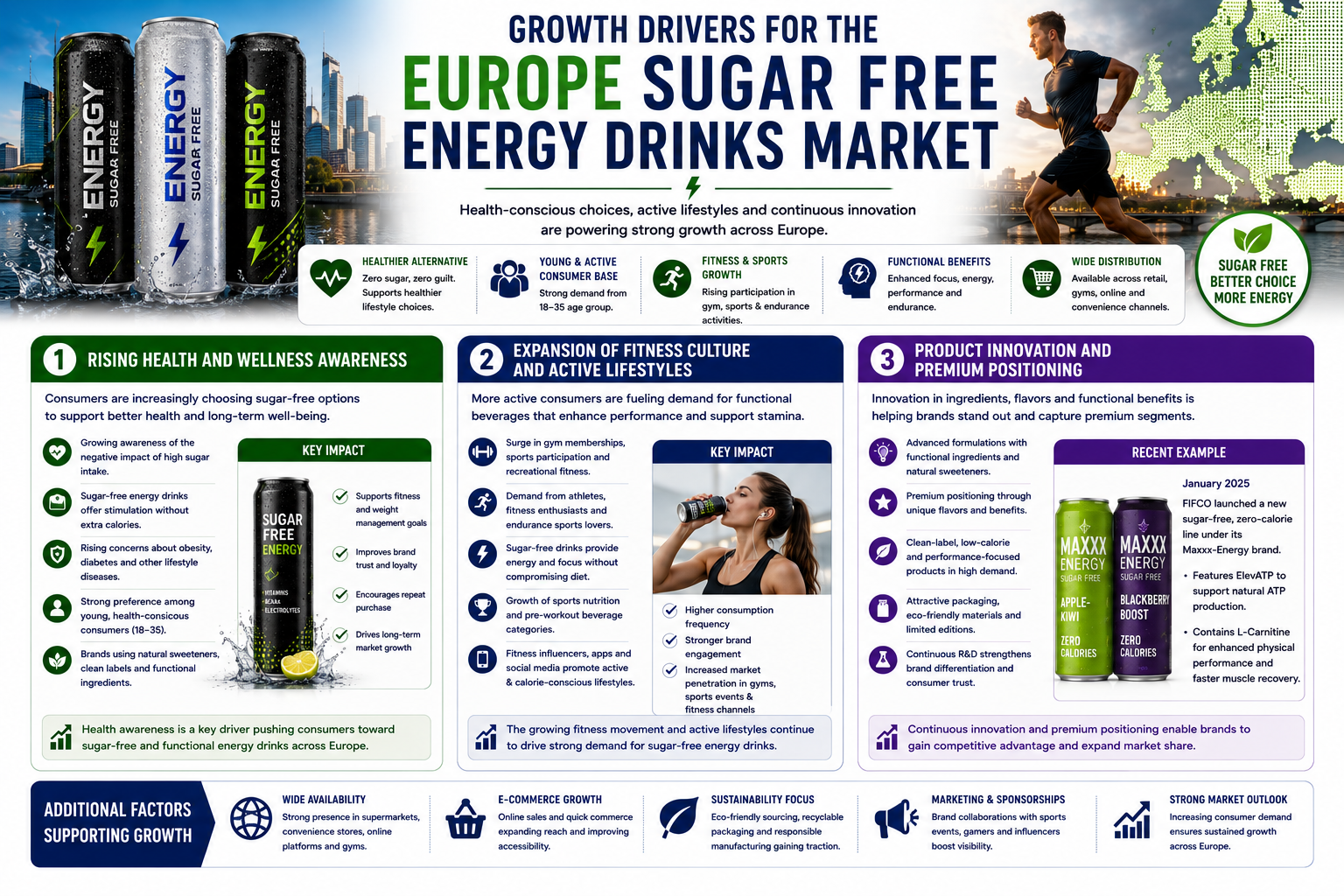
One of the most significant growth drivers within the European sugar-free energy drinks market is increasing health consciousness.
Consumers are becoming increasingly aware of the negative consequences associated with excessive sugar consumption, including obesity, diabetes, cardiovascular disease, and metabolic disorders.
As a result, many individuals are actively reducing their sugar intake and seeking lower-calorie alternatives across multiple beverage categories.
Sugar-free energy drinks provide a compelling solution because they deliver functional benefits such as enhanced alertness and improved focus without the added calories found in traditional energy drinks.
This shift is particularly evident among younger consumers who prioritize wellness and actively monitor dietary choices.
Growing awareness regarding preventive healthcare and healthy living continues supporting strong demand for sugar-free beverage options.
Fitness Culture Continues to Drive Demand
The rapid expansion of fitness culture across Europe represents another major catalyst for market growth.
Consumers increasingly participate in gym workouts, endurance sports, cycling, running, fitness classes, and recreational athletic activities. These lifestyles create demand for beverages that provide energy support while aligning with health and fitness goals.
Sugar-free energy drinks are particularly attractive because they offer stimulation without compromising calorie-controlled diets.
Fitness enthusiasts often incorporate these beverages into pre-workout routines to improve energy levels and training performance.
The growing popularity of sports nutrition products further strengthens demand, as consumers seek convenient solutions that complement active lifestyles.
Social media influencers, fitness applications, and wellness communities continue promoting calorie-conscious consumption habits that support category growth.
Younger Consumers Lead Market Expansion
Consumers between the ages of 18 and 35 represent one of the most important target demographics for sugar-free energy drink manufacturers.
This generation places strong emphasis on health, convenience, productivity, and personal performance. Many actively seek products that support demanding lifestyles while minimizing negative nutritional impacts.
Students consume energy drinks to maintain concentration during academic activities, while professionals use them to remain productive throughout busy workdays.
Younger consumers also tend to embrace new product launches, innovative flavors, and functional ingredients more readily than older demographic groups.
As this consumer segment continues expanding its purchasing power, demand for sugar-free energy drinks is expected to increase substantially.
Product Innovation Strengthens Market Growth
Innovation remains one of the most important factors shaping the future of the European sugar-free energy drinks industry.
Manufacturers continuously develop new formulations designed to address evolving consumer preferences. Modern products increasingly feature natural sweeteners, clean-label ingredients, plant-based additives, and functional nutrients.
Consumers increasingly expect beverages to deliver benefits beyond energy stimulation alone. As a result, brands are incorporating ingredients such as vitamins, branched-chain amino acids (BCAAs), electrolytes, adaptogens, and recovery-enhancing compounds.
Product differentiation through flavor innovation also plays a crucial role in maintaining consumer interest.
Companies continue investing heavily in research and development to improve taste profiles while enhancing nutritional value and functionality.
Premium Positioning Creates New Opportunities
Premiumization has emerged as a significant trend within the sugar-free energy drinks market.
Consumers increasingly seek high-quality products that emphasize natural ingredients, superior formulations, and enhanced performance benefits.
Premium brands often highlight features such as natural caffeine sources, organic ingredients, sustainable packaging, and scientifically supported functional benefits.
This strategy allows manufacturers to target health-conscious consumers willing to pay higher prices for products perceived as healthier and more effective.
Premiumization not only improves brand perception but also contributes to higher profit margins and stronger customer loyalty.
Functional Ingredients Enhance Consumer Appeal
Today's consumers increasingly demand multifunctional beverages.
Sugar-free energy drink manufacturers are responding by incorporating ingredients designed to support hydration, endurance, cognitive performance, and recovery.
In January 2025, FIFCO introduced a new sugar-free, zero-calorie product line under its Maxxx-Energy brand. The beverages feature ElevATP, which supports natural ATP production, and L-Carnitine, known for promoting physical performance and muscle recovery. Flavors such as Apple-Kiwi and Blackberry Boost further enhance consumer appeal.
Such innovations demonstrate how brands are moving beyond traditional energy formulations toward more comprehensive wellness-oriented solutions.
As consumer expectations continue evolving, functional ingredient integration will remain a major competitive differentiator.
Retail Expansion Improves Accessibility
The widespread availability of sugar-free energy drinks has contributed significantly to market growth.
Consumers can purchase these beverages through supermarkets, hypermarkets, convenience stores, specialty retailers, gyms, vending machines, and online platforms.
Retailers increasingly dedicate shelf space to healthier beverage categories in response to changing consumer preferences.
Convenience stores remain particularly important because they serve consumers seeking immediate energy solutions during travel, work, or recreational activities.
Broader distribution ensures greater product visibility and easier access for consumers across diverse geographic markets.
Online Retail Accelerates Market Penetration
E-commerce has become an increasingly important distribution channel within the sugar-free energy drinks industry.
Consumers appreciate the convenience of browsing product selections, comparing ingredients, reading reviews, and purchasing products online.
Subscription services and bulk purchasing options appeal to regular consumers who integrate energy drinks into their daily routines.
Digital marketing campaigns, influencer partnerships, and social media engagement further enhance consumer awareness and brand loyalty.
As online shopping adoption continues expanding throughout Europe, digital channels are expected to play an increasingly important role in supporting market growth.
Sustainable Packaging Gains Importance
Environmental responsibility has become a key purchasing consideration among European consumers.
Many consumers actively seek products packaged in recyclable or environmentally friendly materials. As a result, manufacturers increasingly invest in sustainable packaging solutions.
Metal cans, recyclable plastics, and eco-friendly production practices help brands align with consumer values while strengthening market positioning.
Sustainability initiatives are becoming increasingly important for attracting environmentally conscious consumers and differentiating products within a highly competitive marketplace.
Metal Cans Remain the Preferred Packaging Format
Metal cans continue to dominate the sugar-free energy drinks market.
Consumers appreciate their portability, durability, convenience, and ability to preserve beverage quality. Manufacturers also favor cans because they provide excellent branding opportunities and strong sustainability credentials through recyclability.
The popularity of ready-to-drink energy beverages further reinforces demand for can-based packaging formats.
As convenience remains a key consumer priority, metal cans are expected to maintain their leadership position within the market.
Challenges Facing the Europe Sugar-Free Energy Drinks Market
Regulatory Scrutiny and Health Concerns
One of the most significant challenges facing the industry involves strict regulatory oversight.
European authorities closely monitor caffeine levels, ingredient claims, marketing practices, and labeling requirements to protect consumers.
Concerns regarding artificial sweeteners, caffeine consumption, and long-term health effects continue generating public debate.
Manufacturers must invest heavily in compliance, reformulation, testing, and transparent communication to maintain consumer trust.
These requirements can increase costs and slow product development timelines.
Intense Competition Creates Market Pressure
The European beverage market remains highly competitive.
Sugar-free energy drinks compete not only against traditional energy drinks but also against flavored waters, sports beverages, ready-to-drink coffees, and other functional drinks.
Large multinational brands dominate retail shelf space, making it difficult for smaller companies to establish visibility and market share.
Intense promotional activity, pricing pressure, and constant innovation requirements create ongoing challenges for industry participants.
Market saturation remains a particular concern in mature Western European markets.
France Sugar-Free Energy Drinks Market
France continues experiencing strong demand for healthier beverage alternatives.
Young adults increasingly prefer sugar-free products because of growing awareness regarding weight management and nutritional health. The country's expanding fitness culture further supports consumption.
Manufacturers emphasizing natural ingredients, reduced additives, and innovative flavors are particularly successful in attracting French consumers.
Germany Sugar-Free Energy Drinks Market
Germany represents one of Europe's largest and most dynamic sugar-free energy drink markets.
Strong fitness participation, widespread health awareness, and consumer interest in performance-enhancing beverages continue driving growth.
German consumers respond particularly well to clean-label products, natural sweeteners, and environmentally responsible packaging solutions.
Italy Sugar-Free Energy Drinks Market
Italian consumers increasingly embrace low-sugar beverage options that support active lifestyles.
Although coffee remains deeply ingrained in Italian culture, sugar-free energy drinks continue gaining popularity due to their convenience and functional benefits.
Premium products emphasizing natural ingredients and authentic flavors resonate strongly with consumers.
Spain Sugar-Free Energy Drinks Market
Spain's active lifestyle culture and warm climate support strong demand for refreshing functional beverages.
Students, professionals, and fitness enthusiasts represent key consumer groups driving category growth.
Brands that focus on clean-label formulations, natural sweeteners, and innovative flavor profiles continue attracting attention throughout the Spanish market.
Future Outlook
The future of the Europe sugar-free energy drinks market appears highly promising.
Growing health awareness, expanding fitness participation, rising demand for low-calorie beverages, and continuous product innovation will continue driving growth through 2034.
Manufacturers that successfully combine functionality, taste, clean-label ingredients, and sustainability will be best positioned to capture future opportunities.
As consumers increasingly seek healthier ways to maintain energy and productivity, sugar-free energy drinks are expected to become an even more important segment within Europe's beverage industry.
Final Thoughts
The Europe sugar-free energy drinks market has evolved into one of the most dynamic segments of the functional beverage industry. Driven by growing health consciousness, active lifestyles, and demand for calorie-conscious alternatives, the category continues attracting a broad range of consumers.
With the market projected to grow from US$ 4.37 billion in 2025 to US$ 8.11 billion by 2034, significant opportunities exist for manufacturers, retailers, ingredient suppliers, and beverage innovators. Companies that focus on product quality, functional benefits, sustainability, and consumer trust will be best positioned to succeed in Europe's rapidly evolving energy drinks landscape.
About the Creator
Enjoyed the story? Support the Creator.
Subscribe for free to receive all their stories in your feed.
Comments
There are no comments for this story
Be the first to respond and start the conversation.