
Europe Sugar Confectionery Market: Why Does Europe’s Love for Sweet Treats Continue to Drive Market Growth?
Product innovation, premiumization, expanding retail channels, and growing demand for healthier indulgence are fueling steady growth in the Europe sugar confectionery market through 2034.

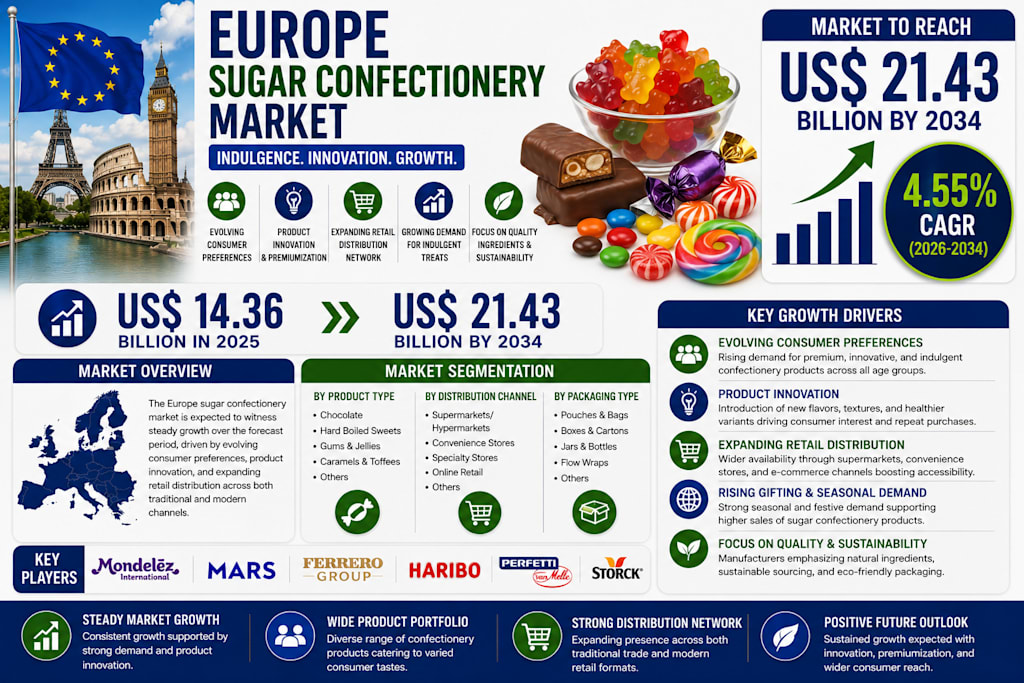
Sugar confectionery has long been an integral part of European food culture. From traditional hard candies and mints to modern gummies, jellies, toffees, and novelty sweets, confectionery products continue to enjoy widespread popularity among consumers of all ages. Whether purchased as an everyday indulgence, a festive treat, or an impulse snack, sugar confectionery remains one of the most resilient categories within the food and beverage industry.
Despite being a mature market, Europe's sugar confectionery industry continues to evolve rapidly. Manufacturers are responding to changing consumer preferences through product innovation, healthier formulations, premium ingredients, and sustainable packaging solutions. At the same time, expanding retail and e-commerce channels are improving accessibility and enabling brands to reach wider audiences.
As consumers increasingly seek both indulgence and wellness, the market is finding new opportunities through sugar-reduced products, functional confectionery, and premium offerings that balance taste with evolving health expectations.
According to Renub Research, the Europe Sugar Confectionery Market is expected to grow from US$ 14.36 billion in 2025 to US$ 21.43 billion by 2034, registering a CAGR of 4.55% from 2026 to 2034. Product innovation, premiumization, changing consumer preferences, and expanding distribution networks are expected to support steady market growth throughout the forecast period.

A Mature Market Continues to Reinvent Itself
The Europe sugar confectionery market represents one of the most established segments within the food industry.
The category includes a broad variety of products such as hard candies, lollipops, mints, pastilles, gummies, jellies, toffees, nougats, and specialty confectionery products. These items continue to enjoy strong consumer demand due to their affordability, convenience, and emotional appeal.
Confectionery consumption remains closely linked to cultural traditions, seasonal celebrations, gifting occasions, and impulse purchasing behavior. Holidays, festivals, and special events continue to generate significant sales volumes throughout Europe.
While the market has a long history, consumer expectations are evolving. Today's buyers seek greater variety, higher quality, and products that align with modern lifestyle preferences.
This ongoing evolution is encouraging manufacturers to innovate continuously while maintaining the nostalgic appeal that has historically driven confectionery consumption.
Product Innovation Drives Consumer Engagement
Innovation remains one of the most important growth drivers within the European sugar confectionery market.
Manufacturers continuously introduce new flavors, textures, shapes, and formats to capture consumer interest and encourage repeat purchases. Limited-edition products, seasonal offerings, and themed collections are particularly effective at generating excitement and boosting sales.
Consumers increasingly seek unique taste experiences that go beyond traditional confectionery offerings. Exotic fruit flavors, sour varieties, layered products, and hybrid confectionery formats are becoming increasingly popular.
Packaging innovation is also contributing to market growth. Resealable packs, portion-controlled formats, and convenient on-the-go packaging solutions enhance product usability and consumer appeal.
The ability to continuously refresh product portfolios allows brands to remain relevant and competitive in a crowded marketplace.
Premiumization Continues to Strengthen Market Value
Premiumization has become a defining trend within Europe's confectionery industry.
Consumers are increasingly willing to pay more for products that offer superior quality, artisanal craftsmanship, unique flavors, and premium ingredients. This shift is particularly evident among adult consumers seeking indulgent experiences and gifting options.
Manufacturers are responding by introducing products made with natural ingredients, high-quality fruit extracts, specialty sweeteners, and gourmet flavor combinations.
Premium packaging and sophisticated branding further enhance product positioning and perceived value.
The premium segment enables companies to differentiate themselves while improving margins and strengthening brand loyalty.
As consumer demand for elevated confectionery experiences continues growing, premiumization is expected to remain a key growth driver.
Health-Conscious Consumers Are Influencing Product Development
The growing focus on health and wellness is reshaping the sugar confectionery landscape.
Consumers are becoming increasingly aware of the potential health implications associated with excessive sugar consumption. Concerns regarding obesity, diabetes, and lifestyle-related diseases are influencing purchasing behavior throughout Europe.
As a result, manufacturers are introducing healthier alternatives designed to satisfy indulgence needs while addressing nutritional concerns.
Sugar-free, reduced-sugar, organic, vegan, gluten-free, and clean-label confectionery products are becoming increasingly common across retail shelves.
Natural sweeteners and plant-based ingredients are also gaining popularity as consumers seek products with simpler and more transparent ingredient lists.
This trend toward healthier indulgence is helping the industry retain consumers who may otherwise reduce confectionery consumption altogether.
Functional Confectionery Creates New Opportunities
One of the most exciting developments within the market is the emergence of functional confectionery.
Consumers increasingly seek products that provide benefits beyond traditional enjoyment. In response, manufacturers are incorporating vitamins, minerals, botanical extracts, caffeine, and other functional ingredients into confectionery products.
Functional candies designed to support energy, immunity, focus, or wellness are attracting attention from younger consumers and busy professionals.
This convergence of indulgence and functionality is creating entirely new product categories that appeal to modern lifestyle needs.
As consumers continue seeking convenient wellness solutions, functional confectionery is expected to become an increasingly important segment within the broader market.
Retail Expansion Supports Market Accessibility
The widespread availability of sugar confectionery products remains a major advantage for the industry.
Supermarkets, hypermarkets, convenience stores, specialty retailers, and kiosks continue serving as primary distribution channels. Their extensive reach ensures that consumers can easily access confectionery products across urban and rural locations.
Impulse purchases remain a significant driver of sales, particularly within convenience-oriented retail environments.
Strategic product placement near checkout counters, promotional displays, and seasonal merchandising initiatives help stimulate consumer demand and encourage spontaneous purchases.
The continued expansion of retail infrastructure across Europe supports stable market growth and strong product visibility.
E-Commerce Is Transforming Confectionery Distribution
Digitalization has created new opportunities for confectionery manufacturers and retailers.
Online platforms allow consumers to access a broader selection of products, including premium, niche, and specialty confectionery items that may not be available in local stores.
E-commerce also enables brands to launch new products, offer personalized promotions, and engage directly with consumers through targeted marketing campaigns.
Subscription services and direct-to-consumer models are becoming increasingly popular among consumers seeking convenience and exclusive product offerings.
The continued growth of online retail is expected to enhance market accessibility and support future expansion.
Sustainability Is Becoming a Strategic Priority
Environmental sustainability is increasingly influencing consumer expectations and corporate strategies.
Consumers are paying closer attention to packaging materials, ingredient sourcing practices, and environmental impact when making purchasing decisions.
Manufacturers are responding by investing in recyclable packaging, reducing plastic usage, and adopting more sustainable sourcing practices.
Responsible sourcing of ingredients and improvements in supply chain transparency are also becoming important competitive differentiators.
Sustainability initiatives help companies strengthen consumer trust while aligning with evolving regulatory requirements and environmental goals.
As sustainability concerns continue growing, environmentally responsible practices will play an increasingly important role within the industry.
Rising Health Concerns Remain a Major Challenge
Despite strong consumer demand, the industry faces significant challenges related to health perceptions.
Public health campaigns and government initiatives aimed at reducing sugar consumption have increased scrutiny of confectionery products. Sugar taxes, stricter labeling requirements, and marketing restrictions are influencing industry dynamics across several European countries.
These measures create additional compliance requirements and may impact consumer purchasing behavior.
Manufacturers must balance product appeal with evolving nutritional expectations while maintaining affordability and taste.
The ability to adapt to changing health priorities will remain essential for sustaining long-term market growth.
Intense Competition Creates Constant Pressure
The Europe sugar confectionery market is highly competitive.
Global confectionery leaders compete alongside regional manufacturers, private-label brands, and emerging niche companies focused on specialty products.
This intense competition creates pressure to continuously innovate, invest in marketing, and differentiate product offerings.
Private-label products offered by major retailers often compete aggressively on price, attracting value-conscious consumers.
At the same time, smaller brands specializing in organic, vegan, or premium confectionery continue gaining market share.
Maintaining consumer loyalty in such a dynamic environment requires ongoing investment in innovation and brand development.
Germany Sugar Confectionery Market
Germany remains one of the largest sugar confectionery markets in Europe.
The country benefits from strong consumer demand, established confectionery traditions, and a highly developed retail infrastructure. Consumers increasingly seek healthier alternatives, including sugar-free and functional products, while maintaining interest in traditional confectionery favorites.
Seasonal demand and continuous product innovation continue supporting market growth across Germany.
France Sugar Confectionery Market
France's market is characterized by strong demand for premium and artisanal confectionery products.
Consumers place significant emphasis on ingredient quality, flavor sophistication, and aesthetic presentation. Premiumization trends are particularly prominent within the French market.
Growing interest in natural ingredients and reduced-sugar formulations is also influencing purchasing behavior and product development strategies.
Italy Sugar Confectionery Market
Italy combines strong traditional confectionery consumption with growing demand for innovative products.
Consumers appreciate artisanal quality and regional specialties while increasingly embracing healthier alternatives and modern flavor profiles.
Manufacturers continue investing in premium packaging and product differentiation to appeal to evolving consumer preferences.
Spain Sugar Confectionery Market
Spain continues experiencing steady growth supported by strong consumer demand and increasing product diversification.
Traditional confectionery remains popular, particularly during festive periods, while sugar-free and natural ingredient-based products are gaining traction among health-conscious consumers.
The country's expanding retail infrastructure further supports market accessibility and growth.
Recent Industry Developments Highlight Ongoing Innovation
Innovation remains central to industry growth.
In September 2025, Roly's Fudge introduced a seasonal Toffee Apple flavor inspired by traditional Bonfire Night celebrations and crafted using natural ingredients.
In July 2025, Premier Foods launched McDougalls No Added Sugar Vegan Jelly, offering allergy-friendly and HFSS-compliant options for schools across the UK.
Earlier, in May 2025, Ruly introduced caffeine-infused candies containing guarana caffeine and B vitamins, targeting busy professionals and fitness-conscious consumers seeking convenient energy solutions.
These developments demonstrate the industry's commitment to innovation, functionality, and evolving consumer needs.
Future Outlook
The future of the Europe sugar confectionery market remains positive despite evolving consumer expectations and regulatory pressures.
Product innovation, premiumization, healthier formulations, expanding retail channels, and growing demand for functional confectionery are expected to support continued growth through 2034.
Manufacturers that successfully balance indulgence, wellness, sustainability, and innovation will be best positioned to capitalize on future opportunities.
As consumers continue seeking enjoyable yet increasingly mindful treats, the sugar confectionery industry is expected to remain an important component of Europe's food and beverage sector.
Final Thoughts
The Europe sugar confectionery market continues to demonstrate remarkable resilience by adapting to changing consumer preferences while preserving its traditional appeal. From premium artisanal products and functional candies to healthier formulations and sustainable packaging, the industry is evolving to meet the expectations of modern consumers.
With the market projected to grow from US$ 14.36 billion in 2025 to US$ 21.43 billion by 2034, significant opportunities exist for manufacturers, retailers, distributors, and investors. Companies that embrace innovation, transparency, and consumer-centric product development will be best positioned to thrive in Europe's dynamic sugar confectionery market.
About the Creator
Enjoyed the story? Support the Creator.
Subscribe for free to receive all their stories in your feed.
Comments
There are no comments for this story
Be the first to respond and start the conversation.