
Europe Snack Bar Market: Why Are Snack Bars Becoming the Go-To Choice for Health-Conscious Europeans?
Growing demand for convenient nutrition, rising health awareness, functional food trends, and continuous product innovation are driving strong growth in the Europe snack bar market through 2034.

The way Europeans snack is changing rapidly. Traditional snacks such as chips, pastries, and sugary treats are increasingly facing competition from healthier, more functional alternatives. Among the fastest-growing categories benefiting from this shift are snack bars. Whether consumed as a breakfast replacement, post-workout recovery snack, afternoon energy boost, or convenient meal supplement, snack bars have become an important part of modern dietary habits across Europe.
Today's consumers are busier than ever and increasingly seek products that combine convenience, nutrition, and great taste. Snack bars perfectly fit this demand by offering portable, ready-to-eat solutions that support active lifestyles. From protein bars and cereal bars to fruit-and-nut bars and functional nutrition products, manufacturers continue introducing innovative options designed to meet diverse consumer needs.
At the same time, growing awareness of health, fitness, and preventive nutrition is encouraging consumers to make smarter snacking choices. This transformation is creating substantial growth opportunities throughout the European snack bar industry.
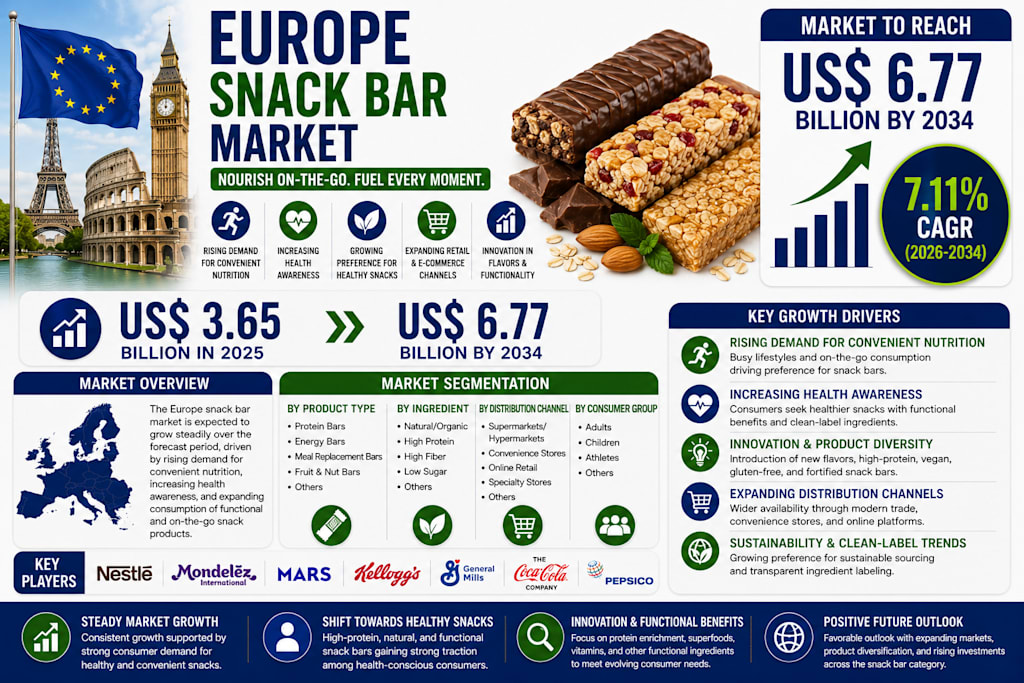
According to Renub Research, the Europe Snack Bar Market is projected to grow from US$ 3.65 billion in 2025 to US$ 6.77 billion by 2034, registering a CAGR of 7.11% from 2026 to 2034. Rising demand for convenient nutrition, expanding health-conscious consumer behavior, and continuous product innovation are expected to drive strong market expansion throughout the forecast period.
Snack Bars Have Become a Mainstream Nutrition Solution
Snack bars have evolved significantly from their early origins as niche sports nutrition products.
Today, the category includes a wide variety of products such as protein bars, cereal bars, fruit-and-nut bars, energy bars, and specialized functional nutrition bars designed to support specific health goals.
These products appeal to consumers because they offer a combination of convenience, portability, and nutritional value. Unlike many traditional snacks, modern snack bars often contain protein, fiber, vitamins, minerals, and other functional ingredients that align with health-conscious lifestyles.
Their versatility allows consumers to incorporate them into multiple eating occasions, including breakfast, post-exercise recovery, meal supplementation, and between-meal snacking.
As consumers increasingly prioritize nutrition and convenience, snack bars have become one of the fastest-growing categories within Europe's broader food and beverage market.
Convenience Continues to Drive Consumer Demand
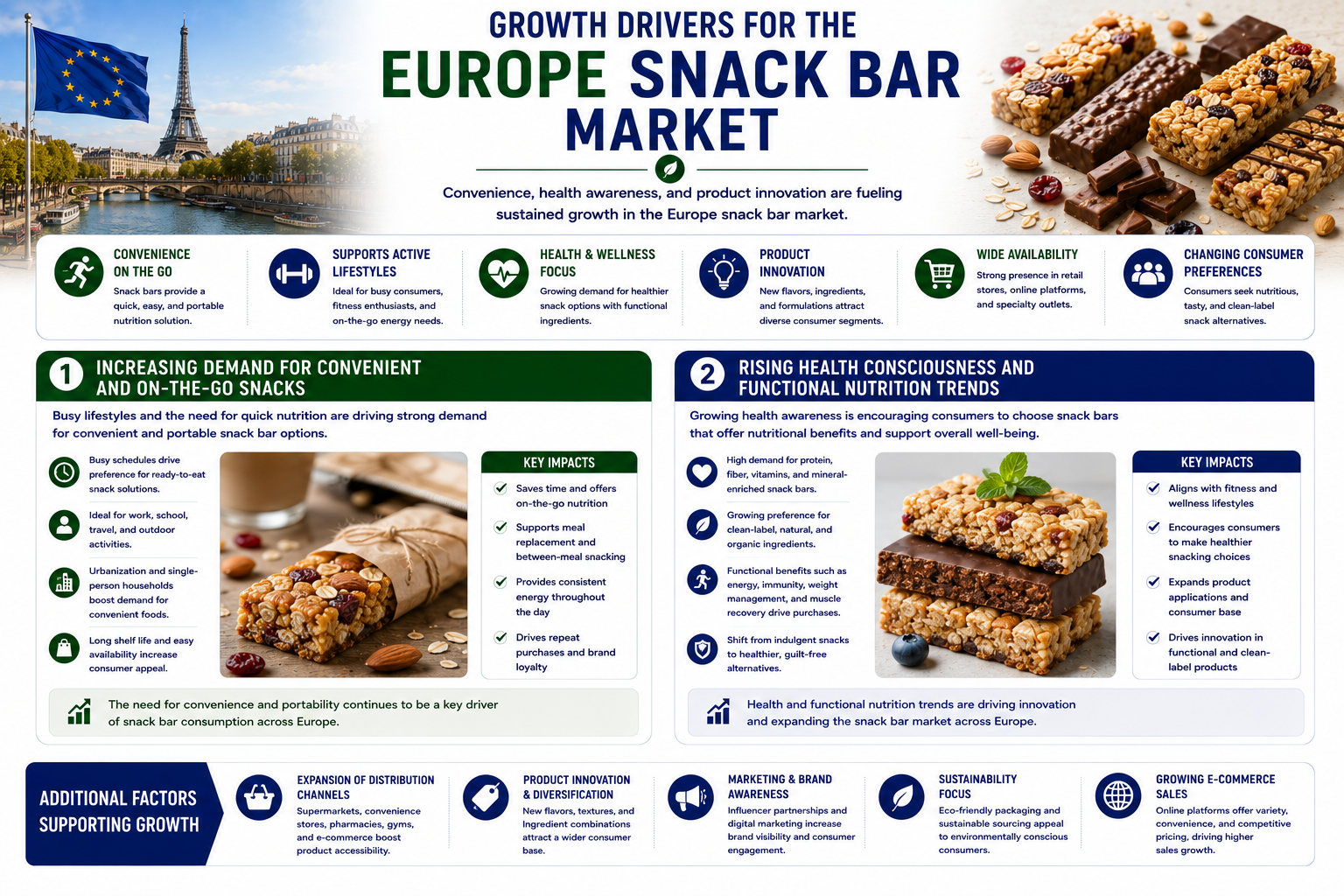
One of the strongest growth drivers within the Europe snack bar market is the increasing demand for convenience.
Modern lifestyles leave many consumers with limited time for meal preparation. Busy professionals, students, travelers, and commuters often seek quick and accessible food options that fit seamlessly into their daily routines.
Snack bars provide an ideal solution because they require no preparation, are easy to carry, and can be consumed virtually anywhere.
The growing trend toward frequent snacking rather than traditional large meals has further strengthened demand. Consumers increasingly prefer smaller eating occasions throughout the day, making snack bars a practical and appealing choice.
Urbanization and the rise of single-person households have also contributed to the popularity of convenient, portion-controlled food products.
As convenience continues to influence purchasing behavior, snack bars are expected to remain highly attractive to European consumers.
Health Awareness Is Reshaping Snacking Habits
Health consciousness has become one of the most influential trends shaping Europe's food industry.
Consumers are paying closer attention to nutritional content, ingredient quality, and the long-term health implications of their dietary choices. This shift has encouraged many individuals to move away from highly processed snacks and toward products that offer functional nutritional benefits.
Snack bars are increasingly perceived as healthier alternatives to conventional snack foods because many contain protein, fiber, whole grains, nuts, fruits, and other nutrient-rich ingredients.
Consumers seeking weight management, balanced nutrition, and sustained energy are particularly drawn to these products.
The increasing prevalence of lifestyle-related health concerns such as obesity and diabetes has further reinforced demand for healthier snack alternatives.
As awareness regarding nutrition continues growing, the snack bar market is expected to benefit significantly from evolving consumer preferences.
Functional Nutrition Trends Support Market Expansion
The rise of functional nutrition represents a major growth opportunity for the snack bar industry.
Consumers increasingly seek foods that provide benefits beyond basic nourishment. Functional snack bars are designed to support specific health objectives such as energy enhancement, muscle recovery, digestive health, weight management, and overall wellness.
Protein bars remain particularly popular among fitness enthusiasts and active consumers due to their role in supporting muscle maintenance and recovery.
Meanwhile, bars enriched with vitamins, minerals, probiotics, and botanical ingredients are attracting health-conscious consumers seeking targeted nutritional benefits.
This growing demand for multifunctional food products is encouraging manufacturers to develop increasingly sophisticated formulations that address a broad range of consumer needs.
As functional nutrition continues gaining popularity across Europe, snack bars are expected to play an increasingly important role within the wellness market.
Plant-Based and Clean-Label Products Are Gaining Momentum
European consumers are increasingly interested in products that align with sustainability goals and transparent ingredient standards.
This trend has fueled strong demand for plant-based snack bars made with ingredients such as peas, oats, nuts, seeds, fruits, and plant-derived proteins.
Consumers are also paying greater attention to clean-label products that contain recognizable ingredients and minimal processing.
Manufacturers are responding by reducing artificial additives, preservatives, and unnecessary ingredients while emphasizing natural and organic formulations.
The availability of vegan, gluten-free, keto-friendly, and allergen-conscious products has expanded the category's appeal to a wider consumer audience.
As dietary preferences continue diversifying, plant-based and clean-label snack bars are expected to remain major growth segments within the market.
Product Innovation Keeps Consumers Engaged
Innovation remains essential for maintaining growth and competitiveness within the snack bar industry.
Manufacturers continuously introduce new flavors, ingredient combinations, textures, and nutritional profiles designed to capture consumer attention and encourage repeat purchases.
The development of specialized bars targeting specific consumer groups—including athletes, weight-management consumers, vegans, and wellness-focused individuals—has significantly broadened market opportunities.
Advances in food technology have also enabled manufacturers to improve taste, texture, and shelf stability while enhancing nutritional performance.
Innovative packaging solutions further improve convenience and product differentiation.
The ability to consistently introduce exciting new products remains one of the industry's strongest competitive advantages.
Expanding Retail Networks Improve Accessibility
The widespread availability of snack bars across Europe continues supporting market growth.
Supermarkets and hypermarkets remain the dominant distribution channels, offering extensive product selections and strong consumer visibility.
Convenience stores play a crucial role in supporting impulse purchases and serving consumers seeking immediate, on-the-go nutrition solutions.
Specialty health food stores and sports nutrition retailers cater to consumers seeking premium and functional snack bar products.
Retailers increasingly allocate shelf space to healthier snack categories, reflecting strong consumer demand and market potential.
This broad retail presence ensures that snack bars remain accessible to diverse consumer groups across multiple purchasing environments.
E-Commerce Creates New Growth Opportunities
Online retail has become an increasingly important sales channel within the Europe snack bar market.
Consumers appreciate the convenience of purchasing nutrition products online, where they can compare ingredients, read reviews, and access a wider range of brands and product variants.
Subscription services have become particularly popular among regular consumers who prefer recurring deliveries of their favorite products.
Manufacturers benefit from direct-to-consumer sales models that improve customer engagement and provide valuable consumer insights.
Digital marketing, influencer partnerships, and social media campaigns further support brand awareness and product discovery.
As e-commerce adoption continues growing, online channels are expected to play an increasingly important role in market development.
Intense Competition Creates Market Challenges
Despite strong growth prospects, the Europe snack bar market remains highly competitive.
Numerous global brands, regional manufacturers, private-label offerings, and emerging specialty companies compete for consumer attention.
This intense competition often results in pricing pressure and increased marketing expenditures.
Frequent product launches make it difficult for brands to maintain differentiation and long-term consumer loyalty.
To remain competitive, companies must continuously invest in innovation, branding, and product development.
The ability to communicate clear value propositions and nutritional benefits remains essential for success in this crowded marketplace.
Changing Consumer Expectations Require Constant Adaptation
Consumer preferences continue evolving rapidly, creating additional challenges for manufacturers.
While consumers increasingly seek healthier snacks, they are also becoming more critical of ingredients, sugar content, processing methods, and nutritional claims.
Products perceived as overly processed or high in calories may face resistance from health-conscious consumers.
Manufacturers must balance taste, nutrition, convenience, and transparency while adapting to emerging dietary trends.
Continuous reformulation and product improvement are necessary to maintain relevance in a rapidly changing market environment.
Germany Snack Bar Market
Germany represents one of Europe's largest and most influential snack bar markets.
Strong health awareness, widespread participation in fitness activities, and growing demand for functional nutrition products support robust market growth.
German consumers particularly value high-protein, low-sugar, and plant-based snack options.
The country's advanced retail infrastructure and strong e-commerce ecosystem further contribute to market expansion.
France Snack Bar Market
France continues experiencing steady growth in snack bar consumption.
Urban consumers and working professionals increasingly adopt snack bars as convenient nutritional solutions. Demand for organic, natural, and premium products is particularly strong within the French market.
Manufacturers are responding with innovative formulations that align with consumer expectations regarding quality and wellness.
Italy Snack Bar Market
Italy's snack bar market is gradually expanding as younger consumers embrace modern dietary habits.
Although traditional food culture remains influential, demand for convenient nutrition products continues increasing among busy professionals and fitness-focused individuals.
Product innovation and expanding retail availability are supporting continued market development.
Spain Snack Bar Market
Spain is witnessing growing demand for snack bars driven by increasing health awareness and active lifestyle trends.
Energy bars and protein bars are particularly popular among consumers seeking convenient nutritional support.
Improved retail distribution and product diversification continue contributing to market growth throughout the country.
Future Outlook
The future of the Europe snack bar market remains highly promising.
Growing demand for convenient nutrition, rising health consciousness, expanding functional food categories, and ongoing product innovation are expected to drive sustained growth through 2034.
Manufacturers that prioritize nutritional quality, transparency, sustainability, and consumer-centric innovation will be best positioned to capitalize on future opportunities.
As consumers increasingly seek healthier and more convenient snacking solutions, snack bars are expected to become an even more important part of Europe's evolving food landscape.
Final Thoughts
The Europe snack bar market has successfully transformed from a niche sports nutrition segment into a mainstream category that appeals to a broad range of consumers. Driven by convenience, health awareness, and functional nutrition trends, snack bars continue gaining popularity across multiple demographic groups.
With the market projected to grow from US$ 3.65 billion in 2025 to US$ 6.77 billion by 2034, significant opportunities exist for manufacturers, retailers, nutrition brands, and investors. Companies that focus on innovation, quality, transparency, and evolving consumer needs will be best positioned to thrive in Europe's dynamic snack bar market.a
About the Creator
Enjoyed the story? Support the Creator.
Subscribe for free to receive all their stories in your feed.
Comments
There are no comments for this story
Be the first to respond and start the conversation.