
Europe’s Sleep Health Awakening: How Advanced Sleep Apnea Devices Are Transforming Care Across the Continent
Growing awareness of sleep disorders, expanding home healthcare, advanced CPAP technology, and aging populations are driving rapid growth in Europe’s sleep apnea devices market.

For decades, sleep was often overlooked as a critical component of overall health. While diet, exercise, and preventive healthcare received widespread attention, sleep disorders frequently remained undiagnosed and untreated. Today, that situation is changing rapidly.
Across Europe, healthcare providers, policymakers, and patients are increasingly recognizing the serious health consequences associated with poor sleep. Among the various sleep disorders affecting millions of people, sleep apnea has emerged as one of the most significant public health concerns.
Characterized by repeated interruptions in breathing during sleep, sleep apnea can contribute to a wide range of medical complications, including cardiovascular disease, hypertension, diabetes, cognitive impairment, and chronic fatigue. As awareness grows and diagnosis rates increase, demand for effective diagnostic and therapeutic solutions is accelerating.
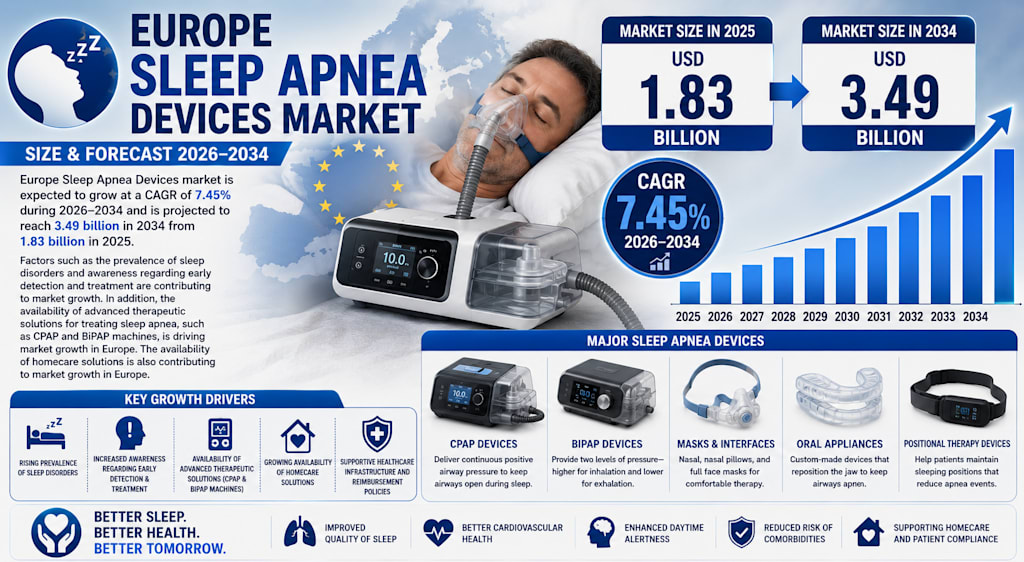
This trend is reflected in the market's strong growth outlook. According to Renub Research, the Europe Sleep Apnea Devices Market is projected to grow from US$ 1.83 billion in 2025 to US$ 3.49 billion by 2034, expanding at a compound annual growth rate (CAGR) of 7.45% between 2026 and 2034. Rising prevalence of sleep disorders, expanding awareness regarding early diagnosis, technological innovation, and increased adoption of home healthcare solutions are among the major factors driving this growth.
As Europe continues investing in preventive healthcare and modern sleep medicine, sleep apnea devices are becoming an increasingly important part of the region’s healthcare ecosystem.
Understanding Sleep Apnea and Its Impact
Sleep apnea is a medical condition characterized by repeated pauses or reductions in breathing during sleep.
The most common form, Obstructive Sleep Apnea (OSA), occurs when throat muscles relax excessively and temporarily block airflow. These interruptions may occur dozens or even hundreds of times during a single night.
As a result, individuals often experience fragmented sleep, daytime fatigue, poor concentration, headaches, mood changes, and reduced productivity.
More importantly, untreated sleep apnea has been associated with serious long-term health risks, including hypertension, stroke, heart disease, metabolic disorders, and depression.
To address these challenges, healthcare providers utilize a range of diagnostic and therapeutic devices designed to monitor breathing patterns, maintain airway function, and improve sleep quality.
These devices have become essential tools in modern sleep medicine and continue to evolve through technological innovation.
Rising Sleep Disorders Are Driving Demand
One of the strongest growth drivers within the European sleep apnea devices market is the increasing prevalence of sleep disorders.
Several demographic and lifestyle trends are contributing to this rise.
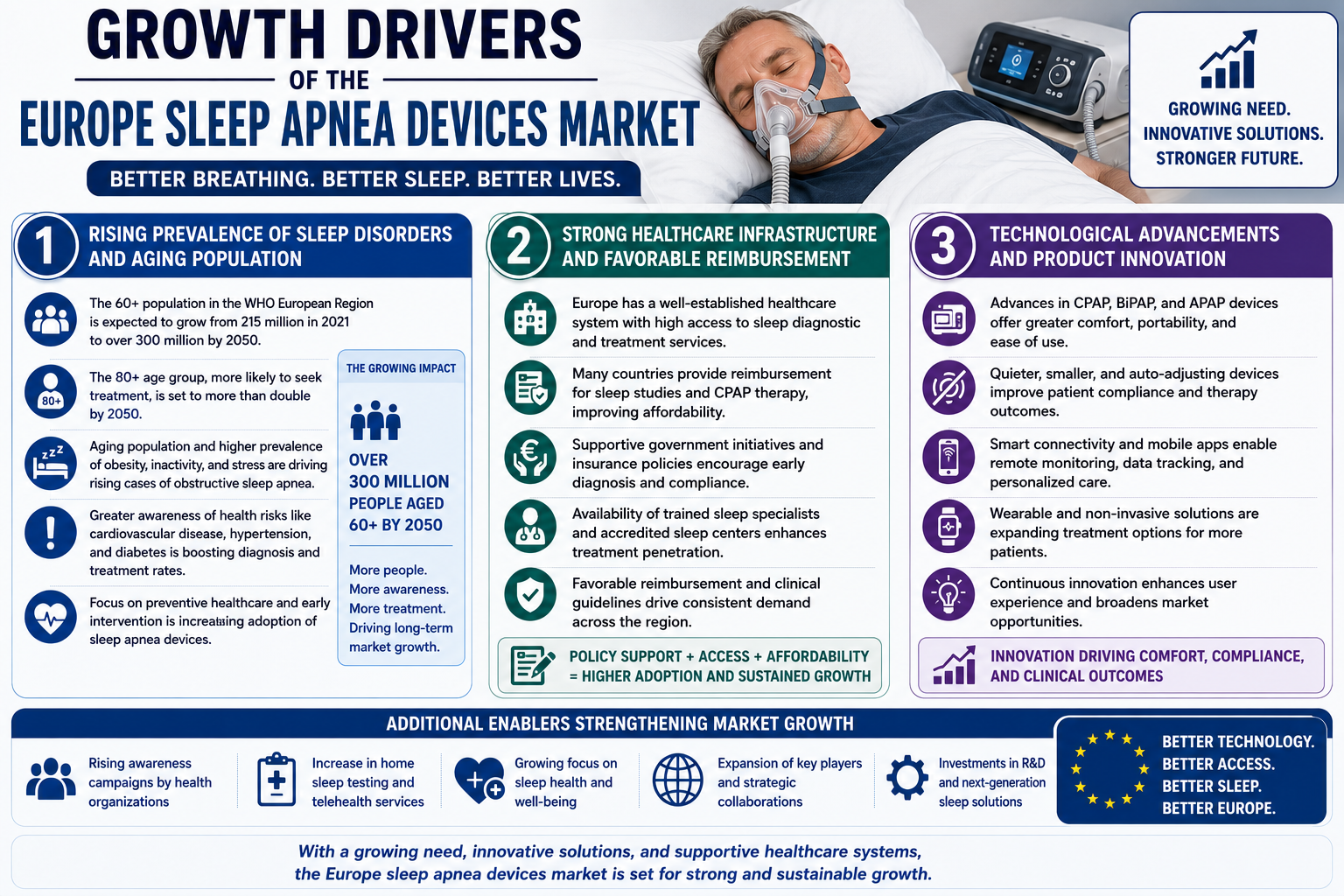
Europe's population is aging rapidly, and older adults are particularly susceptible to sleep-related breathing disorders. According to data referenced in the market report, the number of individuals aged 60 and above within the WHO European Region is expected to increase from approximately 215 million in 2021 to 247 million by 2030, eventually surpassing 300 million by 2050. The population aged 80 and above is expected to more than double during the same period.
At the same time, lifestyle-related risk factors such as obesity, physical inactivity, stress, and cardiovascular disease are becoming increasingly common across many European countries.
These factors significantly increase the likelihood of developing obstructive sleep apnea.
Growing awareness regarding the health risks associated with untreated sleep disorders is encouraging more patients to seek diagnosis and treatment.
As screening efforts expand and awareness campaigns continue, demand for sleep apnea devices is expected to rise steadily.
Europe’s Healthcare System Supports Market Growth
Europe's strong healthcare infrastructure represents a major advantage for the sleep apnea devices market.
Many European countries operate comprehensive public healthcare systems that provide access to diagnostic and therapeutic services for sleep disorders.
Reimbursement policies often cover a significant portion of the costs associated with sleep apnea diagnosis and treatment, including sleep studies and CPAP therapy.
This financial support helps reduce barriers to care and encourages patients to seek treatment earlier.
The presence of specialized sleep clinics, trained healthcare professionals, and advanced medical facilities further strengthens access to high-quality sleep medicine services.
Government investment in healthcare modernization also continues improving diagnostic capabilities and patient outcomes.
As healthcare systems increasingly prioritize preventive medicine, sleep apnea diagnosis and treatment are becoming integral components of long-term healthcare planning.
Technology Is Transforming Sleep Apnea Treatment
Technological innovation has dramatically improved sleep apnea devices over the past decade.
Earlier generations of equipment were often bulky, noisy, and uncomfortable, contributing to low patient adherence rates.
Today's devices are far more sophisticated.
Modern CPAP and BiPAP machines are smaller, quieter, lighter, and easier to operate. Advanced pressure-adjustment technologies automatically adapt airflow to patient needs throughout the night, improving comfort and effectiveness.
Integrated humidification systems help reduce dryness and irritation, while redesigned masks provide better fit and comfort.
Connectivity features have become increasingly important.
Many devices now connect wirelessly to smartphones and cloud-based platforms, enabling healthcare providers to monitor patient progress remotely and adjust treatment plans when necessary.
The expansion of telemedicine and remote patient monitoring is further enhancing treatment accessibility and effectiveness.
Innovation continues throughout the sector. In December 2024, Nyxoah SA introduced its battery-free Genio neurostimulator in England through the NHS Specialized Services Devices Programme. The implantable technology offers a new treatment approach for selected patients with obstructive sleep apnea.
These advancements are making sleep apnea treatment more effective and patient-friendly than ever before.
Home Healthcare Is Changing the Treatment Model
One of the most significant trends shaping the European market is the rapid expansion of home healthcare.
Patients increasingly prefer receiving diagnosis and treatment in familiar home environments whenever possible.
Sleep apnea management is particularly suited to this approach.
Portable diagnostic devices now allow patients to undergo sleep assessments without requiring overnight hospital stays.
Similarly, modern CPAP and BiPAP systems are specifically designed for convenient home use.
Home-based treatment offers several advantages, including greater comfort, reduced healthcare costs, improved accessibility, and increased patient satisfaction.
Healthcare providers also benefit because home care helps reduce demand on hospitals and specialized sleep laboratories.
Telemedicine platforms and remote monitoring systems further support this shift by enabling clinicians to supervise treatment without requiring frequent in-person visits.
As home healthcare adoption continues growing across Europe, demand for sleep apnea devices is expected to increase accordingly.
CPAP Devices Continue to Dominate the Market
Among all therapeutic options, CPAP devices remain the dominant segment within the European sleep apnea devices market.
Continuous Positive Airway Pressure therapy works by delivering a steady stream of air that prevents airway collapse during sleep.
Healthcare professionals widely regard CPAP as the most effective treatment for obstructive sleep apnea.
Its proven clinical effectiveness, widespread physician recommendation, and extensive availability have helped maintain its leadership position.
Continuous innovation has improved device acceptance significantly.
Features such as auto-adjusting pressure, advanced humidification, cloud connectivity, and enhanced mask comfort have helped address many of the compliance challenges associated with earlier generations of equipment.
Despite ongoing adherence concerns, CPAP therapy remains the gold standard for sleep apnea treatment throughout Europe.
Diagnostic Technologies Are Becoming More Sophisticated
Accurate diagnosis is essential for effective treatment.
Polysomnography devices continue serving as the gold standard for diagnosing sleep apnea and related sleep disorders.
These systems simultaneously monitor brain activity, breathing patterns, oxygen levels, heart rate, and sleep stages, providing comprehensive diagnostic information.
Hospitals and specialized sleep laboratories rely heavily on polysomnography equipment for complex evaluations.
At the same time, portable diagnostic technologies are expanding rapidly.
Oximeters, respiratory polygraphs, sleep screening devices, and actigraphy monitors offer convenient alternatives for preliminary assessment and ongoing monitoring.
Advances in technology are making these devices increasingly accurate, accessible, and user-friendly.
As awareness regarding early diagnosis grows, demand for advanced diagnostic equipment is expected to remain strong.
Oximeters Are Becoming Essential Monitoring Tools
Pulse oximeters have emerged as one of the most widely used monitoring tools within the sleep apnea diagnostics market.
These devices measure blood oxygen saturation levels during sleep, helping identify breathing interruptions associated with sleep apnea.
Their affordability, simplicity, portability, and suitability for home use have contributed to widespread adoption.
Modern wireless and wearable oximeters provide real-time monitoring and can integrate seamlessly with digital health platforms.
These capabilities allow both patients and healthcare professionals to track sleep quality and oxygen levels more effectively.
As remote monitoring becomes increasingly important within healthcare systems, demand for oximeter devices is expected to continue growing.
Hospitals and Clinics Remain Essential Providers
Hospitals and clinics continue playing a central role in sleep apnea diagnosis and treatment.
These facilities offer comprehensive services ranging from initial consultations and sleep studies to advanced therapeutic interventions.
Access to specialized sleep medicine professionals, sophisticated diagnostic equipment, and multidisciplinary care teams ensures high-quality patient management.
Investments in healthcare infrastructure and specialized sleep centers across Europe are further strengthening service availability.
Insurance reimbursement for diagnostic and therapeutic procedures also supports utilization of hospital-based services.
As awareness and diagnosis rates continue increasing, clinics and hospitals will remain key contributors to market growth.
France and Germany Lead Regional Adoption
France represents one of Europe's strongest sleep apnea device markets.
The country's comprehensive public healthcare system, growing awareness of sleep disorders, and financial support programs have encouraged widespread adoption of diagnostic and therapeutic devices. In July 2024, Inspire Medical Systems secured reimbursement approval in France for its innovative obstructive sleep apnea therapy, further expanding treatment access.
Germany also remains a major market due to its advanced healthcare infrastructure, high diagnosis rates, and strong medical technology sector.
The country has embraced innovative sleep apnea technologies and benefits from favorable reimbursement policies that encourage treatment adoption.
Germany's reputation for medical innovation continues supporting growth across the sleep apnea device sector. In December 2024, Eli Lilly announced FDA approval of Zepbound for adults with obesity and moderate-to-severe obstructive sleep apnea, highlighting growing interest in comprehensive sleep disorder management.
Challenges Still Need Attention
Despite positive growth prospects, several challenges remain.
Underdiagnosis continues to affect many regions.
A significant portion of the population remains unaware of sleep apnea symptoms, leading to delayed diagnosis and treatment. Limited access to specialized sleep clinics in certain areas further contributes to this problem.
Patient compliance remains another concern.
Some individuals struggle to adapt to CPAP therapy due to discomfort, mask pressure, or anxiety associated with device use. Because treatment effectiveness depends heavily on consistent usage, improving adherence remains a major priority.
The cost of advanced therapeutic devices can also create barriers in certain healthcare systems, despite reimbursement support.
Addressing these challenges will be essential for sustaining long-term market growth.
Final Thoughts
Europe's growing focus on sleep health is transforming how sleep apnea is diagnosed and treated. Increasing awareness, aging populations, technological innovation, and expanding home healthcare services are creating new opportunities throughout the sleep apnea devices market.
Modern devices are becoming more comfortable, more connected, and more effective, helping patients achieve better sleep while reducing the health risks associated with untreated sleep disorders.
With the Europe Sleep Apnea Devices Market projected to grow from US$ 1.83 billion in 2025 to US$ 3.49 billion by 2034, the industry is entering a period of significant expansion.
As healthcare systems continue emphasizing preventive care and digital health solutions, sleep apnea devices will play an increasingly important role in improving patient outcomes, enhancing quality of life, and supporting healthier populations across Europe.
About the Creator
Enjoyed the story? Support the Creator.
Subscribe for free to receive all their stories in your feed.
Comments
There are no comments for this story
Be the first to respond and start the conversation.