
Europe’s Next Generation of Nutrition: How Organic Innovation Is Reshaping the Baby Food and Infant Formula Market
Growing demand for clean-label nutrition, organic ingredients, sustainable packaging, and convenient feeding solutions is driving remarkable transformation across Europe’s baby food and infant formula industry.

The first years of a child's life are among the most important for growth, development, and long-term health. As parents become increasingly informed about the impact of early nutrition, expectations for baby food and infant formula products have evolved dramatically.
Across Europe, mothers and fathers are paying closer attention to ingredient quality, nutritional value, sustainability, and transparency. Products that were once viewed simply as feeding solutions are now expected to support cognitive development, digestive health, immunity, and overall well-being while also aligning with modern values surrounding environmental responsibility and clean-label nutrition.
This changing mindset is transforming one of the most important segments of the food industry.
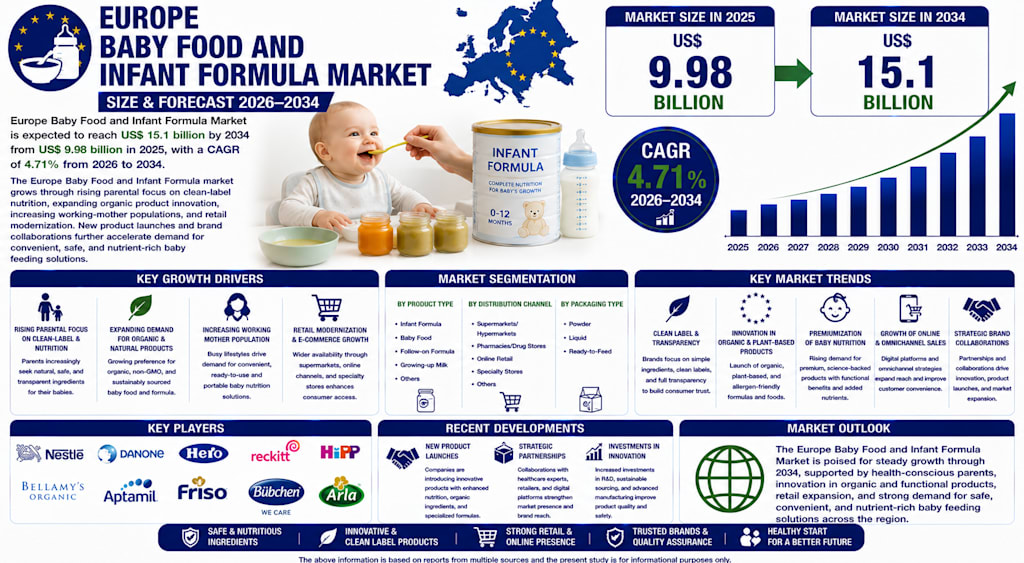
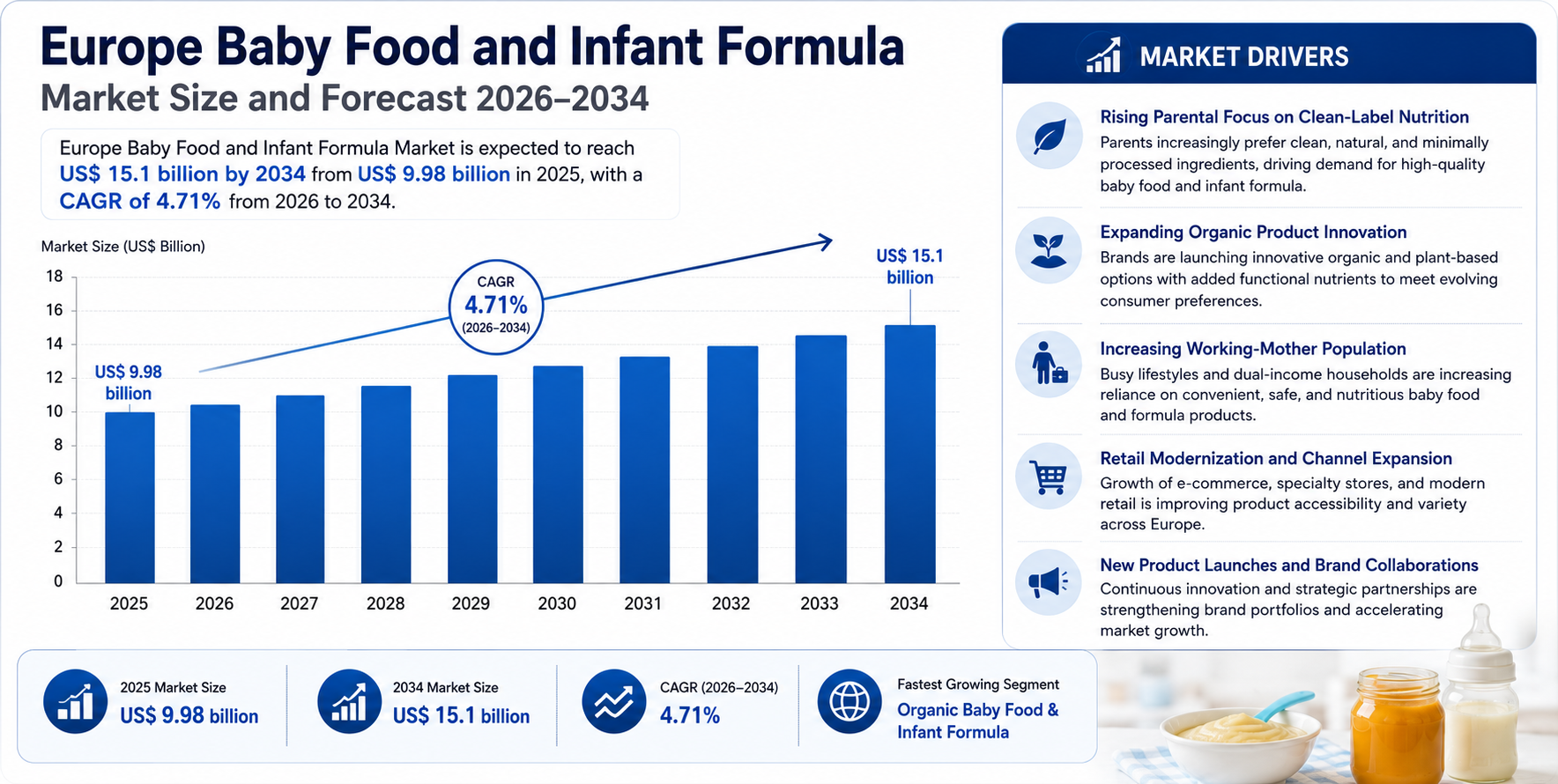
According to Renub Research, the Europe Baby Food and Infant Formula Market is projected to grow from US$ 9.98 billion in 2025 to US$ 15.1 billion by 2034, expanding at a compound annual growth rate (CAGR) of 4.71% between 2026 and 2034. Rising parental awareness of nutrition, increasing demand for organic and clean-label products, growing participation of women in the workforce, and continuous innovation in infant feeding solutions are among the key factors supporting market growth.
As European families increasingly prioritize health, convenience, and sustainability, the baby food and infant formula sector is entering a new phase of innovation and expansion.
The Growing Importance of Early Childhood Nutrition
Nutrition during infancy and toddlerhood plays a critical role in shaping lifelong health outcomes.
Baby food and infant formula products are designed specifically to meet the unique dietary needs of young children during crucial developmental stages.
Infant formula provides a carefully balanced source of:
Proteins, fats, carbohydrates, vitamins, and minerals that support healthy growth when breastfeeding is unavailable or supplemented.
Baby food products include:
Purees, cereals, snacks, meals, fruits, vegetables, grains, and protein-based formulations developed to be safe, digestible, and age appropriate.
As scientific understanding of childhood development advances, manufacturers continue refining nutritional formulations to better support physical and cognitive growth.
Parents increasingly view nutrition as an investment in their children's future health, creating strong demand for premium and scientifically formulated products.
Organic and Clean-Label Nutrition Is Becoming the Standard
One of the most influential trends driving the European market is the growing preference for organic and clean-label nutrition.
Modern parents are increasingly skeptical of artificial additives, preservatives, synthetic ingredients, and highly processed foods.
Instead, they seek products made with:
Organic ingredients, simple formulations, natural flavors, sustainable sourcing practices, and transparent labeling.
This shift reflects broader consumer interest in health, wellness, and environmental responsibility.
European consumers are particularly attentive to ingredient traceability and production methods.
As a result, manufacturers are investing heavily in organic certification, cleaner formulations, and improved transparency.
A strong example emerged in May 2025 when organic baby food company Little Freddie launched a 20-product range that included cereals, puffs, biscuits, and rice teethers while emphasizing parent-friendly packaging and clean-label messaging.
Such initiatives demonstrate how organic nutrition continues moving from niche preference to mainstream expectation.
Sustainability Is Influencing Purchasing Decisions
Environmental responsibility has become an increasingly important factor for European consumers.
Parents are not only concerned about what goes into baby food products but also how those products are manufactured, packaged, and distributed.
Many consumers now actively seek:
Recyclable packaging, sustainable sourcing, reduced environmental impact, and responsible agricultural practices.
Manufacturers are responding through investments in eco-friendly materials and sustainable production methods.
Packaging innovation has become particularly important as brands attempt to balance convenience with environmental responsibility.
As sustainability continues shaping purchasing behavior, companies that successfully combine nutrition, transparency, and environmental stewardship are likely to gain competitive advantages.
Educational Campaigns Are Building Consumer Trust
Trust plays a critical role in the infant nutrition market.
Parents want confidence that the products they choose are safe, effective, and beneficial for their children.
To strengthen consumer relationships, brands increasingly rely on educational partnerships and awareness campaigns.
These initiatives provide parents with accessible information regarding infant nutrition, feeding practices, and product benefits.
A notable example occurred in April 2025 when Stonyfield Organic partnered with educator and content creator Ms. Rachel to launch the "O is for Organic" initiative promoting healthier feeding choices and organic nutrition awareness.
Such collaborations help brands build credibility while encouraging informed decision-making among caregivers.
As digital platforms become primary sources of parenting information, educational content will continue playing an important role in market growth.
Convenience Is Driving Product Innovation
Modern lifestyles are creating new demands within the baby food and infant formula industry.
An increasing number of European households include working parents balancing childcare responsibilities with professional commitments.
As a result, convenience has become a major purchasing consideration.
Parents increasingly favor products that offer:
Easy preparation, portability, portion control, ready-to-feed functionality, and on-the-go convenience.
This trend has accelerated innovation across categories such as:
Squeeze pouches, prepared meals, ready-to-drink products, snacks, and single-serving formats.
Manufacturers continue introducing solutions that combine nutritional quality with practical convenience.
As busy lifestyles become more common, convenience-oriented products are expected to remain a major growth driver.
Nutrient-Rich Snacking Is Becoming a Major Category
The concept of healthy snacking has expanded beyond adults and entered the infant and toddler nutrition market.
Parents increasingly seek nutritious snack products that support healthy development while fitting into busy daily routines.
Products featuring:
Whole grains, fruits, vegetables, fiber-rich ingredients, and natural flavors are becoming increasingly popular.
In March 2025, Ella's Kitchen expanded its portfolio for children aged 12 months and older with Oaty Smooshies, dairy-free fruit and oat snacks offered in recyclable packaging. The products contain no added sugar or salt while contributing to daily fruit and vegetable intake recommendations.
This development reflects growing demand for healthier snack alternatives that complement traditional meals.
Milk Formula Remains the Largest Product Segment
Milk formula continues to represent one of the most important segments within the European infant nutrition market.
For families who cannot exclusively breastfeed or choose to supplement breastfeeding, infant formula provides essential nutritional support.
Manufacturers continue investing in advanced formulations designed to more closely resemble breast milk.
Innovations increasingly include:
Human Milk Oligosaccharides (HMOs), probiotics, prebiotics, and specialized nutrient blends.
A major development occurred in June 2025 when Nestlé introduced NAN Sinergity, a super-premium infant formula featuring six HMOs and B. infantis probiotics. The company positioned the product as a breakthrough designed to deliver benefits modeled closely on breast milk.
Such innovations continue driving premiumization throughout the market.
Prepared Baby Food Continues Expanding
Prepared baby food products are experiencing strong growth across Europe.
Parents appreciate the convenience of ready-made solutions while maintaining expectations regarding quality and nutrition.
Popular products include:
Fruit purees, vegetable blends, complete meals, organic snacks, cereals, and developmental-stage-specific foods.
The segment benefits from continuous innovation in flavors, ingredients, packaging formats, and nutritional profiles.
As consumers increasingly seek practical feeding solutions without compromising quality, prepared baby food remains a major contributor to market growth.
E-Commerce Is Transforming Distribution
Digital commerce is reshaping how European families purchase baby food and infant formula products.
Online platforms offer several advantages:
Convenience, subscription services, broader product selection, home delivery, and detailed product information.
Parents can easily compare nutritional content, read reviews, access expert recommendations, and purchase specialty products that may not be available locally.
The rise of direct-to-consumer brands has further accelerated competition and innovation.
Subscription-based purchasing models are becoming particularly popular among families seeking reliable access to essential products.
As digital retail continues expanding, e-commerce is expected to remain a major growth channel.
France Leads Premium Nutrition Adoption
France remains one of Europe's most influential baby nutrition markets.
French consumers traditionally place strong emphasis on food quality, nutritional standards, and ingredient authenticity.
Demand for organic products continues growing rapidly, particularly within categories such as purees, cereals, and infant snacks.
Convenience-focused solutions, including ready-to-eat meals and pouch-based products, are also gaining popularity among modern families.
Strict regulatory standards contribute to strong consumer confidence while encouraging continuous product innovation.
Germany Drives Organic and Sustainable Growth
Germany represents one of Europe's largest baby food and infant formula markets.
German parents demonstrate particularly strong interest in:
Organic certification, sustainability, environmentally responsible packaging, and clean-label ingredients.
The country benefits from high consumer purchasing power and widespread awareness of nutritional quality.
Strong domestic brands and growing online retail adoption continue supporting market stability and expansion.
Germany's commitment to sustainability is also influencing broader European industry trends.
Italy and Spain Embrace Natural Nutrition
Italy's market is strongly influenced by Mediterranean dietary traditions emphasizing fresh, natural ingredients.
Parents increasingly prefer preservative-free products, organic options, and locally sourced ingredients.
Growing numbers of dual-income households are also increasing demand for convenient feeding solutions.
Spain continues experiencing steady market growth driven by increasing awareness of infant nutrition and growing demand for organic products.
Convenient formats, fortified snacks, and environmentally friendly packaging solutions are becoming increasingly popular among Spanish consumers.
Challenges Facing the Market
Despite favorable growth prospects, several challenges remain.
One major issue involves affordability.
Premium and organic products often carry higher price tags due to certification requirements, ingredient sourcing costs, and specialized manufacturing processes.
Economic pressures and rising living costs may limit access for some households, particularly in lower-income segments. This creates challenges for manufacturers attempting to balance premium quality with broad accessibility.
Another challenge is regulatory complexity.
Europe maintains some of the world's most stringent standards regarding infant nutrition, ingredient composition, labeling, and product safety.
While these regulations protect consumers, they also increase operational costs and may slow new product development and market entry. Smaller companies often face particular difficulties navigating compliance requirements.
Addressing these challenges will be important for sustaining long-term growth.
Final Thoughts
The Europe baby food and infant formula market is undergoing a significant transformation driven by changing consumer values and advancing nutritional science.
Parents increasingly demand products that combine safety, convenience, transparency, sustainability, and scientifically supported nutrition.
From organic ingredients and clean-label formulations to nutrient-rich snacks and advanced infant formulas, innovation continues reshaping the industry.
With the market projected to grow from **US$ 9.98 billion in
About the Creator
Enjoyed the story? Support the Creator.
Subscribe for free to receive all their stories in your feed.
Comments
There are no comments for this story
Be the first to respond and start the conversation.