
Europe Protein Market: Why Is Protein Becoming the Cornerstone of Modern Nutrition Across Europe?
Rising health awareness, expanding fitness culture, innovation in plant-based and alternative proteins, and growing demand for functional foods are driving the evolution of the European protein market through 2034.

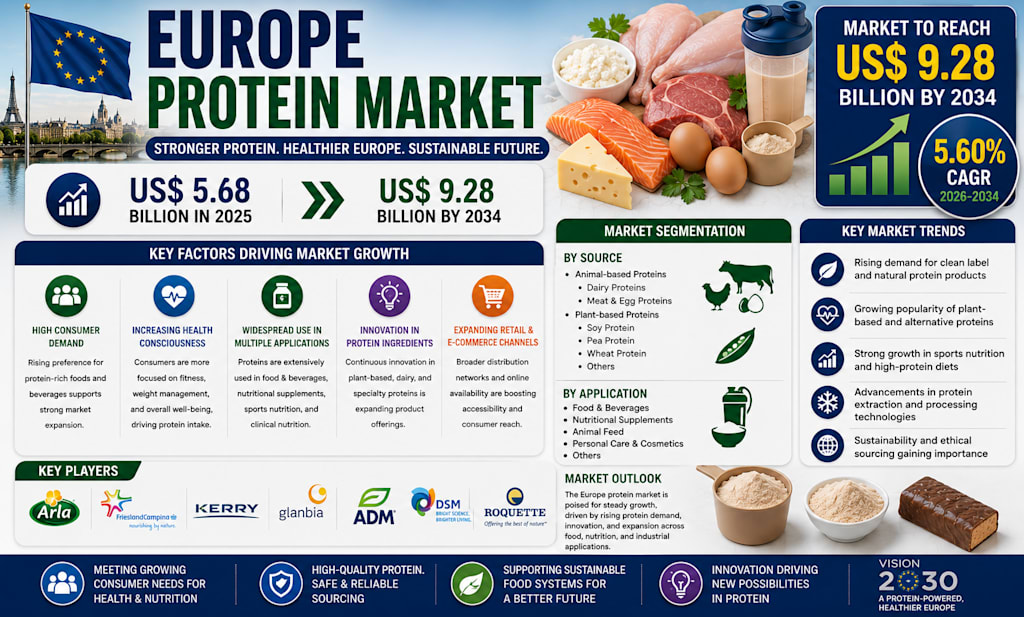
Across Europe, consumer attitudes toward nutrition are changing rapidly. Protein, once primarily associated with athletes and bodybuilders, has become one of the most sought-after nutrients among mainstream consumers. From protein-enriched snacks and beverages to meal replacements and nutritional supplements, protein is now a central component of modern dietary habits.
Consumers increasingly recognize the importance of protein for muscle maintenance, weight management, immunity, healthy aging, and overall wellness. At the same time, innovations in food technology have expanded the availability of protein-rich products across numerous categories, including food, beverages, supplements, personal care products, and medical nutrition.
According to Renub Research, the Europe Protein Market is projected to grow from US$ 5.68 billion in 2025 to US$ 9.28 billion by 2034, registering a CAGR of 5.60% between 2026 and 2034. Strong demand for protein-based foods, growing health consciousness, expanding sports nutrition consumption, and increasing applications of protein ingredients are expected to fuel market growth throughout the forecast period.

Understanding the Role of Protein in Modern Nutrition
Protein is one of the three essential macronutrients required by the human body, alongside carbohydrates and fats. Composed of amino acids, protein plays a vital role in muscle development, tissue repair, enzyme production, immune function, hormone regulation, and numerous other physiological processes.
Protein can be sourced from both animal and plant origins. Animal proteins include meat, dairy products, eggs, and fish, while plant proteins are derived from soy, peas, hemp, rice, wheat, lentils, beans, and other crops.
The versatility of protein allows it to be incorporated into a wide range of products, including dairy beverages, protein bars, cereals, baked goods, ready meals, nutritional supplements, and functional beverages.
As consumers place greater emphasis on preventive healthcare and balanced diets, protein continues to gain importance across all demographic groups throughout Europe.
Rising Health Awareness Drives Protein Consumption
One of the strongest growth drivers within the European protein market is increasing consumer awareness regarding health and nutrition.
People are becoming more informed about the role of protein in maintaining overall wellness. Scientific research, healthcare recommendations, and social media discussions have all contributed to greater understanding of protein's benefits.
Consumers increasingly associate adequate protein intake with improved muscle strength, healthy weight management, enhanced satiety, and better metabolic health. These perceptions have encouraged individuals to actively seek protein-rich foods and beverages as part of their daily diets.
The growing prevalence of lifestyle-related conditions such as obesity, diabetes, and cardiovascular diseases has further reinforced interest in healthier eating patterns. Many consumers view protein-enriched products as practical tools for supporting healthier lifestyles.
As awareness continues growing, demand for innovative protein products is expected to remain strong throughout Europe.
Functional Nutrition Becomes Mainstream
The rise of functional nutrition is transforming the European protein landscape.
Consumers increasingly seek products that provide benefits beyond basic nutrition. Protein has emerged as a key ingredient within this trend because of its association with strength, recovery, satiety, and overall health.
Manufacturers are introducing protein-enhanced foods and beverages designed to support specific consumer goals, including weight management, energy enhancement, muscle recovery, healthy aging, and immunity support.
Products such as protein shakes, meal replacements, protein waters, functional yogurts, protein cereals, and nutritional bars have become increasingly common in supermarkets and specialty retailers.
The growing popularity of functional foods continues creating opportunities for manufacturers to develop premium and value-added protein products that cater to evolving consumer preferences.
Fitness Culture Accelerates Market Expansion
Europe's expanding fitness culture remains one of the most important factors supporting protein market growth.
Consumers are participating in gym memberships, running clubs, cycling activities, yoga programs, strength training, and wellness initiatives at unprecedented levels. This trend has increased demand for products that support physical performance and recovery.
Protein powders, ready-to-drink beverages, recovery shakes, protein bars, and performance supplements have become staples among both professional athletes and recreational fitness enthusiasts.
Importantly, protein consumption is no longer confined to the sports nutrition segment. Everyday consumers increasingly use protein products as convenient meal solutions and healthy snacks.
Social media influencers, fitness professionals, and wellness advocates continue promoting high-protein lifestyles, further driving consumer interest across Europe.
Innovation in Plant-Based Proteins Reshapes the Industry
One of the most transformative developments within the European protein market is the rapid growth of plant-based proteins.
Consumers are increasingly exploring plant-derived protein sources due to concerns regarding sustainability, environmental impact, animal welfare, and personal health.
Protein ingredients derived from peas, soy, rice, hemp, wheat, and other crops have gained significant popularity. Advances in food technology have improved taste, texture, nutritional quality, and functionality, making plant-based proteins increasingly competitive with traditional animal proteins.
Manufacturers continue investing heavily in research and development to create products that closely replicate the sensory characteristics of animal-derived foods.
Retailers have also expanded shelf space dedicated to plant-based products, improving accessibility and consumer awareness.
As sustainability concerns continue influencing purchasing decisions, plant-based proteins are expected to remain one of the fastest-growing segments within the market.
Animal Proteins Continue to Hold Strong Market Position
Despite the growth of alternative proteins, animal-derived proteins remain a critical component of the European market.
Animal proteins such as whey, casein, collagen, gelatin, milk proteins, and egg proteins continue to enjoy strong demand because of their complete amino acid profiles and superior bioavailability.
These proteins are extensively used across sports nutrition, infant nutrition, clinical nutrition, food processing, and dietary supplement applications.
Whey protein remains particularly popular due to its effectiveness in supporting muscle recovery and athletic performance. Collagen products have also experienced rapid growth as consumers increasingly seek solutions for skin, joint, and bone health.
Animal proteins continue to play a dominant role in numerous nutritional categories despite growing competition from plant-based alternatives.
Sports Nutrition Industry Creates Significant Opportunities
The sports nutrition segment represents one of the most dynamic areas within the European protein market.
Consumers increasingly view protein supplementation as an essential component of active lifestyles. Protein powders, shakes, bars, and functional snacks are widely consumed to support exercise recovery and muscle development.
Manufacturers continue introducing innovative products that combine convenience, functionality, and appealing flavors.
In January 2025, Myprotein launched a new line of plant-based protein powders, reflecting growing demand for diverse protein options within the sports nutrition category.
The convergence of fitness culture and nutritional awareness is expected to continue generating strong demand for sports nutrition products throughout the coming decade.
Collagen Protein Gains Popularity Across Health and Beauty Categories
Collagen protein has emerged as one of the fastest-growing segments within Europe's protein industry.
Consumers increasingly recognize collagen's potential benefits for skin elasticity, joint health, bone strength, and overall wellness. This trend has fueled demand for collagen supplements, functional beverages, beauty products, and protein snacks.
The popularity of "beauty from within" concepts has encouraged manufacturers to introduce innovative collagen-based products targeting both health-conscious and beauty-focused consumers.
An aging population further supports collagen demand as older adults seek nutritional solutions that promote mobility and healthy aging.
Hemp Protein Benefits from Sustainability Trends
Hemp protein is gaining momentum as consumers seek sustainable and plant-based nutrition options.
Derived from hemp seeds, hemp protein provides essential amino acids, fiber, and omega fatty acids while requiring relatively low environmental resources during cultivation.
The growing popularity of clean-label products and organic foods has contributed significantly to hemp protein adoption. Consumers increasingly appreciate hemp's nutritional profile and environmental advantages compared with some traditional protein sources.
Food manufacturers continue incorporating hemp protein into beverages, snacks, cereals, and nutritional supplements, supporting category expansion.
Algae Protein Represents the Future of Sustainable Nutrition
Algae protein is emerging as one of Europe's most innovative protein categories.
Derived from microalgae such as spirulina and chlorella, algae proteins provide complete amino acid profiles while offering excellent sustainability characteristics.
Algae cultivation requires minimal land and water resources compared to conventional agriculture, making it attractive from an environmental perspective.
Increasing interest in sustainable food systems and alternative protein sources has created favorable conditions for algae protein development across Europe.
Its applications continue expanding across dietary supplements, functional foods, beverages, and medical nutrition products.
Protein Breakfast Cereals Gain Consumer Attention
The demand for protein-enriched breakfast cereals is increasing steadily throughout Europe.
Consumers seek convenient breakfast solutions that provide sustained energy and nutritional benefits. Protein-fortified cereals help satisfy these needs while supporting wellness goals.
Manufacturers are introducing products that combine high protein content with reduced sugar levels, added fiber, and functional ingredients.
The popularity of convenient and nutritious breakfast options continues driving growth within this category.
Elderly Nutrition Creates Long-Term Growth Opportunities
Europe's aging population is creating substantial demand for specialized protein products.
Healthcare professionals increasingly emphasize the importance of adequate protein intake for maintaining muscle mass, preventing frailty, and supporting healthy aging.
Protein-enriched beverages, medical nutrition products, powders, and supplements are becoming essential components of elderly nutrition programs.
Hospitals, healthcare providers, and caregivers increasingly rely on specialized protein products designed to address age-related nutritional challenges.
As demographic aging continues across Europe, this segment is expected to become an increasingly important contributor to market growth.
Challenges Facing the Europe Protein Market
Despite strong growth prospects, several challenges remain.
Raw Material Price Volatility
Protein production relies heavily on agricultural commodities and raw materials.
Climate-related disruptions, geopolitical tensions, changing trade policies, and supply-chain constraints can significantly affect production costs and profitability.
Manufacturers must continually adapt sourcing strategies and improve supply-chain resilience to maintain competitiveness.
Sustainability and Regulatory Pressures
Consumers and regulators increasingly expect protein producers to demonstrate environmental responsibility.
Companies face pressure to reduce emissions, improve resource efficiency, enhance transparency, and comply with evolving sustainability standards.
Meeting these expectations often requires significant investments in technology, innovation, and operational improvements.
Germany Leads European Protein Innovation
Germany remains one of Europe's most advanced protein markets.
Strong consumer awareness regarding health, fitness, and nutrition supports demand for both animal and plant proteins. The country's sophisticated food processing industry continues introducing innovative protein products across multiple categories.
Growing interest in sustainability and clean-label products further strengthens market opportunities.
United Kingdom Protein Market Benefits from Functional Nutrition Trends
The United Kingdom demonstrates strong demand for protein-rich foods, beverages, and supplements.
Health-conscious consumers increasingly seek convenient and functional products that support active lifestyles. The popularity of plant-based diets has also encouraged innovation across alternative protein categories.
Well-developed retail infrastructure and strong e-commerce adoption ensure broad accessibility of protein products throughout the country.
France Maintains Strong Protein Consumption
France continues to exhibit robust demand for both traditional and innovative protein products.
The country's rich culinary heritage supports animal protein consumption, while growing wellness trends encourage adoption of plant-based and functional protein solutions.
Premium quality, local sourcing, and nutritional value remain key purchasing factors for French consumers.
Future Outlook
The future of the European protein market appears highly promising.
Rising health awareness, expanding fitness culture, innovations in alternative proteins, increasing demand for functional nutrition, and demographic changes will continue driving growth through 2034.
Manufacturers that successfully balance nutrition, sustainability, convenience, and product innovation will be best positioned to capitalize on emerging opportunities.
As consumers increasingly prioritize protein as a foundational component of healthy lifestyles, the market is expected to remain one of the most dynamic segments within the broader food and nutrition industry.
Final Thoughts
The Europe protein market is entering a new phase of growth driven by evolving consumer priorities, scientific innovation, and expanding applications across food, beverage, supplement, and healthcare sectors.
With the market projected to grow from US$ 5.68 billion in 2025 to US$ 9.28 billion by 2034, protein will remain at the center of Europe's nutrition landscape. Companies that invest in quality, sustainability, functionality, and innovation will be best positioned to succeed as consumer demand for protein-rich solutions continues to rise.
About the Creator
Enjoyed the story? Support the Creator.
Subscribe for free to receive all their stories in your feed.
Comments
There are no comments for this story
Be the first to respond and start the conversation.