
Europe Protein Market to Reach US$ 9.28 Billion by 2034 as Functional Nutrition and High-Protein Food Demand Accelerate Growth
Rising health awareness, expanding sports nutrition culture, and innovation in plant-based and alternative proteins are reshaping the Europe protein industry

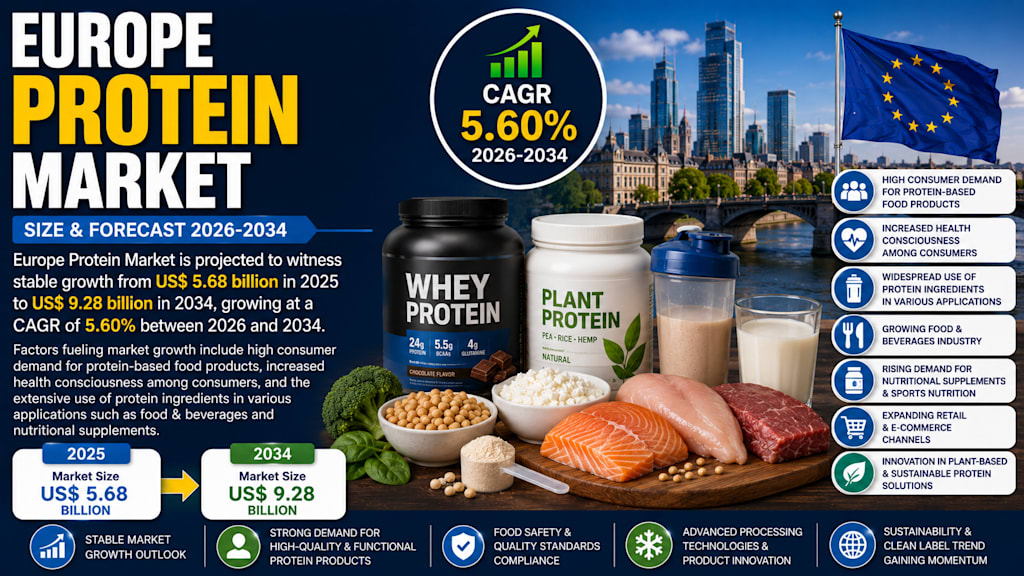
The Europe protein market is expected to witness stable and long-term growth as consumers increasingly prioritize protein-rich diets, functional nutrition, and healthier food choices. According to Renub Research, the Europe protein market is projected to grow from US$ 5.68 billion in 2025 to US$ 9.28 billion by 2034, registering a CAGR of 5.60% from 2026 to 2034. Growing demand for protein-enriched foods and beverages, expanding fitness culture, rising health consciousness, and increasing use of proteins in supplements and medical nutrition are among the key drivers fueling market expansion across Europe.
Proteins remain one of the most important macronutrients in human nutrition because they support muscle growth, tissue repair, enzyme production, and overall physical wellbeing. European consumers increasingly recognize the role of protein in maintaining active lifestyles, improving immunity, supporting healthy aging, and managing body weight.
Both animal-based and plant-based proteins are gaining strong traction across the region. Proteins sourced from meat, dairy, eggs, fish, soy, peas, hemp, rice, algae, and microbial fermentation are now widely used across food processing, sports nutrition, elderly nutrition, infant formula, beverages, bakery products, and convenience foods.
The market is also evolving rapidly as consumers seek cleaner labels, functional ingredients, sustainable sourcing, and innovative protein delivery formats that fit modern lifestyles.
Rising Health Awareness Is Strengthening Protein Consumption
One of the strongest growth drivers for the Europe protein market is the increasing focus on health, wellness, and balanced nutrition.
Consumers across Europe are becoming more aware of the importance of protein consumption for muscle maintenance, weight management, energy levels, and overall physical performance. This shift is encouraging higher consumption of protein-enriched snacks, beverages, meal replacements, and functional foods.
The rise in lifestyle-related conditions such as obesity and diabetes has also encouraged consumers to adopt healthier eating habits that prioritize higher protein intake and reduced sugar consumption.
Manufacturers are responding by developing innovative products that combine protein with additional health benefits such as immunity support, energy enhancement, digestive wellness, and recovery nutrition.
The report highlights that companies continue launching specialized nutritional products targeting consumers seeking convenient and nutrient-dense food solutions. These trends are helping expand protein demand far beyond traditional sports nutrition applications.
Sports Nutrition and Fitness Culture Are Accelerating Market Growth
The rapid expansion of fitness culture and sports nutrition across Europe is significantly boosting protein consumption.
Consumers increasingly participate in gym training, sports activities, wellness programs, and active lifestyle routines, driving stronger demand for protein powders, bars, ready-to-drink beverages, and performance nutrition products.
Protein supplements are no longer limited to professional athletes and bodybuilders. Everyday consumers now use protein products to support weight management, muscle recovery, and general health goals.
Social media fitness trends and influencer marketing have also contributed to wider awareness and adoption of protein-rich diets.
The report highlights a notable development from January 2025, when Myprotein launched a new line of plant-based protein powders designed to meet rising demand for vegan and sustainable fitness nutrition products.
The aging population across Europe is another important contributor to market growth. Older consumers increasingly use protein-enriched products to preserve muscle mass, mobility, and strength as part of healthy aging strategies.
Together, these trends are creating sustained long-term demand for sports and performance nutrition products across Europe.
Plant-Based and Alternative Protein Innovation Is Reshaping the Market
Innovation in plant-based and alternative proteins is becoming one of the defining trends within the Europe protein market.
Consumers are increasingly concerned about sustainability, environmental impact, and animal welfare, leading to growing adoption of plant-based diets and flexitarian eating habits. According to the report, a significant percentage of adults in countries such as the United Kingdom and Germany are reducing animal meat and dairy consumption while increasing plant-based food intake.
This shift has encouraged major investments in alternative protein technologies using soy, pea, wheat, hemp, algae, and microbial fermentation.
Food manufacturers are rapidly improving taste, texture, and nutritional profiles in order to create products that closely replicate traditional animal-based proteins.
Retailers are also increasing shelf space for plant-based protein products across supermarkets, convenience stores, and e-commerce platforms.
At the same time, innovation in hybrid proteins and next-generation food technologies is creating new opportunities within the protein industry.
Despite strong growth in plant-based alternatives, animal proteins continue maintaining an important role across European diets because of their complete amino acid profiles and long-standing culinary traditions.
Functional Foods and Convenience Products Continue Expanding
The Europe protein market is also benefiting from growing demand for convenient and functional food products.
Busy lifestyles and increasing interest in wellness-oriented eating habits are driving higher consumption of protein-rich ready-to-eat meals, snacks, breakfast cereals, beverages, and dairy products.
Protein-enriched convenience foods are becoming especially popular among working professionals, students, and urban consumers seeking balanced nutrition without extensive meal preparation.
Manufacturers continue launching innovative products such as:
- Protein breakfast cereals
- Functional dairy drinks
- High-protein snacks
- Protein bakery products
- Meal replacement beverages
- Ready-to-consume sports nutrition products
Consumers increasingly expect products that combine convenience, nutritional value, taste, and clean-label ingredients in a single format.
This shift is encouraging continued product diversification across both mainstream retail and specialty nutrition categories.
Collagen Protein Market Is Growing Through Beauty and Wellness Trends
The Europe collagen protein market is experiencing steady growth due to increasing consumer interest in beauty, wellness, and functional nutrition.
Collagen proteins are widely used in dietary supplements, functional beverages, protein powders, and cosmetic wellness products because of their perceived benefits for skin elasticity, joint health, and aging support.
The growing “beauty from within” trend is encouraging higher collagen consumption among health-conscious consumers, especially within premium wellness categories.
The aging population is also contributing significantly to demand, as collagen products are frequently used to support joint mobility and bone health.
Manufacturers are responding by introducing collagen-based drinks, snack bars, powders, and ready-to-consume wellness products aimed at both beauty-focused and active-lifestyle consumers.
Hemp and Algae Proteins Are Emerging as Sustainable Alternatives
Europe’s growing sustainability focus is helping support demand for emerging protein categories such as hemp protein and algae protein.
Hemp protein is gaining popularity because of its strong nutritional profile, fiber content, omega fatty acids, and environmentally sustainable production process. Consumers increasingly associate hemp-based products with clean eating and organic lifestyles.
At the same time, algae proteins sourced from spirulina and chlorella are gaining momentum because of their high nutrient density, sustainability advantages, and broad application across supplements and functional foods.
Algae protein production requires relatively low land and water usage compared to conventional protein sources, making it attractive to environmentally conscious consumers and food manufacturers.
These emerging segments are expected to play a growing role within Europe’s evolving protein ecosystem.
Elderly Nutrition and Medical Nutrition Markets Are Supporting Long-Term Growth
The Europe elderly nutrition and medical nutrition protein market is benefiting from demographic changes and increased healthcare awareness.
Proteins play a critical role in maintaining muscle mass, strength, and overall physical wellbeing among aging populations. Healthcare professionals increasingly recommend protein-enriched products to help prevent muscle loss and malnutrition in elderly patients.
As a result, demand is increasing for specialized nutritional products such as protein shakes, powders, beverages, and medical nutrition formulas.
Hospitals, healthcare providers, and wellness-focused consumers are all contributing to stronger demand for protein-based medical nutrition solutions.
Advancements in nutritional science are also enabling companies to develop more specialized formulations tailored to different health conditions and aging-related needs.
Raw Material Volatility and Supply Chain Disruptions Remain Challenges
Despite strong growth prospects, the Europe protein market faces several operational and economic challenges.
Protein production depends heavily on agricultural raw materials such as feed crops, dairy ingredients, soybeans, peas, and specialty plant proteins. Commodity price fluctuations caused by climate conditions, geopolitical instability, and international trade disruptions can significantly affect production costs.
Supply-chain disruptions, shipping delays, and logistics challenges can also impact product availability and pricing across the market.
Smaller companies are especially vulnerable because they often lack the financial flexibility required to absorb rapid increases in ingredient costs.
Manufacturers increasingly need to diversify sourcing strategies, improve operational efficiency, and strengthen supply-chain resilience in order to remain competitive.
Regulatory Pressure and Sustainability Expectations Are Increasing
Regulatory complexity and sustainability pressure continue shaping the Europe protein market.
European consumers and policymakers increasingly expect food manufacturers to adopt environmentally responsible practices, improve traceability, and reduce carbon footprints associated with protein production.
Compliance with regulations related to food safety, ingredient labeling, sustainability standards, and environmental protection increases operational complexity across the industry.
At the same time, consumers increasingly favor ethically sourced, organic, and transparent products.
These expectations are encouraging producers to invest in sustainable farming methods, renewable packaging solutions, alternative protein technologies, and cleaner manufacturing practices.
Companies that successfully balance innovation, sustainability, and affordability are likely to remain competitive in the evolving European protein landscape.
Germany Remains One of Europe’s Leading Protein Markets
Germany continues to represent one of the largest and most advanced protein markets in Europe.
The country benefits from strong consumer awareness regarding health, fitness, balanced nutrition, and sustainability. Both animal-based and plant-based protein products enjoy strong demand across retail and foodservice channels.
German consumers increasingly seek high-protein snacks, beverages, dairy products, and convenience foods that support active lifestyles.
The report highlights a major innovation development from November 2024, when ICL Food Specialties and DAIZ Engineering launched ROVITARIS SprouTx textured soy protein at Food Ingredients Europe in Frankfurt. The product was designed to improve taste, texture, affordability, and nutritional quality in plant-based protein applications.
Germany’s highly developed retail infrastructure and strong emphasis on sustainability continue supporting long-term protein market growth.
United Kingdom Protein Market Benefits from Functional Nutrition Trends
The United Kingdom protein market is expanding steadily because of rising demand for convenience foods, sports nutrition products, and functional wellness beverages.
Protein powders, bars, ready-to-drink products, and plant-based proteins are increasingly popular among British consumers focused on fitness, weight management, and healthy lifestyles.
The country’s strong retail and e-commerce sectors ensure wide accessibility for both mainstream and premium protein products.
The report highlights a major development from April 2025, when Eat Just partnered with Vegan Food Group to secure manufacturing and distribution rights for JUST Egg products in Europe. The company also invested significantly in automated production capacity in Germany.
Such developments reflect the growing importance of alternative protein innovation within the UK and broader European market.
France Continues Supporting Premium Protein Consumption
France’s protein market remains deeply connected to its culinary traditions and preference for high-quality food products.
Consumers strongly value product quality, taste, origin, and nutritional value across both animal and plant protein categories. Protein-enriched functional foods, dairy products, and supplements continue gaining popularity among French consumers.
The report highlights a major innovation initiative launched in April 2026 by Insect Research & Bioindustry and Innovafeed. The FrenchFly project aims to improve insect protein production capabilities in France and support large-scale development of black soldier fly protein technologies.
France’s emphasis on food innovation and premium nutrition continues supporting strong market development.
Russia Protein Market Continues Expanding Through Affordable Nutrition
Russia’s protein market is witnessing stable growth driven by increasing demand for affordable protein products and expanding food-processing industries.
Animal proteins such as poultry, dairy, and meat continue dominating consumption because of their accessibility and cultural importance. However, plant-based proteins are also gaining popularity as health awareness improves.
Government support for domestic agriculture and expanding retail infrastructure are helping strengthen protein availability across Russian markets.
The report highlights that in November 2022, Uralchem Innovation launched a pilot plant for pea isolate production, helping strengthen domestic vegetable protein manufacturing capacity.
Key Companies Operating in the Europe Protein Market
Major companies operating in the Europe protein market include Archer Daniels Midland, Arla Foods, Darling Ingredients, Groupe Lactalis, International Flavors & Fragrances, Kerry Group, Roquette, and FrieslandCampina.
These companies compete through protein innovation, food technology development, sustainability initiatives, product diversification, and strong distribution capabilities across Europe.
Final Thoughts
The Europe protein market is entering a period of sustained expansion as health-conscious consumers increasingly seek functional nutrition, convenient protein-rich foods, and sustainable dietary solutions.
Rising sports nutrition culture, growing elderly nutrition needs, expanding demand for convenience foods, and continued innovation in plant-based and alternative proteins are all reshaping the market landscape. According to Renub Research, the market is projected to reach US$ 9.28 billion by 2034, highlighting the strong long-term potential of protein-focused nutrition across Europe.
At the same time, the industry must navigate rising raw material costs, supply-chain instability, and increasing sustainability expectations. Companies that successfully combine nutritional value, product innovation, affordability, and responsible sourcing practices are likely to lead the next phase of growth within Europe’s evolving protein market.
About the Creator
Enjoyed the story? Support the Creator.
Subscribe for free to receive all their stories in your feed.
Comments
There are no comments for this story
Be the first to respond and start the conversation.