
Europe Meat Snacks Market Expected to Reach US$6.5 Billion by 2034 as High-Protein Snacking Trends Accelerate
Rising demand for convenient protein-rich foods, premium meat snacks, and innovative flavor offerings is transforming Europe’s fast-growing snack industry

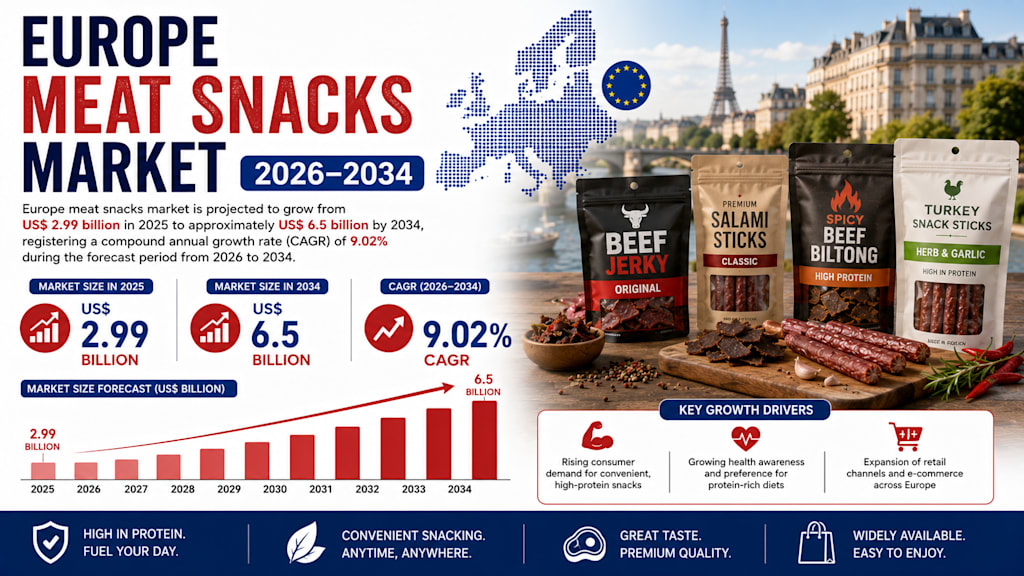
The Europe meat snacks market is witnessing rapid expansion as consumers increasingly seek convenient, protein-rich food options that align with modern lifestyles and evolving dietary habits. Once considered a niche category dominated by traditional cured meats, meat snacks are now becoming mainstream across Europe’s broader healthy snacking movement.
According to Renub Research, the Europe meat snacks market is projected to grow from US$2.99 billion in 2025 to approximately US$6.5 billion by 2034, registering a strong compound annual growth rate (CAGR) of 9.02% between 2026 and 2034.
The market’s impressive growth is being fueled by rising demand for high-protein snacks, growing preference for on-the-go food consumption, and continuous innovation in premium, organic, and even plant-based meat snack products. As European consumers continue prioritizing convenience without sacrificing nutrition, meat snacks are becoming one of the fastest-growing categories within the packaged foods sector.
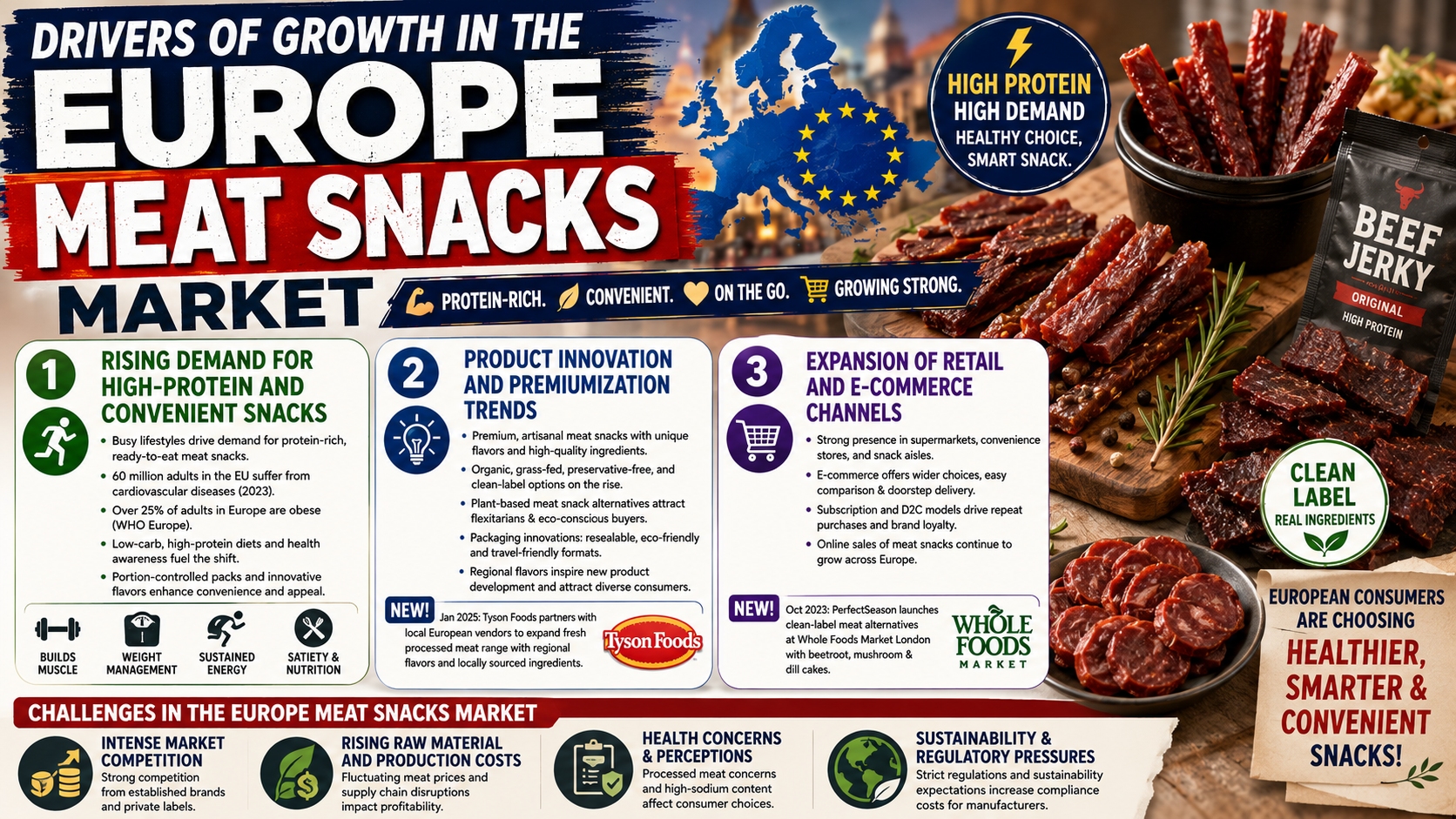
High-Protein Diet Trends Are Driving Consumer Demand
One of the strongest growth drivers behind Europe’s meat snacks market is the increasing popularity of high-protein diets and fitness-focused lifestyles.
Consumers are becoming more conscious about the nutritional value of their snacks and are increasingly shifting away from traditional carbohydrate-heavy products toward protein-rich alternatives. Meat snacks such as jerky, dried meat strips, sausages, and meat sticks provide a portable and satisfying source of protein while supporting satiety and energy levels.
The market is benefiting from several broader lifestyle trends, including:
- Fitness and gym culture growth
- Weight management awareness
- Low-carb and keto diets
- Increased focus on muscle health
- Demand for nutrient-dense snacks
As busy lifestyles continue expanding across Europe, consumers increasingly prefer ready-to-eat snacks that require minimal preparation while delivering nutritional benefits.
According to the report, health awareness across Europe is also accelerating demand for healthier snack options. In 2023, the European Union reported that approximately 60 million adults suffer from cardiovascular diseases, while obesity affects more than 25% of adults across the WHO European region.
These health concerns are encouraging consumers to seek protein-rich snacks with lower sugar and improved nutritional profiles.
Europe’s Culinary Traditions Continue Supporting Market Growth
Europe’s long history of cured and preserved meat consumption provides a strong cultural foundation for the meat snacks industry.
Countries such as Spain, Italy, Germany, and France already have deeply rooted traditions involving products like:
- Chorizo
- Salami
- Air-dried beef
- Ham sausages
- Smoked meats
- Jerky-style snacks
This cultural familiarity gives meat snacks a natural advantage within European food habits.
At the same time, modern product innovation is helping transform traditional meat products into convenient snack formats designed for today’s fast-paced lifestyles.
Manufacturers are increasingly introducing smaller, resealable, portion-controlled packages aimed at commuters, office workers, travelers, and fitness-conscious consumers.
Product Innovation and Premiumization Are Reshaping the Industry
Continuous innovation is becoming one of the most important competitive strategies within the Europe meat snacks market.
Manufacturers are aggressively expanding product portfolios through:
- Gourmet flavor combinations
- Organic meat snacks
- Grass-fed meat sourcing
- Preservative-free products
- Clean-label formulations
- Low-fat snack options
- Plant-based meat alternatives
- Premiumization is especially important as consumers become more willing to pay higher prices for products perceived as healthier, artisanal, or ethically sourced.
Brands are also experimenting with international flavors inspired by Mediterranean, Asian, and regional European cuisines to attract younger consumers seeking variety and culinary experiences.
In January 2025, Tyson Foods partnered with local European vendors to expand its fresh processed meat offerings focused on regional flavor profiles and locally sourced ingredients.
Innovation is no longer limited to flavor alone. Packaging improvements such as resealable pouches and eco-friendly materials are also helping brands improve convenience and sustainability appeal.
E-Commerce and Modern Retail Are Expanding Accessibility
The rapid expansion of organized retail and e-commerce platforms is significantly contributing to market growth.
Supermarkets, hypermarkets, convenience stores, and online marketplaces now offer consumers access to a much wider variety of meat snack products than ever before.
Online shopping platforms are particularly important because they allow consumers to:
- Compare nutritional information
- Explore premium and niche brands
- Access subscription snack services
- Discover new flavors and formats
- Read product reviews before purchasing
The growth of direct-to-consumer snack brands is also intensifying competition while improving product visibility across Europe.
In October 2023, Danish company PerfectSeason introduced clean-label meat alternatives through Whole Foods Market locations in London.
This reflects how both traditional meat snacks and alternative protein products are increasingly sharing retail shelf space.
Health Concerns Continue Challenging Traditional Meat Snacks
Despite rapid market expansion, the industry faces growing scrutiny regarding the health implications of processed meat consumption.
Many traditional meat snacks contain:
- High sodium levels
- Saturated fats
- Preservatives
- Artificial additives
These concerns are influencing purchasing behavior among health-conscious consumers.
European food regulations surrounding additives, labeling, and nutritional standards also remain strict, creating compliance challenges for manufacturers.
To respond to these concerns, companies are increasingly reformulating products to include:
- Reduced sodium content
- Natural preservatives
- Clean-label ingredients
- Organic certifications
- Lower-fat formulations
Balancing taste, shelf life, and nutritional improvements remains one of the industry’s biggest ongoing challenges.
Plant-Based Snacks Are Creating Strong Competitive Pressure
Another major challenge for the meat snacks market is the growing popularity of plant-based and alternative protein snacks.
Increasing numbers of European consumers are adopting:
- Vegetarian diets
- Vegan lifestyles
- Flexitarian eating habits
This shift is creating strong competition from plant-based protein snacks such as legume-based products, nut bars, and meat-free jerky alternatives.
Plant-based meat snacks that replicate the texture and flavor of traditional products are becoming especially popular among environmentally conscious consumers.
As a result, many traditional meat snack companies are diversifying product portfolios to include hybrid or alternative protein offerings.
Jerky Remains One of the Fastest-Growing Categories
Jerky continues to dominate the European meat snacks market because of its portability, long shelf life, and high protein content.
While beef jerky remains highly popular, manufacturers are increasingly introducing alternatives such as:
- Turkey jerky
- Pork jerky
- Plant-based jerky
- Exotic flavor combinations
Consumers are especially attracted to jerky products because they align closely with modern fitness and convenience trends.
Flavor innovation, including smoked paprika, teriyaki, and Mediterranean-inspired seasonings, is helping brands appeal to broader consumer groups.
Ham Sausage Snacks Continue Benefiting From European Traditions
Ham sausage snacks remain deeply embedded within several European food cultures, particularly in Spain and Germany.
Dry-cured and smoked sausage products continue seeing strong demand because of their:
- Rich flavor profiles
- High protein content
- Cultural familiarity
- Convenient snack formats
Manufacturers are increasingly introducing reduced-sodium and preservative-free sausage snacks to address evolving health expectations.
Organic Meat Snacks Are Gaining Premium Appeal
The organic meat snacks segment is emerging as one of the most premium categories within the market.
Consumers increasingly prefer products made from:
- Grass-fed meat
- Hormone-free livestock
- Antibiotic-free production systems
- Sustainably sourced ingredients
Strict European organic certification standards further strengthen consumer trust in these products.
Although organic meat snacks are generally more expensive, health-conscious consumers continue showing willingness to pay premium prices for perceived quality and sustainability benefits.
Convenience Stores and Grocery Retailers Remain Critical Distribution Channels
Convenience stores continue playing a major role in Europe’s meat snacks market because they cater directly to impulse purchases and on-the-go consumers.
Single-serve snack packs are especially popular in high-traffic urban locations and transportation hubs.
Meanwhile, supermarkets and grocery retailers remain the largest distribution channels because they provide consumers with extensive product selections, including organic, premium, and private-label options.
Retailers are increasingly using promotional displays, discounts, and dedicated snack aisles to drive category growth.
France, Germany, the UK, and Spain Lead Regional Demand
France
France’s market continues benefiting from strong demand for gourmet and artisanal charcuterie-style meat snacks. Consumers increasingly favor products with natural ingredients and healthier nutritional profiles.
Germany
Germany remains one of Europe’s strongest meat snack markets due to its deep-rooted meat consumption culture and rising interest in fitness-focused protein products.
United Kingdom
The UK market is expanding rapidly because of growing adoption of keto and paleo diets alongside rising demand for convenient high-protein snacks.
Spain
Spain continues benefiting from its strong tradition of cured meats such as chorizo and jamón while also embracing innovation in snack-sized packaging and alternative proteins.
Major Companies Intensify Market Competition
Competition within the Europe meat snacks market is becoming increasingly intense as brands focus on innovation, premiumization, and healthier formulations.
Leading companies include:
- Meatsnacks Group
- Cremonini
- Jack Link's
- Danish Crown
- Kerry Group
- Campofrio Food Group
- Espuña
- Bell Food Group
Manufacturers are increasingly investing in flavor development, clean-label products, sustainable sourcing, and alternative protein innovations to remain competitive.
Final Thoughts
The Europe meat snacks market is rapidly evolving as consumers seek convenient, protein-rich foods that align with healthier and more active lifestyles.
With the market projected to reach approximately US$6.5 billion by 2034, meat snacks are expected to remain one of the fastest-growing categories within Europe’s packaged snack industry.
However, long-term success will depend on how effectively manufacturers address health concerns, sustainability expectations, and increasing competition from plant-based alternatives.
As high-protein diets, convenience-driven consumption, and premium food experiences continue gaining popularity across Europe, meat snacks are likely to remain a central part
About the Creator
Enjoyed the story? Support the Creator.
Subscribe for free to receive all their stories in your feed.
Comments
There are no comments for this story
Be the first to respond and start the conversation.