
Europe Meal Replacement Products Market: Why Are More Europeans Replacing Traditional Meals with Convenient Nutrition Solutions
Rising health awareness, busy lifestyles, increasing demand for weight management products, and continuous innovation in functional nutrition are driving strong growth in the Europe meal replacement products market through 2034.

The way Europeans approach nutrition is changing rapidly. Modern consumers are increasingly seeking food options that combine convenience, balanced nutrition, and health benefits without requiring extensive preparation time. As work schedules become more demanding and lifestyles increasingly fast-paced, meal replacement products have emerged as a practical solution for individuals striving to maintain healthy eating habits while managing busy routines.
Meal replacement products have evolved far beyond simple diet shakes. Today's offerings include ready-to-drink beverages, nutritional bars, powdered supplements, and functional nutrition products formulated to deliver balanced levels of protein, carbohydrates, vitamins, minerals, and dietary fiber. These products appeal to consumers focused on weight management, fitness, wellness, and convenience.
At the same time, increasing awareness of obesity, lifestyle-related diseases, and preventive healthcare has encouraged many consumers to make more conscious dietary choices. This shift is creating significant growth opportunities for manufacturers throughout Europe.
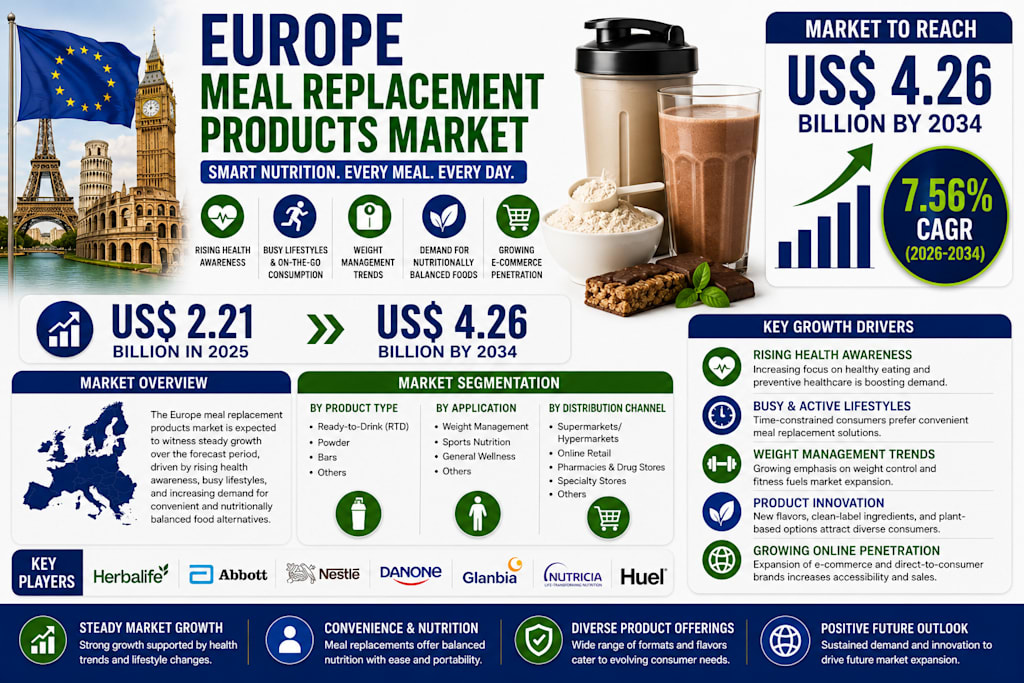
According to Renub Research, the Europe Meal Replacement Products Market is projected to grow from US$ 2.21 billion in 2025 to US$ 4.26 billion by 2034, registering a CAGR of 7.56% from 2026 to 2034. Rising health awareness, urbanization, changing dietary habits, and growing demand for convenient nutrition solutions are expected to drive strong market expansion during the forecast period.
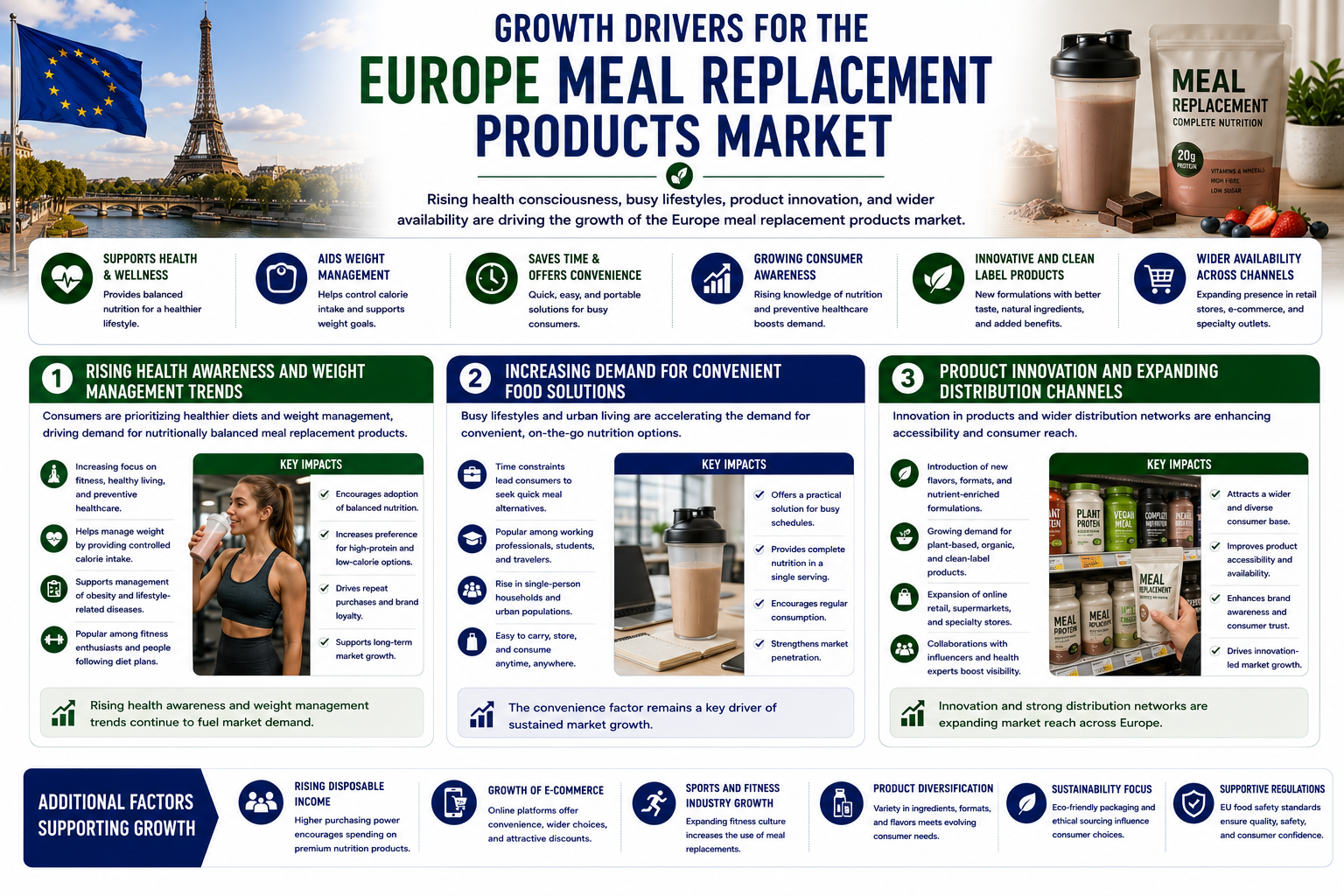
Meal Replacement Products Are Becoming Mainstream
Meal replacement products are designed to provide balanced nutrition in a convenient and easy-to-consume format.
These products typically contain a combination of proteins, carbohydrates, healthy fats, vitamins, minerals, and fiber intended to replace one or more daily meals. Popular formats include ready-to-drink shakes, nutritional bars, powdered meal replacement mixes, and functional beverages.
Initially popular among athletes and individuals pursuing weight-loss programs, meal replacements have gradually entered mainstream consumption. Today, consumers use them for a variety of reasons, including weight management, improved dietary control, convenience, fitness support, and general wellness.
The increasing versatility of these products has broadened their appeal across multiple demographic groups, making meal replacements one of the fastest-growing segments within Europe's nutrition and wellness industry.
Health Awareness Continues to Drive Market Growth
One of the most important growth drivers in the Europe meal replacement products market is rising health consciousness.
Consumers are becoming increasingly aware of the relationship between nutrition and long-term health outcomes. Growing concerns regarding obesity, diabetes, cardiovascular diseases, and other lifestyle-related conditions have encouraged individuals to pay closer attention to dietary habits.
Meal replacement products provide a convenient way to control calorie intake while ensuring balanced nutrition. Their carefully formulated nutritional profiles make them attractive options for consumers seeking healthier eating patterns.
Many individuals use meal replacements as part of structured wellness programs, fitness regimens, and weight management strategies.
As preventive healthcare becomes increasingly important across Europe, demand for nutritionally balanced meal alternatives is expected to continue rising.
Weight Management Remains a Key Demand Driver
Weight management continues to be one of the primary reasons consumers purchase meal replacement products.
Many Europeans are actively seeking practical solutions that help manage calorie intake without sacrificing nutritional quality. Meal replacements offer portion-controlled servings that simplify dietary planning and reduce the likelihood of overeating.
Unlike traditional dieting approaches that may involve complex meal preparation and calorie tracking, meal replacement products provide a convenient and predictable nutritional solution.
Fitness enthusiasts, health-conscious consumers, and individuals pursuing weight-loss goals frequently incorporate these products into daily routines.
The growing prevalence of obesity and weight-related health concerns across Europe is expected to sustain strong demand for meal replacement solutions in the years ahead.
Busy Lifestyles Are Increasing Demand for Convenience
Modern lifestyles have significantly influenced consumer food choices.
Working professionals, students, commuters, and urban residents often face time constraints that make preparing traditional meals difficult. Meal replacement products provide a practical alternative that delivers balanced nutrition while saving time.
Ready-to-drink beverages, nutritional bars, and powdered supplements are particularly attractive because they can be consumed quickly and conveniently without extensive preparation.
The rise of remote work, flexible employment models, and increasingly mobile lifestyles has further reinforced demand for portable nutrition solutions.
As consumers continue prioritizing convenience alongside health, meal replacement products are becoming an integral part of modern dietary habits.
Fitness and Wellness Trends Continue to Expand the Market
Europe's growing fitness culture has created significant opportunities for meal replacement manufacturers.
Consumers participating in gym workouts, endurance sports, recreational fitness activities, and wellness programs increasingly seek nutritional products that support active lifestyles.
Meal replacements offer a convenient source of protein, vitamins, and essential nutrients that help support fitness goals and recovery needs.
The integration of meal replacement products into sports nutrition routines has expanded their relevance beyond traditional weight management applications.
Fitness influencers, personal trainers, and wellness professionals frequently recommend meal replacements as part of balanced nutrition strategies, contributing to greater consumer awareness and adoption.
As interest in fitness and wellness continues growing, demand for meal replacement products is expected to strengthen further.
Product Innovation Is Transforming Consumer Perceptions
Innovation remains one of the most powerful forces driving growth within the Europe meal replacement products market.
Manufacturers are continuously introducing new products designed to improve taste, texture, nutritional value, and consumer appeal.
Plant-based meal replacements have gained particular momentum as consumers increasingly seek sustainable and vegan-friendly alternatives. Organic, clean-label, and allergen-free formulations are also becoming increasingly popular.
The inclusion of functional ingredients such as proteins, vitamins, minerals, probiotics, fiber, and botanical extracts has enhanced the nutritional profile of meal replacement products.
Manufacturers are also focusing on improving flavor options and sensory experiences to attract a broader audience.
These innovations are helping shift consumer perceptions by positioning meal replacements as premium nutritional products rather than merely diet aids.
Plant-Based Nutrition Creates New Growth Opportunities
The growing popularity of plant-based diets is significantly influencing the meal replacement industry.
Consumers increasingly seek products that align with environmental sustainability, ethical consumption, and dietary preferences. As a result, manufacturers are expanding plant-based product portfolios using ingredients such as pea protein, soy protein, oat-based formulations, and other plant-derived nutrients.
Plant-based meal replacements appeal not only to vegans and vegetarians but also to flexitarian consumers seeking greater dietary diversity.
The combination of sustainability, nutrition, and convenience makes plant-based meal replacements one of the fastest-growing segments within the market.
This trend is expected to continue shaping product development and market strategies throughout the forecast period.
E-Commerce Is Expanding Market Accessibility
The rapid growth of e-commerce has significantly improved access to meal replacement products across Europe.
Consumers increasingly prefer purchasing health and nutrition products online because of convenience, broader product selections, and access to detailed nutritional information.
Online platforms allow consumers to compare products, read reviews, and subscribe to recurring delivery services.
Manufacturers benefit from direct-to-consumer sales models that strengthen customer relationships and improve brand visibility.
The continued expansion of digital retail channels is expected to play a major role in supporting market growth and consumer engagement.
Expanding Retail Networks Support Market Growth
Traditional retail channels remain highly important within the meal replacement products market.
Supermarkets, hypermarkets, convenience stores, specialty nutrition retailers, and pharmacies continue expanding their health and wellness product offerings.
Improved shelf visibility and increased product variety have made meal replacements more accessible to mainstream consumers.
Strategic placement within stores and promotional activities help drive product awareness and trial purchases.
The combination of online and offline distribution channels ensures broad market reach and continued growth opportunities for manufacturers.
Consumer Skepticism Remains a Challenge
Despite growing popularity, meal replacement products continue to face certain challenges.
One of the most significant obstacles involves consumer skepticism regarding processed and packaged foods. Some consumers remain concerned about artificial ingredients, preservatives, and the long-term health implications of relying on meal replacements.
Many Europeans continue to prefer fresh, home-cooked meals and may view meal replacements as inferior alternatives to traditional foods.
Manufacturers must address these concerns through transparency, clean-label formulations, and consumer education initiatives that emphasize nutritional quality and safety.
Building trust remains essential for achieving broader market acceptance.
Regulatory and Pricing Pressures Affect Market Dynamics
The European meal replacement products market operates within a highly regulated environment.
Manufacturers must comply with strict requirements regarding food safety, labeling, nutritional claims, and ingredient standards. Compliance with these regulations can increase operational complexity and development costs.
Pricing also represents a challenge, particularly in price-sensitive markets. Meal replacement products are often more expensive than conventional meal options, limiting affordability for some consumers.
Companies must carefully balance quality, compliance, and pricing strategies to remain competitive while maintaining profitability.
Germany Meal Replacement Products Market
Germany represents one of Europe's leading markets for meal replacement products.
Strong health awareness, an established fitness culture, and widespread acceptance of functional nutrition products contribute to robust demand. Consumers increasingly seek protein-rich, plant-based, and nutritionally balanced products that support wellness goals.
Advanced retail infrastructure and a thriving e-commerce sector further support market growth across the country.
France Meal Replacement Products Market
France's market is driven by growing health consciousness and increasing interest in weight management solutions.
Urban consumers and working professionals are gradually incorporating meal replacements into balanced dietary routines. Demand for organic and clean-label products continues to rise as consumers prioritize ingredient quality and transparency.
While traditional culinary culture remains influential, convenience and wellness trends are creating new growth opportunities.
Italy Meal Replacement Products Market
Italy's market continues expanding as younger consumers and busy professionals seek convenient nutrition solutions.
Although traditional dietary habits remain strong, increasing awareness of health and fitness is encouraging greater adoption of meal replacement products.
Manufacturers are introducing products featuring natural ingredients and improved taste profiles to better align with local preferences.
Spain Meal Replacement Products Market
Spain is experiencing steady growth driven by rising health awareness and increasing participation in fitness activities.
Consumers are becoming more receptive to meal replacements as practical solutions for weight management and nutritional support.
The growing availability of plant-based and organic options is further expanding consumer interest throughout the Spanish market.
Recent Industry Developments Highlight Innovation
The meal replacement products industry continues to evolve through innovation and strategic product launches.
In September 2025, Dozz introduced a chilled, ready-to-eat soup packaged in a fully recyclable aluminum container, targeting health-conscious consumers seeking convenient meal solutions.
In July 2025, Arla Protein launched a ready-to-drink protein milkshake containing 20 grams of protein, no added sugar, and fewer than 182 calories per serving.
Earlier, in April 2025, German wellness company More Nutrition expanded into the UK market with a range of protein bars, protein iced coffees, flavored powders, and other functional nutrition products.
These developments demonstrate the industry's focus on convenience, health, and product differentiation.
Future Outlook
The future of the Europe meal replacement products market appears highly promising.
Rising health awareness, growing demand for weight management solutions, increasing adoption of functional nutrition, and expanding distribution networks are expected to drive continued growth through 2034.
Manufacturers that prioritize nutritional quality, convenience, transparency, and product innovation will be best positioned to capitalize on evolving consumer preferences.
As preventive healthcare and wellness continue gaining importance, meal replacement products are expected to play an increasingly significant role in European nutrition habits.
Final Thoughts
The Europe meal replacement products market is transforming from a niche weight-management category into a mainstream nutrition solution. Driven by changing lifestyles, growing health consciousness, and continuous innovation, meal replacements are becoming an attractive option for consumers seeking convenience without compromising nutritional value.
With the market projected to grow from US$ 2.21 billion in 2025 to US$ 4.26 billion by 2034, substantial opportunities exist for manufacturers, retailers, nutrition brands, and investors. Companies that successfully balance taste, nutrition, convenience, and transparency will be best positioned to thrive in Europe's rapidly evolving meal replacement products market.
About the Creator
Enjoyed the story? Support the Creator.
Subscribe for free to receive all their stories in your feed.
Comments
There are no comments for this story
Be the first to respond and start the conversation.