
Europe Luxury Hotel Market Thrives as Experiential Travel and High-Net-Worth Tourism Surge
Fueled by rising international tourism, premium travel experiences, and growing spending by affluent travelers, the Europe luxury hotel market is projected to grow from US$ 31.32 billion in 2025 to US$ 66.03 billion by 2034, at a CAGR of 8.64% from 2026 to 2034.

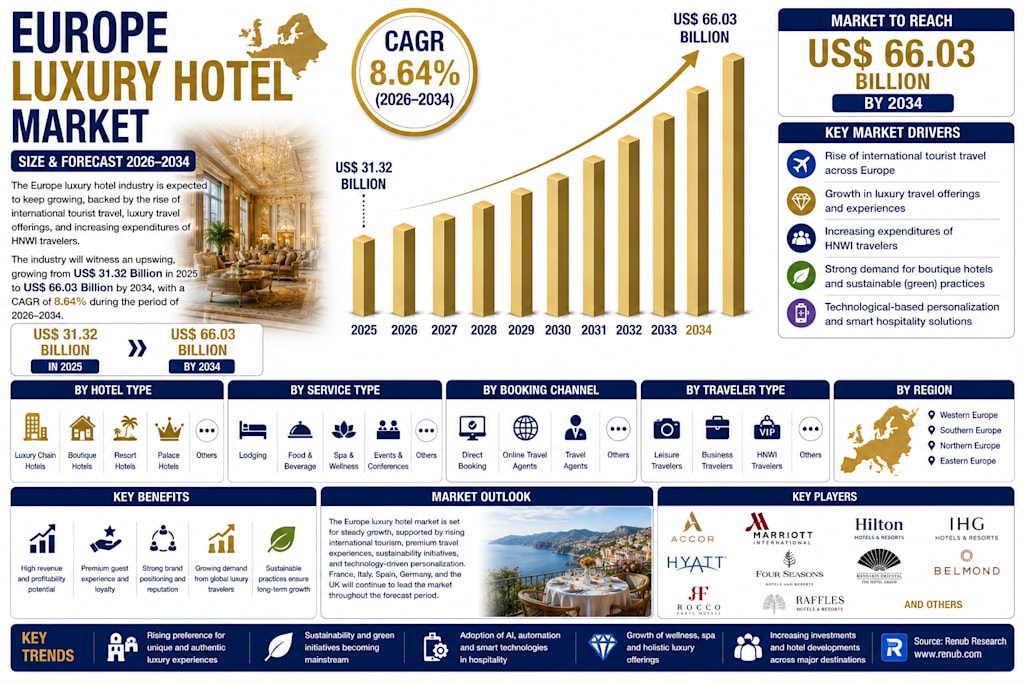
The Europe luxury hotel market is experiencing strong and sustained growth, driven by the region’s global appeal as a premier travel destination and the increasing demand for high-end, personalized travel experiences. With a rich blend of history, culture, architecture, and gastronomy, Europe continues to attract millions of international visitors seeking both comfort and exclusivity.
According to Renub Research, the market is expected to expand from US$ 31.32 billion in 2025 to US$ 66.03 billion by 2034, reflecting a compound annual growth rate (CAGR) of 8.64% during the forecast period. This growth underscores the resilience and evolution of the luxury hospitality sector in Europe.
Luxury hotels in Europe are known for offering premium services, elegant interiors, world-class dining, wellness facilities, and personalized guest experiences. Many properties are located in historic landmarks or heritage buildings, blending traditional charm with modern sophistication. This unique positioning has made Europe a hub for luxury travel, attracting high-spending tourists from across the globe.
Rising International Tourism and High-Net-Worth Travelers
Europe remains one of the world’s most popular travel destinations, benefiting from strong international tourism flows and a growing population of high-net-worth individuals (HNWIs). Cities such as Paris, London, Rome, and Barcelona continue to attract luxury travelers seeking cultural experiences, fine dining, and exclusive accommodations.
In 2025, tourist accommodation nights in the European Union reached over 3 billion, highlighting the region’s strong tourism activity. The steady increase in affluent travelers, including ultra-high-net-worth millennials, is driving demand for luxury hotels that offer privacy, exclusivity, and premium services.
Europe’s well-developed infrastructure, connectivity, and accessibility further enhance its appeal. Despite challenges such as rising travel costs and environmental factors, the market has demonstrated resilience, with continued growth in international arrivals and overnight stays.
Experiential and Personalized Travel Transforming Hospitality
Modern luxury travelers are increasingly seeking experiences rather than just accommodation. This shift is driving the evolution of luxury hotels in Europe, where personalized services and unique experiences are becoming key differentiators.
Hotels are offering curated experiences such as vineyard stays, wellness retreats, cultural tours, and gourmet dining experiences. Advanced technologies, including AI-driven personalization and smart room features, are enhancing guest experiences by tailoring services to individual preferences.
This focus on experiential travel allows hotels to command premium pricing and build long-term customer loyalty. The integration of local culture, cuisine, and heritage into hotel offerings further enriches the travel experience, making Europe a leading destination for luxury tourism.
Expansion of Luxury Brands and Sustainable Hospitality
The expansion of international luxury hotel brands is another major driver of market growth. Leading hotel chains are investing heavily in new properties, renovations, and brand expansions across Europe’s major cities and resort destinations.
At the same time, sustainability is emerging as a key trend in the luxury hospitality sector. Eco-conscious travelers are increasingly seeking hotels that adopt green practices, such as energy-efficient operations, sustainable sourcing, and community engagement.
Luxury hotels are responding by incorporating environmentally friendly designs, offering sustainable dining options, and promoting responsible tourism practices. This alignment with sustainability trends is enhancing the appeal of luxury hotels among modern travelers.
Recent developments, such as the expansion of luxury hotel collections and the entry of premium brands into the European market, highlight the ongoing evolution and competitiveness of the industry.
Challenges: High Costs and Economic Uncertainty
Despite its strong growth, the Europe luxury hotel market faces several challenges. High operational and development costs are among the most significant barriers. Luxury hotels require substantial investment in prime locations, high-end design, and premium services.
Operational expenses, including staffing, maintenance, and energy consumption, are also high. Additionally, strict regulatory requirements and environmental standards in many European countries increase the complexity and cost of hotel development.
Economic uncertainty is another concern. Factors such as inflation, exchange rate fluctuations, and changes in consumer spending can impact demand for luxury travel. Since luxury hospitality relies on discretionary spending, it is particularly sensitive to economic downturns.
Seasonal demand fluctuations also affect occupancy rates, with peak travel periods in summer and lower demand during off-peak seasons. Managing these fluctuations is essential for maintaining profitability.
Segment Insights: Diverse Luxury Offerings
The Europe luxury hotel market is highly diversified, catering to different traveler segments and preferences.
Chain Luxury Hotels
Global hotel chains provide consistent quality, strong brand recognition, and extensive loyalty programs. They are expanding their presence across Europe, blending global standards with local cultural elements.
Business Luxury Hotels
Located in major cities, these hotels cater to corporate travelers with advanced facilities such as conference rooms, executive lounges, and high-speed connectivity.
Holiday and Resort Hotels
Luxury holiday hotels and resorts are popular in destinations such as the French Riviera, Amalfi Coast, and Swiss Alps. These properties focus on leisure experiences, wellness, and personalized services.
Upper-Upscale Hotels
This segment offers high-quality services at relatively accessible prices, appealing to affluent travelers seeking value-oriented luxury experiences.
Direct Booking and Travel Agents
While digital booking platforms are growing, luxury travel agents remain important for high-net-worth individuals seeking personalized travel planning and exclusive access to premium accommodations.
These segments highlight the versatility and adaptability of the European luxury hotel market in meeting diverse customer needs.
Regional Insights: Key Countries Driving Growth
The United Kingdom is a major market, with London serving as a global hub for luxury hospitality. The country’s rich cultural heritage and strong business travel sector support demand.
France leads in luxury tourism, with Paris and the French Riviera attracting high-end travelers. The country’s reputation for fashion, cuisine, and culture enhances its appeal.
Italy’s luxury hotel market is driven by its historical cities and scenic destinations, including the Amalfi Coast and Lake Como. Spain also plays a significant role, with its vibrant cities and coastal resorts attracting luxury tourists.
These countries collectively drive the growth of the European luxury hotel market, supported by strong tourism infrastructure and global appeal.
Competitive Landscape and Key Players
The Europe luxury hotel market is highly competitive, with major global and regional players continuously expanding their presence. Key companies include Accor, Marriott International, Hilton Worldwide, Hyatt Corporation, and Melia International.
These companies are focusing on innovation, sustainability, and personalized services to differentiate themselves in a competitive market. Investments in technology, brand expansion, and customer experience are shaping the future of the industry.
Strategic partnerships, acquisitions, and new property developments are further strengthening the competitive landscape and driving market growth.
Final Thoughts
The Europe luxury hotel market is evolving rapidly, driven by changing traveler preferences, technological advancements, and a growing emphasis on sustainability and personalized experiences.
Renub Research’s forecast of US$ 66.03 billion by 2034 highlights the market’s strong growth potential and resilience.
While challenges such as high costs and economic uncertainty remain, the sector’s ability to adapt and innovate ensures its continued expansion.
Ultimately, Europe’s luxury hotel market represents a dynamic and sophisticated segment of the global hospitality industry, offering unparalleled experiences that continue to attract travelers from around the world.
About the Creator
Enjoyed the story? Support the Creator.
Subscribe for free to receive all their stories in your feed.
Comments
There are no comments for this story
Be the first to respond and start the conversation.