
Europe Juices Market: Why Are Healthy Beverage Choices Transforming the Future of Europe’s Juice Industry?
Rising health awareness, growing demand for organic and functional beverages, expanding retail channels, and continuous product innovation are driving strong growth in the Europe juices market through 2034.

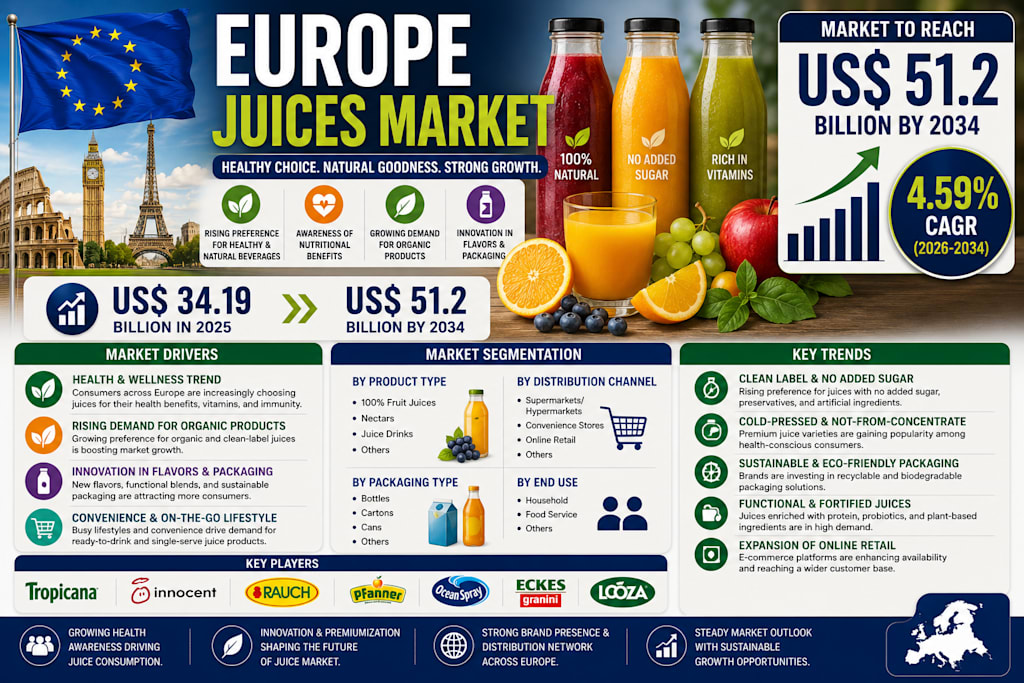
Across Europe, consumers are becoming increasingly mindful of what they eat and drink. As awareness of nutrition, wellness, and preventive healthcare continues to rise, many individuals are moving away from sugary carbonated beverages and seeking healthier alternatives. Among the categories benefiting most from this shift is the juice market.
Fruit and vegetable juices have long been popular for their refreshing taste and nutritional value. However, today's consumers expect much more than simple refreshment. They increasingly seek products that offer functional benefits, clean-label ingredients, organic sourcing, and sustainable packaging. As a result, the European juice industry is undergoing a significant transformation.
Manufacturers are responding by introducing innovative formulations, premium products, and health-focused ingredients designed to meet changing consumer expectations. These developments are helping create new growth opportunities across the region.
According to Renub Research, the Europe Juices Market is expected to grow from US$ 34.19 billion in 2025 to US$ 51.2 billion by 2034, expanding at a CAGR of 4.59% from 2026 to 2034. Rising consumer preference for healthy and natural beverages, increasing awareness regarding nutritional benefits, growing demand for organic products, and continuous innovation in flavors and packaging are expected to support market growth throughout the forecast period.

Understanding the Modern Juice Industry
Juices are beverages extracted from fruits and vegetables that provide essential vitamins, minerals, antioxidants, and other nutrients beneficial to human health.
They are available in numerous forms, including freshly squeezed juices, packaged juices, concentrate-based products, cold-pressed beverages, and functional juice blends.
Consumers increasingly choose juices because they offer convenience while delivering nutritional benefits that support hydration, immunity, digestion, and overall wellness.
The category has evolved considerably over the past decade. Modern juice products often incorporate functional ingredients such as probiotics, plant extracts, vitamins, minerals, and superfoods designed to provide targeted health benefits.
As consumers continue prioritizing healthier lifestyles, juices have become an increasingly attractive alternative to traditional soft drinks and sugar-laden beverages.
Health Awareness Is Driving Consumer Demand
One of the strongest growth drivers within the European juice market is increasing health consciousness.
Consumers across Europe are paying greater attention to nutrition and making deliberate efforts to improve dietary habits. This trend has encouraged many individuals to replace carbonated soft drinks with beverages perceived as more natural and nutritious.
Juices rich in vitamins, antioxidants, and minerals are particularly appealing because they support immune health, digestion, hydration, and overall well-being.
The growing popularity of fitness culture, wellness programs, and preventive healthcare initiatives has further strengthened demand for fruit and vegetable juices.
Consumers increasingly view juice consumption as part of a broader commitment to healthy living, making health-focused products one of the most attractive segments within the beverage industry.
Functional Juices Are Becoming Mainstream
The emergence of functional beverages represents one of the most important trends shaping the future of the market.
Consumers increasingly seek products that deliver benefits beyond basic nutrition. Functional juices enriched with probiotics, prebiotics, vitamins, minerals, antioxidants, and plant-based ingredients are gaining widespread popularity.
These products appeal to consumers looking to support immunity, digestive health, energy levels, mental well-being, and athletic performance.
Manufacturers continue introducing innovative formulations that address specific health needs while maintaining appealing taste profiles.
As consumers become more proactive in managing their health, functional juices are expected to play an increasingly important role within the European beverage landscape.
Organic Products Continue Gaining Popularity
Demand for organic juices continues to rise across Europe.
Consumers increasingly prefer products made without synthetic pesticides, artificial additives, or genetically modified ingredients. Organic certifications provide reassurance regarding quality, transparency, and environmental responsibility.
Health-conscious buyers often associate organic juices with superior nutritional value and cleaner ingredient profiles.
At the same time, sustainability concerns encourage consumers to support farming practices that promote biodiversity and environmental protection.
Manufacturers are responding by expanding organic product portfolios and investing in certified supply chains that meet growing consumer expectations.
The organic segment remains one of the most promising opportunities within the broader juice market.
Product Innovation Continues to Fuel Market Expansion
Innovation remains a critical factor supporting growth throughout the European juice industry.
Manufacturers continually introduce new flavors, exotic fruit blends, vegetable combinations, and functional ingredients designed to differentiate products and attract consumers.
Premiumization has emerged as another important trend. Many brands now offer cold-pressed, not-from-concentrate, organic, and specialty juices targeting consumers willing to pay higher prices for perceived quality and nutritional benefits.
Ingredients such as turmeric, ginger, plant proteins, and superfoods are increasingly incorporated into formulations to create unique value propositions.
Seasonal offerings, limited-edition products, and customized beverage experiences further help maintain consumer engagement.
These innovations not only improve product appeal but also create opportunities for higher profit margins and stronger brand loyalty.
Premium Juices Capture Consumer Attention
Premium juice products are becoming increasingly popular among European consumers.
Many buyers are willing to pay more for beverages perceived as healthier, fresher, and more natural. Cold-pressed juices, organic offerings, and not-from-concentrate products have become particularly attractive within this segment.
Premium products often emphasize quality sourcing, minimal processing, clean-label ingredients, and superior taste experiences.
Consumers increasingly associate premium juices with wellness, authenticity, and lifestyle aspirations.
This willingness to invest in higher-quality beverages is encouraging manufacturers to expand premium product portfolios and develop differentiated offerings.
Expansion of Retail Channels Supports Accessibility
The expansion of retail channels has significantly improved consumer access to juice products throughout Europe.
Supermarkets, hypermarkets, convenience stores, specialty food retailers, and online platforms offer extensive product selections that cater to diverse consumer preferences.
Large retail chains have expanded shelf space dedicated to healthy beverages, organic products, and premium juice categories.
The availability of private-label products has also increased affordability and competition, providing consumers with a wider range of choices.
Improved retail accessibility ensures that consumers can conveniently purchase juices across multiple shopping environments, supporting continued market growth.
E-Commerce Is Reshaping Juice Distribution
Online retail has emerged as an increasingly important distribution channel.
Consumers appreciate the convenience of browsing extensive product catalogs, comparing prices, reading reviews, and receiving home deliveries.
Many juice companies have developed direct-to-consumer strategies that enable stronger customer relationships and personalized shopping experiences.
Subscription-based delivery services have become particularly popular among health-conscious consumers who regularly incorporate juices into their daily routines.
Digital marketing, social media engagement, and influencer partnerships further enhance brand visibility and customer acquisition.
The continued growth of e-commerce is expected to contribute significantly to future market expansion.
Sustainability Influences Purchasing Decisions
Environmental concerns increasingly influence consumer behavior throughout Europe.
Many consumers actively seek products packaged in recyclable, reusable, or environmentally friendly materials. As a result, manufacturers are investing heavily in sustainable packaging solutions.
Innovations include recyclable PET bottles, glass containers, plant-based packaging materials, and lightweight transportation solutions designed to reduce environmental impact.
Sustainability initiatives help brands strengthen consumer trust while aligning with broader environmental objectives.
Packaging innovation is becoming an increasingly important competitive differentiator within the juice market.
Health Juice Segment Continues Expanding
Health-focused juice products represent one of the fastest-growing categories within the market.
These beverages often contain ingredients specifically selected to support immunity, digestion, energy, detoxification, and overall wellness.
Consumers increasingly seek convenient nutritional solutions that fit into busy lifestyles without compromising health objectives.
Manufacturers continue developing products that address emerging wellness trends while delivering appealing taste experiences.
The combination of functionality and convenience ensures continued growth within the health juice segment.
Challenges Facing the Europe Juices Market
Growing Concerns Regarding Sugar Content
One of the most significant challenges facing the juice industry is increasing concern about sugar consumption.
Although fruit juices contain naturally occurring sugars, many consumers remain cautious about overall sugar intake due to links with obesity, diabetes, and other health issues.
Government sugar reduction initiatives and evolving nutritional guidelines are placing pressure on manufacturers to reformulate products and improve transparency.
Consumers increasingly seek low-sugar, reduced-sugar, and naturally sweetened alternatives.
Balancing nutritional value, taste, and sugar reduction remains a major challenge for juice producers.
Intense Competition Across Beverage Categories
The European juice market faces intense competition from a wide range of alternative beverages.
Flavored waters, plant-based drinks, sports beverages, functional beverages, kombucha, and ready-to-drink wellness products all compete for consumer attention.
Private-label products offered by major retailers further intensify competition by providing lower-cost alternatives.
Manufacturers must continually innovate, invest in marketing, and differentiate products to maintain relevance and profitability.
This competitive environment creates ongoing pressure throughout the industry.
France Juice Market
France remains one of Europe's most important juice markets.
French consumers place strong emphasis on quality, taste, and natural ingredients. Demand for premium, organic, not-from-concentrate, and cold-pressed juices continues increasing.
Sustainability concerns also influence purchasing behavior, encouraging interest in locally sourced products and environmentally responsible packaging.
Growing demand for low-sugar and functional beverages further supports market development.
Germany Juice Market
Germany represents one of the largest juice markets in Europe.
The country benefits from a strong juice consumption culture, well-developed retail infrastructure, and growing demand for natural and organic beverages.
Apple juice remains particularly popular among German consumers, while interest in fortified and functional products continues rising.
Sustainability and eco-friendly packaging remain important considerations influencing purchasing decisions.
Italy Juice Market
Italy's rich agricultural heritage supports strong demand for fruit-based beverages.
Consumers increasingly prefer natural, locally sourced juices that emphasize authenticity and quality. Citrus-based products remain particularly popular due to the country's abundant fruit production.
Busy lifestyles are also encouraging greater adoption of convenient packaged juice products.
Innovation and premiumization continue driving growth within the Italian market.
Spain Juice Market
Spain benefits from its position as one of Europe's leading fruit-producing nations.
The country's strong citrus industry supports both domestic consumption and export activity. Health-conscious consumers increasingly favor organic, functional, and low-sugar products.
Tourism also contributes to juice demand through hotels, restaurants, and foodservice establishments.
Manufacturers continue introducing innovative products designed to meet evolving consumer preferences.
Future Outlook
The future of the Europe juices market remains highly promising.
Growing health awareness, increasing demand for organic and functional beverages, expanding digital retail channels, and continuous product innovation are expected to support strong market growth through 2034.
Manufacturers that successfully combine nutritional value, clean-label ingredients, sustainability, and innovative product development will be best positioned to capture future opportunities.
As consumers continue prioritizing wellness and healthier lifestyles, juices are expected to remain an important component of Europe's beverage industry.
Final Thoughts
The Europe juices market is undergoing a significant transformation driven by changing consumer preferences, health-conscious lifestyles, and continuous innovation. From premium cold-pressed products to functional wellness beverages, manufacturers are creating solutions that align with modern nutritional expectations.
With the market projected to grow from US$ 34.19 billion in 2025 to US$ 51.2 billion by 2034, substantial opportunities exist for beverage manufacturers, retailers, ingredient suppliers, and health-focused brands. Companies that emphasize quality, functionality, sustainability, and consumer trust will be best positioned to succeed in Europe's evolving juice industry.
About the Creator
Enjoyed the story? Support the Creator.
Subscribe for free to receive all their stories in your feed.
Comments
There are no comments for this story
Be the first to respond and start the conversation.