
Europe Ice Cream Market Outlook 2026–2034: How Premium Flavors, Plant-Based Innovation, and Changing Consumer Preferences Are Reshaping the Industry
Growing demand for premium products, rising popularity of plant-based alternatives, expanding retail distribution, and continuous flavor innovation are driving steady growth in the Europe ice cream market.

Ice cream has long been one of Europe’s most beloved desserts, enjoyed by consumers of all ages across diverse cultures and regions. From traditional Italian gelato and French artisanal creations to British premium tubs and German frozen specialties, ice cream remains deeply embedded in Europe’s culinary traditions.
However, the European ice cream industry is undergoing a remarkable transformation. Modern consumers are no longer satisfied with conventional flavors and standard offerings. Instead, they are increasingly seeking premium experiences, healthier alternatives, sustainable products, and unique flavor combinations that reflect changing lifestyles and evolving dietary preferences.
The rise of veganism, growing awareness of health and wellness, increasing discretionary spending, and continuous product innovation are reshaping the market. Manufacturers are responding by introducing premium ingredients, low-sugar formulations, plant-based alternatives, and environmentally conscious packaging solutions designed to attract modern consumers.
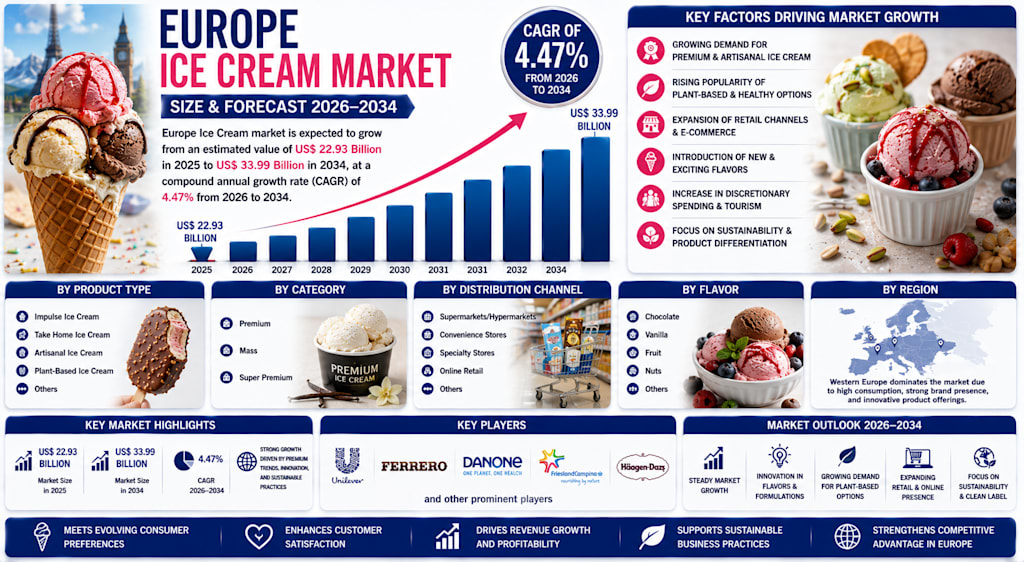
According to Renub Research, the Europe Ice Cream Market is expected to grow from US$ 22.93 Billion in 2025 to US$ 33.99 Billion by 2034, expanding at a Compound Annual Growth Rate (CAGR) of 4.47% from 2026 to 2034. Growing demand for premium, artisanal, and plant-based products, along with retail expansion and exciting flavor innovation, are among the major factors supporting market growth.
As consumer tastes continue evolving, Europe's ice cream industry is expected to remain one of the most innovative and competitive segments within the global food market.
Ice Cream Remains a Cultural Favorite Across Europe
Ice cream is more than just a frozen dessert in Europe. It is an important part of the continent’s food culture and social traditions.
Made primarily from milk, cream, sugar, and flavoring ingredients, ice cream is available in countless varieties ranging from classic vanilla and chocolate to exotic fruit blends and gourmet creations.
Europe's strong dairy heritage has helped establish the region as a global leader in ice cream production and innovation.
Traditional products such as Italian gelato, French glace artisanale, British ice cream, and regional specialties continue attracting consumers throughout the year.
Although sales peak during summer months, ice cream remains a year-round indulgence thanks to strong retail availability and changing consumer habits.
The increasing popularity of premium, organic, low-sugar, and plant-based products further demonstrates the industry's ability to adapt to evolving consumer preferences.
Premium and Artisanal Products Are Driving Market Growth
One of the most significant trends influencing the Europe ice cream market is the growing demand for premium and artisanal products.
Consumers increasingly value quality over quantity and are willing to pay higher prices for products that offer superior ingredients, unique flavors, and authentic production methods.
Artisanal ice cream brands and specialty gelato shops are gaining popularity throughout Europe by emphasizing craftsmanship, natural ingredients, and distinctive taste experiences.
Premium ingredients such as Belgian chocolate, Madagascan vanilla, pistachios, salted caramel, and exotic fruits are becoming increasingly common in new product launches.
Health-conscious consumers are also favoring premium products that contain fewer artificial additives, lower sugar content, and organic ingredients.
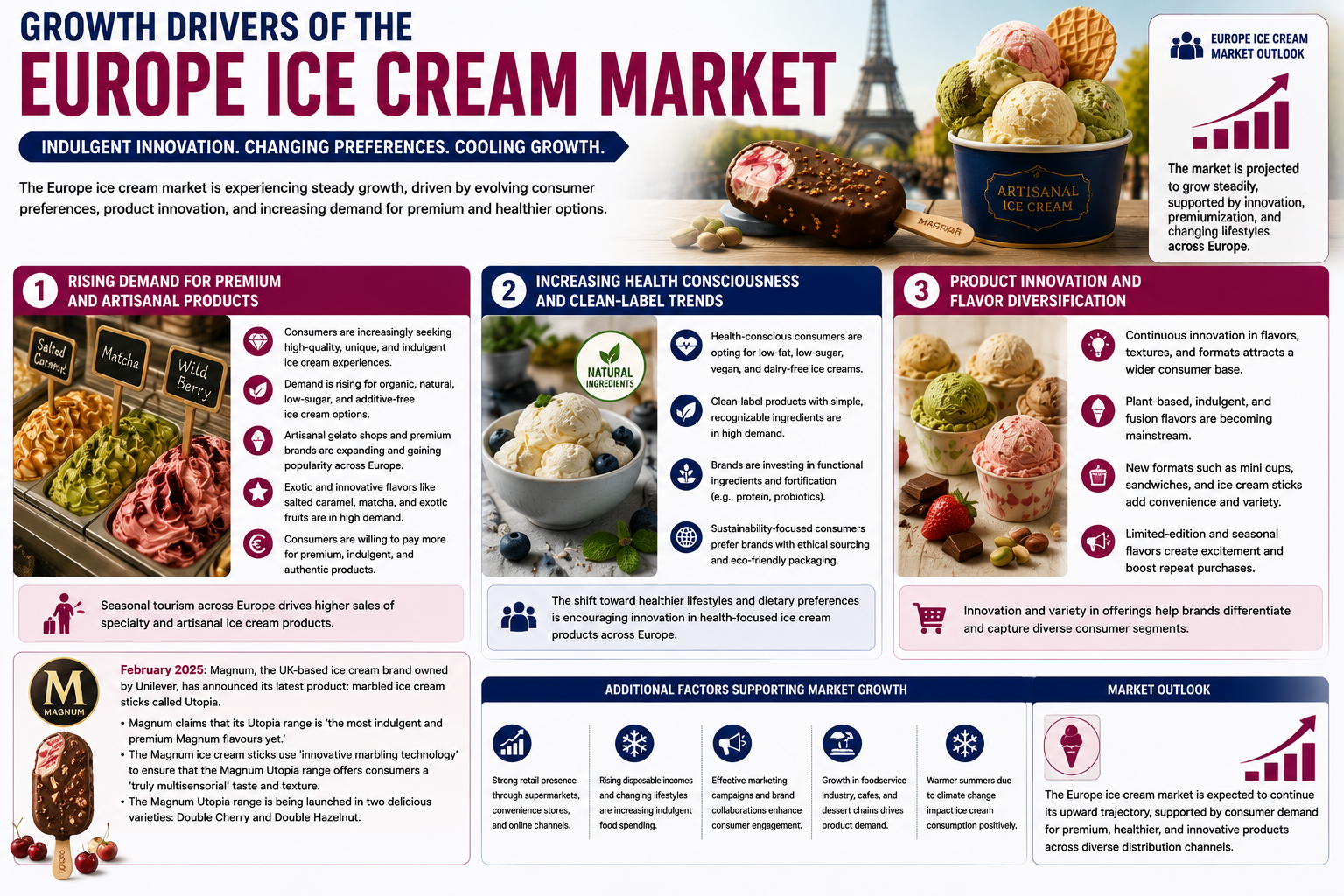
In February 2025, Magnum introduced its Utopia range featuring innovative marbling technology and premium flavors such as Double Cherry and Double Hazelnut, reflecting the growing consumer appetite for indulgent premium experiences.
As consumers continue seeking elevated dessert experiences, premiumization is expected to remain a major growth driver.
Expanding Retail Channels Are Improving Accessibility
The rapid expansion of retail and distribution networks is another important factor contributing to market growth.
Supermarkets, hypermarkets, convenience stores, specialty retailers, and online platforms are making ice cream products more accessible than ever before.
Improved freezer infrastructure allows retailers to offer broader product selections and maintain product quality more effectively.
Private-label offerings from major retailers are also increasing competition while providing consumers with affordable alternatives.
E-commerce and quick-commerce grocery delivery platforms are creating new purchasing opportunities by enabling convenient home delivery of frozen products.
Promotional campaigns, loyalty programs, and bundled offers further stimulate consumer purchases.
The expansion of retail channels is helping manufacturers reach wider audiences while supporting overall market development.
Plant-Based and Health-Conscious Products Continue Expanding
Changing dietary preferences are significantly influencing product development across the European ice cream market.
The growing prevalence of lactose intolerance, vegan lifestyles, and environmental concerns has created strong demand for dairy-free alternatives.
Manufacturers are increasingly introducing products made from almond milk, oat milk, soy milk, coconut milk, and other plant-based ingredients.
Health-conscious consumers are also seeking products with lower sugar content, reduced fat levels, and higher protein content.
These innovations allow consumers to enjoy indulgent desserts while aligning with their nutritional goals and dietary preferences.
In April 2025, Auchan Portugal launched a vegan ice cream made with ripe bananas and coconut milk, incorporating sustainability principles by utilizing bananas that might otherwise have been discarded.
As sustainability and wellness continue influencing purchasing decisions, plant-based ice cream is expected to become an increasingly important segment of the market.
Sustainability Is Becoming a Competitive Advantage
Environmental sustainability has become a key focus area for both consumers and manufacturers.
European consumers are paying closer attention to product sourcing, packaging materials, carbon footprints, and overall environmental impact.
Manufacturers are responding through investments in sustainable production methods, responsible sourcing practices, and eco-friendly packaging solutions.
Many companies are introducing recyclable containers, biodegradable materials, and reduced-plastic packaging initiatives.
Sustainability also extends to ingredient sourcing, with growing interest in organic dairy products and responsibly sourced cocoa, fruits, and nuts.
Brands that successfully combine indulgence with environmental responsibility are increasingly gaining favor among modern consumers.
This trend is expected to continue shaping product development and marketing strategies throughout the forecast period.
Cones and Cups Remain Highly Popular
Cones and cups continue representing one of the most popular packaging formats in the European ice cream market.
Consumers appreciate their portability, convenience, and ease of consumption.
Waffle cones, sugar cones, and premium coated cones provide an additional layer of texture that enhances the overall eating experience.
Cups remain especially popular among families and children because they offer a cleaner and more controlled consumption experience.
Manufacturers continue introducing innovative packaging features such as insulated cups, chocolate-coated cones, textured surfaces, and premium toppings.
The popularity of these formats is supported by their availability across retail stores, convenience outlets, tourist destinations, and foodservice establishments.
As convenience continues influencing consumer behavior, cones and cups are expected to remain leading product formats.
Impulse Purchases Continue Driving Sales
Impulse ice cream products account for a substantial share of market revenue throughout Europe.
Single-serve bars, cones, sticks, sandwiches, and novelty products are frequently purchased on impulse, particularly during warmer weather.
Retailers strategically position these products near checkout counters, convenience store entrances, transportation hubs, and tourist attractions.
Urbanization and increasingly busy lifestyles have further strengthened demand for convenient, ready-to-eat dessert options.
Tourism also contributes significantly to impulse purchases, particularly in major European destinations during peak travel seasons.
Manufacturers continuously introduce new flavors, promotional campaigns, and limited-edition products to maintain consumer interest and encourage spontaneous purchases.
As convenience-driven consumption continues growing, impulse products are expected to remain a critical segment of the market.
Fruit-Based Ice Cream Is Gaining Popularity
Fruit-flavored ice cream has become increasingly popular among European consumers seeking lighter and more refreshing dessert options.
Popular flavors include strawberry, raspberry, mango, lemon, mixed berries, and tropical fruit combinations.
Many consumers perceive fruit-based products as healthier alternatives to richer chocolate and cream-based varieties.
Manufacturers are incorporating real fruit ingredients, natural flavorings, and reduced-sugar formulations to appeal to health-conscious consumers.
Fruit-based frozen desserts and sorbets are particularly attractive to lactose-intolerant individuals and vegan consumers because they often contain no dairy ingredients.
The growing preference for clean-label products and natural ingredients is further supporting segment growth.
As demand for refreshing and wellness-oriented desserts increases, fruit-based ice cream is expected to continue gaining market share.
Chocolate Continues Dominating Consumer Preferences
Despite the emergence of new flavor categories, chocolate remains one of the most popular ice cream flavors across Europe.
Its rich taste, versatility, and broad consumer appeal make it a staple within virtually every ice cream portfolio.
Manufacturers continue introducing premium chocolate varieties featuring dark chocolate, milk chocolate, Belgian chocolate, Swiss chocolate, chocolate fudge, chocolate chips, brownie inclusions, and layered sauces.
Europe's strong chocolate-making tradition further supports demand for high-quality chocolate ice cream products.
Available across tubs, cones, bars, and impulse formats, chocolate remains a reliable driver of sales and consumer loyalty.
Ongoing innovation within the chocolate segment ensures continued relevance among both traditional and modern consumers.
Convenience Stores Play a Critical Distribution Role
Convenience stores remain essential distribution channels within the European ice cream market.
Strategically located in urban centers, residential neighborhoods, transportation hubs, and fuel stations, these stores provide immediate access to frozen treats.
Single-serve products such as cones, sticks, cups, and sandwiches perform particularly well within convenience store environments.
Extended operating hours further support spontaneous purchases throughout the day and evening.
Advancements in freezer technology have enabled convenience retailers to expand product offerings while maintaining optimal storage conditions.
Partnerships between ice cream manufacturers and convenience store operators continue driving visibility and sales growth.
As urban lifestyles become increasingly fast-paced, convenience stores are expected to remain important contributors to market expansion.
Rising Costs Present Challenges
Despite favorable growth prospects, the European ice cream industry faces several challenges.
One of the most significant concerns is the volatility of raw material prices.
Key ingredients such as milk, cream, sugar, cocoa, and fruits are subject to fluctuations caused by climate conditions, agricultural disruptions, and supply chain constraints.
Energy costs represent another major challenge because ice cream production, transportation, and storage require continuous refrigeration.
Increasing operational expenses place pressure on manufacturers, particularly smaller producers with limited bargaining power.
Maintaining profitability while preserving product quality and competitive pricing remains an ongoing challenge throughout the industry.
Health Concerns Are Influencing Consumer Behavior
Growing awareness regarding nutrition, obesity, sugar consumption, and overall wellness is influencing consumer purchasing decisions.
Many consumers are reducing consumption of high-calorie foods and seeking healthier alternatives.
Traditional ice cream products may face pressure from evolving dietary preferences and public health initiatives.
Manufacturers are responding by developing reduced-sugar, lower-fat, high-protein, and functional products that offer indulgence with improved nutritional profiles.
Balancing taste, texture, and health benefits remains one of the industry's most important challenges.
Companies that successfully meet consumer expectations for both indulgence and wellness are likely to achieve stronger growth in the coming years.
Country-Level Market Insights
France
France represents a mature and sophisticated ice cream market characterized by strong demand for artisanal and premium products. French consumers place high value on traditional production methods, gourmet flavors, and natural ingredients. Tourism also contributes significantly to market demand. In November 2024, Van Den Casteele introduced a new range of plant-based ice cream products featuring sunflower-based formulations.
United Kingdom
The United Kingdom market is highly innovative and driven by demand for premium, indulgent, vegan, and low-calorie products. Supermarkets play a dominant role in distribution, while consumers increasingly seek unique flavor combinations and healthier alternatives. In February 2025, Häagen-Dazs launched its premium Stickbars range featuring Belgian chocolate coatings and indulgent flavors.
Germany
Germany remains one of Europe's largest ice cream markets, supported by high per-capita consumption and a strong retail infrastructure. Consumers show strong interest in private-label products, premium offerings, and sustainable packaging. In March 2023, Oatly introduced new oat-based ice cream flavors in Germany through major retail partners.
Russia
Russia's large population, strong tradition of ice cream consumption, and expanding retail infrastructure support steady market growth. Traditional products such as plombir remain highly popular while manufacturers continue introducing innovative flavors and healthier product options.
Competitive Landscape
The Europe ice cream market remains highly competitive, with major global and regional companies focusing on innovation, sustainability, premiumization, and product diversification.
Leading market participants include Froneri International Limited, General Mills, Meiji Co. Ltd., Unilever Group, Mondelez International Inc., Nestlé SA, DMK Group, and Danone S.A.
These companies continue investing in new product development, flavor innovation, plant-based alternatives, sustainable packaging, and expanded distribution networks to strengthen their competitive positions.
Strategic partnerships, retail collaborations, and investments in premium product categories are expected to remain key growth strategies throughout the forecast period.
Final Thoughts
The Europe ice cream market is entering a dynamic period of growth driven by premiumization, health-conscious consumption, sustainability initiatives, and continuous product innovation. Consumers are increasingly seeking high-quality products that combine indulgence with responsible sourcing, nutritional value, and unique flavor experiences.
The growing popularity of plant-based alternatives, premium artisanal products, and innovative packaging solutions demonstrates the industry's ability to adapt to changing consumer expectations. Although challenges related to raw material costs, seasonality, and health concerns remain, the long-term outlook for the market remains highly positive.
With the market projected to grow from US$ 22.93 Billion in 2025 to US$ 33.99 Billion by 2034, Europe’s ice cream industry is expected to continue evolving through innovation, sustainability, and consumer-centric product development. Companies that successfully balance indulgence, wellness, and environmental responsibility will be best positioned to capitalize on future growth opportunities in this highly competitive market.
About the Creator
Enjoyed the story? Support the Creator.
Subscribe for free to receive all their stories in your feed.
Comments
There are no comments for this story
Be the first to respond and start the conversation.