
Europe Genetic Testing Market Set for Strong Growth as Precision Medicine Reshapes Healthcare
Rising Demand for Personalized Healthcare, Technological Innovation, and Early Disease Detection Fuels Market Expansion Across Europe

The healthcare industry is undergoing a profound transformation, and genetic testing is at the center of this evolution. Once considered a specialized diagnostic tool used primarily in research institutions, genetic testing has become a mainstream component of modern healthcare. Across Europe, healthcare providers, governments, and biotechnology companies are increasingly investing in genetic technologies to improve disease diagnosis, personalize treatment strategies, and support preventive healthcare initiatives.
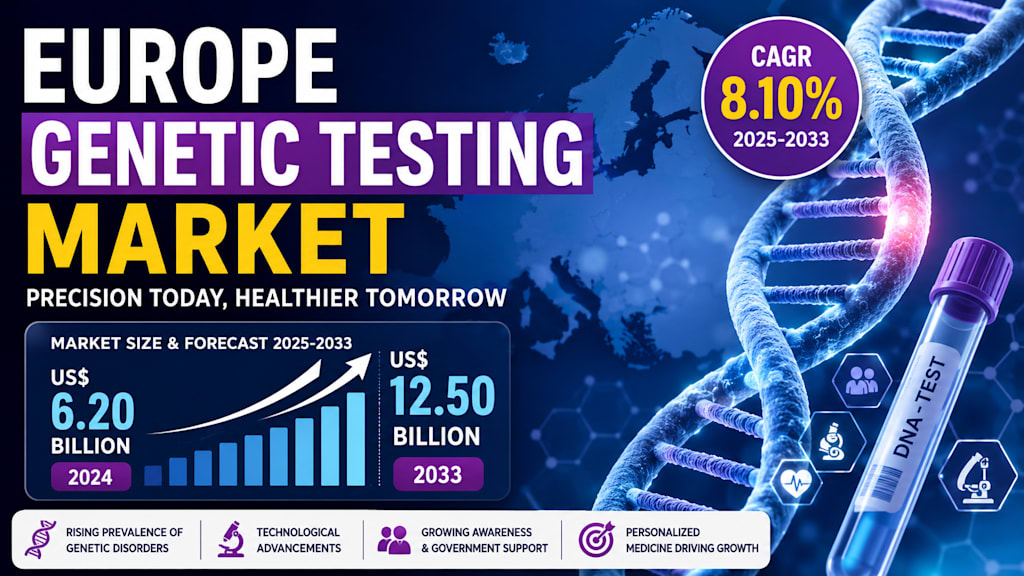
According to Renub Research, the Europe Genetic Testing Market is projected to increase from US$ 6.20 billion in 2024 to US$ 12.50 billion by 2033, expanding at a CAGR of 8.10% between 2025 and 2033. This remarkable growth reflects the growing importance of genomics in healthcare and the increasing demand for advanced diagnostic solutions.
Understanding the Growing Importance of Genetic Testing
Genetic testing involves analyzing DNA, chromosomes, genes, or proteins to identify inherited conditions, genetic mutations, and disease risks. These tests provide valuable insights into an individual's health profile, enabling physicians to detect diseases earlier and develop more personalized treatment plans.
Today, genetic testing plays a critical role in various medical fields, including:
Cancer diagnosis and treatment
Prenatal and newborn screening
Rare disease identification
Pharmacogenomics
Cardiovascular disease risk assessment
Infectious disease monitoring
As healthcare systems shift toward personalized medicine, genetic testing is becoming an indispensable tool for clinicians and patients alike.
Europe Emerges as a Global Hub for Precision Medicine
Europe has established itself as one of the world's leading regions for genetic testing and genomic research. The combination of advanced healthcare infrastructure, strong regulatory frameworks, increasing public awareness, and substantial investments in biotechnology is creating favorable conditions for market growth.
Countries such as Germany, France, the United Kingdom, and Spain are leading the adoption of genomic technologies. Government-backed initiatives focused on personalized healthcare and precision medicine have accelerated the integration of genetic testing into routine clinical practice.
Additionally, advancements in digital healthcare and artificial intelligence are improving the interpretation of complex genetic data, making testing more accessible and actionable.
Rising Burden of Genetic Disorders and Chronic Diseases
One of the primary drivers behind market growth is the increasing prevalence of genetic disorders and chronic illnesses across Europe.
Cancer remains a major healthcare challenge throughout the region. As healthcare providers seek more effective methods for diagnosis and treatment selection, genetic testing has become an essential component of oncology care.
Genetic testing helps identify inherited cancer risks and enables physicians to select targeted therapies based on a patient's unique genetic profile. This personalized approach improves treatment effectiveness while reducing unnecessary interventions.
Beyond oncology, genetic testing is increasingly utilized for diagnosing cardiovascular diseases, neurological disorders, rare diseases, and inherited metabolic conditions. Early identification of genetic risks allows healthcare professionals to implement preventive measures before symptoms become severe.
Growing Public Awareness Accelerates Adoption
Public understanding of genetics has increased dramatically over the past decade. Educational campaigns, healthcare initiatives, and media coverage have contributed to greater awareness about the benefits of genetic testing.
Consumers are becoming more proactive about their health and are increasingly interested in understanding their genetic predispositions. This trend has contributed to the growing popularity of genetic screening services and preventive healthcare programs.
The rise of direct-to-consumer genetic testing has further expanded public engagement. Individuals can now access genetic insights related to ancestry, wellness, and disease risks more conveniently than ever before.
As health literacy continues to improve, demand for genetic counseling and testing services is expected to increase significantly across Europe.
Technological Innovations Transform the Industry
The genetic testing market has experienced rapid innovation in recent years, significantly improving testing accuracy, speed, and affordability.
Among the most impactful technologies are:
Next-Generation Sequencing (NGS)
NGS enables comprehensive analysis of DNA at unprecedented speed and precision. It allows healthcare providers to identify genetic mutations associated with various diseases while reducing testing costs.
Artificial Intelligence and Data Analytics
AI-powered platforms can analyze vast amounts of genetic data, helping researchers and clinicians identify meaningful patterns and disease markers. This capability enhances diagnostic accuracy and supports personalized treatment planning.
CRISPR and Gene Editing Technologies
Gene-editing tools are revolutionizing genomic research and opening new possibilities for disease prevention and treatment. These technologies continue to influence innovation across the genetic testing ecosystem.
Expanded Genomic Databases
Growing genomic databases are improving researchers' understanding of genetic variations across populations, leading to more accurate diagnostic outcomes and targeted therapies.
Collectively, these advancements are making genetic testing more practical, scalable, and accessible.
The Role of Genetic Testing in Personalized Medicine
Personalized medicine represents one of the most promising applications of genetic testing.
Traditional healthcare often relies on generalized treatment approaches that may not be effective for every patient. Genetic testing enables healthcare providers to tailor treatment plans based on individual genetic characteristics.
For example, pharmacogenomic testing helps determine how a patient will respond to specific medications. Physicians can select the most effective treatment while minimizing side effects and adverse drug reactions.
This precision-based approach is particularly valuable in oncology, where targeted therapies are increasingly being developed based on specific genetic mutations.
As personalized medicine gains momentum, demand for genetic testing services is expected to grow substantially throughout Europe.
Challenges Limiting Market Expansion
Despite its strong growth trajectory, the Europe Genetic Testing Market faces several challenges.
High Costs of Advanced Testing
Although technology costs have declined, advanced tests such as whole-genome sequencing and comprehensive gene panels remain expensive.
Limited reimbursement policies in some European countries can restrict patient access and slow adoption rates. Smaller healthcare facilities may also struggle to invest in sophisticated testing infrastructure.
Regulatory Complexity
Europe's regulatory environment presents another challenge.
While regulations such as GDPR and IVDR establish important standards, varying national policies create complexities for companies operating across multiple countries.
Different approval processes, reimbursement systems, and data privacy requirements can increase operational costs and delay market entry for innovative products.
Data Privacy and Ethical Concerns
Genetic information is highly sensitive. Patients and regulators remain concerned about data security, confidentiality, and potential misuse of genetic information.
Healthcare organizations and testing providers must invest heavily in secure data management systems to maintain public trust and regulatory compliance.
Country-Level Market Outlook
Germany Leads Through Innovation
Germany remains one of Europe's most advanced genetic testing markets. Strong healthcare infrastructure, government support for genomic research, and strategic partnerships between biotechnology companies continue to drive growth.
The country's focus on precision medicine and early disease detection positions it as a key contributor to regional market expansion.
France Strengthens Genomic Medicine Initiatives
France is making significant investments in genomic medicine through national healthcare programs. The country's commitment to precision healthcare and advanced research is accelerating adoption across hospitals and diagnostic centers.
Government-backed initiatives are helping improve access to innovative genetic testing services.
United Kingdom Expands National Testing Programs
The UK continues to demonstrate leadership in genomic healthcare. National initiatives aimed at integrating genetic testing into routine healthcare services are expanding access to life-saving diagnostics.
Growing applications in oncology, rare disease diagnosis, and newborn screening are creating significant growth opportunities.
Spain Shows Strong Momentum
Spain's increasing investments in healthcare modernization and genomic research are supporting market growth. Enhanced public awareness and broader access to genetic services are encouraging greater adoption throughout the country.
Competitive Landscape Remains Dynamic
The European genetic testing industry is highly competitive, with established healthcare companies and biotechnology innovators investing heavily in research and development.
Key market participants include:
Abbott Laboratories
Danaher Corporation (Cepheid)
Illumina Inc.
Bio-Rad Laboratories
F. Hoffmann-La Roche AG
DiaSorin
Revvity Inc.
Thermo Fisher Scientific
These organizations continue to focus on technological innovation, strategic collaborations, product launches, and geographic expansion.
10 Recent Developments Shaping the Genetic Testing Industry
1. Illumina Advances Sequencing Technologies
Illumina continues enhancing next-generation sequencing platforms to improve testing speed and affordability.
2. Roche Expands Precision Diagnostics Portfolio
Roche has strengthened its molecular diagnostics capabilities through ongoing investments in genomic testing solutions.
3. Thermo Fisher Scientific Enhances Genomic Workflows
The company continues introducing integrated solutions that simplify laboratory genetic testing processes.
4. Abbott Expands Molecular Diagnostic Capabilities
Abbott is investing in advanced diagnostic technologies supporting precision medicine applications.
5. Bio-Rad Introduces Enhanced Genomic Research Tools
Bio-Rad continues developing innovative tools for genetic analysis and biomarker discovery.
6. DiaSorin Strengthens Molecular Testing Offerings
The company is expanding its portfolio of molecular diagnostic products targeting multiple disease areas.
7. Revvity Expands Newborn Screening Solutions
Revvity continues investing in technologies supporting early disease detection and genetic screening.
8. Myriad Genetics Expands European Partnerships
Strategic collaborations in Germany and France have broadened access to advanced genetic testing services.
9. Blueprint Genetics Collaborates on Rare Disease Testing
Partnership initiatives are helping improve diagnostic capabilities for rare genetic disorders.
10. Growing Adoption of AI in Genomics
Leading companies are increasingly integrating artificial intelligence into genetic data analysis platforms to improve diagnostic accuracy.
Future Outlook
The future of the Europe Genetic Testing Market appears exceptionally promising. Continued advances in genomics, artificial intelligence, precision medicine, and molecular diagnostics are expected to transform healthcare delivery across the region.
As testing becomes more affordable and accessible, genetic insights will increasingly guide disease prevention, diagnosis, and treatment decisions. Governments, healthcare providers, and biotechnology companies are likely to continue investing in genomic infrastructure and research, creating a favorable environment for sustained growth.
The integration of genetic testing into routine healthcare will not only improve patient outcomes but also support more efficient and cost-effective healthcare systems.
Final Thoughts
Genetic testing is rapidly evolving from a specialized diagnostic service into a cornerstone of modern healthcare. The ability to identify disease risks, personalize treatments, and improve patient outcomes is reshaping medical practice across Europe.
With the Europe Genetic Testing Market forecast to grow from US$ 6.20 billion in 2024 to US$ 12.50 billion by 2033, the industry is entering a period of significant expansion. Driven by technological innovation, growing public awareness, rising disease prevalence, and increasing adoption of precision medicine, genetic testing is poised to become one of the most influential healthcare technologies of the coming decade.
For patients, healthcare providers, and investors alike, the genetic testing revolution represents an opportunity to unlock a healthier, more personalized future.
About the Creator
Enjoyed the story? Support the Creator.
Subscribe for free to receive all their stories in your feed.
Comments
There are no comments for this story
Be the first to respond and start the conversation.