
Europe Food Cans Market Expected to Reach US$10.85 Billion by 2034 as Demand for Sustainable Packaging Grows
Europe Food Cans Market Expected to Reach US$10.85 Billion by 2034 as Demand for Sustainable Packaging Grows

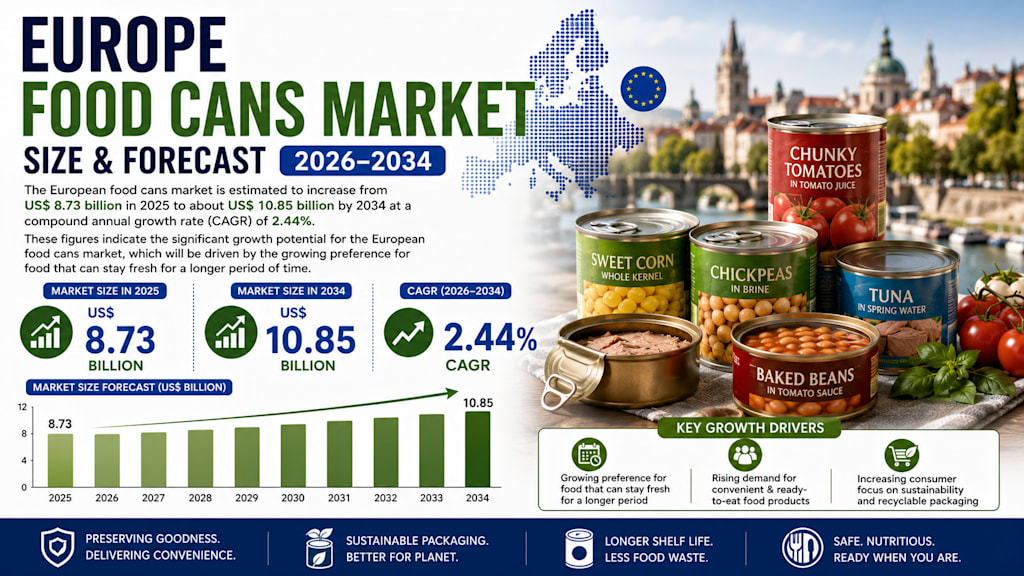
The Europe food cans market is steadily evolving as consumers increasingly prioritize convenience, sustainability, and long-lasting food products. Once viewed primarily as a practical storage solution, food cans are now gaining renewed importance within Europe’s broader sustainability movement and changing food consumption patterns.
According to Renub Research, the Europe food cans market is projected to grow from US$8.73 billion in 2025 to approximately US$10.85 billion by 2034, registering a compound annual growth rate (CAGR) of 2.44% between 2026 and 2034.
The market’s growth is being driven by rising consumer preference for foods with extended shelf life, increasing demand for ready-to-eat meals, and stronger focus on recyclable and environmentally friendly packaging solutions. As European consumers continue embracing convenience without compromising sustainability, metal food cans are regaining strategic importance across the food packaging industry.
Food Cans Continue Playing a Vital Role in Food Preservation
Food cans remain one of the most reliable methods for preserving food quality and extending shelf life.
These metal containers are designed to create airtight seals and undergo heat treatment processes that eliminate bacteria, allowing products to remain safe for consumption over extended periods.
Food cans are widely used to preserve:
- Vegetables
- Fruits
- Seafood
- Meat products
- Soups
- Ready meals
- Pet food
- Powdered products
In addition to preserving freshness, canned packaging protects food from exposure to light and air, helping maintain flavor, texture, and nutritional value.
As European consumers increasingly seek practical food storage solutions amid busy lifestyles, canned foods continue offering an affordable and convenient option.

Convenience Foods Are Driving Market Expansion
One of the biggest growth drivers in the Europe food cans market is the rising demand for convenient and long shelf-life foods.
Modern lifestyles across Europe are becoming increasingly fast-paced, leading consumers to seek ready-to-eat and easy-to-prepare meal options. Canned foods fit perfectly into this trend because they require minimal preparation and offer extended usability without refrigeration.
Ready meals, soups, vegetables, seafood, and canned pasta products remain especially popular among:
- Urban professionals
- Students
- Single-person households
- Busy working families
According to Eurostat, consumption expenditure on fast foods within European metropolitan areas increased by 35% between 2022 and 2024. Additionally, more than 60% of younger consumers admitted they prefer fast foods because they save time.
These changing consumption habits continue fueling demand for practical canned food solutions across Europe.
Sustainability Is Becoming a Major Industry Advantage
Sustainability trends are significantly strengthening the position of food cans within the European packaging market.
Metal food cans are highly recyclable and align closely with Europe’s strict environmental regulations and circular economy objectives. Consumers increasingly favor packaging solutions that minimize environmental impact, encouraging manufacturers to invest heavily in sustainable can production technologies.
The industry is increasingly adopting:
- Lightweight metal cans
- BPA-free coatings
- Reduced material usage
- Fully recyclable packaging systems
- Energy-efficient manufacturing methods
European governments are also actively supporting recycling initiatives and sustainable packaging regulations.
A major milestone occurred in March 2024 when the European Parliament and Council reached an agreement on new legislation aimed at making packaging more sustainable across the European Union.
As environmental awareness continues rising among consumers, food cans are increasingly benefiting from their strong sustainability profile compared to many alternative packaging formats.
Premiumization Is Transforming the Canned Food Category
The canned food industry is no longer limited to basic or low-cost products.
Manufacturers across Europe are increasingly introducing premium, gourmet, and organic canned food options to meet evolving consumer preferences.
Modern consumers now expect canned foods to offer:
- High nutritional value
- Minimal preservatives
- Clean-label ingredients
- Lower sodium content
- Gourmet flavor profiles
- Organic sourcing
Premium canned seafood, organic vegetables, ethnic ready meals, and artisanal food products are becoming increasingly popular among health-conscious and convenience-oriented consumers.
Packaging innovation is also playing a central role in premiumization strategies. Easy-open lids, resealable cans, modern graphics, and transparent product labeling are helping brands elevate consumer perception of canned foods.
In June 2024, Sonoco Products Company completed its acquisition of Eviosys, a major European food can manufacturer, strengthening its position within the premium food cans segment.
Competition From Alternative Packaging Formats Remains Strong
Despite steady growth, the Europe food cans market faces increasing competition from alternative packaging solutions.
Flexible pouches, glass jars, and plastic containers continue attracting consumers because of features such as:
- Lightweight design
- Microwave compatibility
- Resealable packaging
- Lower transportation costs
- Premium visual appeal
Glass packaging, in particular, is often perceived as healthier and more luxurious by consumers.
To remain competitive, food can manufacturers are focusing on innovation, sustainability messaging, and convenience improvements that reinforce the advantages of metal packaging.
Health Concerns Continue Influencing Consumer Perceptions
Another challenge affecting the market involves consumer perceptions surrounding canned and processed foods.
Many consumers continue associating canned foods with:
- High sodium levels
- Artificial preservatives
- Reduced nutritional value
- Processed ingredients
There are also ongoing concerns regarding chemical can linings, particularly involving substances such as BPA.
In response, manufacturers are increasingly introducing:
- BPA-free coatings
- Organic canned foods
- Low-sodium products
- Clean-label formulations
- Natural ingredient profiles
Brands are also investing more heavily in consumer education campaigns to improve perceptions around canned food quality and safety.
Aluminum Cans Are Gaining Momentum
Aluminum food cans are becoming increasingly important within Europe’s food packaging industry.
Their lightweight structure, corrosion resistance, and strong recyclability profile make them highly attractive for sustainable food packaging applications.
Aluminum cans are commonly used for:
- Soups
- Seafood
- Vegetables
- Ready meals
Manufacturers continue focusing on lightweight aluminum designs to reduce carbon emissions and transportation costs.
In January 2024, Ball Corporation expanded its sustainable aluminum packaging initiatives in Europe with a focus on low-carbon lightweight can production.
Steel Cans Continue Offering Durability and Protection
Steel food cans remain essential for products requiring stronger protection against oxygen and light exposure.
They are particularly common in:
- Pet food packaging
- Meat products
- Vegetables
- Long shelf-life goods
Manufacturers are developing lightweight steel cans with BPA-free coatings to improve sustainability and safety standards.
In March 2024, Ardagh Group launched a new range of steel cans featuring advanced protective coatings.
Ready Meals and Canned Vegetables Are Seeing Strong Demand
Ready Meals
The ready meals category continues expanding rapidly as consumers prioritize convenience and faster meal preparation. Canned pasta dishes, soups, and ethnic meal options are especially popular among urban consumers.
In February 2024, Princes Group announced an expansion of its canned ready meal offerings.
Vegetables
Canned vegetables remain highly popular because of their affordability, accessibility, and year-round availability. Health-conscious consumers increasingly prefer low-sodium and preservative-free vegetable products.
Bonduelle introduced a new range of lower-sodium canned vegetables with sustainable packaging in April 2024.
Pet Food Is Becoming a Major Growth Segment
The canned pet food category is emerging as one of the strongest contributors to market growth.
Rising pet ownership and increasing “pet humanization” trends are encouraging consumers to purchase premium pet nutrition products with high-quality ingredients and improved preservation methods.
In May 2024, Nestlé Purina launched a premium canned pet food range in Europe emphasizing natural ingredients and nutritional value.
France, Germany, the UK, and Spain Remain Key Regional Markets
France
France continues seeing steady growth in canned vegetables, seafood, and ready meals, with increasing focus on gourmet and organic canned food products.
Germany
Germany’s advanced food processing industry and strong recycling regulations make it one of Europe’s largest food cans markets. Demand remains particularly high for canned meats, vegetables, and pet food.
United Kingdom
The UK market is benefiting from rising demand for convenient meals and eco-friendly packaging solutions. Retailers and e-commerce platforms continue expanding canned food product availability.
Spain
Spain’s strong culinary traditions continue supporting demand for canned fish, olives, and vegetables, while exports are growing because of advances in canning technology.
Major Companies Continue Intensifying Competition
Competition within the Europe food cans market remains highly competitive.
Leading companies include:
- Ardagh Group
- Ball Corporation
- Can-Pack
- Crown Holdings
- Nestlé
- Silgan Holdings
- Zwanenberg Food Group
Manufacturers are increasingly focusing on sustainability, premiumization, lightweight materials, and convenience-driven innovation to maintain competitiveness.
Final Thoughts
The Europe food cans market is steadily adapting to modern consumer demands centered around convenience, sustainability, and premium food experiences.
With the market projected to reach US$10.85 billion by 2034, canned food packaging is expected to remain an essential component of Europe’s food supply chain and sustainability agenda.
However, the industry must continue addressing challenges related to health perceptions, competition from alternative packaging, and evolving consumer expectations around product quality and transparency.
As sustainability regulations tighten and convenience-oriented lifestyles continue expanding, food cans are likely to maintain their relevance as one of Europe’s most reliable and environmentally compatible food packaging solutions.
About the Creator
Enjoyed the story? Support the Creator.
Subscribe for free to receive all their stories in your feed.
Comments
There are no comments for this story
Be the first to respond and start the conversation.