
Europe Coffee Market to Reach USD 78.25 Billion by 2034 as Premium Coffee Culture and Specialty Brews Drive Growth
Europe's rich café culture, growing demand for specialty coffee, and rising consumption of premium beverages are fueling steady expansion of the regional coffee industry.

Europe's Coffee Culture Continues to Shape the Global Industry
Coffee is far more than a beverage across Europe—it is a tradition, a social ritual, and an important part of everyday life. From the historic espresso bars of Italy and neighborhood cafés in France to Germany's thriving specialty coffee scene and the United Kingdom's expanding café culture, coffee remains deeply woven into European lifestyles.
Changing consumer preferences, growing interest in premium products, and the rapid expansion of specialty cafés have transformed Europe's coffee industry into one of the world's most dynamic markets. Consumers today seek not only quality coffee but also ethically sourced beans, sustainable production, and unique brewing experiences that reflect changing lifestyles and environmental awareness.
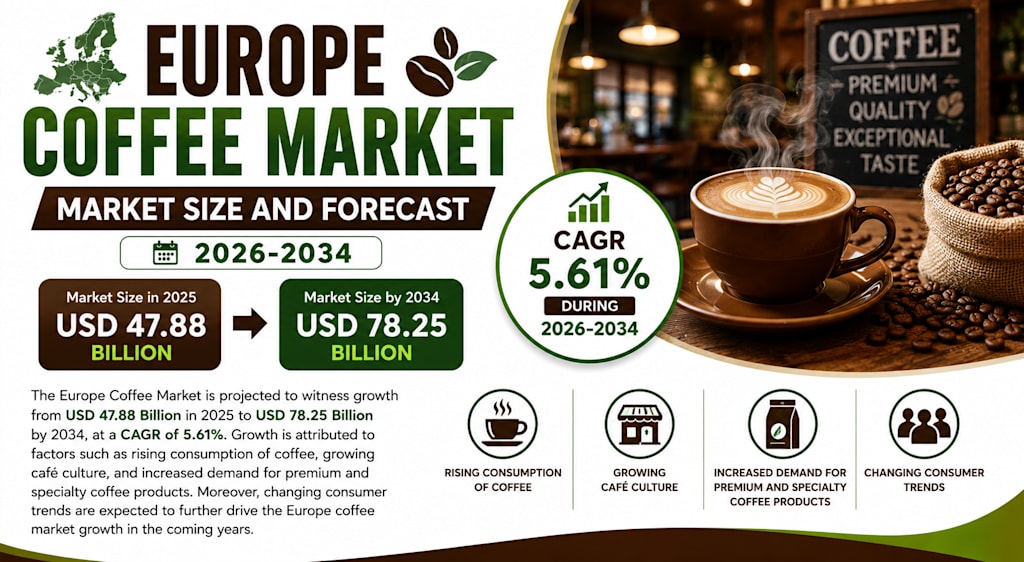
According to the latest market outlook, the Europe Coffee Market is expected to grow from USD 47.88 billion in 2025 to USD 78.25 billion by 2034, registering a compound annual growth rate (CAGR) of 5.61% during 2026–2034. Rising coffee consumption, expanding café culture, and increasing demand for premium and specialty coffee products continue to drive this long-term growth.
Coffee Remains a Daily Ritual Across Europe
Coffee has become an essential part of everyday routines throughout Europe.
Millions of consumers begin their mornings with espresso, cappuccino, latte, filter coffee, or specialty brews while cafés continue serving as important social and business meeting places.
Unlike many other beverages, coffee holds both cultural and economic significance across European countries, where centuries-old traditions continue to influence consumption habits.
Whether enjoyed at home, in offices, or at cafés, coffee remains one of Europe's most widely consumed beverages.
Café Culture Continues to Drive Consumption
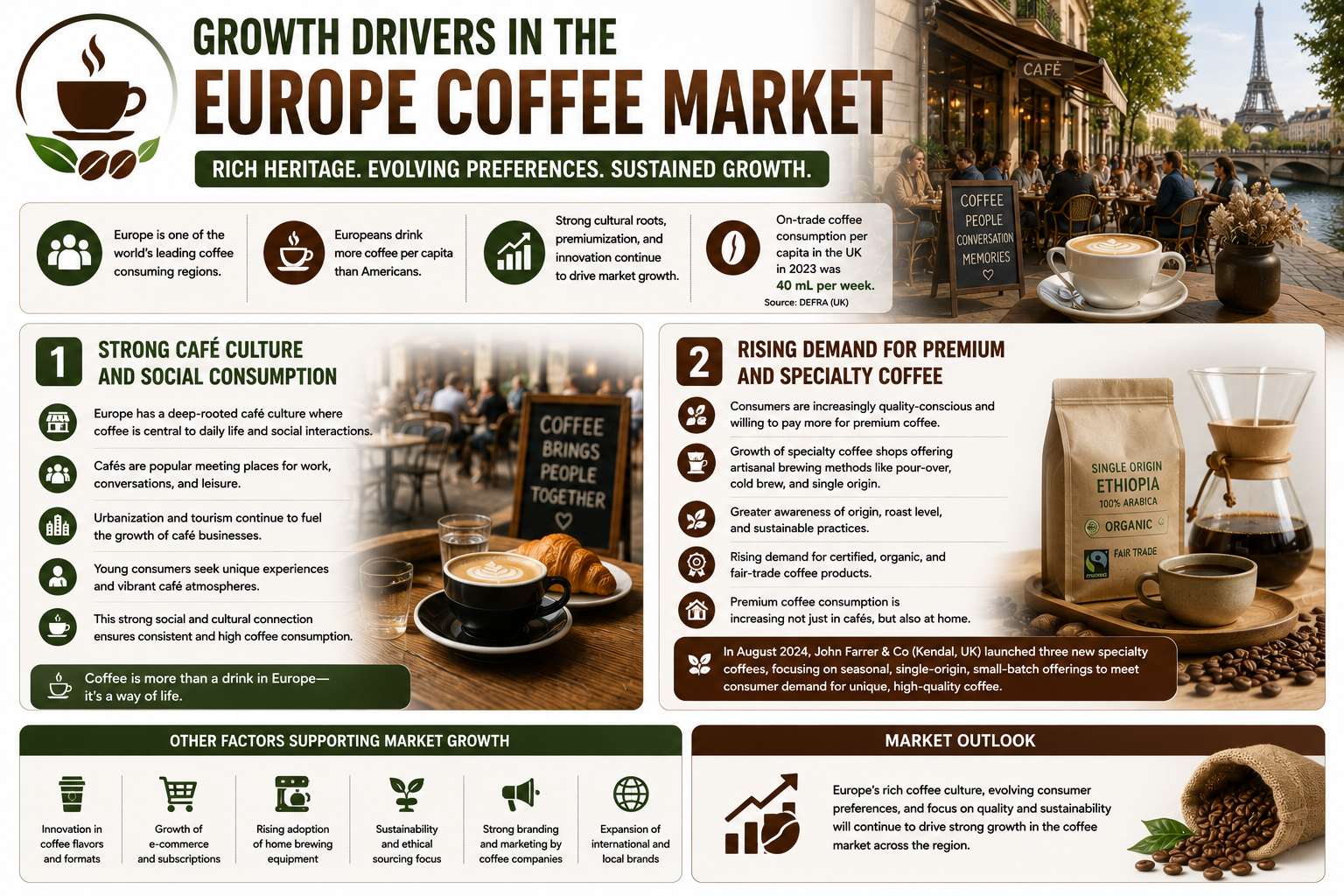
One of the strongest growth drivers for the European coffee market is its long-established café culture.
Countries such as Italy, France, Spain, and Germany have built strong traditions around café visits, where consumers gather not only for coffee but also for social interaction, business meetings, and leisure.
Urbanization, tourism, and flexible work arrangements have further increased café visits throughout Europe.
Many young professionals now use cafés as temporary workplaces, creating additional occasions for coffee consumption during the day.
The continued expansion of café chains and independent coffee houses is expected to support sustained market growth.
Specialty Coffee Is Becoming Increasingly Popular
Consumer preferences are steadily shifting toward premium and specialty coffee.
Today's coffee enthusiasts increasingly value single-origin beans, artisanal roasting techniques, sustainable sourcing, and carefully crafted brewing methods.
Specialty cafés now offer pour-over coffee, cold brew, manual brewing techniques, and limited-edition seasonal products that appeal to consumers seeking unique flavor experiences.
Growing awareness regarding bean origin, roast profiles, and ethical sourcing has encouraged consumers to pay premium prices for higher-quality coffee.
Independent roasters continue introducing innovative products that strengthen Europe's premium coffee segment.
Sustainability Influences Purchasing Decisions
Environmental and ethical considerations have become increasingly important for European coffee buyers.
Consumers actively seek coffee certified through organic, Fairtrade, Rainforest Alliance, and other sustainability programs.
Responsible sourcing, environmentally friendly farming, recyclable packaging, and transparent supply chains have become major competitive advantages for coffee brands.
Retailers and coffee chains increasingly highlight sustainability initiatives to attract environmentally conscious consumers while strengthening long-term brand loyalty.
Ready-to-Drink Coffee Continues Growing
Changing lifestyles have accelerated demand for ready-to-drink (RTD) coffee beverages.
Busy professionals, students, and commuters increasingly purchase canned cold brew, iced coffee, bottled lattes, and ready-made espresso drinks that offer convenience without sacrificing quality.
Supermarkets, convenience stores, vending machines, and coffee chains continue expanding RTD product selections.
Improvements in packaging technology and shelf-life preservation have also helped manufacturers deliver premium-quality beverages in portable formats.
The RTD category is expected to remain one of Europe's fastest-growing coffee segments.
Whole Bean Coffee Benefits From Home Brewing
The popularity of home brewing has significantly increased demand for whole bean coffee.
Consumers increasingly invest in espresso machines, grinders, and premium brewing equipment to recreate café-quality beverages at home.
Whole beans preserve freshness and aroma longer than pre-ground coffee, making them particularly attractive for coffee enthusiasts.
Growing interest in specialty coffee has further encouraged consumers to explore different bean origins, roast levels, and brewing methods.
Countries such as Germany, Italy, and France continue leading demand within this segment.
Instant Coffee Remains an Important Category
Despite growing interest in specialty coffee, instant coffee continues maintaining a strong position within the European market.
Consumers appreciate instant coffee for its affordability, convenience, and ease of preparation, particularly in busy households and workplaces.
Manufacturers continue improving product quality through freeze-drying technology and premium formulations that deliver enhanced aroma and flavor.
Single-serve packaging, premium instant blends, and innovative product formats continue supporting steady demand across multiple European markets.
Supermarkets Dominate Coffee Distribution
Supermarkets and hypermarkets remain the largest retail channel for coffee sales throughout Europe.
Consumers benefit from extensive product selections, competitive pricing, promotional offers, and private-label alternatives covering every price segment.
Retailers increasingly expand premium, organic, and specialty coffee offerings while introducing their own branded products to satisfy evolving consumer preferences.
Loyalty programs and in-store promotions further strengthen supermarket sales.
Specialist Retailers Strengthen Premium Segment
Specialist coffee retailers play a vital role in expanding Europe's premium coffee market.
These stores focus on high-quality beans, professional brewing equipment, coffee education, tasting events, and personalized customer service.
Independent coffee roasters continue gaining popularity among consumers seeking authentic coffee experiences and unique products unavailable through traditional retail channels.
Direct relationships with coffee farmers and transparent sourcing practices also appeal to ethically conscious buyers.
Price Volatility Remains a Major Challenge
Despite strong demand, the coffee industry faces significant supply-side challenges.
Coffee production depends heavily on favorable weather conditions in producing countries.
Droughts, excessive rainfall, pests, transportation disruptions, and geopolitical tensions can all reduce supply and increase global coffee prices.
These fluctuations create difficulties for roasters, retailers, and cafés attempting to maintain stable prices while preserving profit margins.
Managing supply chain risks has therefore become an increasingly important strategic priority.
Competition From Alternative Beverages Is Increasing
Coffee also faces growing competition from alternative beverages.
Consumers increasingly purchase herbal teas, matcha, energy drinks, functional beverages, and plant-based drinks that offer different nutritional benefits or lower caffeine levels.
Health-conscious consumers seeking reduced caffeine intake contribute to this trend.
Coffee companies continue responding through innovation, introducing healthier formulations, flavored beverages, low-caffeine options, and functional coffee products that meet changing consumer expectations.
Regional Markets Continue Driving Growth
The United Kingdom remains one of Europe's largest coffee markets, supported by expanding café chains, premium home brewing, and strong demand for specialty coffee.
Germany continues leading coffee consumption, with growing interest in whole bean coffee, sustainable sourcing, and specialty roasting.
Italy remains globally recognized for its espresso tradition while gradually embracing specialty coffee innovations alongside its historic café culture.
France continues strengthening demand for premium coffee through expanding artisanal cafés, independent roasters, and increasing home coffee consumption.
Together, these major markets continue shaping coffee trends across Europe.
Innovation Continues Transforming the Industry
Leading coffee companies continue investing in product innovation.
Seasonal limited-edition blends, single-origin offerings, sustainable packaging, coffee capsules, premium instant coffee, and RTD beverages continue attracting new consumers.
Digital commerce, subscription services, and direct-to-consumer sales models are also reshaping how Europeans purchase coffee.
Advances in brewing technology and personalized coffee experiences are expected to create additional growth opportunities throughout the coming decade.
Final Thoughts
Europe remains one of the world's most influential coffee markets, combining centuries-old traditions with continuous innovation.
The projected growth from USD 47.88 billion in 2025 to USD 78.25 billion by 2034, supported by a 5.61% CAGR, reflects strong consumer demand for premium products, expanding café culture, specialty coffee experiences, and sustainable sourcing practices.
While supply chain disruptions and changing consumer preferences present ongoing challenges, Europe's coffee industry is well positioned for long-term growth. Companies that continue investing in quality, sustainability, innovation, and customer experience are expected to lead the next chapter of one of the world's most established beverage markets.
About the Creator
Enjoyed the story? Support the Creator.
Subscribe for free to receive all their stories in your feed.
Comments
There are no comments for this story
Be the first to respond and start the conversation.