
Europe Books Market: Why Reading Culture and Digital Innovation Are Powering Growth Through 2034
From Printed Pages to Audiobooks: Europe’s Book Industry Enters a New Growth Era


Books remain one of the most enduring products in the modern world. Even in an age dominated by streaming platforms, short-form videos, and social media, Europe continues to prove that reading is not fading—it is evolving. From traditional hardcovers and academic textbooks to e-books and audiobooks, the European books industry is entering a fresh chapter of growth fueled by literacy, technology, and changing consumer habits.
According to Renub Research, the Europe Books Market is expected to rise from US$ 44.68 Billion in 2025 to US$ 62.29 Billion by 2034, expanding at a CAGR of 3.76% during 2026–2034. This steady growth reflects the region’s strong reading culture, expanding digital publishing ecosystem, and continued demand across educational, professional, and leisure categories.
Books Still Matter in Europe
Europe has one of the richest literary traditions in the world. From Shakespeare and Goethe to Victor Hugo and Dostoevsky, the continent has shaped global literature for centuries. That legacy continues today through a robust publishing network, government support for literacy, world-famous book fairs, and millions of active readers.
Books in Europe are more than entertainment. They serve as:
- Educational tools for students
- Professional resources for workers
- Cultural preservation assets
- Leisure reading materials
- Personal development guides
- Research and academic references
Whether in print or digital form, books remain deeply embedded in European life.
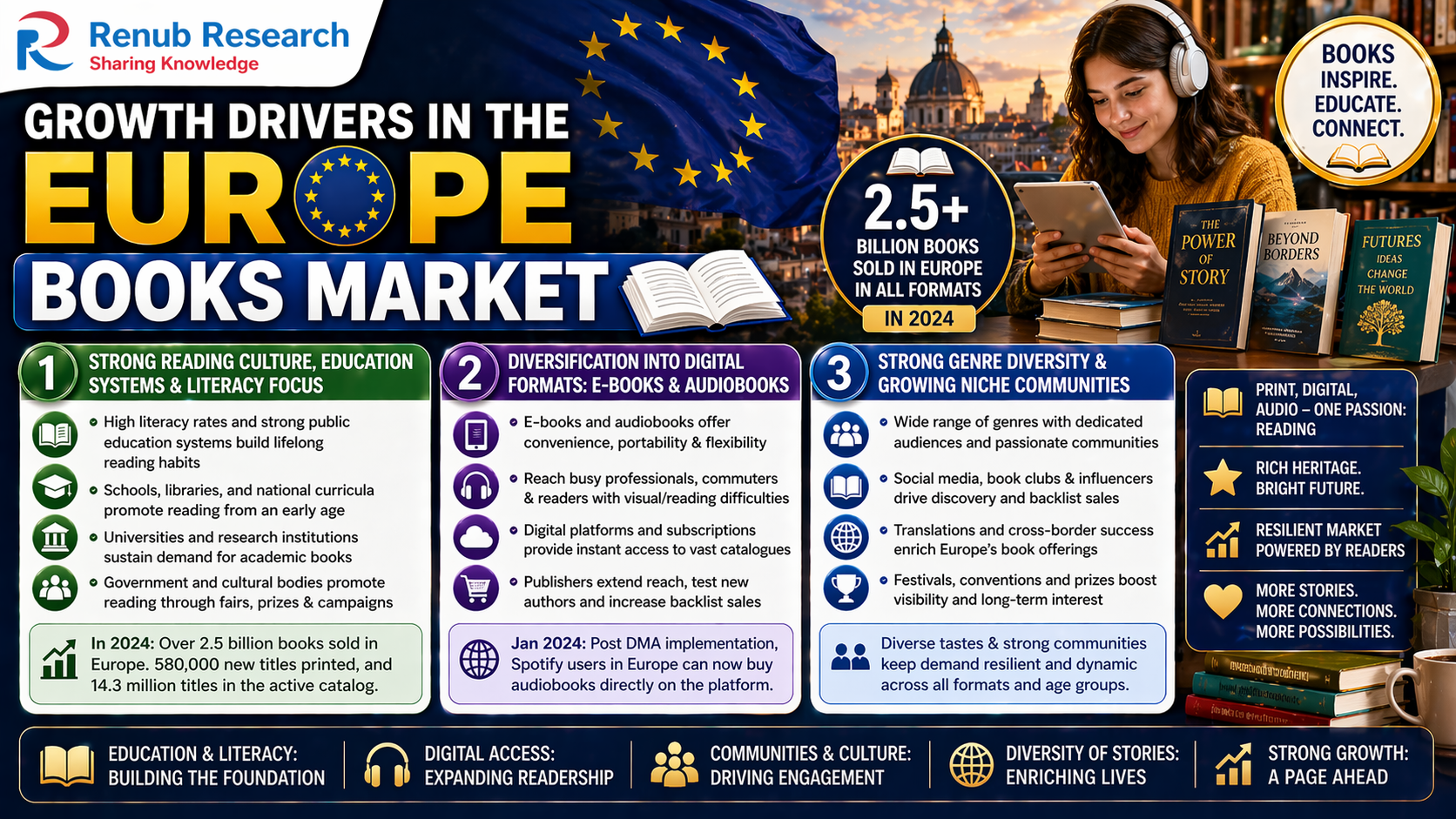
What Is Driving Growth in Europe’s Book Market?
1. Strong Reading Culture and High Literacy Rates
One of the biggest strengths of Europe’s books market is its reading-first culture. Public libraries, quality education systems, and school curricula across the continent encourage reading from an early age.
Children grow up exposed to literature through schools, storytelling programs, and public institutions. As they become adults, many continue purchasing books for leisure, study, or career development.
In 2024 alone:
- More than 2.5 billion books in all formats were sold in Europe
- Around 580,000 new titles were printed
- Total active publisher catalogues reached 14.3 million titles
These numbers show that Europe’s appetite for books remains powerful.
2. Rapid Rise of E-Books and Audiobooks
Digital transformation is opening new opportunities for publishers and readers alike.
Today’s readers want convenience. They want to carry libraries on phones, tablets, and e-readers. They want to listen while driving, exercising, or commuting. This is where e-books and audiobooks shine.
Audiobooks have especially gained momentum among:
- Busy professionals
- Younger mobile-first readers
- Visually impaired audiences
- Multitaskers
Streaming platforms are accelerating this trend. Spotify’s audiobook expansion in Europe is one example of how books are entering mainstream digital entertainment channels.
3. Genre Diversity Keeps Demand Strong
Another key advantage of Europe’s books industry is variety. Demand does not depend on a single category.
Popular genres include:
- Mystery & crime fiction
- Romance
- Fantasy
- Science books
- Historical fiction
- Children’s literature
- Self-help
- Academic titles
- Comics & graphic novels
This wide mix creates resilience. If one category slows, another often rises.
Book clubs, BookTok trends, social media recommendations, and literary festivals are helping readers discover both new releases and older hidden gems.
Fast-Growing Segments in Europe
Audiobooks Market
Europe’s audiobook segment is one of the most exciting growth stories. Narrated content has transformed books into a hands-free experience.
Many consumers now listen to:
- Crime thrillers during travel
- Self-help while exercising
- Memoirs during chores
- Fantasy novels during long drives
Subscription platforms are making access easier than ever.
E-Books Market
E-books continue gaining share, especially among students, city residents, and travelers.
Benefits include:
- Instant downloads
- Lower storage needs
- Adjustable font sizes
- Global access to titles
- Promotional pricing
Genres like romance, crime, and professional non-fiction perform especially well digitally.
Science Books Market
Interest in STEM education, climate change, AI, medicine, and space exploration is boosting science publishing.
Science books now appeal to:
- University students
- Researchers
- Curious parents
- Young learners
General readers seeking trusted information
This makes science one of the most stable segments in European publishing.
Mystery Books Market
Mystery and crime fiction remain European favorites.
From Nordic noir to British detective stories and psychological thrillers, readers love suspense-driven storytelling. Many titles are adapted into TV series and films, further boosting book sales.
Romance Books Market
Romance consistently delivers high-volume sales across Europe. Readers value emotional storytelling, relatable characters, and binge-worthy series.
Digital formats have especially helped romance thrive through privacy, convenience, and quick access to sequels.
Country Spotlight
France
France remains one of Europe’s strongest literary markets. Fixed-price book laws help protect independent bookstores and publishing diversity. Literature remains central to French culture.
United Kingdom
United Kingdom combines strong domestic demand with global publishing influence. English-language exports give UK publishers major scale advantages. London remains a world publishing hub. Spotify’s audiobook launch also strengthened digital momentum.
Germany
Germany is among Europe’s most structured and stable book markets. The Frankfurt Book Fair reinforces Germany’s leadership in global publishing rights and trade.
Challenges the Market Must Solve
Competition From Digital Entertainment
Streaming services, gaming, and social media compete heavily for attention. Younger consumers often spend more time on screens than reading long-form books.
Publishers must work harder to make reading engaging and visible.
Rising Costs and Margin Pressure
Paper prices, printing costs, shipping, and retail rent continue rising. Meanwhile, online discounting pressures profit margins for publishers and bookstores.
Independent shops face the greatest pressure.
Why Local Bookshops Still Matter
Despite e-commerce growth, Europe’s independent bookstores remain culturally important.
They offer:
- Personal recommendations
- Community events
- Author signings
- Reading groups
- Curated shelves
Many have evolved into hybrid spaces with cafés, gifts, and workshops, helping them stay relevant in a digital age.
Final Thoughts
Europe’s books market proves that reading is not disappearing—it is adapting. Consumers still value stories, knowledge, and meaningful content, but now they want it in multiple formats: print, digital, and audio.
With market value projected to grow from US$ 44.68 Billion in 2025 to US$ 62.29 Billion by 2034, Europe remains one of the world’s most important publishing regions.
About the Creator
Enjoyed the story? Support the Creator.
Subscribe for free to receive all their stories in your feed.
Comments
There are no comments for this story
Be the first to respond and start the conversation.