
Europe Anticoagulants Market Set to Reach US$ 23.68 Billion by 2033 as Cardiovascular Disorders Rise Across the Region
Aging Population, Growing Incidence of Blood Clotting Disorders, and Rapid Adoption of NOACs Are Reshaping Europe’s Anticoagulants Industry

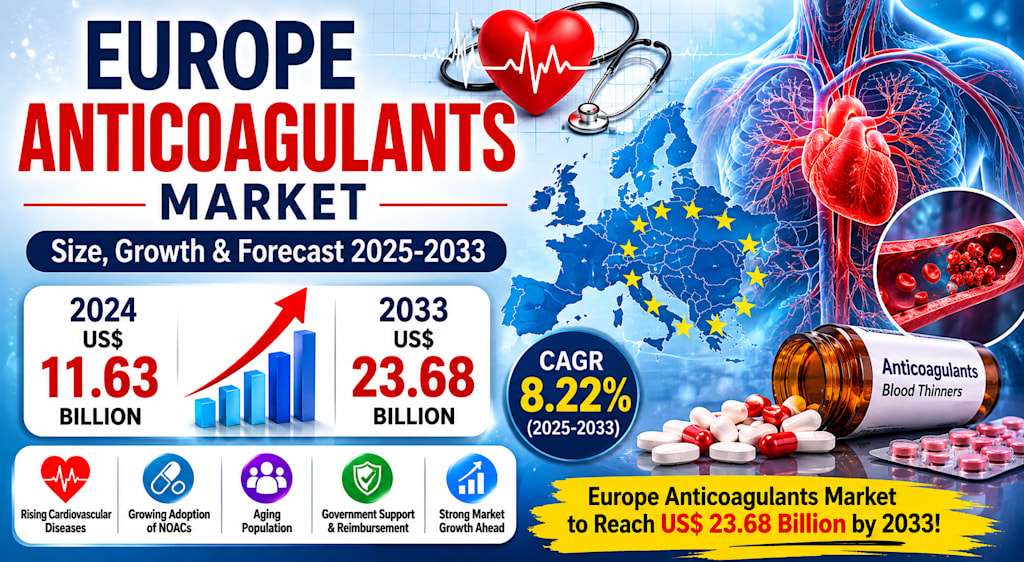
The Europe anticoagulants market is entering a transformative growth phase as cardiovascular diseases, stroke risks, and thrombotic disorders continue to increase across the region. According to Renub Research, the Europe anticoagulants market is projected to grow from US$ 11.63 billion in 2024 to US$ 23.68 billion by 2033, expanding at a CAGR of 8.22% during the forecast period from 2025 to 2033.
Anticoagulants, commonly referred to as blood thinners, have become essential in modern cardiovascular treatment. These drugs help prevent dangerous blood clot formation that can lead to stroke, pulmonary embolism, deep vein thrombosis, and heart attacks. With Europe witnessing a steady increase in sedentary lifestyles, obesity, aging demographics, and cardiovascular complications, the demand for advanced anticoagulant therapies is accelerating rapidly.
The growing shift toward novel oral anticoagulants (NOACs), coupled with supportive healthcare policies and expanding awareness programs, is further strengthening the market outlook across countries including Germany, France, the United Kingdom, Spain, Italy, and other European nations.
Cardiovascular Diseases Continue to Fuel Anticoagulants Demand
Cardiovascular disorders remain one of the leading causes of mortality in Europe. The increasing prevalence of atrial fibrillation, venous thromboembolism, ischemic stroke, and deep vein thrombosis is significantly boosting the demand for anticoagulant medications throughout the region.
Healthcare experts across Europe are increasingly emphasizing preventive cardiovascular care, especially for elderly patients who are more vulnerable to blood clot formation. Individuals above 60 years of age are particularly susceptible due to reduced mobility, obesity, unhealthy lifestyles, prolonged bed rest, and genetic predispositions.
The rise in lifestyle-related disorders is also contributing heavily to market growth. Factors such as smoking, excessive alcohol consumption, poor dietary habits, diabetes, and hypertension are creating a larger patient population that requires long-term anticoagulant treatment.
As cardiovascular complications continue to burden healthcare systems, anticoagulants are becoming a critical component of chronic disease management strategies throughout Europe.
Novel Oral Anticoagulants (NOACs) Revolutionizing Treatment Approaches
One of the biggest transformations in the Europe anticoagulants market is the rapid adoption of Novel Oral Anticoagulants (NOACs). These medications are increasingly replacing traditional anticoagulants such as warfarin due to their superior convenience and safety profiles.
NOACs offer several important advantages:
- Reduced need for regular blood monitoring
- Fewer food and dietary restrictions
- Lower risk of drug interactions
- Improved patient compliance
- Predictable pharmacological response
These benefits have made NOACs highly attractive among physicians and patients alike. As clinical evidence supporting their effectiveness continues to expand, hospitals and healthcare providers are integrating these medications into mainstream cardiovascular treatment protocols.
The increased prescription rates of NOACs are expected to remain a key growth catalyst for the European anticoagulants industry over the next decade.
Government Support and Healthcare Reforms Accelerating Market Expansion
European governments and healthcare agencies are actively supporting cardiovascular disease prevention and treatment initiatives. Countries such as Germany, France, and the United Kingdom have introduced reimbursement policies that improve patient access to advanced anticoagulant therapies.
Universal healthcare systems and insurance coverage across much of Europe are also enabling wider adoption of expensive but effective anticoagulant medications. Public health campaigns promoting early diagnosis and stroke prevention are helping increase awareness regarding thrombosis management.
Additionally, the role of the European Medicines Agency (EMA) remains crucial in ensuring drug safety, accessibility, and innovation. Pharmaceutical companies continue to invest heavily in research and development activities aimed at creating safer, more efficient anticoagulant formulations with reduced bleeding risks.
This supportive ecosystem is expected to encourage further product launches and market penetration across Europe.
Aging Population Becoming a Major Long-Term Growth Driver
Europe is one of the fastest-aging regions globally, and this demographic shift is directly contributing to anticoagulants demand.
Older adults face higher risks of:
- Atrial fibrillation
- Stroke
- Pulmonary embolism
- Venous thromboembolism
- Deep vein thrombosis
These conditions often require prolonged or lifelong anticoagulant therapy. As life expectancy continues to increase in Europe, healthcare providers are preparing for a growing patient base dependent on anticoagulation treatments.
The geriatric population’s vulnerability to chronic illnesses is expected to keep the Europe anticoagulants market on a sustained growth trajectory through 2033.
Challenges Related to Bleeding Risks Continue to Impact Market
Despite strong growth prospects, the Europe anticoagulants market still faces notable challenges.
One of the most significant concerns is the risk of bleeding complications associated with anticoagulant use. These medications reduce blood clotting ability, which can sometimes lead to excessive or uncontrolled bleeding, especially among elderly or high-risk patients.
Patients with kidney disease, gastrointestinal disorders, or those taking multiple medications simultaneously are particularly vulnerable. As a result, physicians must closely monitor treatment regimens and carefully balance the benefits of clot prevention against bleeding risks.
These safety concerns can sometimes limit treatment adoption and increase healthcare monitoring costs.
Limited Awareness in Rural Regions Remains a Barrier
Another important challenge for the market is limited awareness about thrombosis and anticoagulant therapy in rural and underserved areas of Europe.
Many individuals are still unaware of:
- Symptoms of blood clot disorders
- Importance of early diagnosis
- Benefits of modern anticoagulant therapies
- Availability of NOAC medications
Delayed treatment often leads to severe complications such as stroke or pulmonary embolism. Moreover, some rural healthcare facilities still lack updated treatment guidelines and specialized cardiovascular training.
Improving education campaigns, healthcare accessibility, and physician training will be essential for expanding anticoagulant usage across all European regions.
Country-Level Insights
Germany Leading Innovation and Advanced Treatment Adoption
Germany remains one of Europe’s strongest anticoagulants markets due to its highly developed healthcare infrastructure and increasing cardiovascular disease burden. The country is experiencing strong adoption of NOACs as healthcare providers prioritize safer and more convenient treatment solutions.
Germany’s focus on personalized medicine and pharmacogenomics is also enabling more targeted anticoagulant therapies, improving treatment outcomes for patients with complex cardiovascular conditions.
France Witnessing Strong Demand for Preventive Cardiovascular Care
France continues to demonstrate steady growth in anticoagulant demand, driven by its aging population and strong emphasis on preventive healthcare.
The country’s universal healthcare system and favorable reimbursement structure are encouraging widespread access to advanced anticoagulant treatments. Physicians are increasingly preferring NOACs due to their predictable dosing and lower monitoring requirements.
However, challenges related to treatment costs and bleeding risk management still influence prescribing decisions.
United Kingdom Expanding Personalized Anticoagulant Therapies
The United Kingdom anticoagulants market is growing steadily due to rising atrial fibrillation and deep vein thrombosis cases. The country is also seeing greater adoption of precision medicine approaches in anticoagulant treatment.
Healthcare authorities are investing in cardiovascular disease management programs aimed at reducing stroke-related mortality. The NHS continues to support access to advanced therapies while encouraging improved patient education and compliance.
Spain Strengthening Cardiovascular Disease Prevention
Spain’s anticoagulants market is expanding due to increasing cardiovascular disease prevalence and rising elderly population numbers. NOAC adoption is steadily replacing traditional therapies like warfarin in clinical settings.
Growing awareness initiatives and improvements in healthcare infrastructure are expected to further support market growth across the country.
Key Segments Driving the Europe Anticoagulants Market
By Drug Class
- Novel Oral Anticoagulants (NOACs)
- Heparin and Low Molecular Weight Heparin (LMWH)
- Vitamin K Antagonists
- Others
Among these, NOACs are expected to dominate future growth due to convenience, effectiveness, and increasing physician preference.
By Route of Administration
- Oral Anticoagulants
- Injectable Anticoagulants
Oral anticoagulants are gaining significant traction because of improved patient convenience and long-term therapy compliance.
By Distribution Channel
- Hospital Pharmacies
- Retail Pharmacies
- Online Stores
- Others
Hospital pharmacies currently account for a major share due to prescription-based anticoagulant usage and specialized cardiovascular care.
By Application
- Atrial Fibrillation and Heart Attack
- Stroke
- Deep Vein Thrombosis (DVT)
- Pulmonary Embolism (PE)
- Others
Atrial fibrillation-related anticoagulant usage remains one of the largest application segments in Europe.
Recent Developments from Leading Companies
1. Pfizer Inc.
Pfizer continues expanding cardiovascular drug research and strengthening collaborations focused on advanced anticoagulant therapies and stroke prevention solutions.
2. Bayer AG
Bayer has intensified investments in NOAC innovation and digital cardiovascular monitoring technologies to improve patient management.
3. Sanofi
Sanofi is focusing on expanding anticoagulant accessibility through strategic partnerships and improved cardiovascular treatment programs across Europe.
4. Bristol Myers Squibb
The company continues strengthening clinical research initiatives related to thrombosis management and stroke prevention therapies.
5. Johnson & Johnson
Johnson & Johnson is advancing patient-centered anticoagulant treatment approaches through healthcare innovation and cardiovascular disease awareness initiatives.
6. Daiichi Sankyo
Daiichi Sankyo continues enhancing its anticoagulant product portfolio with a strong focus on NOAC-based therapies.
7. Alexion Pharmaceuticals
Alexion is expanding research into rare blood-related disorders and specialized anticoagulation therapies.
8. Aspen Pharmacare
Aspen continues strengthening injectable anticoagulant manufacturing and regional distribution capabilities.
9. European Medicines Agency (EMA)
The EMA continues streamlining regulatory pathways for innovative anticoagulant therapies while ensuring patient safety standards.
10. National Health Service (NHS) UK
The NHS is expanding cardiovascular disease prevention programs and improving access to advanced anticoagulant treatment options.
Competitive Landscape
The Europe anticoagulants market remains highly competitive, with leading pharmaceutical companies focusing on:
- Product innovation
- Clinical trials
- Strategic collaborations
- Geographic expansion
- Personalized medicine
- Digital health integration
The competition is expected to intensify as demand for safer and more efficient anticoagulants continues to rise across Europe.
Final Thoughts
The Europe anticoagulants market is poised for substantial expansion over the coming years, supported by rising cardiovascular disease prevalence, aging demographics, and increasing adoption of novel oral anticoagulants.
As healthcare systems across Europe prioritize preventive care and precision medicine, anticoagulants will continue playing a vital role in reducing stroke risks and managing thrombotic disorders. While challenges such as bleeding risks and limited awareness remain, technological innovation, supportive reimbursement policies, and growing healthcare investments are expected to sustain long-term market growth.
With the market forecasted to reach US$ 23.68 billion by 2033, Europe’s anticoagulants industry is entering a critical phase of transformation and opportunity for pharmaceutical companies, healthcare providers, and investors alike.
About the Creator
Enjoyed the story? Support the Creator.
Subscribe for free to receive all their stories in your feed.
Comments
There are no comments for this story
Be the first to respond and start the conversation.