
Europe Animal Protein Market to Reach US$ 3.30 Billion by 2034 as High-Protein Nutrition and Food Innovation Drive Industry Growth
Europe Animal Protein Market to Reach US$ 3.30 Billion by 2034 as High-Protein Nutrition and Food Innovation Drive Industry Growth

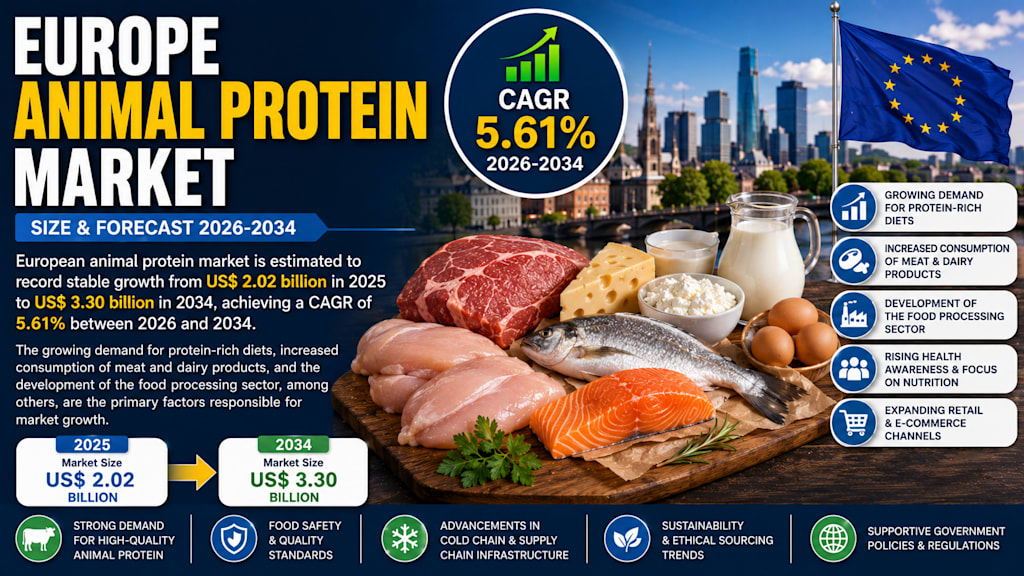
The Europe animal protein market is expected to witness stable and sustained growth as consumers increasingly prioritize high-protein nutrition, functional foods, and convenient dietary solutions. According to Renub Research, the European animal protein market is projected to grow from US$ 2.02 billion in 2025 to US$ 3.30 billion by 2034, registering a CAGR of 5.61% from 2026 to 2034. Growing consumption of meat and dairy products, expanding food processing industries, rising sports nutrition demand, and increasing health awareness are among the major factors supporting market expansion across Europe.
Animal proteins remain a critical part of European diets because they provide complete amino acid profiles, strong digestibility, and high biological value. Products derived from meat, poultry, fish, eggs, and milk are widely used across food and beverage manufacturing, sports nutrition, infant nutrition, clinical nutrition, and dietary supplements.
Despite the growing popularity of plant-based alternatives, animal proteins continue maintaining a dominant presence across Europe because of deeply rooted culinary traditions, high-quality nutritional profiles, and widespread use in processed foods and beverages.
Rising Health Awareness Is Increasing Demand for High-Protein Diets
One of the strongest growth drivers for the Europe animal protein market is the increasing focus on health, fitness, and balanced nutrition.
Consumers across Europe are becoming more aware of the importance of protein consumption for muscle maintenance, weight management, energy balance, and overall wellbeing. Animal proteins are especially valued because they provide all essential amino acids required for human health.
The report highlights that rising participation in physical activity and fitness culture is encouraging food manufacturers to collaborate with protein suppliers in order to create high-protein products designed for active lifestyles and sports nutrition.
Increased awareness surrounding healthy aging is also contributing to stronger protein demand. Europe’s aging population increasingly seeks protein-rich foods and supplements to maintain muscle strength, mobility, and overall physical health.
At the same time, health-conscious consumers continue favoring leaner protein sources such as poultry, fish, whey protein, and egg proteins as part of healthier dietary routines.
These trends are helping animal protein products maintain strong consumer relevance despite competition from plant-based alternatives.
Food Processing Innovation Is Accelerating Market Expansion
Europe’s highly developed food processing industry plays a major role in supporting the growth of the animal protein market.
Animal proteins are widely used in processed meats, dairy products, bakery items, ready meals, snacks, beverages, and nutritional supplements. Food manufacturers continue introducing innovative protein-enriched products designed to meet evolving consumer preferences.
High-protein snacks, fortified dairy beverages, protein yogurts, sports drinks, ready-to-consume meals, and protein-enriched bakery products are becoming increasingly common across supermarkets and online retail channels.
Consumers also increasingly prefer clean-label, premium-quality, and organic products, encouraging companies to invest in better sourcing practices, transparent labeling, and higher-quality formulations.
Technological improvements in food processing, preservation, and packaging are further supporting market growth by improving shelf life, safety standards, and product convenience.
The report highlights a major innovation example from November 2024, when Arla Foods Ingredients introduced Lacprodan HYDRO. Power, a specialized whey protein developed through controlled hydrolysis technology.
Such developments reflect how companies are continuously investing in advanced protein technologies to meet growing demand for specialized nutritional solutions.
Foodservice and Hospitality Industries Continue Supporting Demand
Europe’s large foodservice and hospitality sectors are another major contributor to animal protein market growth.
Restaurants, hotels, catering companies, cafés, and quick-service restaurants rely heavily on meat, dairy, poultry, seafood, and protein-based ingredients across a wide range of cuisines. Europe’s strong tourism industry and rich culinary traditions continue driving demand for premium animal protein products.
The growing popularity of dining out, food delivery services, and international cuisine trends is increasing protein consumption across both urban and tourist-heavy regions.
Large-scale events, festivals, corporate catering operations, and entertainment venues also contribute significantly to demand for processed meat products, dairy ingredients, and protein-enriched food offerings.
As tourism and hospitality activity continue recovering and expanding across Europe, foodservice-related protein demand is expected to remain highly resilient.
Sports Nutrition and Supplement Markets Are Expanding Rapidly
The Europe animal protein supplements market is experiencing strong growth because of rising fitness culture and preventive healthcare awareness.
Consumers increasingly use whey protein, casein, collagen, and egg protein supplements to support muscle growth, workout recovery, and general wellness.
Protein supplements are particularly popular among athletes, gym-goers, bodybuilders, and aging consumers seeking to preserve muscle mass and mobility.
The market is also benefiting from innovation in flavored protein products, ready-to-drink shakes, clean-label supplements, and convenient portable nutrition formats.
E-commerce platforms and specialty nutrition retailers are making protein supplements more accessible across Europe, helping both multinational companies and niche brands reach broader audiences.
Although plant-based supplements continue gaining visibility, animal protein supplements remain highly valued because of their complete amino acid profiles and strong nutritional performance.
Plant-Based Alternatives Are Creating Competitive Pressure
Despite strong growth prospects, the Europe animal protein market faces increasing competition from plant-based and alternative proteins.
Consumers are becoming more aware of sustainability concerns, animal welfare issues, and environmental impacts associated with livestock farming. As a result, flexitarian, vegetarian, and vegan lifestyles are becoming more popular across Europe, especially among younger consumers.
Plant proteins such as soy, pea, and alternative fermentation-based proteins are gaining attention as environmentally friendly substitutes for traditional animal proteins.
Food manufacturers are investing heavily in alternative protein research and development, increasing competition across several food and nutrition categories.
While animal proteins continue maintaining a dominant market position, producers are increasingly under pressure to demonstrate sustainability, ethical sourcing, and environmental responsibility.
Companies that successfully improve production efficiency and sustainability practices are likely to maintain stronger long-term competitiveness.
Regulatory and Environmental Challenges Remain Significant
Europe’s strict regulatory environment presents another major challenge for the animal protein industry.
The report highlights that regulations related to food safety, animal welfare, environmental protection, and sustainable agriculture significantly increase production complexity and operational costs.
Livestock farming is increasingly scrutinized because of greenhouse gas emissions, water usage, and land management concerns. Environmental organizations and policymakers continue encouraging more sustainable agricultural practices throughout the region.
Consumers are also becoming more environmentally conscious, forcing producers to adopt greener production models and improved traceability systems.
Meeting these expectations often requires substantial investment in technology, operational upgrades, and sustainability programs.
For many producers, balancing regulatory compliance, affordability, and profitability remains one of the industry’s biggest long-term challenges.
Egg Protein and Whey Protein Segments Continue Expanding
Several specialized segments within the Europe animal protein market are witnessing particularly strong growth.
The egg protein market is benefiting from increasing demand for protein-rich foods and supplements. Egg proteins are widely used in bakery products, confectionery, sports nutrition, and convenience foods because of their strong amino acid profiles and excellent digestibility.
Consumers also increasingly perceive egg protein as a natural and minimally processed ingredient, strengthening its appeal among clean-label shoppers.
Meanwhile, whey protein remains one of the most important segments within sports nutrition and functional beverages. Whey proteins are extensively used in protein powders, dairy beverages, medical nutrition, and muscle-recovery products.
The report highlights that technological innovation in whey protein processing continues improving product quality and expanding application possibilities across the food and beverage industry.
Gelatin Protein Applications Remain Strong Across Industries
The Europe animal gelatin protein market continues expanding because of its wide applications in food, pharmaceuticals, and cosmetics.
Animal gelatin proteins are widely used as gelling, thickening, and stabilizing agents in confectionery products, desserts, dairy products, capsules, and processed foods.
The growth of convenience foods and ready-made products is supporting increased gelatin usage across several food manufacturing applications.
Gelatin is also gaining popularity because of perceived health benefits related to collagen and skin health, increasing its use in nutritional supplements and beauty products.
Although plant-based alternatives are emerging, gelatin continues maintaining strong market relevance because of its unique functional properties and broad industrial applications.
Germany Remains One of Europe’s Largest Animal Protein Markets
Germany represents one of the largest and most influential animal protein markets in Europe.
The country benefits from strong meat, dairy, and processed food consumption supported by a highly advanced food manufacturing industry. Consumers increasingly prioritize food safety, quality, traceability, and sustainable sourcing.
Germany’s growing fitness culture is also increasing demand for protein-enriched foods and supplements.
At the same time, flexitarian lifestyles are becoming more common, encouraging producers to improve ethical sourcing and sustainability standards while maintaining high-quality protein offerings.
The report highlights that German cultivated protein company Innocent Meat received €6 million in funding to expand production and pursue regulatory approval for cultivated protein products.
United Kingdom Animal Protein Market Benefits from Sports Nutrition Demand
The United Kingdom’s animal protein market remains highly dynamic because of strong demand for convenience foods, sports nutrition, and functional beverages.
Consumers increasingly prefer fish, poultry, dairy, and whey protein products because of growing health consciousness and busy lifestyles. The country’s strong sports nutrition market also supports significant demand for protein supplements and functional foods.
Retail accessibility through supermarkets, specialty nutrition stores, and e-commerce platforms ensures broad product availability across the UK.
However, the growing popularity of vegetarian and flexitarian diets continues pushing companies to improve sustainability practices and diversify protein offerings.
France Maintains Strong Demand for Premium Animal Protein Products
France’s animal protein market remains deeply connected to its culinary traditions and premium food culture.
Consumers strongly value quality, flavor, origin, and locally sourced ingredients, especially within meat, cheese, and seafood categories. Restaurants and foodservice providers continue playing an important role in maintaining strong protein demand across the country.
The report highlights a major innovation example from April 2023, when Innovafeed expanded production capacity at its Nesle facility in France, increasing ingredient output to over 100,000 tons annually across its two production sites.
France’s emphasis on premium food experiences and functional nutrition continues supporting steady demand for high-quality animal protein products.
Russia Continues Expanding Domestic Production
Russia’s animal protein market is growing steadily due to higher domestic production levels and increasing consumption of affordable protein products.
Poultry remains especially popular because of its affordability relative to other meats. Government agricultural policies supporting self-sufficiency and reduced import dependence are helping strengthen local production capacity.
Urbanization and rising disposable incomes are also encouraging greater consumption of processed and packaged animal protein products throughout the country.
Retail expansion through supermarkets and hypermarkets is further improving accessibility and product availability across Russian cities and regional markets.
Key Companies Operating in the Europe Animal Protein Market
Major companies operating in the market include Arla Foods, Darling Ingredients, Groupe Lactalis, FrieslandCampina, Lactoprot Deutschland, LAÏTA, SAS Gelatines Weishardt, and Ÿnsect.
These companies compete through protein innovation, food processing technologies, sustainability initiatives, nutritional product development, and strong distribution networks across Europe.
Final Thoughts
The Europe animal protein market is steadily evolving as consumers continue balancing traditional dietary preferences with modern health, wellness, and sustainability concerns.
Strong demand for protein-rich foods, expanding sports nutrition markets, advanced food processing capabilities, and rising convenience-food consumption are all supporting long-term market growth. According to Renub Research, the market is expected to reach US$ 3.30 billion by 2034, reflecting continued importance of animal proteins across Europe’s food and nutrition industries.
At the same time, producers must navigate increasing environmental scrutiny, strict regulations, and rising competition from plant-based alternatives. Companies that successfully combine nutritional performance, product innovation, sustainability, and transparent sourcing practices are likely to lead the next phase of growth within Europe’s evolving animal protein market.
About the Creator
Enjoyed the story? Support the Creator.
Subscribe for free to receive all their stories in your feed.
Comments
There are no comments for this story
Be the first to respond and start the conversation.